Personal Narratives Worksheets
About This Worksheet Collection
The Personal Narrative Worksheets collection offers students a rich opportunity to reflect, describe, and make meaning from real-life experiences. Each worksheet presents a different type of narrative challenge-from interpreting emotional cues to crafting vivid scenes-giving learners multiple entry points into storytelling. Teachers will appreciate how the activities balance structure with creativity, offering scaffolds that help students organize their thoughts while still encouraging authentic personal expression.
Across the collection, students develop core narrative skills such as sequencing events, describing feelings, identifying themes, and using sensory detail. Many worksheets also prompt reflection, helping writers connect small moments to larger understandings about themselves and their world. By practicing these techniques, learners strengthen their writing voice, deepen comprehension of narrative craft, and build confidence in expressing personal stories with clarity and purpose.
Detailed Descriptions Of These Worksheets
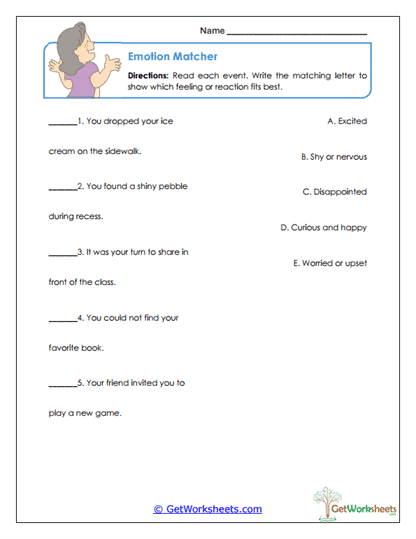
Emotion Matcher
Students read short real-life scenarios and choose the emotion that best fits each situation, encouraging thoughtful interpretation of how people typically respond to certain events. This matching activity deepens their understanding of feelings by requiring them to use contextual clues rather than guesswork. It also supports vocabulary growth as learners distinguish between closely related emotional words. Through careful analysis, students build both inferencing skills and emotional awareness.
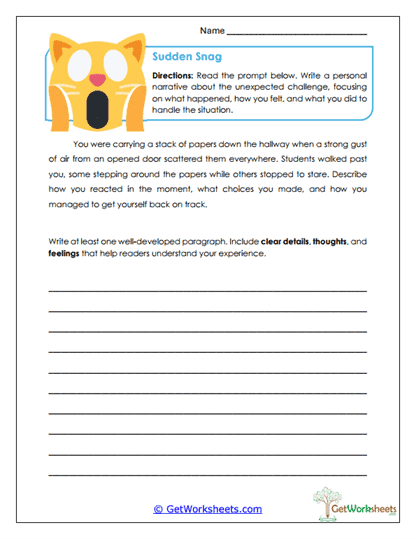
Sudden Snag
This worksheet presents a hallway mishap and asks students to turn the moment into a personal narrative that includes thoughts, feelings, and actions. As they build their stories, learners practice organizing events clearly and incorporating descriptive details. The prompt encourages students to show their responses rather than simply tell them, strengthening narrative voice. Through this work, they gain experience with reflective and emotionally grounded storytelling.
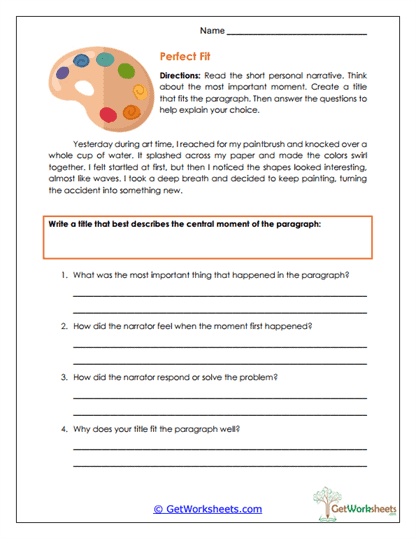
Perfect Fit
Students read a brief personal narrative about a spill in art class that turns into an unexpected opportunity. Afterward, they create a fitting title and answer comprehension questions that probe the character's feelings and the story's resolution. This activity teaches learners to recognize essential narrative moments and articulate how those moments shape meaning. It also helps them evaluate how titles capture a narrative's heart.
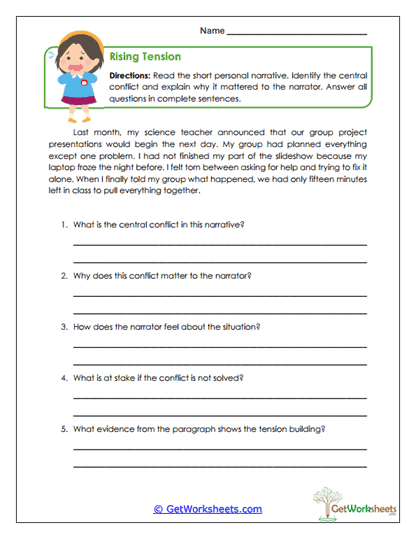
Rising Tension
In this task, students examine a narrative about a group project disrupted by technical issues and answer questions about the conflict. They analyze what makes the situation meaningful, how the narrator feels, and which details reveal rising tension. By using evidence from the text, students strengthen close-reading and interpretive skills. This worksheet helps learners see how conflict functions as the engine of a story.
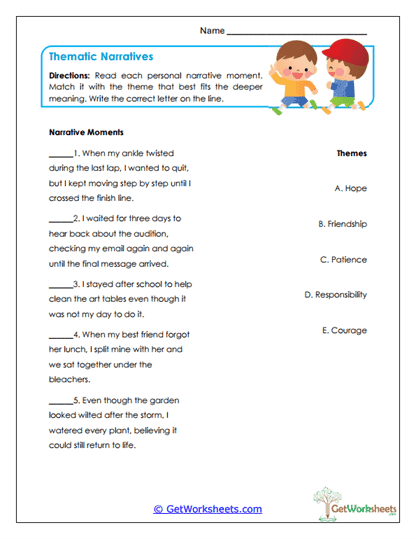
Thematic Narratives
Students study short narrative moments and identify the theme that best reflects each situation's deeper meaning. They must infer how choices, challenges, or actions reveal lessons about topics like responsibility or friendship. This matching task teaches learners to connect concrete details with abstract ideas. It builds foundational skills for analyzing and crafting narratives with purposeful themes.
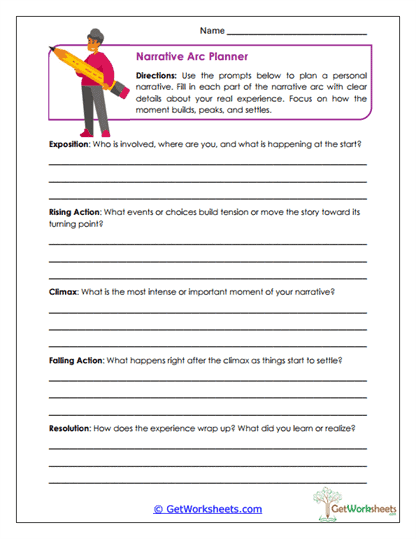
Narrative Arc Planner
This organizer guides students through planning a personal narrative using the five classic stages of story structure. They describe characters, setting, building tension, turning points, and resolution based on real experiences. The worksheet helps students understand how well-planned arcs make narratives more engaging and meaningful. By outlining before writing, learners build stronger sequencing and idea organization.
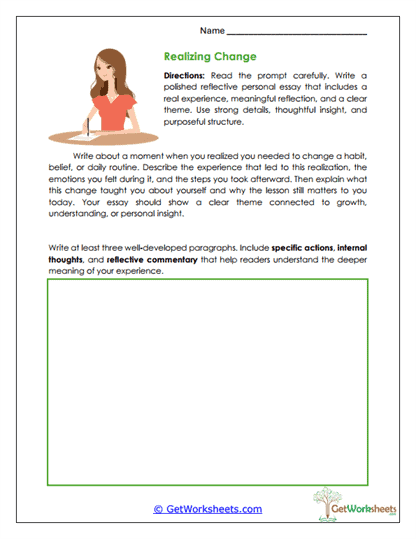
Realizing Change
Students respond to a prompt about a time they recognized the need to change a habit or belief. They explain what led to the realization, how they felt, and what actions they took afterward. This extended writing task encourages deep reflection and meaningful insight. By crafting multiple paragraphs, learners practice developing themes, sustaining organization, and elaborating with emotional detail. It also strengthens their ability to write about personal growth.
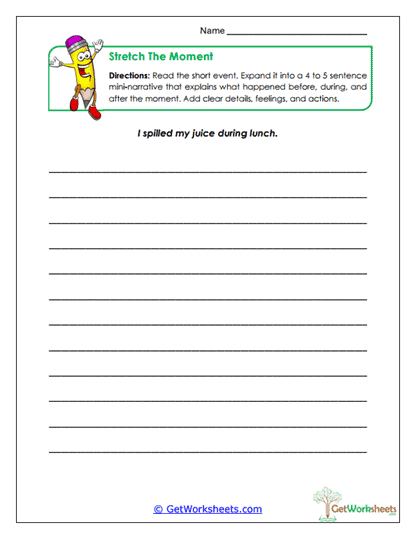
Stretch the Moment
Students expand a simple event-spilling juice at lunch-into a short narrative filled with details and emotion. They describe what happened before, during, and after the moment, learning how to slow down key scenes. This activity teaches elaboration techniques such as sensory description and internal thinking. It helps young writers transform everyday moments into richer, more expressive stories.
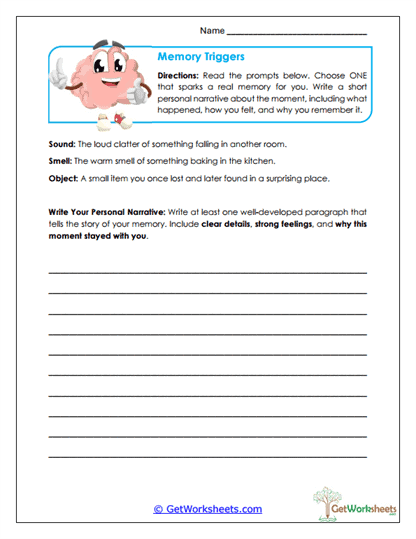
Memory Triggers
Learners choose a sensory prompt-a sound, smell, or object-to spark a personal narrative about a meaningful memory. They explore why the moment stands out, how it made them feel, and what significance it still holds. The task encourages students to connect sensory imagery with storytelling, creating vivid and engaging narratives. It also nurtures reflective thinking and strengthens personal voice.
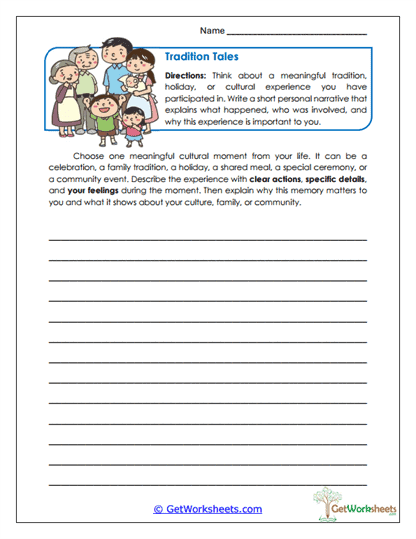
Tradition Tales
Students write a personal narrative centered on a meaningful tradition, celebration, or community event. They describe what happened, who participated, and why the experience matters to them. This task promotes cultural awareness while reinforcing the structure and purpose of personal narratives. By including actions, feelings, and specific details, students learn to craft stories with clarity and emotional depth.
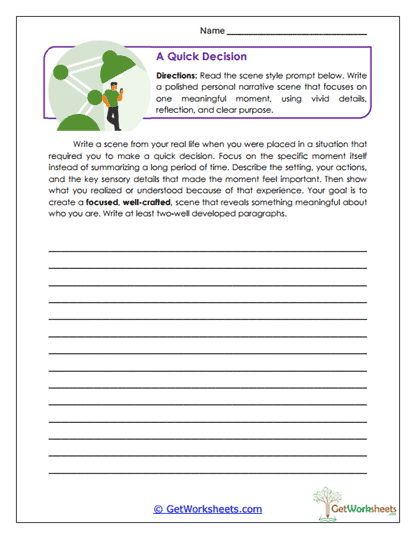
Quick Decision
This worksheet asks students to write a detailed narrative scene about a moment that required a fast, meaningful decision. They use sensory details and specific actions to make the scene vivid while avoiding broad summary. Reflection is also required, prompting students to explain what they learned from the experience. Writing multiple paragraphs helps them develop strong organization and purposeful structure in narrative writing.
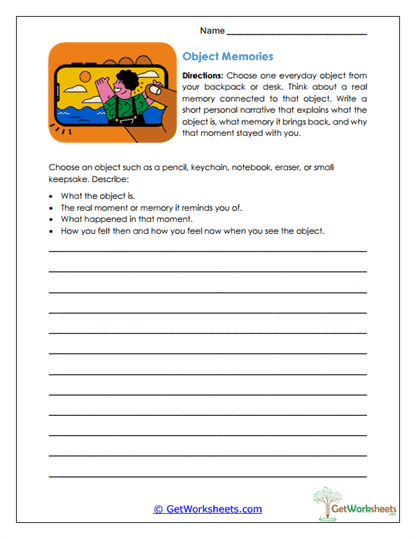
Object Memories
Students choose an everyday object from their desk or backpack and use it as the starting point for a personal narrative. They describe the object, the memory it evokes, and the feelings associated with the moment both then and now. The activity teaches students to use concrete items as anchors for meaningful storytelling. Through descriptive language, reflection, and clear organization, learners deepen their narrative expression.
Bookmark Us Now!
New, high-quality worksheets are added every week! Do not miss out!