Parts of an AI System Worksheets
About This Worksheet Collection
This collection introduces students to the essential building blocks of AI systems and demonstrates how those components work together to solve problems. Through real-world examples such as translation tools, recommendation engines, spam filters, and self-driving cars, learners gain a clearer understanding of how inputs, processing steps, models, outputs, and feedback loops interact. Each activity provides structured practice with reading informational text and analyzing the inner workings of common technologies students encounter every day.
As students move through the worksheets, they build skills in sequencing, vocabulary, error detection, question generation, and cross-application comparison. They learn to identify system parts across diverse domains and recognize how similar structures underlie different AI tools. These tasks support deeper digital literacy, strengthen comprehension of technical processes, and help students develop confidence in discussing how AI systems operate in real-world contexts.
Detailed Descriptions Of These Worksheets
Fact vs. Inference
Students read a passage about language translation AI and sort information into explicit facts and reasonable inferences. They list examples of each and reflect on why distinguishing facts from assumptions matters when studying technology. The activity strengthens analysis of informational text and encourages careful reasoning about AI processes. It also reinforces the importance of evidence-based conclusions.
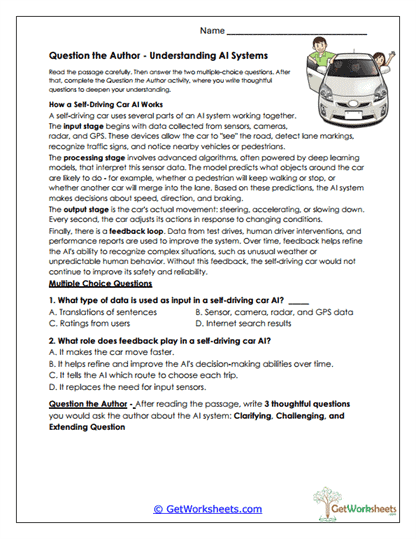
Question the Author
Learners read about self-driving cars and answer multiple-choice questions that check comprehension. They then write clarifying or challenging questions for the author, prompting deeper engagement with the material. This worksheet builds inquiry skills and helps students think critically about technological explanations.
Vocabulary in Context
Students read a passage about movie recommendation systems and answer questions that test understanding of terms such as datasets, algorithms, models, and feedback loops. The task reinforces accurate use of technical vocabulary in context. It also helps learners see how various AI components work together in everyday tools.
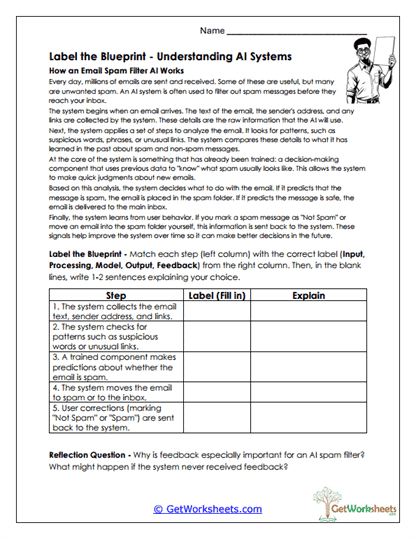
Label the Blueprint
This activity explains how email spam filters operate and asks students to match each step of the workflow with the correct system component. They write explanations to justify their reasoning and answer a reflection question about feedback. The worksheet develops structured thinking about AI processes and highlights the role of each system part.
Step Sequencing
Students reorder scrambled steps describing how a music recommendation AI works. They then apply system part labels to a chatbot example, identifying input, processing, model, output, and feedback. This worksheet builds logical sequencing skills and strengthens understanding of AI workflows.
Error-Injected Text
Learners analyze sentences that contain incorrect descriptions of AI systems and rewrite them accurately. They correct mislabeled components and incorrect sequences, reinforcing precision in technical explanations. This activity strengthens error detection and clear communication.
System Annotations
Students complete cloze-style passages describing medical imaging, online shopping, and smart farming AI systems by adding the correct components. The worksheet highlights shared structures across different fields. It promotes cross-domain understanding and careful analysis of technical information.
System Comparison
Learners compare weather forecasting and language translation systems by examining differences in their inputs and outputs. They answer multiple-choice questions that check comprehension and reasoning. The activity builds comparative thinking and helps students see how the same framework supports diverse AI tasks.
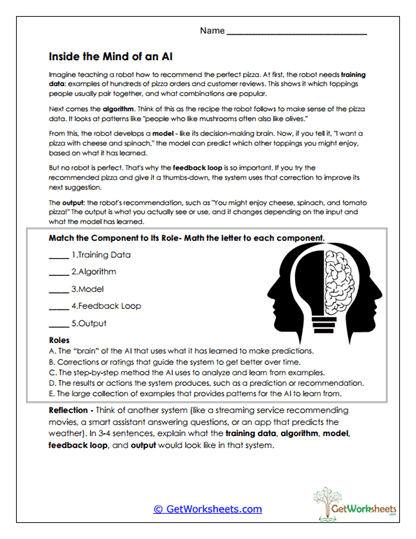
Inside an AI
Students study a pizza-topping recommendation system to understand how training data, algorithms, models, and feedback loops interact. They match each component to its description and apply the concepts to another AI system of their choice. This worksheet deepens conceptual understanding and promotes transfer of knowledge.
Fixing the Flaws
Learners review flawed statements about AI systems and correct them for accuracy. A reflection task reinforces why distinguishing between system parts matters. This activity builds editing skills and strengthens understanding of AI structures.
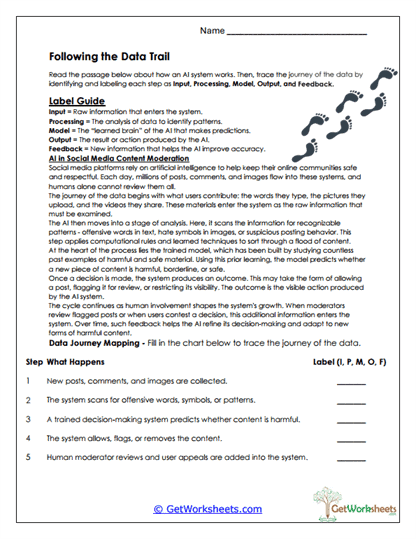
Following the Data Trail
Students read about how social media platforms use AI to moderate content and label each step of the process using system components. They complete a chart mapping the data journey from input to feedback. The worksheet reinforces careful reading and builds understanding of real-world AI safety practices.
AI Mini Case Studies
This worksheet presents short scenarios about self-driving cars, streaming recommendations, and medical imaging. Students identify inputs, models or algorithms, and outputs by annotating each passage. Reflection questions encourage comparison across systems and help students form broader connections about how AI components function.
Bookmark Us Now!
New, high-quality worksheets are added every week! Do not miss out!