Organizing Ideas Logically Worksheets
About This Worksheet Collection
The Organizing Ideas Logically Worksheets collection offers a robust set of activities designed to help students understand how ideas fit together, flow in sequence, and build toward clear communication. Each worksheet highlights a different aspect of organization-from sorting facts and sequencing steps to strengthening transitions and restructuring full paragraphs. Teachers will find this collection useful across a wide range of literacy lessons, as it encourages active thinking, supports structured writing practice, and helps students see how purposeful organization makes reading and writing more effective.
As learners move through the collection, they gain confidence in recognizing patterns, arranging information, and evaluating how well ideas connect. They practice skills such as identifying main ideas, matching evidence to claims, reworking paragraphs for coherence, and selecting logical transitions. These foundational abilities prepare them for more advanced writing, analytical reading, and problem-solving tasks. By the end, students develop a stronger understanding of how clarity and structure support effective communication across subjects.
Detailed Descriptions Of These Worksheets
Category Sort Practice
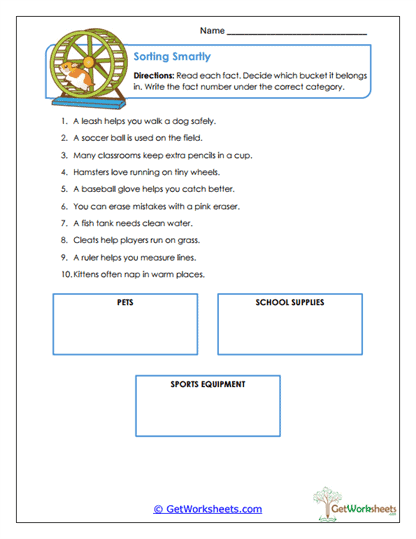
This worksheet invites students to sort ten short factual statements into three specific categories, helping them notice shared characteristics among familiar objects. As they classify each detail, learners develop stronger reasoning skills and a clearer sense of how grouping information improves comprehension. The exercise provides an accessible introduction to logical organization while reinforcing close reading.
Step Sequence Builder
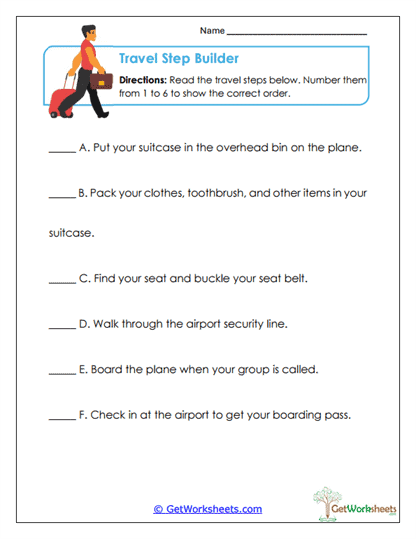
Students examine six steps related to traveling through an airport and arrange them in the order that makes the most sense. By evaluating how each action depends on the one before it, learners sharpen their understanding of chronological flow and procedural organization. This activity supports comprehension of real-world processes and prepares students to write clearer step-by-step explanations. It also strengthens their ability to analyze how order influences meaning.
Scrambled Paragraph Fix
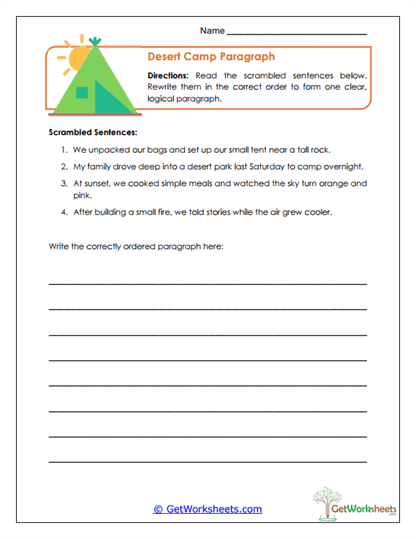
In this task, learners piece together four mixed-up sentences about a family camping trip until the paragraph reads smoothly. Students must rely on time cues, context, and narrative logic to determine which sentence should come first and how the rest should follow. Once they reconstruct the paragraph, they rewrite the final version to reinforce correct sequencing and coherence. The activity helps them recognize how well-organized sentences form a clear narrative.
Topic Sentence Selector
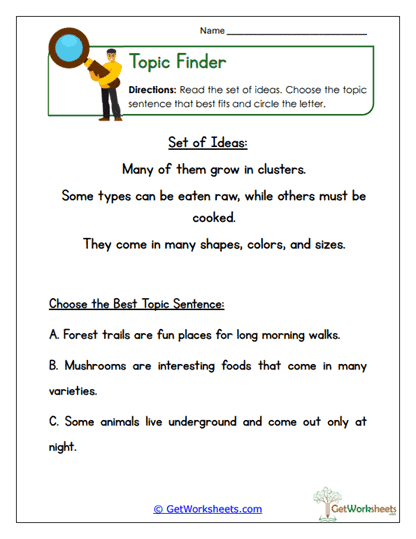
Here, students study several detail sentences and decide which topic sentence best captures the central idea. The worksheet encourages them to evaluate relevance and determine how a strong opening can guide a paragraph's direction. By comparing multiple options, learners sharpen their ability to identify main ideas. This builds an essential foundation for both reading comprehension and effective writing.
Transition Word Practice
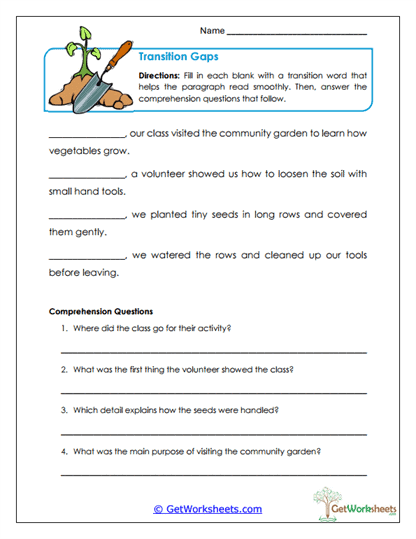
Students complete a paragraph about planting seeds by inserting appropriate transition words that enhance flow and clarity. Afterward, they answer comprehension questions that help reinforce their understanding of sequence and purpose. This combined approach teaches how transitions connect ideas logically and guide the reader through each step. By practicing both reading and revising, learners become more confident in building smooth paragraphs.
Strong Support Matching
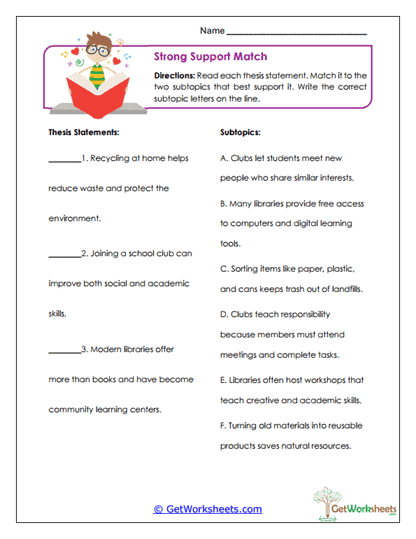
In this matching activity, students review three thesis statements and choose the two subtopics that best support each one. They learn how strong evidence aligns with a central claim and why relevance matters in explanatory and argumentative writing. The exercise encourages thoughtful evaluation of ideas and helps students understand how organized support strengthens overall communication. It lays groundwork for more advanced composition tasks.
Paragraph Cohesion Fix
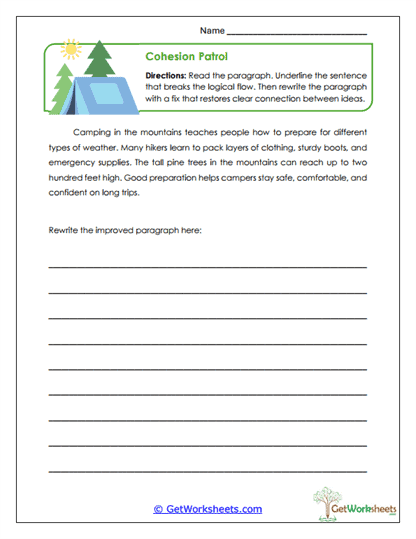
Students read a short paragraph about camping and determine which sentence disrupts the logical flow. After identifying the sentence that does not belong, they rewrite the paragraph to improve unity and coherence. This revision practice helps learners see how each sentence must contribute meaningfully to the whole. By refining the passage, they build stronger editorial judgment and writing clarity.
Outline to Paragraph
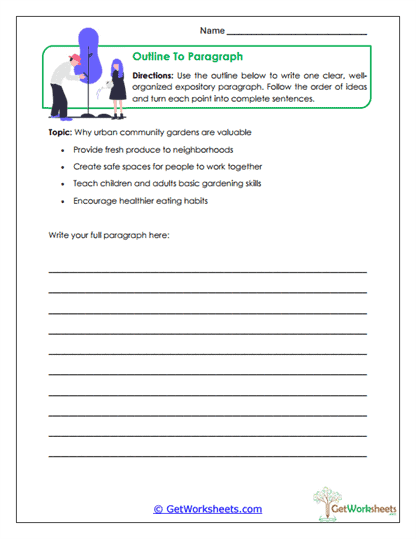
Learners take a four-point outline about urban community gardens and expand it into a polished expository paragraph. They practice transforming brief notes into full sentences while maintaining the logical order established by the outline. This process helps them understand how outlines support organized writing and enhance clarity. The activity also builds confidence in developing connected ideas from structured planning.
Text Structure Detective
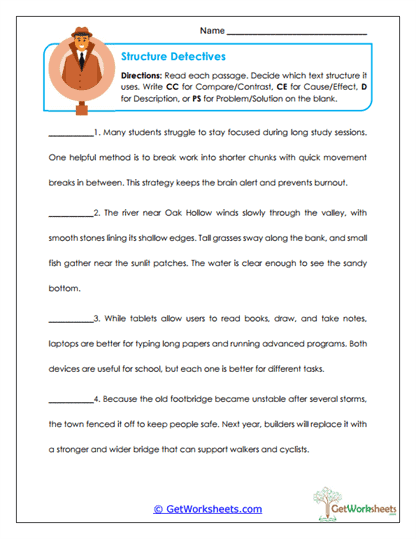
Students examine four short informational passages and determine whether each follows a Compare/Contrast, Cause/Effect, Description, or Problem/Solution structure. By identifying cues within the text, they strengthen their understanding of how authors organize ideas to shape meaning. This awareness supports more accurate reading comprehension and prepares students to analyze longer informational texts. It also deepens their ability to recognize structural patterns across content areas.
Middle Sentence Match
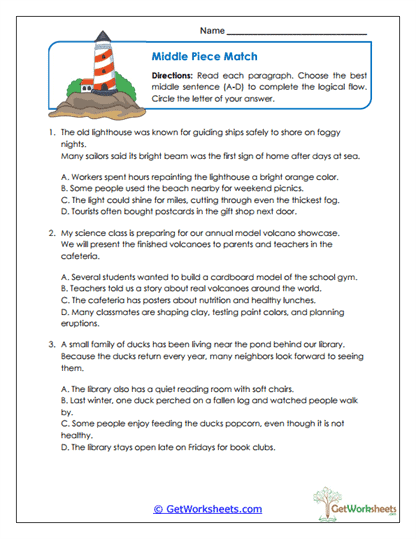
In this exercise, learners evaluate several middle-sentence options to determine which best connects a given beginning and ending sentence. They consider how ideas flow and what information bridges the gap logically. This activity strengthens comprehension and encourages careful reading of subtle relationships between ideas. By selecting the most coherent option, students refine their understanding of paragraph development.
Transition Upgrade Practice
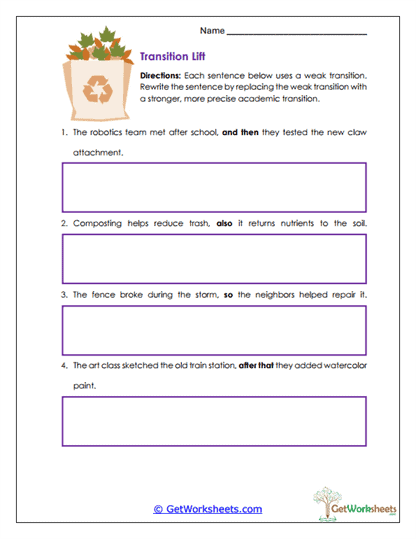
Students revise sentences that rely on basic transitions, replacing them with stronger and more precise academic connectors. This work helps them understand how refined transitions clarify relationships between ideas and elevate writing quality. By practicing sentence-level revision, they develop greater control over coherence and fluency. The worksheet builds essential editing skills for more advanced writing tasks.
Structure Transformation
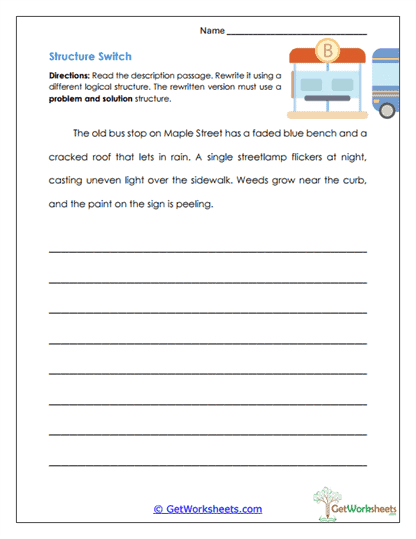
Learners read a descriptive paragraph about an aging bus stop and rewrite it using a problem-solution format. They identify issues within the scene and reorganize them into a clearer structure that leads logically to a proposed remedy. This activity demonstrates how altering text structure changes meaning and improves clarity. It also enhances students' ability to reshape information with a specific purpose in mind.
Bookmark Us Now!
New, high-quality worksheets are added every week! Do not miss out!