Opposites and Contrasts Worksheets
About This Worksheet Collection
This Opposites and Contrasts worksheet collection gives students a wide range of activities that strengthen their understanding of antonyms, contrasting ideas, and how writers use differences to create meaning. Through sentence rewriting, contrast signal-word identification, creative passages, analogy work, idiom opposites, and compare-and-contrast writing, learners explore how opposites function across vocabulary, grammar, reading comprehension, and composition.
Across the collection, students practice essential literacy skills such as context-clue reasoning, vocabulary precision, text analysis, tone shifting, and paragraph rewriting. They also build critical thinking as they analyze opposing ideas, distinguish similarities from differences, and creatively express contrast in both fiction and nonfiction contexts. These worksheets support deeper comprehension of how antonyms and contrasts enhance clarity, structure, and expressive power in writing and communication.
Detailed Descriptions Of These Worksheets
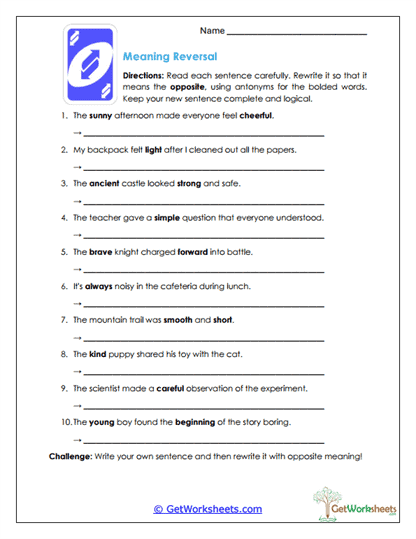
Meaning Reversal
Students replace bolded words with antonyms to rewrite each sentence with the opposite meaning. They ensure the rewritten sentences remain logical and grammatically correct. This strengthens understanding of antonyms, sentence structure, and how one word can shift an idea entirely.
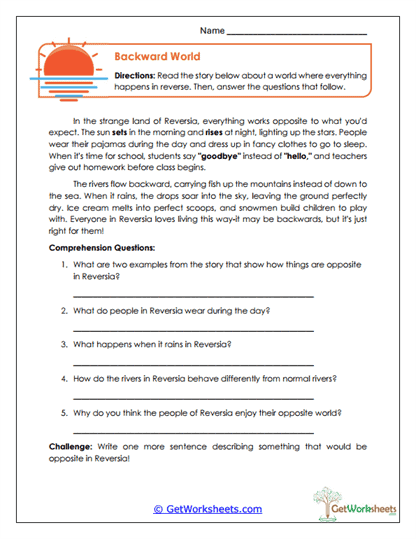
Backward World
Learners explore a humorous fictional world where everything happens in reverse. They identify opposites embedded in the story and answer comprehension questions about how this reversed logic works. The activity supports inference, contrast recognition, and creative thinking.
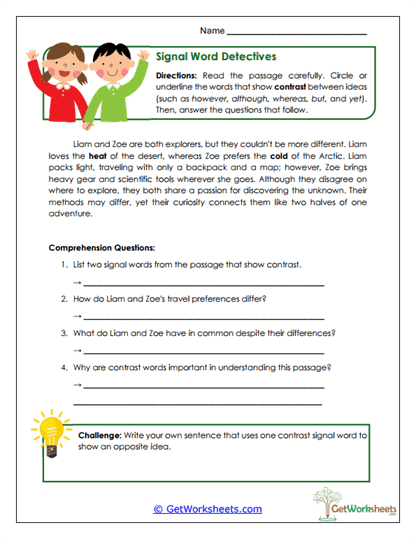
Signal Word Detectives
Students identify contrast signal words-such as however, although, and whereas-within a passage. Then, they answer questions about how these words reveal differences between ideas or characters. This builds text-analysis skills and understanding of compare-and-contrast structure.
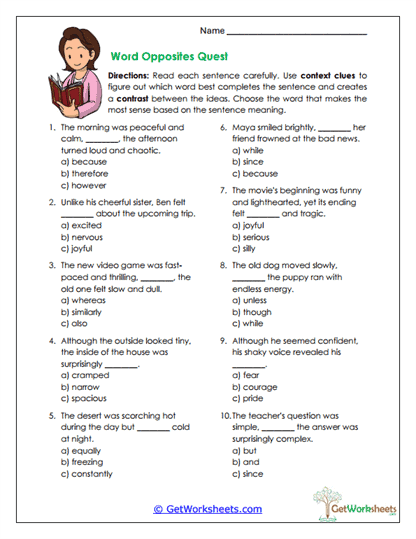
Word Opposites Quest
Students choose the correct antonym-based option to complete each sentence. This reinforces vocabulary knowledge and encourages careful reading for context clues. Learners deepen their ability to recognize contrast through precise word selection.
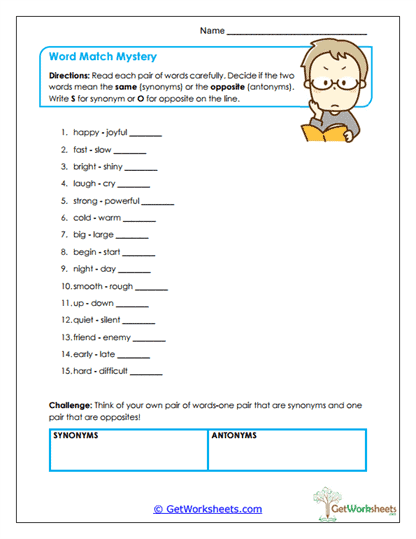
Word Match Mystery
Learners examine pairs of words to determine whether they are synonyms (S) or antonyms (O). They label each pair and create their own examples. This strengthens classification skills and understanding of word relationships.
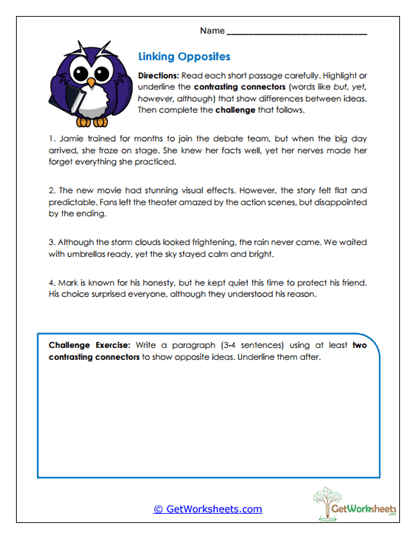
Linking Opposites
Students highlight contrast connectors in short passages and analyze how they function. A writing challenge invites them to craft their own paragraph using multiple contrast connectors. This reinforces cohesive writing and comprehension of idea relationships.
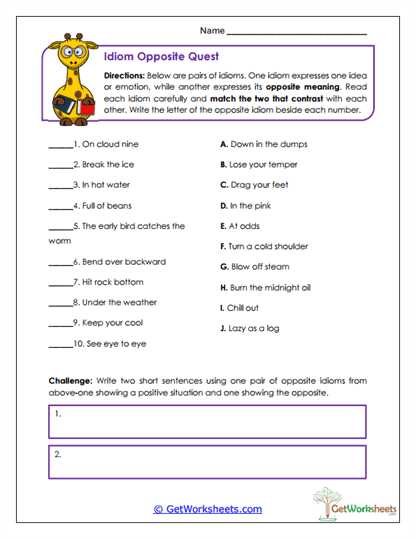
Idiom Opposite Quest
Learners match each idiom to its opposite idiom, exploring how figurative language conveys contrasting meanings. A creative writing extension asks students to use both idioms in sentences. This strengthens figurative language comprehension and vocabulary reasoning.
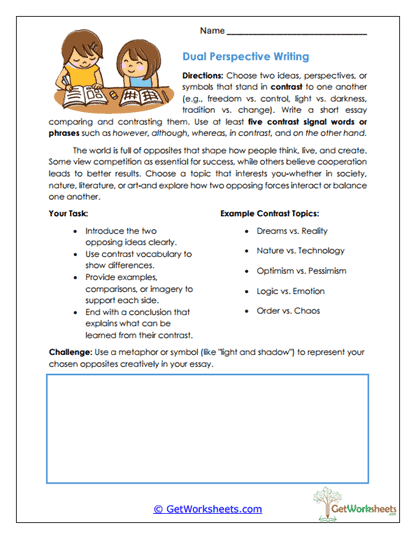
Dual Perspective Writing
Students write a short essay comparing and contrasting two opposing ideas or symbols. They use contrast vocabulary and clear structure to express differences. This task enhances organization, critical thinking, and effective compare-and-contrast writing.
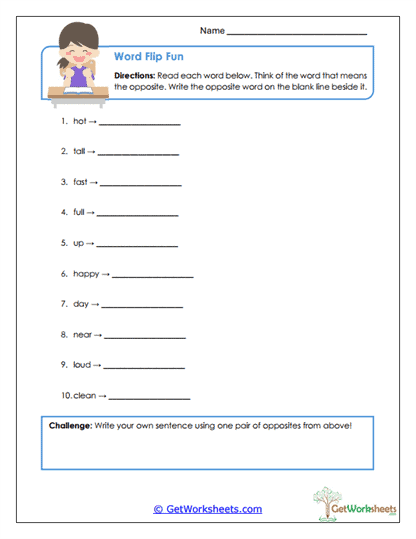
Word Flip Fun
Students write antonyms for a list of simple words and then use one pair in a sentence. This reinforces foundational vocabulary and helps students apply word relationships in context.
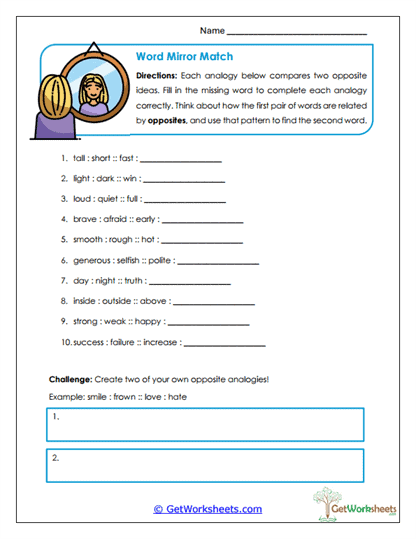
Word Mirror Match
Learners complete opposite-based analogies by identifying the antonym that correctly completes each pattern. They then create their own analogies, strengthening logical reasoning and vocabulary mastery.
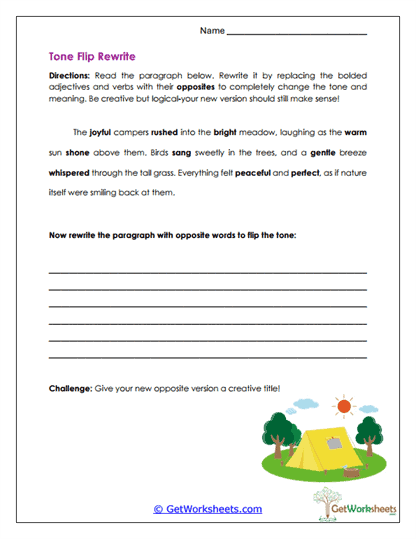
Tone Flip Rewrite
Students transform a positive, uplifting paragraph into a negative or gloomy version by replacing key words with their opposites. This helps them understand tone, mood, and the power of vocabulary choices. A creative title challenge encourages expressive writing.
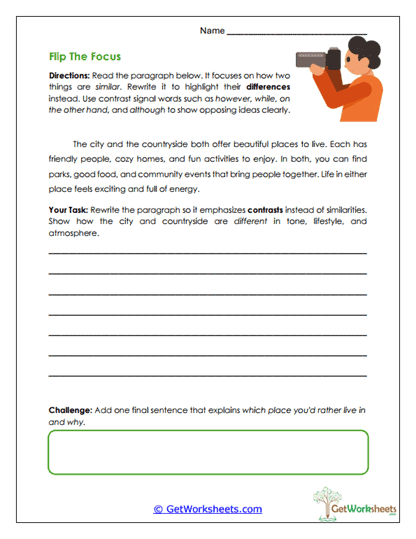
Flip the Focus
Learners rewrite a similarity-focused paragraph so it emphasizes contrast instead, using signal words such as however and on the other hand. This strengthens paragraph rewriting, structural awareness, and compare-and-contrast expression. A final reflective sentence adds personal connection.
Bookmark Us Now!
New, high-quality worksheets are added every week! Do not miss out!