Non-Standard Units of Measure Worksheets
-
Choosing Measuring Tools
-
Choosing the Best Unit
-
Comparing Large Objects
-
-
Drawing Non-Standard Units
-
Estimating with Non-Standard Units
-
Measurement Fill-in-the-Blanks
-
Measurement Logic – True or False
-
Measurement Riddles – What Am I?
-
Measuring Perimeter with Units
-
Object Length Matching
-
Ordering by Length
-
Solving Measurement Puzzles
About This Worksheet Collection
The Non-Standard Measurement Units collection introduces young learners to the foundational concepts of measurement through relatable, hands-on activities that use familiar objects instead of rulers or scales. These worksheets encourage children to compare, estimate, and reason about size using items like paperclips, toy cars, blocks, and hand spans. By measuring with everyday objects, students build a concrete understanding of what it means to quantify length and distance before transitioning to standard units.
Through fun comparisons, drawing exercises, riddles, and logic puzzles, learners develop spatial reasoning, critical thinking, and problem-solving skills. The collection supports early math development by helping students connect math vocabulary to real-world contexts and make sense of measurable attributes like length, perimeter, and proportion. It's an engaging and accessible introduction to the logic and language of measurement.
Detailed Descriptions Of These Worksheets
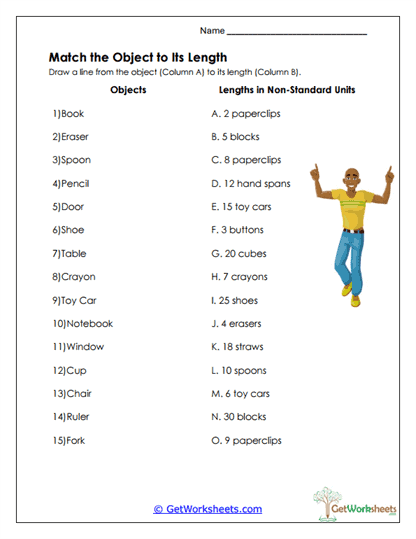
Object Length Matching
Students match common objects to their measured lengths in non-standard units such as paperclips or toy blocks. This matching task helps learners visualize relative size, make logical associations, and understand that familiar items can serve as measurement tools. The activity builds observation, comparison, and early reasoning skills.
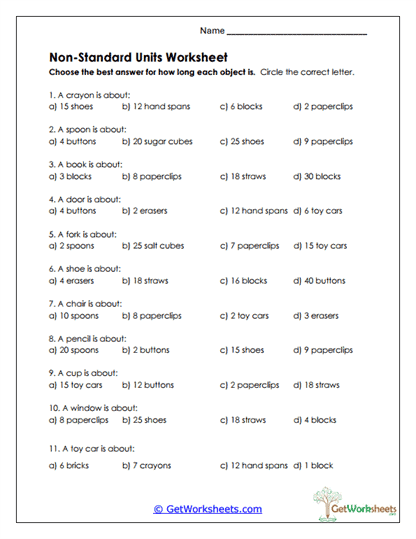
Estimating with Non-Standard Units
Learners select the most reasonable length estimate for each object using choices like hand spans or toy cars. This multiple-choice worksheet promotes estimation, reasoning, and decision-making while reinforcing measurement vocabulary. Students strengthen number sense and develop intuition about length and scale.
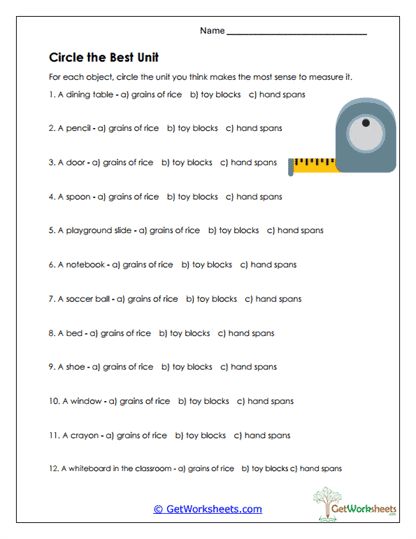
Choosing the Best Unit
Students decide which non-standard unit is most appropriate for measuring different objects, circling the best choice for each. The activity highlights the importance of scale and context in measurement. Learners apply logical thinking and build an understanding of why certain tools are best suited for specific tasks.
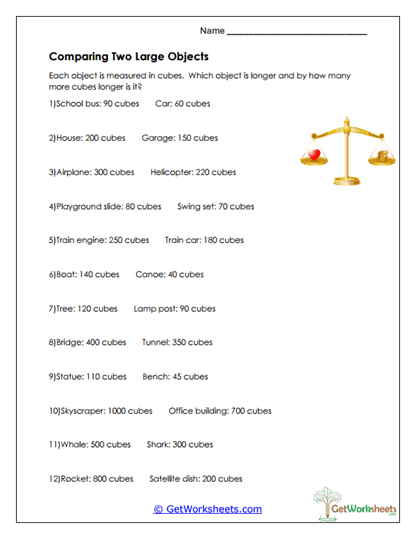
Comparing Large Objects
In this comparison exercise, students determine which of two large objects is longer and by how many cube units. They practice subtraction in a measurement context, reinforcing arithmetic reasoning and understanding of size relationships. The worksheet supports both quantitative comparison and conceptual growth.
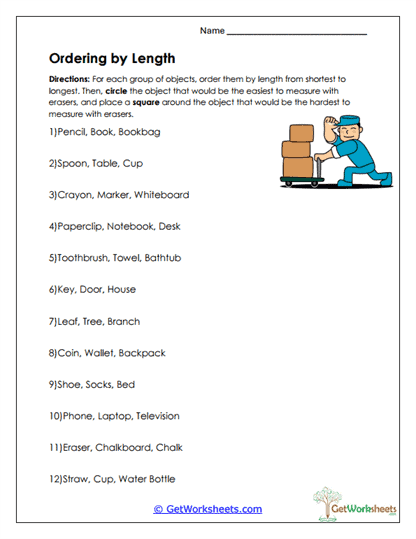
Ordering by Length
Students order groups of familiar objects from shortest to longest and explain which items are easiest or hardest to measure. The activity strengthens comparative reasoning and sequencing skills. Learners gain practical insight into measurement hierarchy and tool selection.
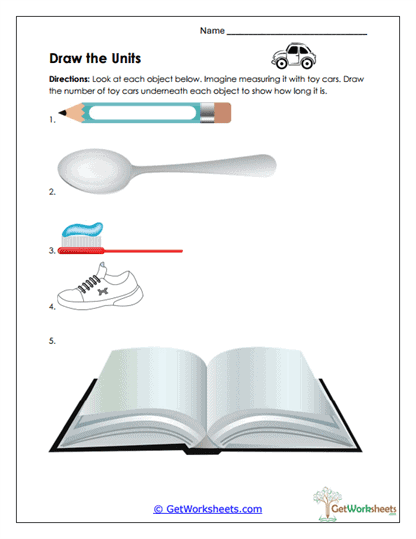
Drawing Non-Standard Units
This creative task asks students to draw toy cars beneath pictures of objects to represent their lengths. The exercise emphasizes repeated units, iteration, and visualization. It fosters fine motor coordination while reinforcing conceptual understanding of how length is represented through repeated measurement.
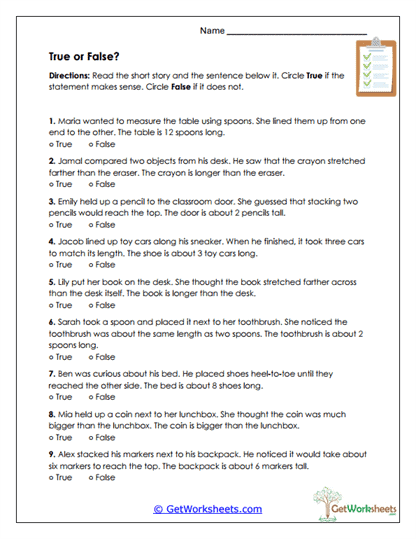
Measurement Logic - True or False
Learners read short scenarios about object lengths and decide if the statements make sense. The worksheet cultivates critical thinking and comprehension as students evaluate plausibility. It helps bridge literacy and math by applying logic to real-world measurement examples.
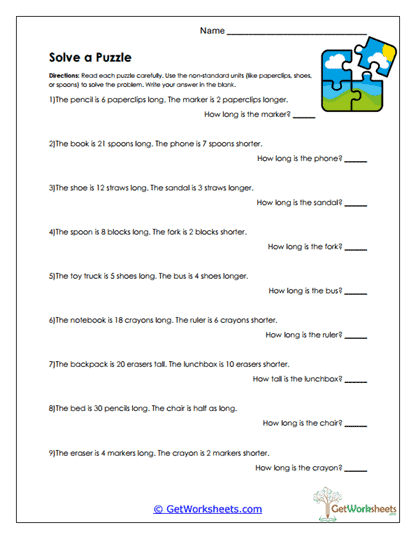
Solving Measurement Puzzles
Students solve riddle-style problems to find missing lengths using clues about how objects compare in non-standard units. The puzzles combine arithmetic with logical deduction. This engaging format strengthens reasoning, addition, and subtraction within a playful, problem-solving framework.
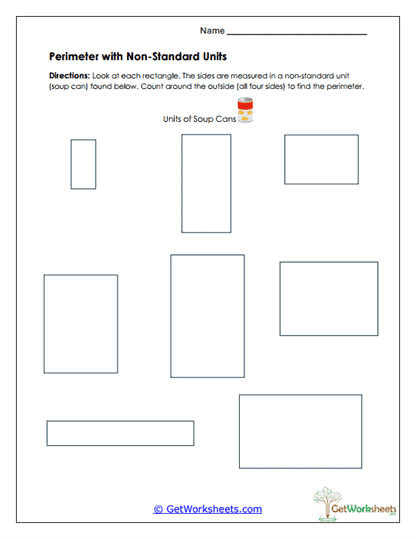
Measuring Perimeter with Units
Students find the perimeter of rectangles using soup cans as non-standard units. By counting around all sides, learners build understanding of total length and geometric relationships. The activity introduces perimeter through hands-on, visual reasoning that makes abstract ideas concrete.
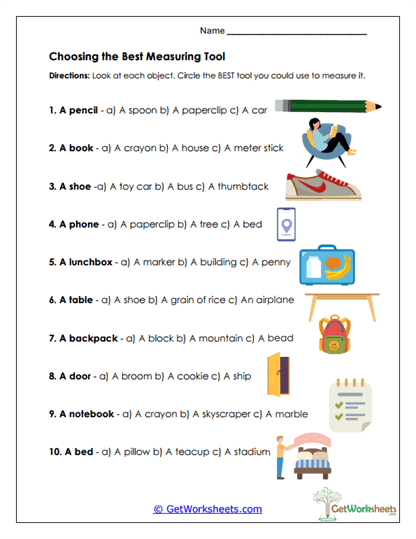
Choosing Measuring Tools
Learners select the most appropriate measuring tool for each object, linking everyday items to practical applications. The worksheet promotes reasoning about scale and context. It encourages decision-making and prepares students for standard measurement by emphasizing tool selection.
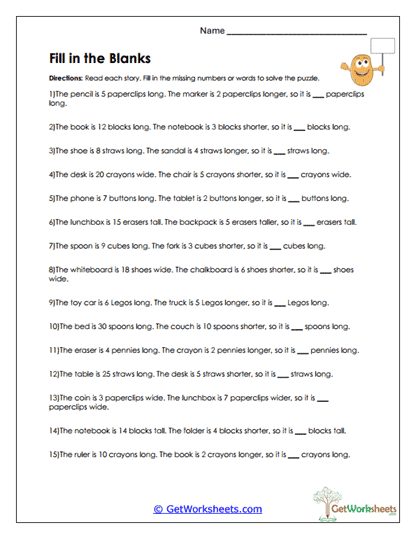
Measurement Fill-in-the-Blanks
Students complete short comparison sentences by filling in missing words or numbers. The task develops reading comprehension and contextual reasoning as learners infer how much longer or shorter one object is than another. It reinforces measurement vocabulary and comparative logic.
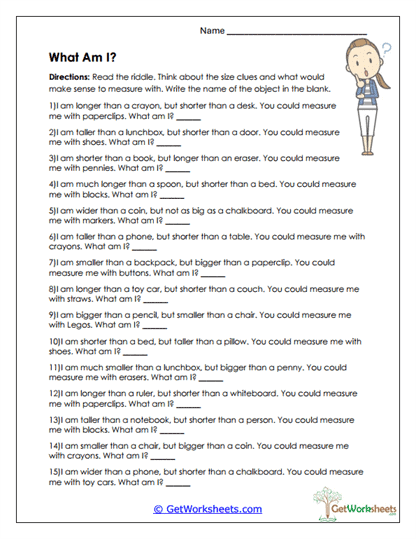
Measurement Riddles - What Am I?
This riddle-based worksheet invites students to use clues about size and measurement tools to identify mystery objects. Learners apply estimation, reasoning, and language skills while reinforcing understanding of non-standard units. It's a fun, inquiry-based activity that builds both logic and math vocabulary.
Bookmark Us Now!
New, high-quality worksheets are added every week! Do not miss out!