Narrative Voice and Tone Worksheets
About This Worksheet Collection
This Narrative Voice and Tone worksheet collection helps students understand how authors shape a story's emotional impact, personality, and style. Through tone identification, voice creation, rewriting tasks, perspective shifts, and bias analysis, learners explore how word choice, point of view, and stylistic decisions influence the reader's experience. These worksheets strengthen both analytical and creative skills by giving students opportunities to interpret tone in existing texts and craft their own narrative voices with intentionality.
Across the collection, students learn to identify subtle emotional cues, rewrite passages in new tones, sort vocabulary by connotation, and manipulate style to match audience or purpose. They also practice switching point of view, analyzing biased language, and experimenting with expressive, consistent narrator voices. These activities build strong foundations for narrative writing, literary analysis, and understanding author craft.
Detailed Descriptions Of These Worksheets
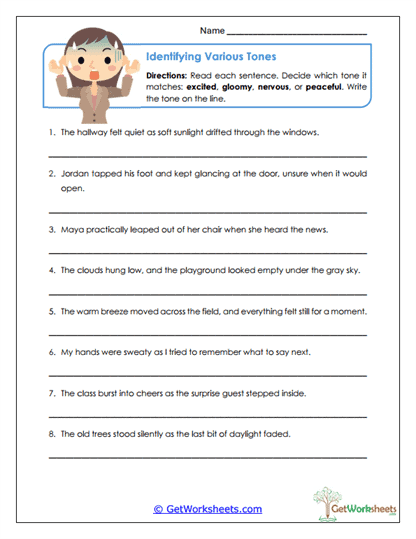
Tone Identifier
Students read individual sentences and select the tone that best matches each one-such as excited, gloomy, nervous, or peaceful. The activity strengthens inferential reasoning and helps learners identify emotional cues through word choice and context. It builds confidence in analyzing tone quickly and accurately.
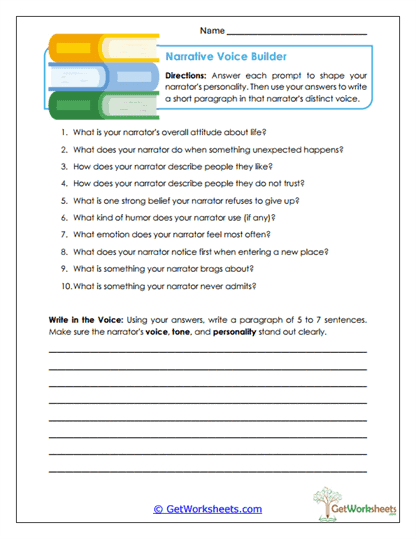
Voice Builder
Learners answer guided questions to construct a unique narrator voice, considering personality traits, emotional tendencies, humor style, and attitude. They then write a paragraph that demonstrates this voice consistently. This exercise deepens understanding of narrator perspective and creative voice development.
Tone Rewriting Practice
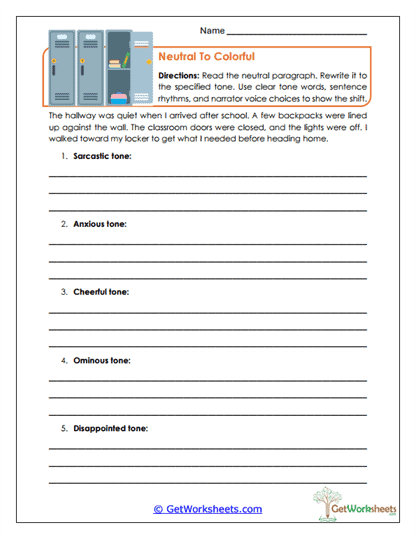
Students rewrite the same neutral paragraph in five different tones-sarcastic, anxious, cheerful, ominous, and disappointed. They explore how tone shifts through vocabulary, pacing, sentence rhythm, and narrator attitude. The task builds revision flexibility and tone-control skills.
Three Voice Rewrite
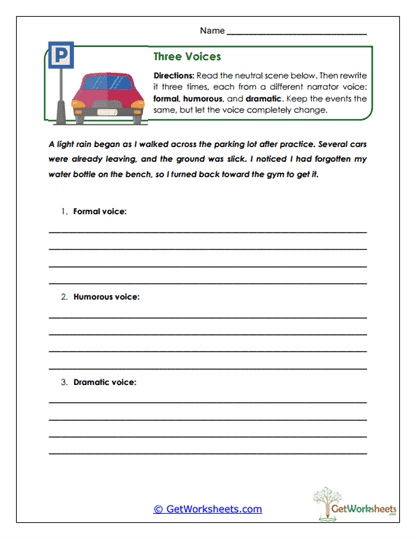
Students rewrite a short neutral scene in three voices: formal, humorous, and dramatic. This side-by-side comparison shows how voice changes storytelling. Learners practice adjusting word choice and sentence structure to create distinct narrative styles.
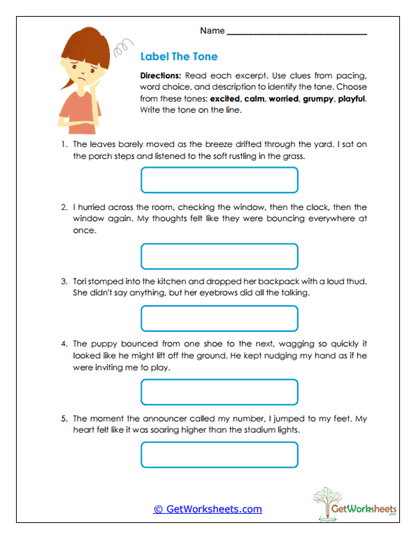
Tone Labeling
Learners read short excerpts and label them with tones like excited, calm, worried, grumpy, or playful. This activity reinforces tone recognition by training students to notice pacing, descriptive cues, and subtle emotional signals in narrative writing.
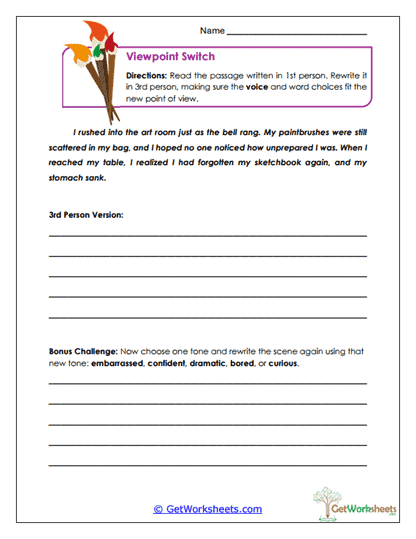
Viewpoint Switch
Students rewrite a first-person passage into third person, maintaining appropriate tone and voice. Then they rewrite the same scene in a new tone (such as embarrassed, confident, or dramatic). This layered activity teaches how point of view and tone work together in narrative writing.
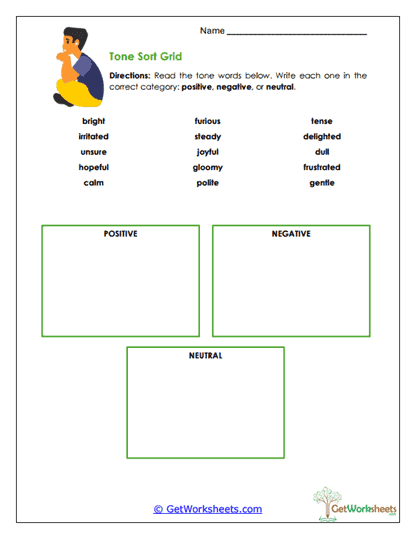
Tone Sort Activity
Students sort tone words into positive, negative, and neutral categories. This develops emotional vocabulary, builds understanding of connotation, and strengthens recognition of nuanced tone words. It provides a foundation for later tone analysis tasks.
Bias and Tone Analyzer
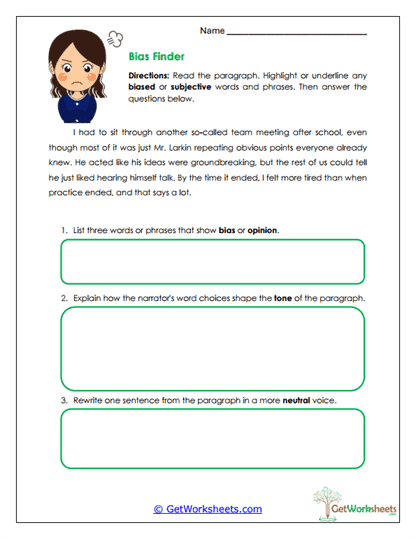
Learners highlight biased or subjective language in a paragraph and analyze how those choices shape tone. They then rewrite one sentence neutrally. This activity strengthens critical reading, helps students recognize bias, and reinforces how word choice influences tone.
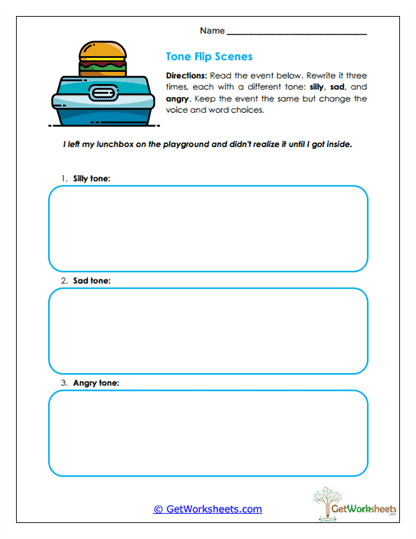
Tone Flip Writing
Students rewrite the same event three times using different tones-silly, sad, and angry. This teaches how drastically tone shapes mood and meaning. Learners experiment with expressive vocabulary and narrative style to convey emotional shifts.
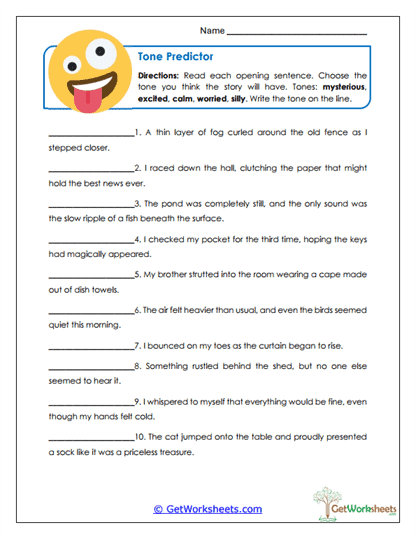
Tone Prediction
Students read opening sentences and predict the tone the full story will likely take. They choose from tones such as mysterious, excited, or worried. This worksheet builds anticipatory reading skills and shows how authors establish tone from the beginning.
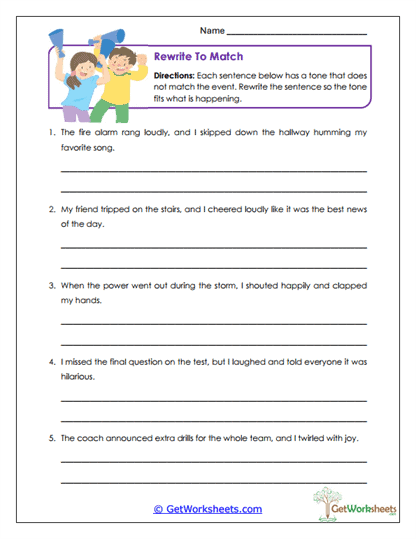
Tone Match Rewrite
Learners revise sentences in which the tone does not match the event. They rewrite each sentence so tone and situation align realistically. This activity strengthens emotional accuracy, word-choice decision-making, and tone consistency.
Diary vs. News Rewrite
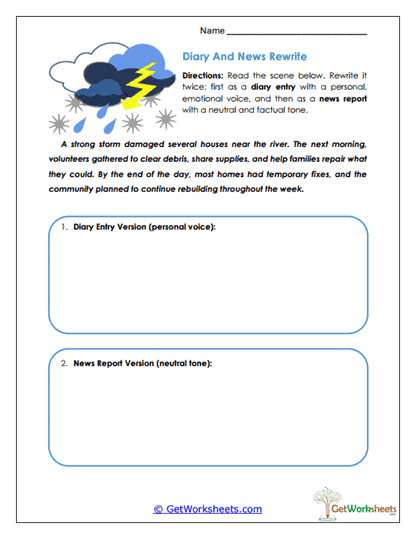
Students rewrite a scene twice-once as a diary entry and once as a news report. This highlights differences between subjective, emotional narration and objective, factual reporting. The activity builds audience awareness, voice control, and stylistic adaptability.
Bookmark Us Now!
New, high-quality worksheets are added every week! Do not miss out!