Missouri Compromise Worksheets
About This Worksheet Collection
This Missouri Compromise worksheet set offers educators a well-rounded collection of activities that help students explore one of the most pivotal legislative agreements in early U.S. history. The worksheets guide learners through political debates, regional tensions, key figures, vocabulary, and the broader implications of the 1820 compromise. With a versatile mix of sourcing tasks, reflection prompts, comparisons, quizzes, and sequencing exercises, the collection supports both content mastery and meaningful historical inquiry.
Throughout these activities, students strengthen essential academic skills such as interpreting perspectives, distinguishing fact from opinion, analyzing cause and effect, and constructing evidence-based written responses. They also deepen their understanding of sectional conflict, federal policymaking, and the delicate balance that shaped national decisions in the antebellum period. By engaging with varied formats, learners develop historical literacy, critical thinking, and the ability to connect past compromises to modern civic challenges.
Detailed Descriptions Of These Worksheets
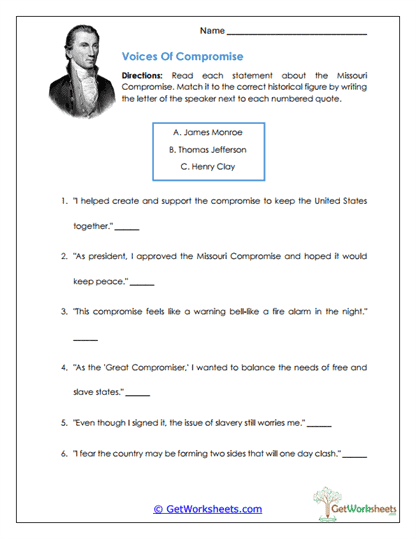
Voices of Compromise
Students read quotations from key leaders and match each one to the correct historical figure, sharpening their ability to attribute ideas accurately. As they compare tone and meaning, learners develop stronger sourcing skills and a deeper understanding of political perspectives surrounding the Missouri Compromise. The task encourages close reading and reinforces knowledge of early national debates. It also helps clarify how leaders differed in their concerns about unity, expansion, and slavery.
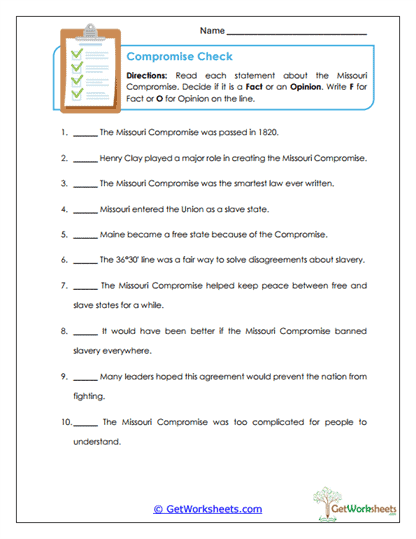
Compromise Check
Learners label each of ten statements as Fact or Opinion, helping them practice distinguishing objective information from interpretation. Each item prompts students to think critically about claims related to the Missouri Compromise and its consequences. By evaluating historical statements, students build accuracy in reading and hone media literacy. The activity strengthens reasoning skills while reinforcing essential content.
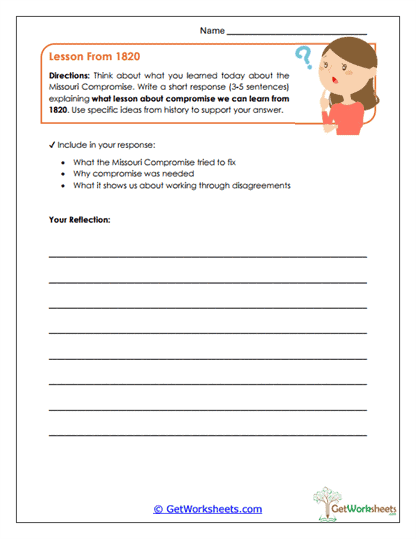
Lesson from 1820
Students write a brief reflection explaining what the Missouri Compromise teaches about conflict and cooperation. They consider why lawmakers sought compromise, what problems it attempted to resolve, and how its lessons apply to resolving disagreements. This encourages thoughtful connections between past events and modern civic ideas. The response format supports clear writing grounded in evidence.
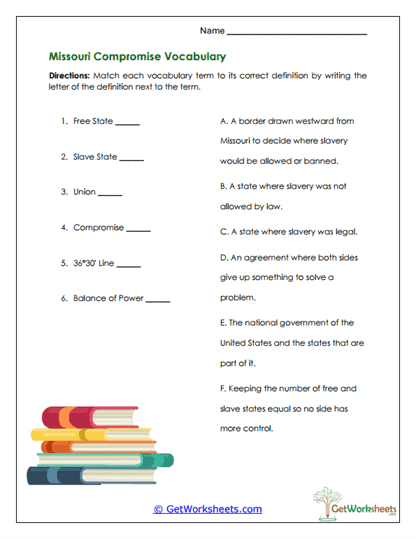
Missouri Compromise Vocabulary
Learners match key terms linked to the Missouri Compromise with their correct definitions, reinforcing academic language related to sectional conflict. Each match helps clarify important ideas such as free states, slave states, and the 36°30′ boundary. The activity builds terminology confidence and strengthens content understanding. It also supports long-term retention of foundational historical concepts.
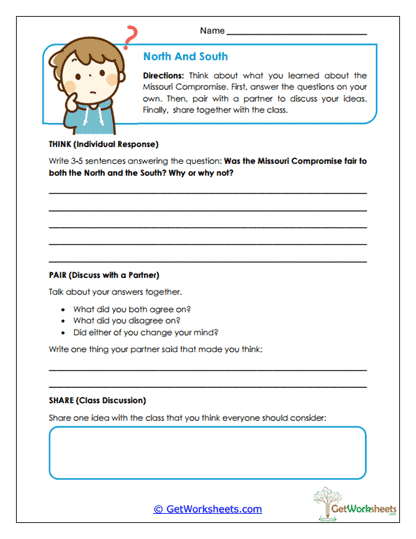
North and South
Students participate in a THINK-PAIR-SHARE exercise centered on whether the Missouri Compromise was fair to both regions. They first record individual thoughts, then exchange ideas with a partner, and finally contribute to a larger discussion. This structured format promotes collaboration and thoughtful civic dialogue. Learners evaluate fairness using evidence and consider multiple viewpoints.
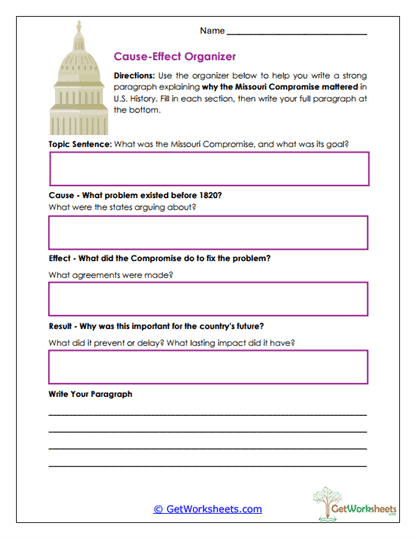
Cause-Effect Organizer
In this worksheet, students explore why the Missouri Compromise mattered by mapping out the causes and consequences surrounding it. After identifying the problem, the agreement, and its results, they write a cohesive paragraph explaining its significance. This structure helps learners understand historical causation with clarity. The activity also supports organized, evidence-based writing.
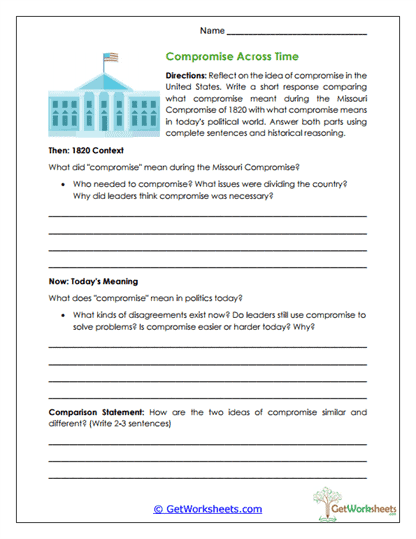
Compromise Across Time
Students compare the idea of compromise in 1820 with how compromise functions in modern politics. They answer targeted questions that encourage them to analyze conflict in both eras. A final comparison statement asks them to synthesize similarities and differences. The worksheet strengthens comparative reasoning and deepens civic understanding.
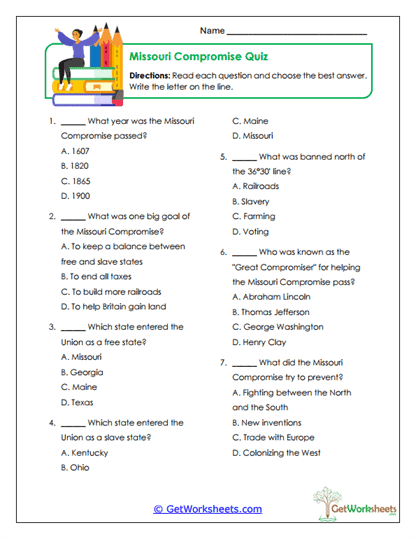
Missouri Compromise Quiz
This multiple-choice quiz checks students' knowledge of essential facts, including the year the compromise passed, key figures, and major outcomes. Learners practice recall and comprehension as they select correct answers. The format works well for review or quick assessment. It supports accuracy and reinforces understanding of major sectional issues.
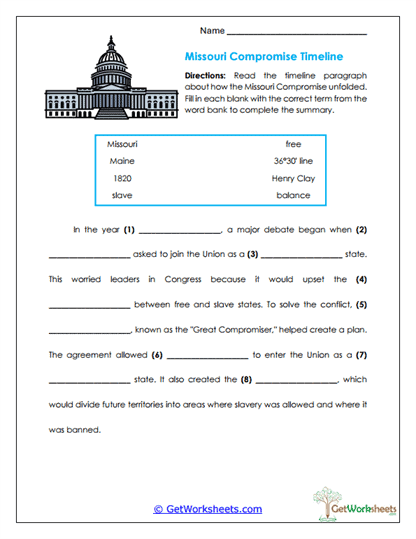
Missouri Compromise Timeline
Students complete a cloze-style paragraph summarizing how the Missouri Compromise unfolded from Missouri's statehood request to the establishment of the 36°30′ line. Each filled-in blank requires them to apply vocabulary and sequencing skills. The task helps solidify understanding of how events progressed. It also builds confidence in summarizing complex historical developments.
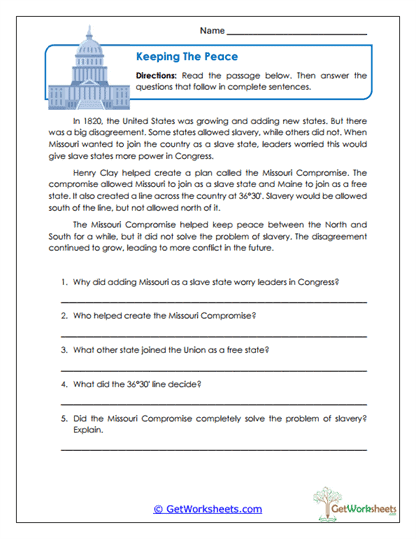
Keeping the Peace
Learners read a short passage explaining how the Missouri Compromise attempted to resolve tensions between free and slave states. They answer comprehension questions that require identifying details and evaluating the compromise's limits. Students also reflect on whether the legislation truly addressed the root issues. The activity strengthens reading comprehension and historical thinking.
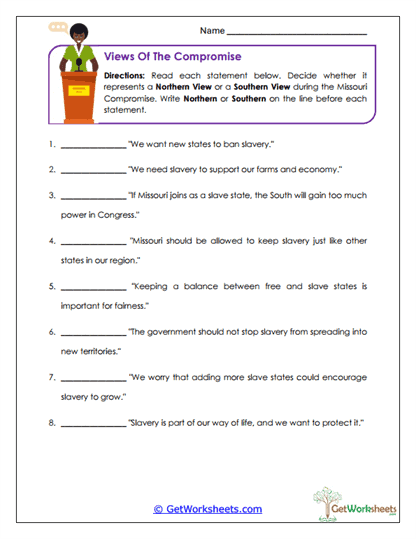
Views of the Compromise
Students review statements representing Northern or Southern viewpoints and classify each accordingly. By analyzing arguments about economics, politics, and slavery, they deepen their understanding of sectional perspectives. The worksheet builds skills in identifying point of view and interpreting competing claims. Its clear structure also supports meaningful classroom discussion.
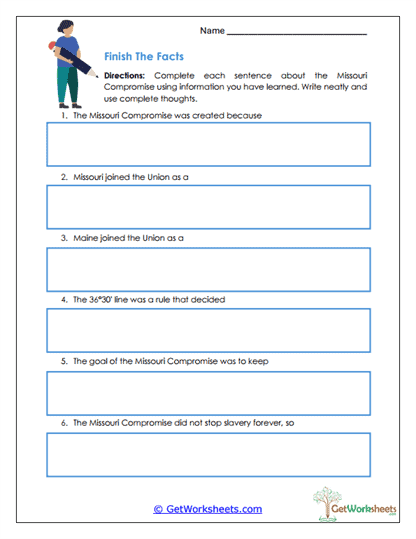
Finish the Facts
Learners complete informational sentence starters that reinforce key facts about the Missouri Compromise. They write full sentences to demonstrate understanding of state balance, territorial boundaries, and policy decisions. This task strengthens writing fluency while reinforcing essential historical knowledge. It works well as a formative check for comprehension before advancing to more complex analysis.
Bookmark Us Now!
New, high-quality worksheets are added every week! Do not miss out!