Missing Letters Worksheets
-
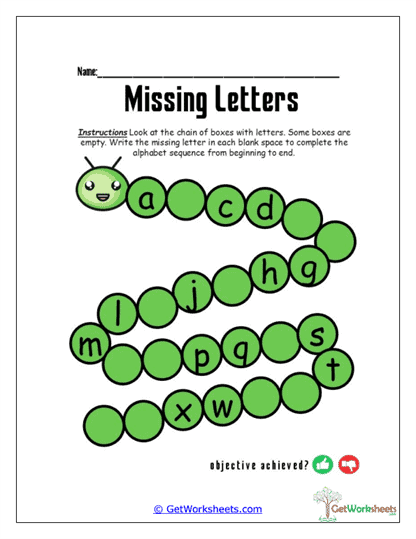
Alphabet Caterpillar
-
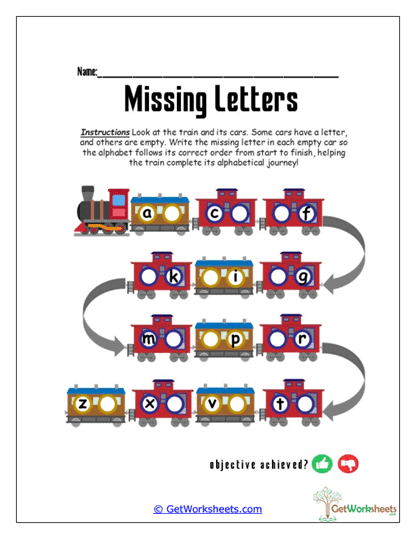
Alphabet Train Journey
-
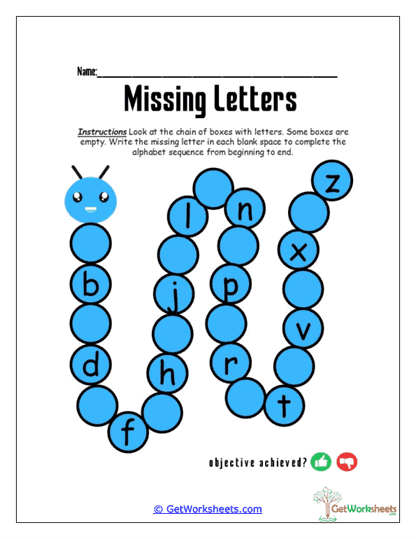
Blue Caterpillar Path
-
-
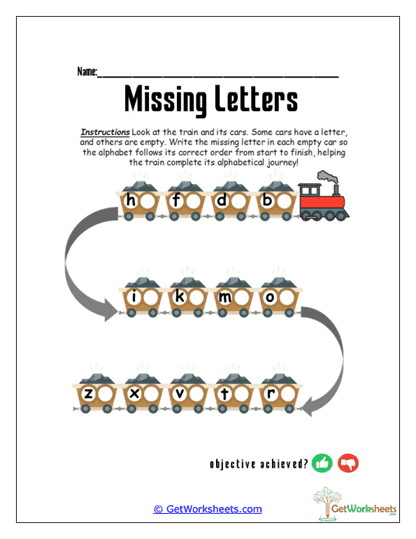
Brown Letter Train
-
Colorful Alphabet Boxes
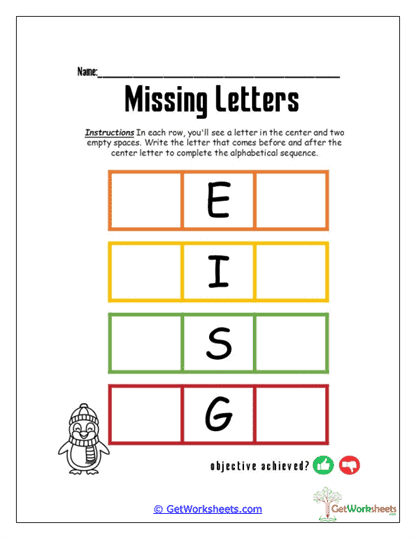
-
Gray Go Train
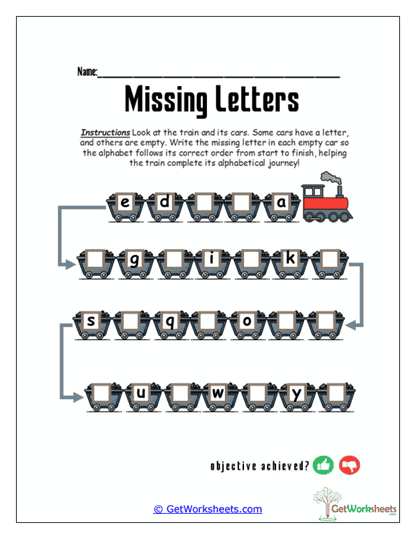
-
Green Sounds Train
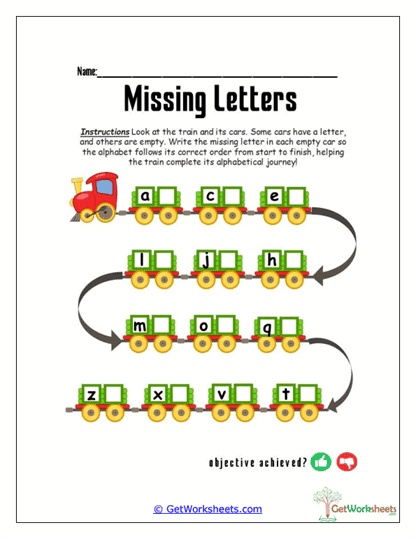
-
Letter Craze
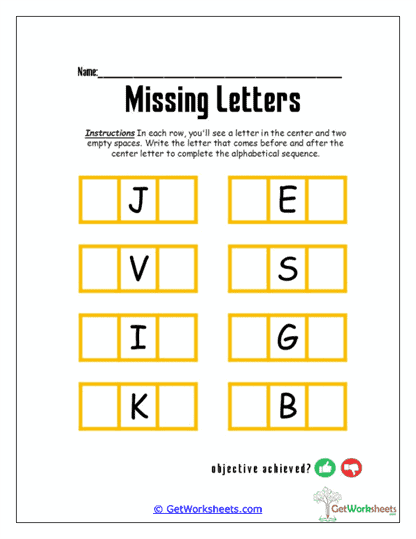
-
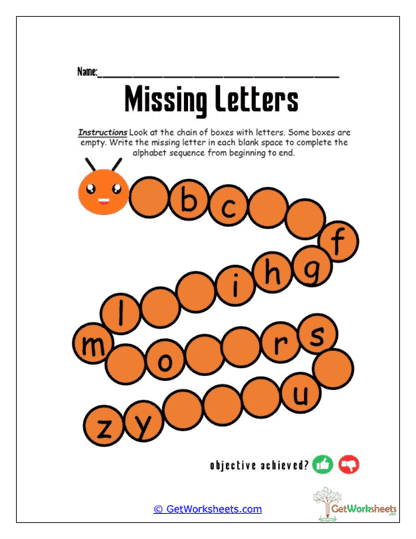
Orange Caterpillar Alphabet
-
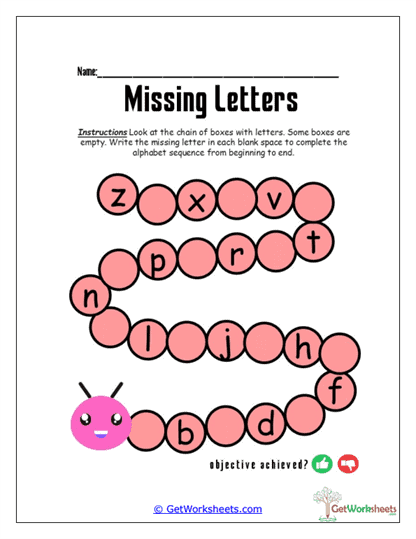
Pink Caterpillar ABCs
-
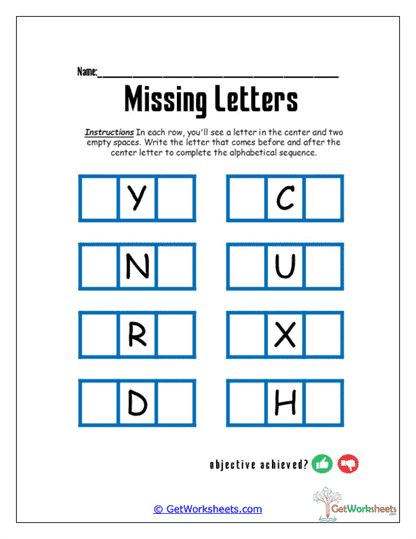
Saucy Blue Grid
-
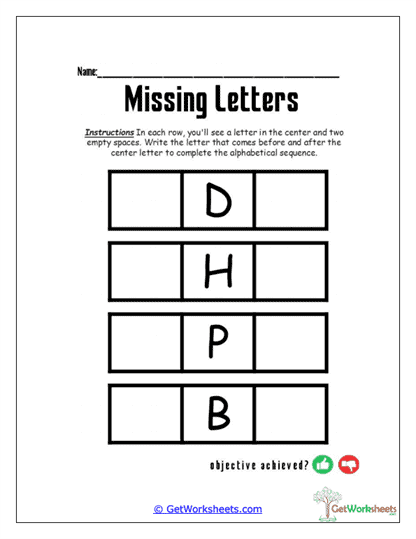
Sequence Letters Box
-
Sweet Green Blocks
-
Train Word Family Sort
-
Yellow Caterpillar Sequence
About This Worksheet Collection
The Missing Letters collection turns alphabetical practice into a playful, visually guided experience that works beautifully in classrooms, small groups, or at-home learning. With themes like caterpillars, trains, and colorful grids, each page offers a motivating context for identifying letter order and supplying what's missing. Clear layouts and consistent routines make these activities easy to introduce, quick to differentiate, and perfect for repeated practice throughout the year.
Beyond simple recall, students strengthen a full set of early literacy foundations. They rehearse alphabetical sequencing, sharpen visual scanning, and refine fine motor control as they write each letter neatly in place. The result is growing accuracy, speed, and confidence with letter naming and order-skills that support decoding, spelling, and fluent handwriting across the primary grades.
Detailed Descriptions Of These Worksheets
Alphabet Caterpillar
Students complete a lively alphabet caterpillar by filling in the missing lowercase letters. Visual prompts and partial sequences guide learners to reason about what comes next and what came before. The repeated write-in format provides steady fine motor practice and reinforces letter formation. Engaging artwork sustains focus while students build reliable alphabet recall.
Orange Caterpillar Alphabet
Learners examine an orange caterpillar path and supply the letters that complete each sequence. This quick, game-like task solidifies letter naming and order while encouraging careful attention. As accuracy improves, students gain confidence moving through the alphabet without prompts.
Yellow Caterpillar Sequence
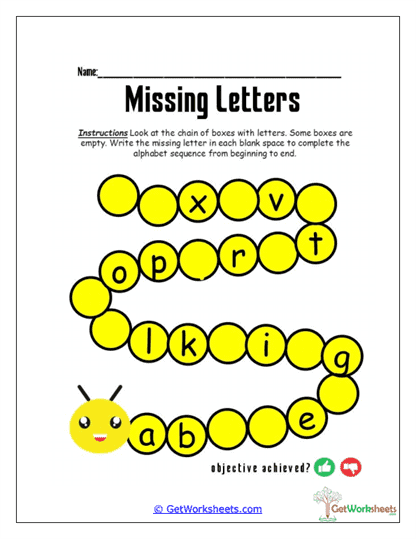
Each circle on the yellow caterpillar represents a step in the alphabet, and students determine which letters are missing. The design invites efficient visual scanning and quick decision-making. Children practice neat handwriting as they record the correct letters. It's a cheerful way to lock in alphabetical order and spacing.
Pink Caterpillar ABCs
Students use a pink caterpillar pattern to reason about letter position within the alphabet. The hands-on write-in approach reinforces memorization while nudging learners toward fluent, automatic recall. Fine motor control grows alongside accuracy as each blank is completed. The playful character keeps motivation high.
Blue Caterpillar Path
Learners identify gaps in the alphabet along a blue caterpillar trail and write the missing letters to complete the chain. The clean layout supports sequential thinking and careful observation. Handwriting practice is embedded throughout, promoting smooth, consistent letter formation.
Alphabet Train Journey
Students help an alphabet train travel from start to finish by writing the missing lowercase letters in each car. The theme adds a sense of progress and purpose to sequencing practice. As learners complete the route, they strengthen recall, spacing, and neatness. It's a lively option for centers or quick review.
Brown Letter Train
Each train car shows part of the alphabet, and students must detect and supply the absent letters. The task promotes accurate sequencing while building pencil control through repeated entries. The train motif keeps attention anchored on order and directionality.
Green Sounds Train
Learners complete a green train of lowercase letters by inserting what comes next or before. This focused practice builds fluency with alphabetical order and supports legible handwriting. The bright theme motivates students to check their work and maintain precision. It's ideal for reinforcing early literacy foundations.
Gray Go Train
Students maintain correct alphabetical order by filling in the missing letters on a gray train. The visual progression from car to car encourages logical sequencing and close observation. Consistent write-in spaces promote careful letter size and placement.
Train Word Family Sort
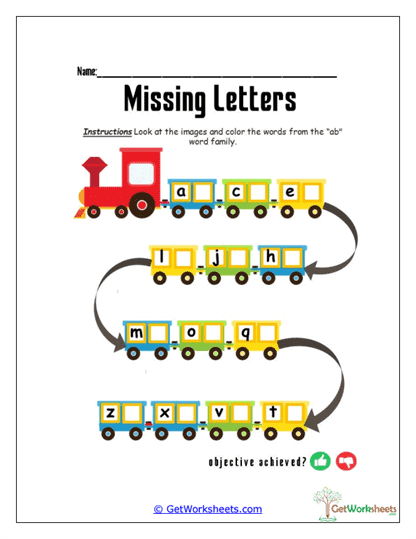
This train-themed worksheet shifts from pure sequencing to phonics by having students locate and color the "ab" word family. Learners scan for consistent letter patterns, strengthening decoding awareness. The coloring step boosts engagement and fine motor control. It's a creative bridge from alphabet practice to early reading skills.
Alphabet Box Sequence
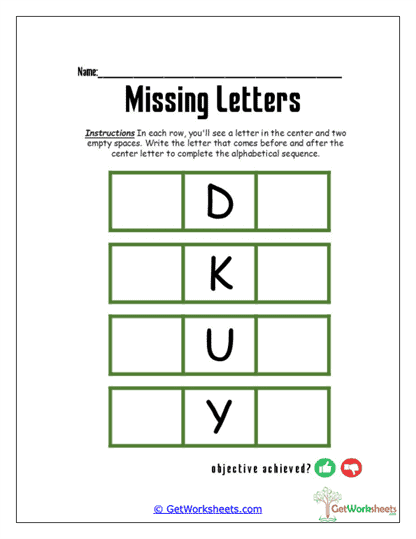
In each row, students write the letters that come directly before and after a given center letter. The boxed grid supports attention to spacing and legibility. Repetition builds quick recall of neighbors in the alphabet, sharpening sequence sense.
Colorful Alphabet Boxes
Brightly colored boxes cue learners to determine which letters precede and follow the ones shown. Visual organization aids tracking while students record neat, correctly formed letters. The result is stronger sequencing, faster recall, and more consistent handwriting. It's an inviting format for targeted practice.
Green Letter Blocks
Students complete alphabet mini-sequences by writing the letters around a center prompt. Bold blocks help maintain uniform letter size and clear spacing. The exercise grows confidence with order recall and supports steady pencil control.
Blue Alphabet Grid
Across multiple rows, learners identify the letters that come before and after each highlighted character. The blue grid format organizes attention and speeds up decision-making. Students refine visual discrimination and sequencing while improving handwriting precision. Over time, letter position recall becomes fast and automatic.
Letter Craze
Students scan a rectangular series of letters and supply the immediate neighbors for each. The streamlined layout makes room for tidy handwriting and repeated, focused practice. Learners strengthen pattern recognition and alphabet fluency through consistent responses. This is a dependable drill for building speed and accuracy.
Bookmark Us Now!
New, high-quality worksheets are added every week! Do not miss out!