Math Worksheets
Math Worksheets Collection
Math is more than just numbers on a page-it's a language for solving problems, recognizing patterns, and making sense of everyday situations. This Math Worksheets collection is designed to walk learners from concrete, hands-on practice toward confident, flexible thinking with numbers and operations. Rather than presenting math as a list of rules to memorize, these worksheets invite students to explore, notice relationships, and build strategies they can use again and again.
Each worksheet set blends computation with conceptual understanding: students might use pictures and number lines, then move into equations, word problems, and multi-step tasks that mirror real-life situations. They practice accuracy and fluency, but also explanation and reasoning-showing how they know an answer is correct. Over time, these repeated, structured experiences strengthen number sense, mental math, perseverance, and mathematical communication.
The subtopic worksheet collections below focus on specific strands of elementary math-addition, subtraction, multiplication, division, measurement, money, and mixed operations. Educators and families can use them to target particular skills or to build a well-rounded math pathway that supports learners as they grow. Taken together, they help students see math as a powerful toolkit they can carry into every subject and everyday life.
Subtopic Worksheet Collection Descriptions
Addition
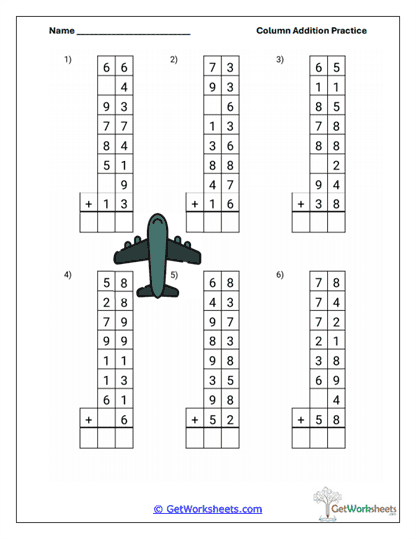
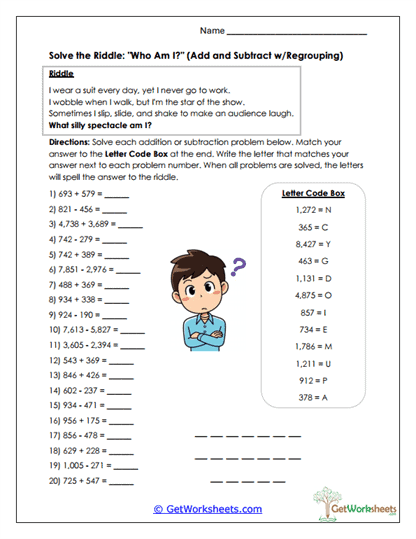
These worksheets guide learners from counting with objects to adding multi-digit numbers using structured models like number lines, tens frames, and columns. Students practice both basic facts and more complex problems, gradually building fluency and confidence. The tasks emphasize number sense by encouraging strategies such as making tens, using doubles, and decomposing numbers. Over time, this helps learners see addition not just as "carrying" but as combining quantities in smart, flexible ways.
Division
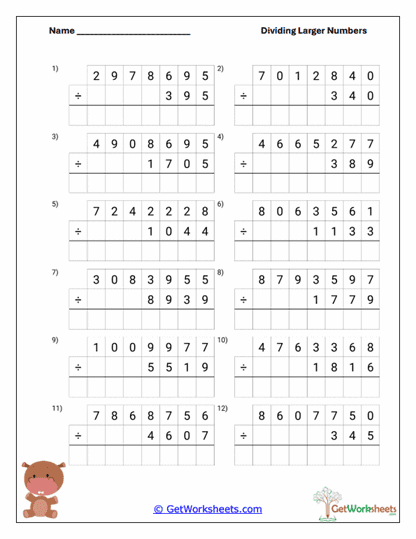
In these worksheets, students move from the idea of sharing and grouping into formal division with and without remainders. Visual models-arrays, equal groups, and number lines-help learners understand what division actually means before they rely on procedures. Practice includes fact fluency, multi-step word problems, and connections to multiplication. This builds strong conceptual understanding so students can interpret real-world division situations, such as splitting items or comparing rates, with confidence.
Measurement
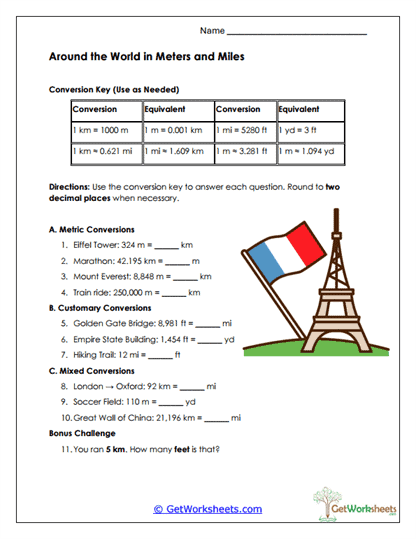
These worksheets introduce learners to length, weight, capacity, time, and temperature through real-life contexts and clear visuals. Students learn to read tools like rulers, scales, thermometers, and clocks, and they practice estimating and comparing measurements. Tasks often combine measurement with operations, asking students to add, subtract, or convert units in meaningful word problems. This supports both mathematical precision and the ability to apply measurement in daily activities, science experiments, and projects.
Money
In the money worksheets, students work with coins and bills to understand value, count totals, and make change. Activities often include matching amounts, solving purchase scenarios, and comparing costs, which naturally connect to addition, subtraction, and place value. Learners also encounter word problems that mirror real-life shopping and budgeting situations. These experiences help students build financial awareness, strengthen arithmetic, and practice practical decision-making.
Multiplication
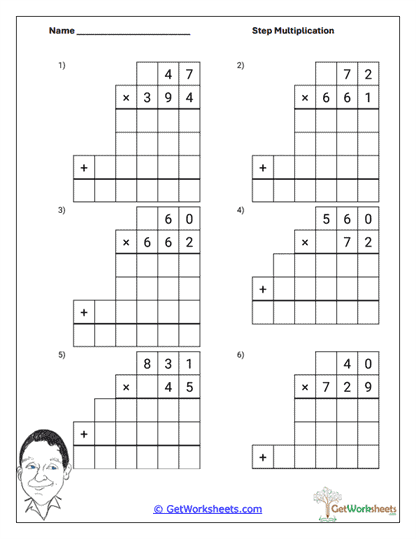
These worksheets develop multiplication from repeated addition and equal groups to arrays, area models, and eventually standard algorithms. Students practice fact fluency while also exploring patterns in times tables and relationships between factors and products. Tasks include visual models, word problems, and multi-digit multiplication with place value support. This combination builds both speed and understanding, helping learners see multiplication as a powerful shortcut for reasoning about larger quantities.
Operations
In the operations worksheets, students bring together addition, subtraction, multiplication, and division in mixed practice. Tasks often require choosing the correct operation for a situation, interpreting key words in word problems, and solving multi-step questions. Learners also work with equations, comparison problems, and balance-style puzzles that highlight the structure of operations. This strengthens mathematical reasoning and helps students see how different operations relate and work together in real problem-solving.
Subtraction
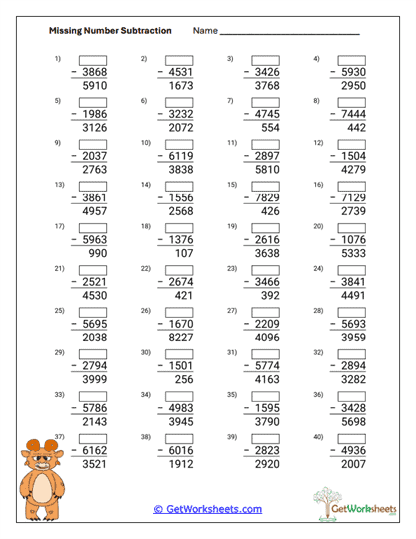
These worksheets support learners as they move from "taking away" objects to using number lines, decomposing numbers, and eventually regrouping with larger numbers. Students practice basic subtraction facts, as well as multi-digit problems that require careful place value thinking. Many tasks are embedded in real-world word problems, such as comparing quantities or finding how much is left. This helps learners understand subtraction as the language of difference and change, not just a reversed addition problem.
Bookmark Us Now!
New, high-quality worksheets are added every week! Do not miss out!