Lowercase Letter Tracing Worksheets
-
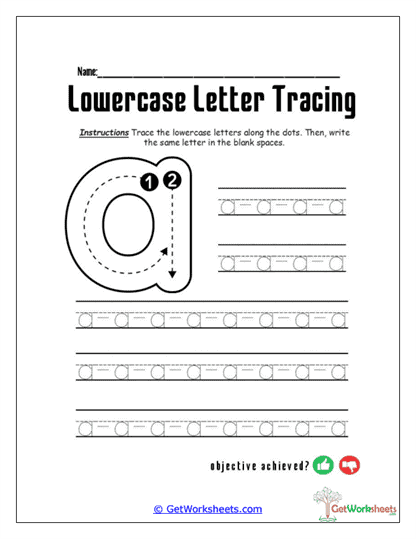
a Trace the Letter
-
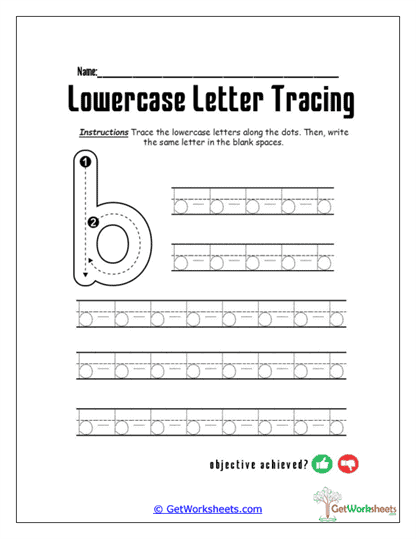
b Outline the Letter
-
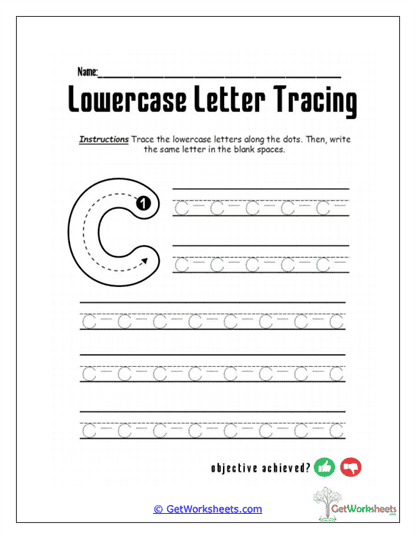
c Follow the Letter
-
-
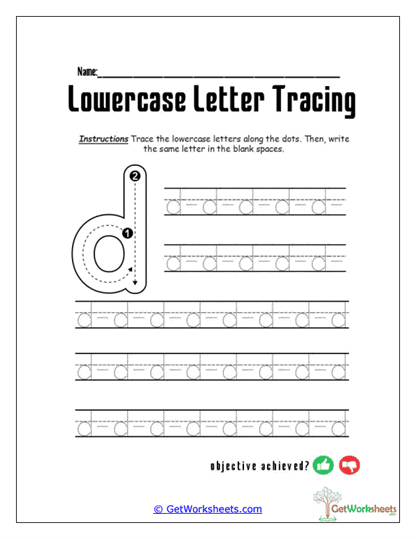
d Copy the Letter
-
e Practice the Letter
-
f Form the Letter
-
g Sketch the Letter
-
h Letter Tracing Fun
-
i Follow the Letter Path
-
j Letter Line-Up
-
k Trace and Learn
-
l Letter Shape Practice
-
m Make the Letter
-
n Write the Symbol
-
o Follow the Lines
-
p Draw the Mark
-
q Practice the Form
-
r Outline the Shape
-
s Follow the Trail
-
t Make the Magic Marks
-
u Draw the Path
-
v Trace the Pattern
-
w Follow the Stroke
-
x Form the Shape
-
y Draw the Curve
-
z Practice the Strokes
About This Worksheet Collection
The Lowercase Letter Tracing collection is a carefully crafted handwriting resource designed to guide young learners through the alphabet one letter at a time. Each worksheet provides a clear, structured approach to forming lowercase letters, using dotted lines, directional arrows, and ample space for practice. Teachers and parents can easily integrate these pages into handwriting lessons, morning work, or literacy centers, offering consistent reinforcement of essential early writing habits. The collection builds confidence through repetition and visual guidance, turning letter formation into an achievable and enjoyable task for beginners.
As students work through the series, they develop a range of foundational skills that go beyond handwriting. Each exercise supports fine motor control, visual-motor integration, spatial awareness, and alphabet recognition-key components of early literacy success. Through tracing and independent writing, learners strengthen hand muscles, refine pencil grip, and internalize letter structure. These worksheets provide a strong stepping stone toward fluent, legible writing and readiness for more advanced literacy skills.
Detailed Descriptions Of These Worksheets
Trace the Letter a
This worksheet introduces children to the lowercase "a" using clear directional arrows and dotted guides. Students begin by tracing before moving to independent writing practice, helping them internalize the letter's round shape and spacing. Each repetition reinforces fine motor control and builds confidence in proper stroke order. It's a foundational exercise that sets the tone for consistent handwriting habits.
Outline the Letter b
Students trace and write the lowercase "b," learning its tall stem and rounded body through guided arrows. The worksheet transitions learners from tracing to writing freely, encouraging precision and rhythm. As they repeat each form, children gain better alignment and balance across writing lines. It's an excellent activity for improving both coordination and alphabet mastery.
Follow the Letter c
Learners practice creating smooth, curved motions as they trace and write the lowercase "c." The worksheet's structured steps help reinforce the difference between similar shapes like "a" and "o." Through repetition, students strengthen muscle memory and spatial awareness. The activity combines visual guidance with hands-on control for confident handwriting development.
Copy the Letter d
This worksheet teaches the correct formation of the lowercase "d" through trace-and-write repetition. Students follow numbered arrows to ensure the proper sequence of circular and tall strokes. Each row encourages consistency in letter height and placement. It's ideal for supporting early writers as they build rhythm and stability in their handwriting.
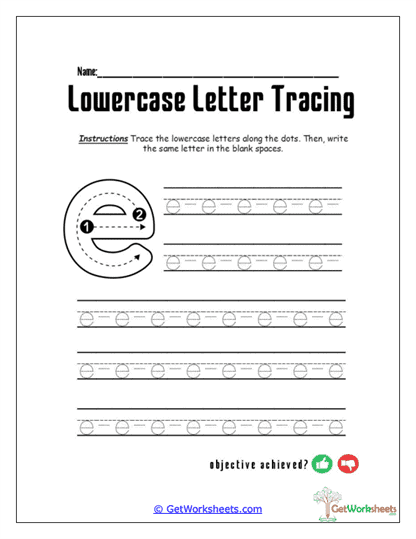
Practice the Letter e
Students trace and write the lowercase "e" to refine their control over small, circular movements. The worksheet's dotted lines promote proper motion before learners move to independent writing. Repetition helps students develop fluency and accuracy in forming the letter. The exercise strengthens both tactile awareness and fine motor coordination.
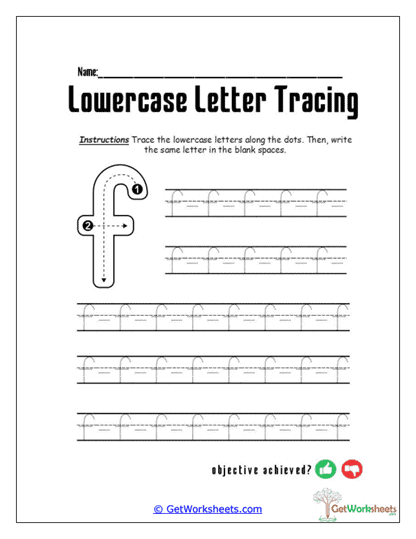
Form the Letter f
This activity focuses on mastering the lowercase "f," a tall letter requiring careful attention to stroke order and height. Guided arrows and dotted lines provide clear support during tracing and writing. Learners enhance pencil control while maintaining spacing along the baseline. It's a helpful resource for teaching proportion and balance in early handwriting.
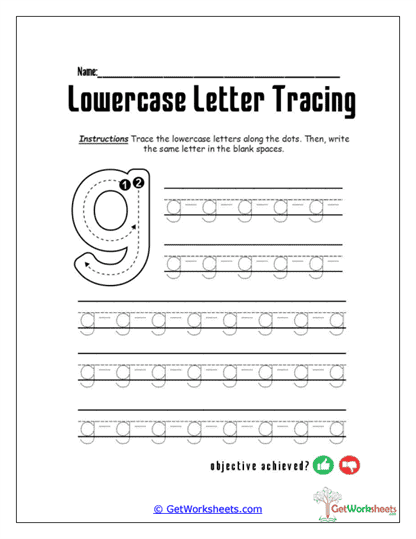
Sketch the Letter g
Students trace and write the lowercase "g," learning its distinctive loop and tail. The worksheet encourages careful control of descending strokes to maintain even spacing. Repeated tracing improves coordination and visual alignment. By completing this exercise, learners become comfortable forming letters that extend below the writing line.
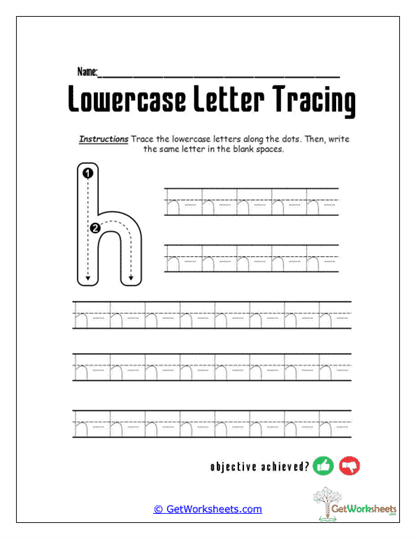
Letter Tracing Fun h
This worksheet offers students step-by-step guidance for writing the lowercase "h." Through dotted models and arrowed instructions, learners practice consistent upward and downward strokes. Each line builds confidence as children move toward independent writing. The structured format helps reinforce letter size, spacing, and smooth pencil movement.
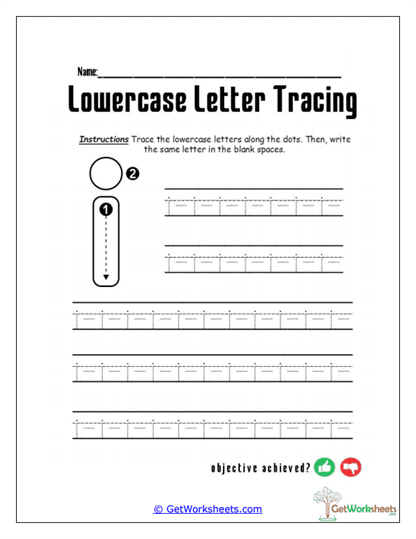
Follow the Letter Path i
Learners trace and write the lowercase "i," mastering both its short stroke and precise dot placement. The worksheet's repetitive design promotes steady hand motion and fine motor accuracy. Visual cues help students maintain alignment on the writing line. It's a simple yet effective way to reinforce neatness and control.
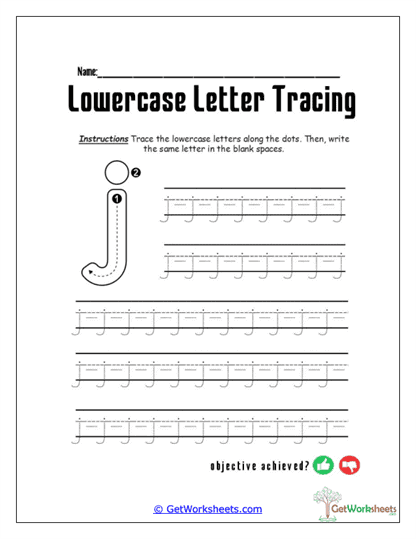
Letter Line-Up j
Students learn to trace and write the lowercase "j," focusing on its curved tail and dotted top. Guided arrows demonstrate correct stroke flow, helping learners develop steady hand coordination. The repetition builds confidence and strengthens recognition of descender letters. This activity also improves spatial awareness and handwriting fluency.
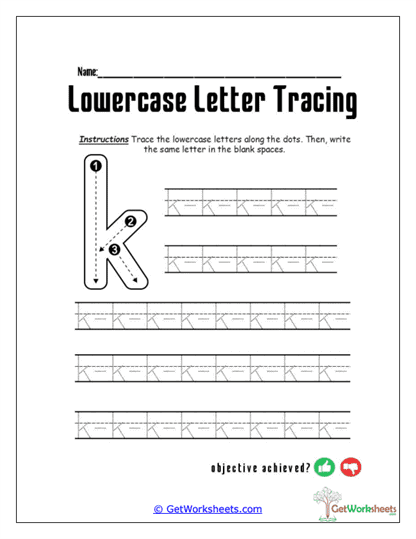
Trace and Learn k
This worksheet teaches students the three-step stroke sequence for writing the lowercase "k." Dotted lines and arrows guide learners as they trace before writing independently. Repetition helps establish proper proportions and motion rhythm. It's a useful page for reinforcing sequencing and control in handwriting practice.
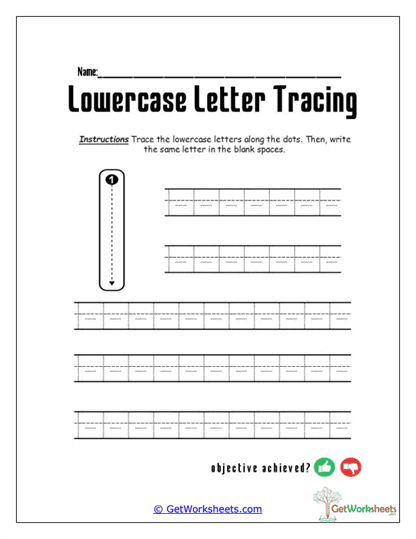
Letter Shape Practice l
Students practice forming the simple, straight lowercase "l" with this tracing worksheet. The single-stroke design allows learners to focus on pencil pressure and line alignment. Each repetition builds confidence and precision. The activity supports early writing fluency and strengthens foundational motor control.
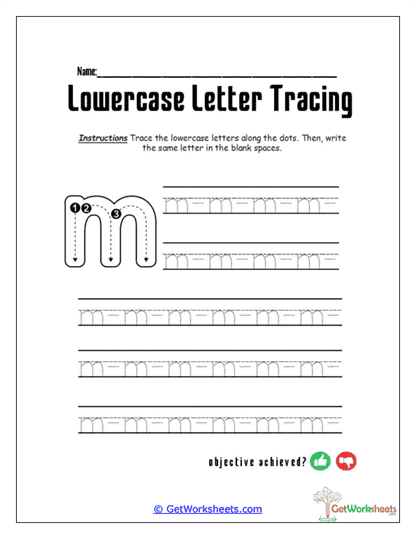
Make the Letter m
Learners trace and write the lowercase "m," following arrowed guides to complete its rounded arches. The worksheet promotes consistent rhythm and smooth transitions between strokes. Through repetition, students develop spatial awareness and even spacing. It's an engaging way to practice fluent and balanced handwriting.
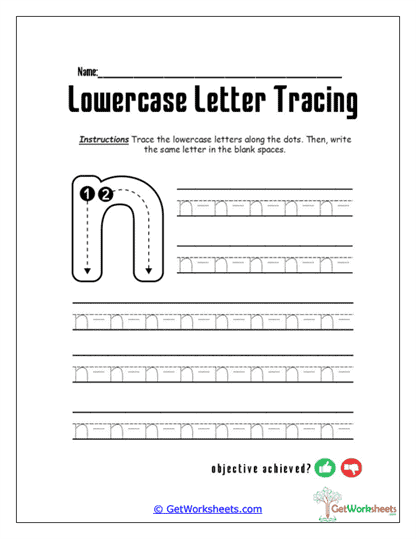
Write the Symbol n
Students master the lowercase "n" through guided tracing and free writing. The worksheet's arrows demonstrate correct stroke motion, supporting consistent form and spacing. Each practice row reinforces visual recognition and hand coordination. The exercise prepares learners for more complex letter combinations in writing.
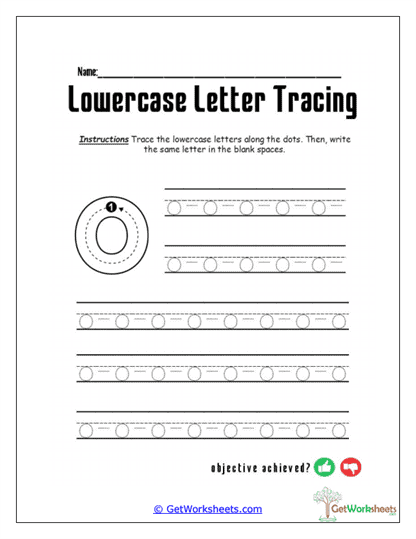
Follow the Lines o
This tracing worksheet helps children form the lowercase "o" with confidence and uniformity. The circular motion practice strengthens control and smoothness in pencil movement. Learners also sharpen their ability to distinguish between similar curved letters. The repetition supports both motor skills and alphabet fluency.
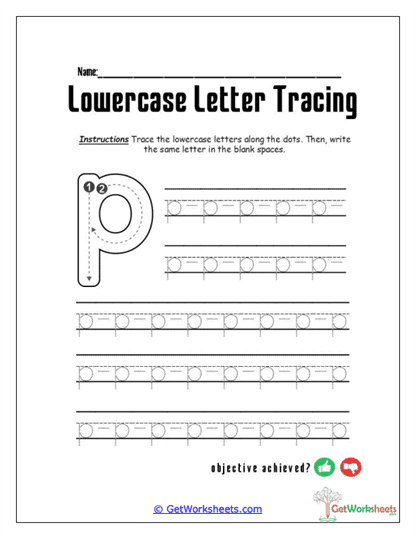
Draw the Mark p
Students trace and write the lowercase "p," learning to balance its tall stem with a rounded lower curve. The dotted and open lines encourage both guided and independent practice. Repetition develops hand steadiness and spatial control. This activity enhances letter recognition while promoting consistent handwriting habits.
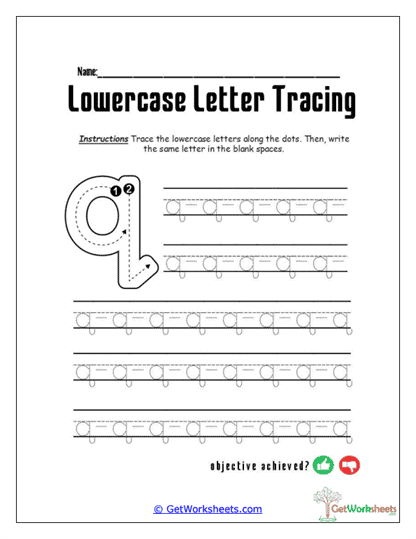
Practice the Form q
Learners follow step-by-step arrows to trace and write the lowercase "q." The worksheet highlights correct tail direction and baseline alignment. By repeating the letter's form, students improve accuracy and coordination. It's perfect for refining motor skills and visual-spatial understanding.
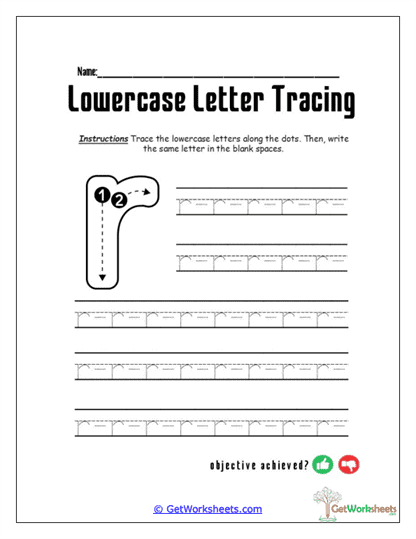
Outline the Shape r
Students practice tracing the lowercase "r" to achieve smooth, precise upward and downward strokes. The worksheet encourages neatness and spacing awareness on every line. Repetition builds rhythm and handwriting confidence. This exercise strengthens fine motor control while reinforcing letter familiarity.
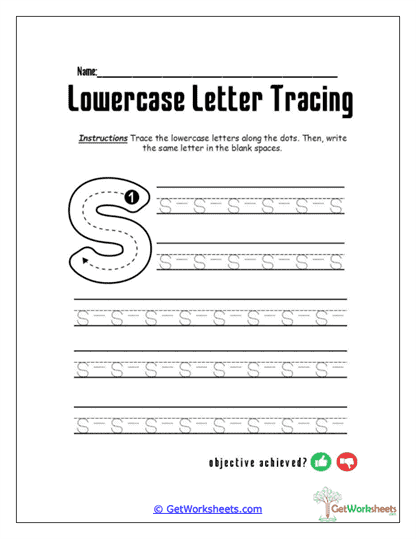
Follow the Trail s
This worksheet focuses on the lowercase "s," guiding learners through curved, flowing strokes. Each tracing line promotes smooth motion and control. Students enhance both dexterity and visual discrimination as they repeat the letter. The task lays groundwork for fluent, legible handwriting.
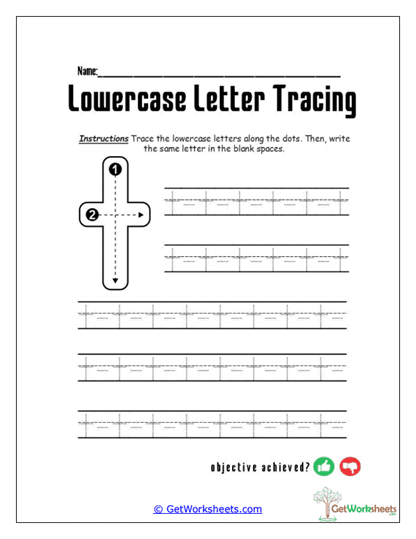
Make the Magic Marks t
Students trace and write the lowercase "t" with attention to its vertical line and crossbar. The worksheet reinforces proportional balance and consistent spacing. Repetition supports fine motor precision and alphabet recognition. It's a structured approach to mastering one of the most common letters in handwriting.
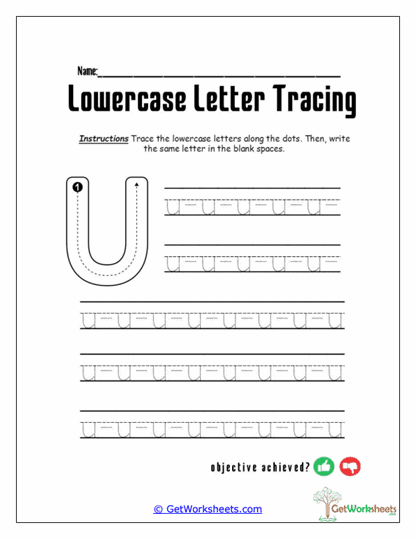
Draw the Path u
Learners trace and write the lowercase "u," following arrows that demonstrate curved motion and smooth line control. The worksheet promotes correct stroke direction and even spacing. Repeated practice improves coordination and confidence. It's ideal for reinforcing fluid handwriting patterns.
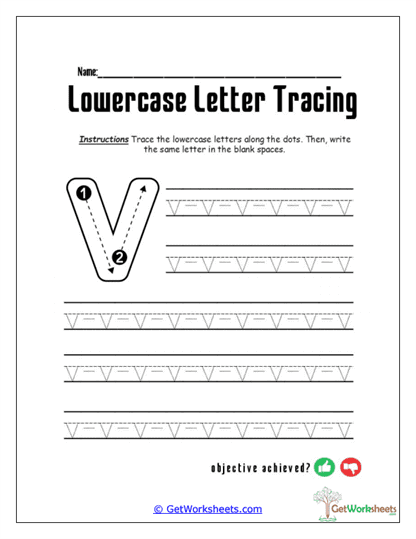
Trace the Pattern v
Students trace and write the lowercase "v," focusing on angled strokes and line symmetry. The guided arrows support proper formation before learners transition to free writing. Each repetition enhances motor strength and precision. The activity encourages careful observation and accuracy in handwriting.
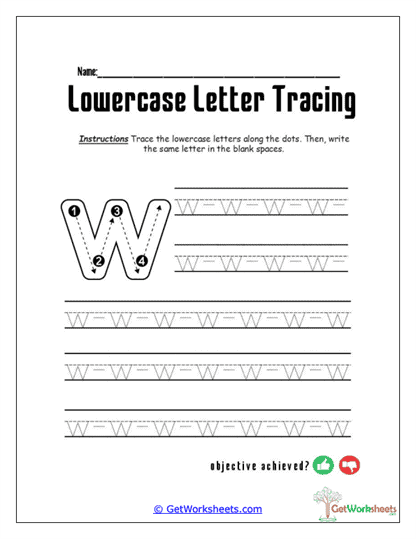
Follow the Stroke w
This worksheet helps students trace and write the lowercase "w" through step-by-step guided motion. Learners build rhythm and consistency as they practice repeating angled lines. Each line of tracing improves control and spatial alignment. The exercise supports fluency in multi-stroke letter writing.
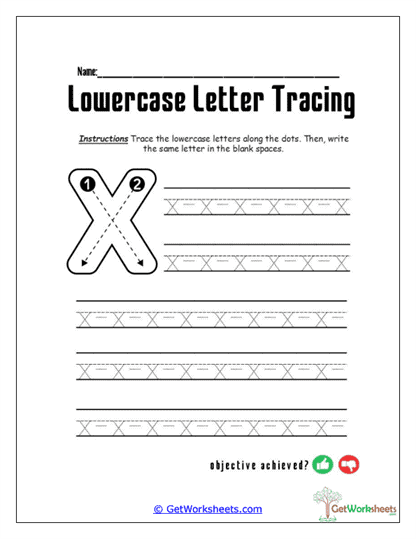
Form the Shape x
Students learn to trace and write the lowercase "x," developing control over intersecting strokes. The worksheet emphasizes spacing and proportion for clear letter formation. Repetition refines fine motor coordination and visual tracking. It's an engaging way to practice cross-stroke accuracy.
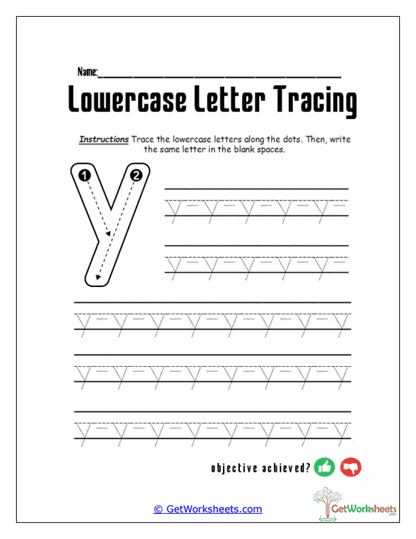
Draw the Curve y
This tracing activity focuses on forming the lowercase "y" with correct downstrokes and tail placement. Learners practice maintaining alignment across writing lines. Repetition builds fine motor steadiness and spatial understanding. The exercise enhances fluency in writing letters with descenders.
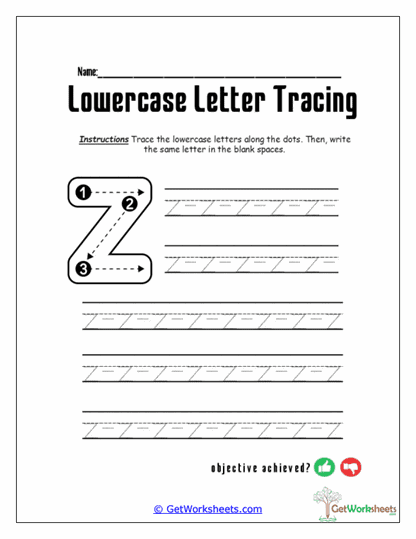
Practice the Strokes z
Students trace and write the lowercase "z," learning its sharp, zigzag pattern through guided arrows. Dotted lines help them practice accuracy before moving to independent writing. Each repetition develops pencil control and consistency. The worksheet builds confidence in completing the alphabet's final letter.
Bookmark Us Now!
New, high-quality worksheets are added every week! Do not miss out!