Lewis and Clark Expedition Worksheets
About This Worksheet Collection
The Lewis and Clark Expedition worksheet collection takes students on a journey across uncharted America, exploring the people, challenges, and discoveries that defined the Corps of Discovery. These activities blend historical comprehension with critical thinking, helping learners experience exploration through multiple perspectives-from leadership and logistics to cultural exchange and survival. Teachers can use this collection to deepen students' understanding of westward expansion, teamwork, and the enduring impact of exploration on both the United States and Indigenous peoples.
Through these worksheets, students practice analyzing primary sources, interpreting historical outcomes, and applying lessons of perseverance and problem-solving to modern contexts. They'll engage in vocabulary development, decision-making scenarios, and creative writing that brings the spirit of discovery to life. Together, the activities foster curiosity, empathy, and analytical reasoning while connecting past exploration to civic and environmental awareness today.
Detailed Descriptions Of These Worksheets
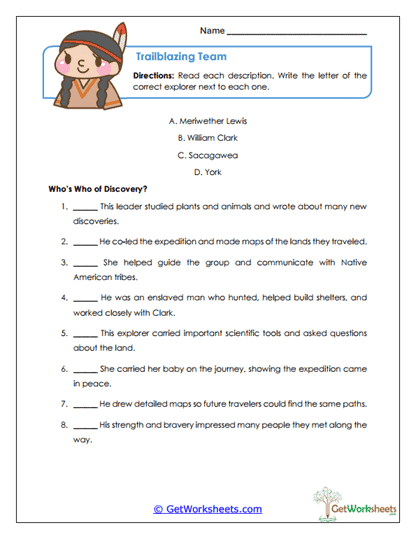
Trailblazing Team
Students identify key figures in the Lewis and Clark Expedition, including Meriwether Lewis, William Clark, Sacagawea, and York. They match each person's description to their name, learning about roles such as leadership, guidance, and cultural exchange. The exercise highlights teamwork and diversity as foundations of success. It's an engaging introduction to the human side of the Corps of Discovery.
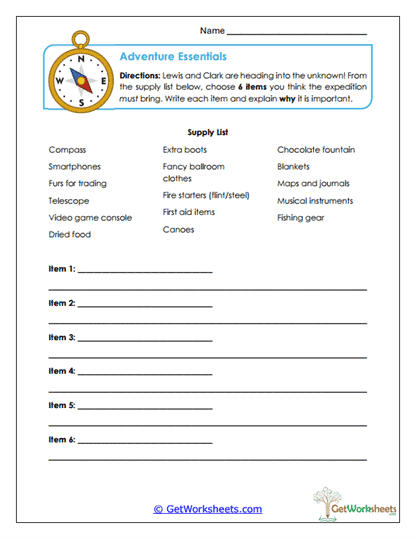
Adventure Essentials
Learners imagine they're preparing for the expedition and must choose six critical supplies from a list of realistic and humorous options. They justify each choice by explaining its purpose for survival, navigation, or trade. The activity strengthens reasoning, prioritization, and understanding of exploration challenges. It's a fun blend of creativity and historical realism.
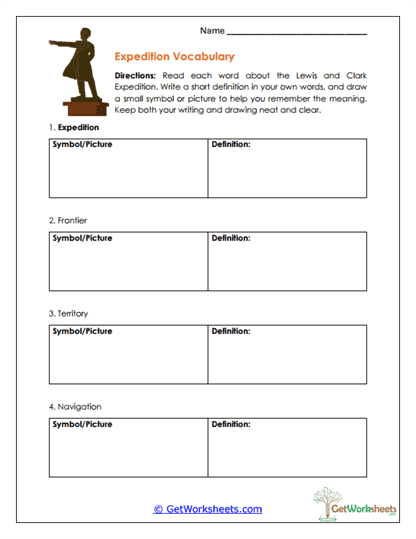
Expedition Vocabulary
Students study words like expedition, frontier, territory, and navigation, writing definitions in their own words and illustrating each concept. The dual-language and visual approach reinforces comprehension and retention. This worksheet connects academic vocabulary to the real-world context of early U.S. exploration. It supports both literacy and conceptual understanding.
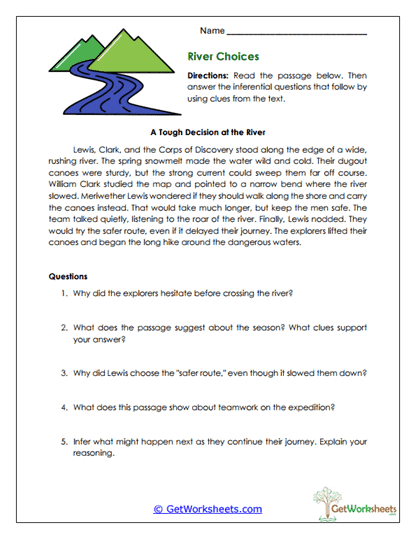
River Choices
In this reading comprehension passage, learners follow Lewis and Clark's team as they face a risky river decision. They answer inference questions about leadership, cooperation, and problem-solving. The task develops close reading and textual reasoning skills. It encourages students to see history through the lens of decision-making under pressure.
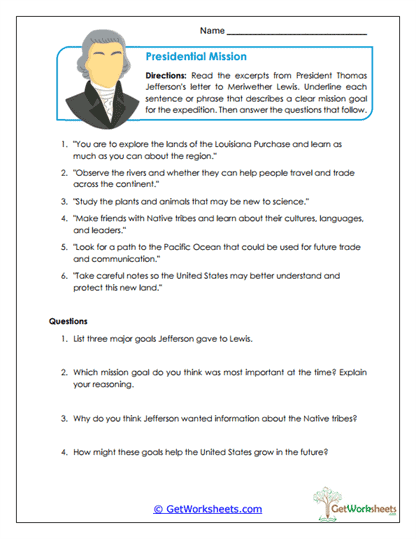
Presidential Mission
Students read excerpts from Thomas Jefferson's letter outlining the expedition's goals and identify key objectives like mapping routes and studying nature. The activity builds primary source analysis and comprehension of purpose in national exploration. Learners connect Jefferson's vision to America's expansion and scientific curiosity. It's a concise study of exploration planning and policy.
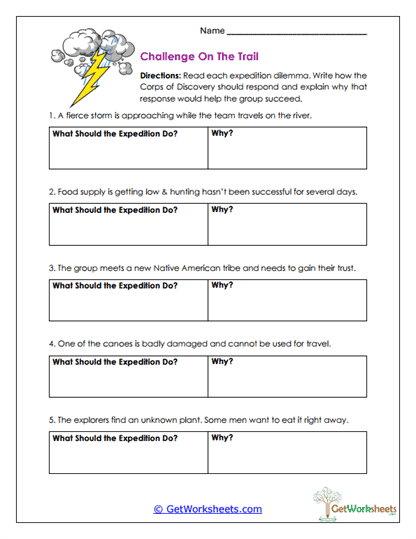
Challenge on the Trail
This scenario-based worksheet presents realistic expedition dilemmas-harsh weather, dwindling supplies, or broken equipment-and asks students to propose solutions. Learners must justify their choices with reasoning and creativity. The exercise promotes problem-solving and resilience while reinforcing historical context. It's perfect for collaborative or independent critical thinking practice.
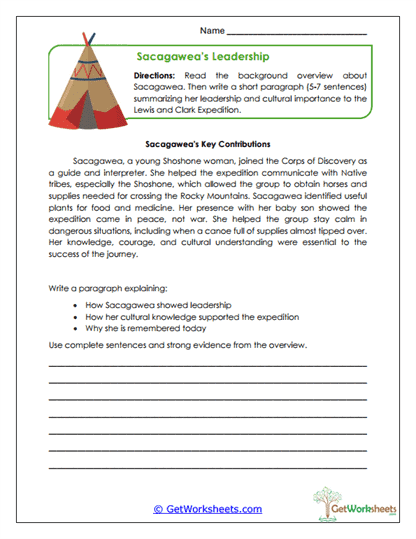
Sacagawea's Leadership
Students read a passage about Sacagawea's role as guide, translator, and peacemaker during the expedition. They write a paragraph summarizing her leadership and influence using text evidence. This activity develops comprehension, informative writing, and appreciation for her cultural contributions. It highlights the power of knowledge and communication in exploration success.
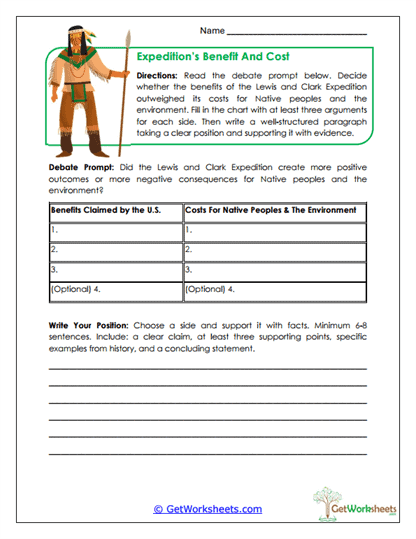
Expedition's Benefit and Cost
Learners analyze the expedition's effects through a balanced lens, listing benefits for the U.S. and costs for Native peoples and the environment. They then craft a short argument supported by evidence. The task builds persuasive writing and ethical reasoning. It encourages reflection on how exploration brings both progress and consequence.
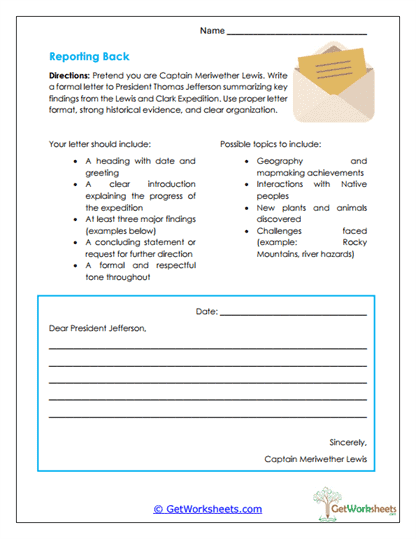
Reporting Back
Acting as Captain Lewis, students compose a formal letter to President Jefferson describing discoveries and challenges from the journey. Structured prompts guide them through clear organization and tone. This writing activity reinforces historical understanding and creativity while strengthening formal composition skills.
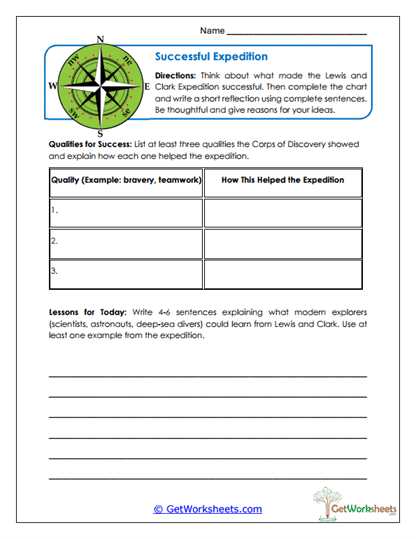
Successful Expedition
Students identify three character traits-such as courage or teamwork-that made the expedition succeed. They explain each trait's importance and connect it to modern examples of exploration. The activity builds reflection, writing fluency, and analytical reasoning. It helps learners apply history's lessons to present-day perseverance.
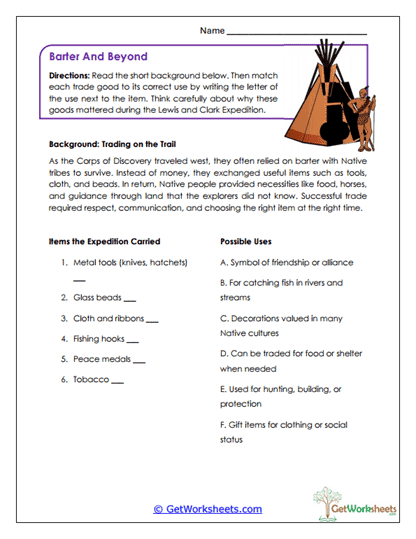
Barter and Beyond
This reading and matching activity explores how the Corps of Discovery traded with Native tribes along their route. Students connect trade items to their practical and cultural purposes. The worksheet emphasizes respect, diplomacy, and communication across cultures. It highlights the economic and social dimensions of survival and cooperation.
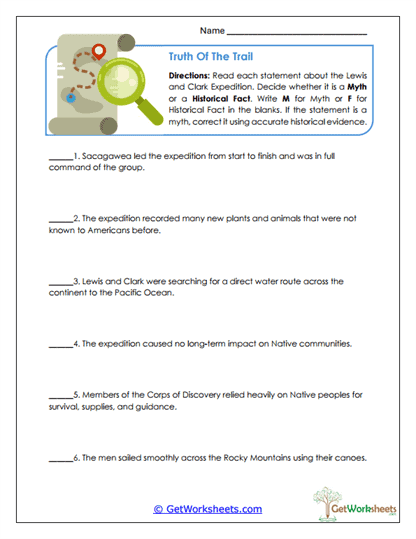
Truth of the Trail
Students separate myth from fact in statements about the expedition, correcting inaccuracies with historical evidence. Topics include Sacagawea's leadership, discoveries, and interactions with Native communities. The task builds critical reading and historical accuracy. It's an effective wrap-up exercise for reinforcing evidence-based understanding of exploration history.
Bookmark Us Now!
New, high-quality worksheets are added every week! Do not miss out!