Letter Sorting Worksheets
About This Worksheet Collection
The Letter Sorting collection transforms alphabet learning into a set of engaging, themed activities that help children master uppercase and lowercase recognition. Through playful contexts like laundry baskets, mailboxes, and garden plants, students strengthen their ability to tell letters apart while improving fine motor coordination. Each worksheet encourages attention to detail, sorting logic, and precision as learners draw lines, color, and organize letters correctly. With bright visuals and interactive designs, these exercises make letter identification an active, confidence-building experience for early readers.
Detailed Descriptions Of These Worksheets
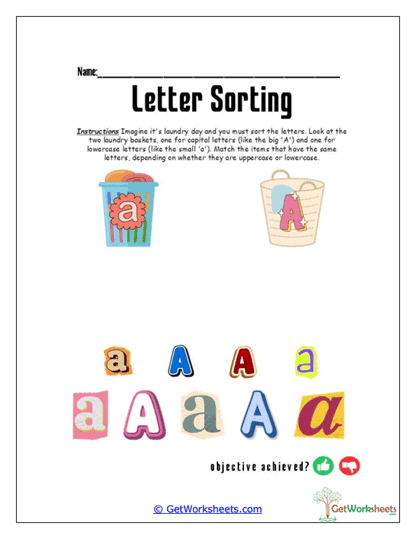
Sort the Letter A
In this worksheet, students sort uppercase and lowercase versions of the letter A into baskets during "laundry day." The activity promotes observation, visual discrimination, and classification skills. Learners practice recognizing the distinct forms of A and a while engaging in a creative, hands-on task. The playful concept keeps children motivated while reinforcing early reading readiness through careful sorting and matching.
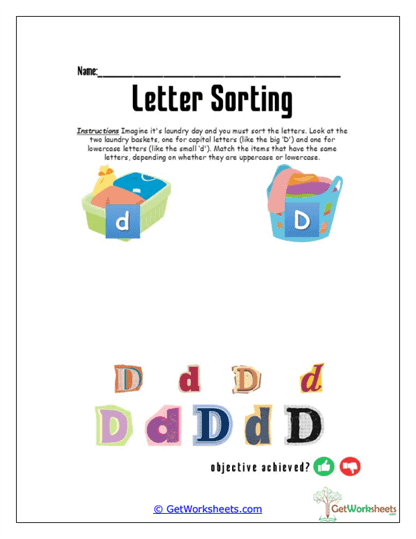
Letter Organizer D
Students identify uppercase and lowercase D and place each one into the correct basket. By studying the size and curve of each letter, learners strengthen their alphabet recognition and visual focus. The colorful theme turns sorting into a game that encourages accuracy and attention. Through repetition, students develop both confidence and fluency in identifying letter cases, supporting stronger early literacy foundations.
Arrange the Letter R
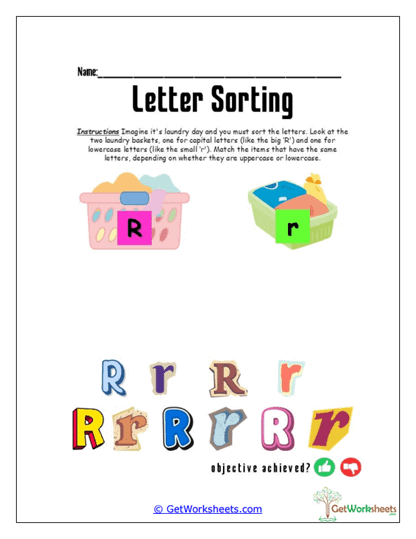
Children practice distinguishing uppercase and lowercase R by sorting them into matching baskets. The interactive task sharpens visual comparison skills and supports alphabet fluency. Learners gain a clearer sense of how letter shapes change between cases while improving their fine motor control. The cheerful visuals make this a rewarding way to build recognition and precision in early literacy practice.
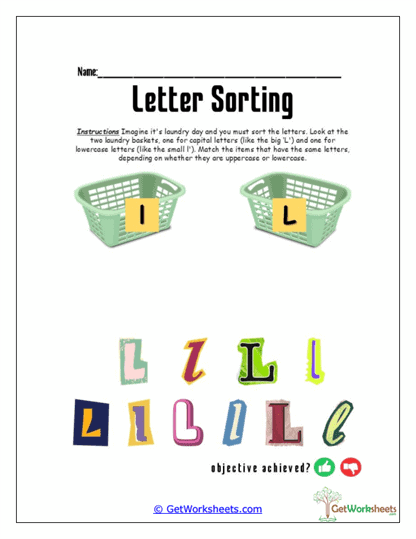
Group the Letters L
In this engaging activity, students sort capital and lowercase L into the correct laundry baskets. The exercise helps children notice small but meaningful differences between the two forms. As they draw or color their answers, learners practice focus and visual memory. The bright, familiar theme turns alphabet learning into a playful, confidence-building experience that promotes pre-reading skills.
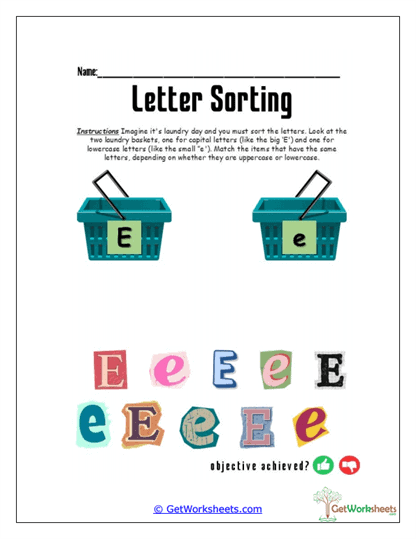
Organize the Letter E
Learners distinguish uppercase and lowercase E by sorting them into their correct baskets. This activity reinforces visual discrimination, letter recognition, and careful scanning skills. Students become more comfortable noticing small shape variations while improving hand-eye coordination. The interactive sorting task provides an excellent bridge between visual learning and fine motor development.
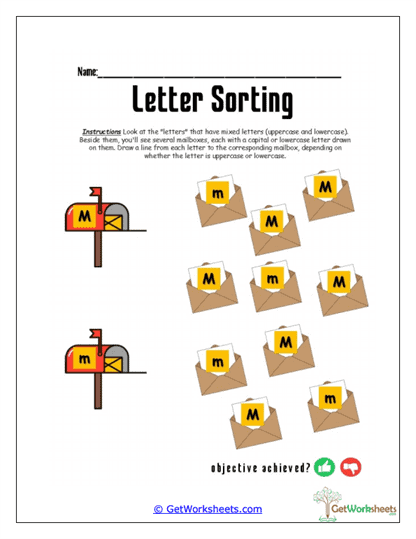
Mailbox Match M
Students connect envelopes showing uppercase and lowercase M to their matching mailboxes. The mail theme adds an imaginative element that encourages focus and accuracy. Learners strengthen their alphabet knowledge by observing shape differences and tracing precise lines. The exercise blends literacy practice with fine motor coordination, making it ideal for early learners building confidence with letter forms.
Mailbox Match R
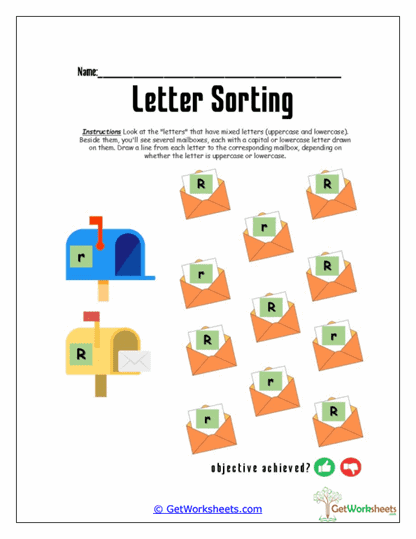
Children match uppercase R and lowercase r by drawing lines from each envelope to its corresponding mailbox. This simple yet engaging exercise builds understanding of letter case relationships. The creative mail theme captures students' attention while encouraging neat, deliberate motion. It reinforces recognition, fine motor control, and attention to visual details essential for early reading.
Mailbox Match E
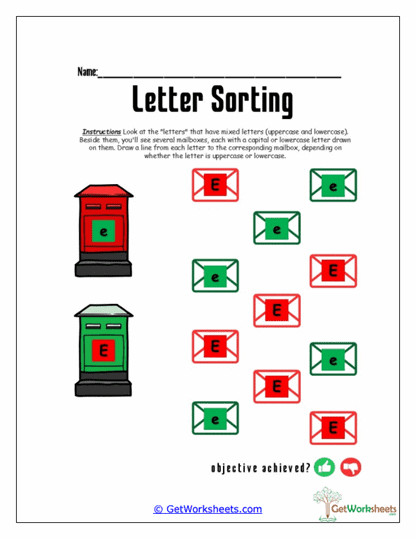
In this worksheet, students connect uppercase and lowercase E to the correct mailbox. Learners enhance their recognition of letter shapes while practicing visual discrimination. The activity encourages accuracy, patience, and control as children draw connecting lines. The mail theme adds real-world relevance and enjoyment to foundational literacy skill development.
Mailbox Match G
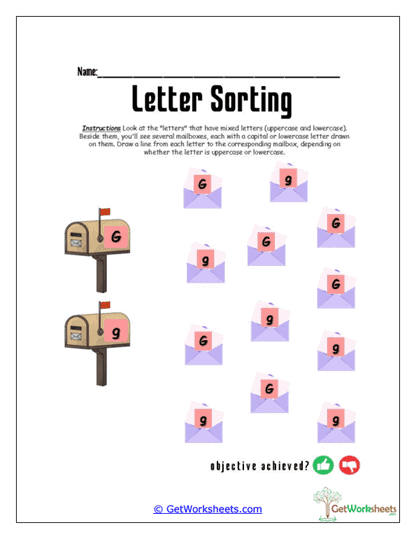
Students identify and sort uppercase and lowercase G by linking each to its proper mailbox. The activity helps children focus on curves and unique letter features, strengthening visual awareness. Learners practice steady line drawing and fine motor precision. The bright theme supports memory retention and makes case differentiation fun and meaningful.
Mailbox Match A
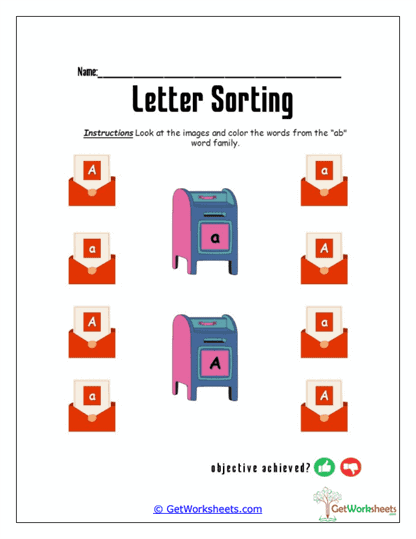
Learners explore the letter A by sorting uppercase and lowercase forms while connecting words from the "ab" family. The colorful, mail-themed visuals encourage engagement and focus. Students build phonemic awareness alongside letter recognition, linking sounds and symbols naturally. This worksheet provides a well-rounded approach to early literacy development through sorting, sound association, and visual attention.
Match the Letter I
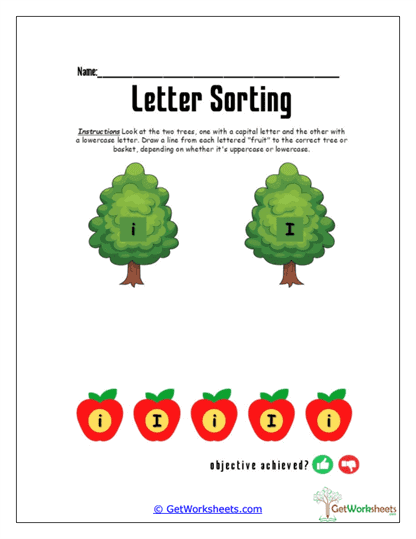
In this garden-themed activity, students connect uppercase and lowercase I by drawing lines from fruit to trees. The cheerful visuals make alphabet practice inviting and memorable. Learners strengthen attention to detail, visual matching, and motor coordination. It's an excellent activity for helping children differentiate between straight-line letters while enhancing sorting logic and control.
Align the Letter N
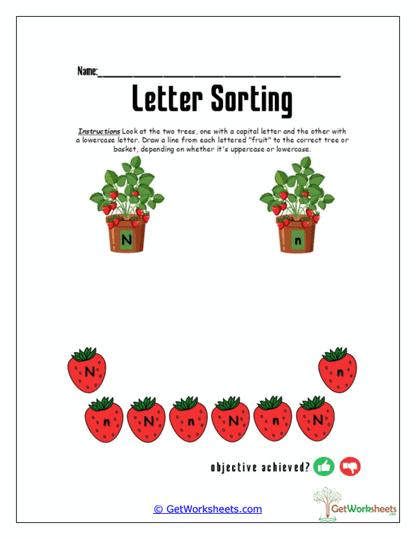
Students identify uppercase and lowercase N and match each fruit to the correct plant pot. The strawberry imagery adds charm while promoting focus and careful scanning. As learners connect letters, they strengthen recognition, categorization, and coordination. This activity supports fine motor growth and reinforces alphabet mastery through repetition and visual cues.
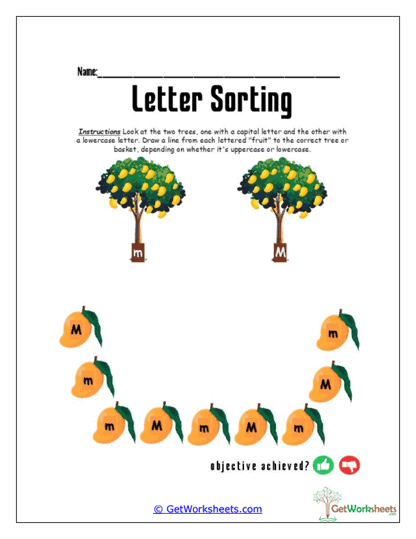
Letter Line-Up M
Learners sort uppercase and lowercase M by linking fruit to lemon trees in a sunny orchard. The task promotes attention to size and shape differences while building alphabet fluency. Students refine hand control and observation as they draw precise connection lines. This colorful and cheerful activity blends visual learning with fun, hands-on practice.
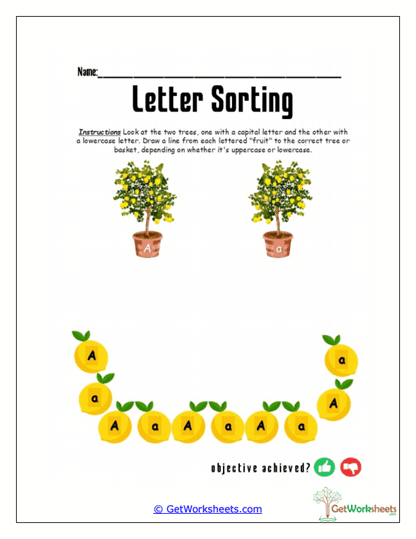
Tidy the Letter A
In this worksheet, students connect uppercase and lowercase A by matching fruit to the correct pots. The garden imagery provides a fun and engaging learning experience that motivates young readers. Learners enhance their visual discrimination and sorting accuracy while building alphabet knowledge. This activity also reinforces focus, precision, and early reading readiness in an interactive way.
Alphabet Arranger B
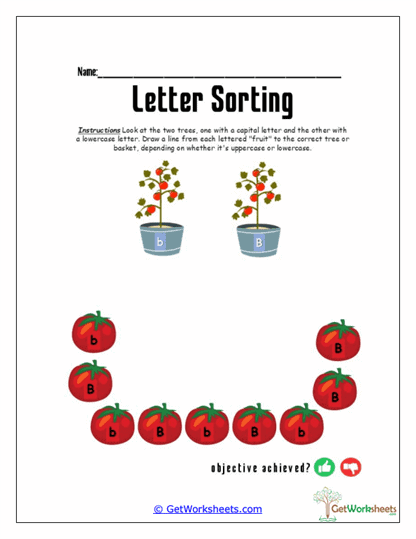
Students sort uppercase and lowercase B by connecting tomatoes to the correct garden pots. The theme helps learners stay engaged while refining their observation and fine motor skills. By comparing curved and straight letter forms, students strengthen visual discrimination and recall. This creative exercise supports foundational literacy and prepares children for handwriting and decoding skills.
Bookmark Us Now!
New, high-quality worksheets are added every week! Do not miss out!