Jamestown Settlement Worksheets
About This Worksheet Collection
The Jamestown Settlement worksheet collection brings early American history to life through inquiry, analysis, and creativity. Students explore the challenges, achievements, and relationships that shaped the first permanent English colony in North America. From leadership dilemmas and archaeological discoveries to myths versus facts, each worksheet invites learners to step into the past and think critically about how perseverance, adaptation, and cooperation made survival possible.
Across the collection, students build historical reasoning, literacy, and problem-solving skills through hands-on activities and primary source analysis. They will evaluate cause and effect, interpret evidence, and write thoughtfully about people and events that defined Jamestown's legacy. By combining factual learning with analytical and creative exercises, these worksheets foster both comprehension and curiosity about the foundations of American history.
Detailed Descriptions Of These Worksheets
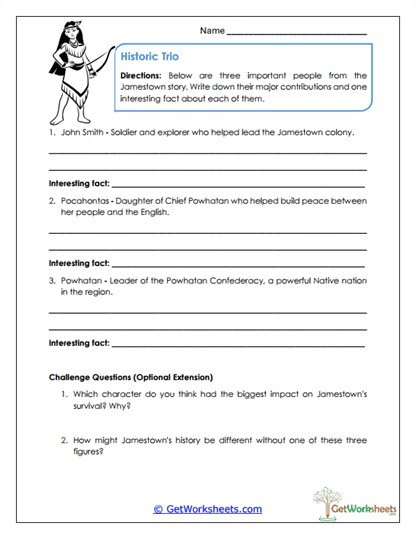
Historic Trio
Students study John Smith, Pocahontas, and Powhatan-the three figures most central to Jamestown's story. They record each person's key contributions and one interesting fact while answering higher-level questions about influence and leadership. The worksheet promotes synthesis of personal roles within broader historical events. It helps learners connect biography, culture, and collaboration in early America.
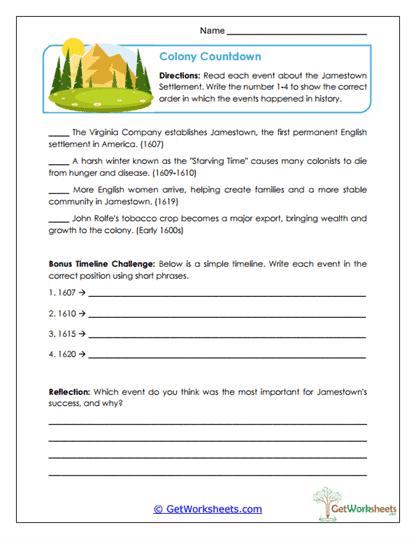
Colony Countdown
This sequencing activity asks students to place four major Jamestown events in chronological order, from its founding through its growth. Learners transfer the events to a timeline and reflect on which turning point mattered most. The task reinforces cause-and-effect understanding and visualization of historical development. It's an excellent way to build temporal reasoning in history studies.
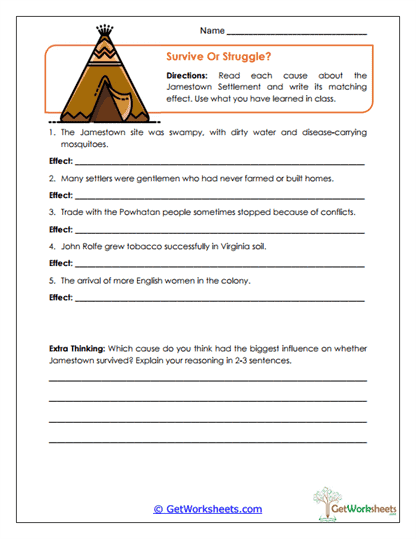
Survive or Struggle
Students analyze why Jamestown settlers faced hardships, linking environmental and human causes to their effects. Using a structured chart, they explore how geography, skill shortages, and conflict shaped outcomes. A reflection section challenges them to determine which factor most influenced survival. The worksheet strengthens critical thinking about resource management and adaptation.
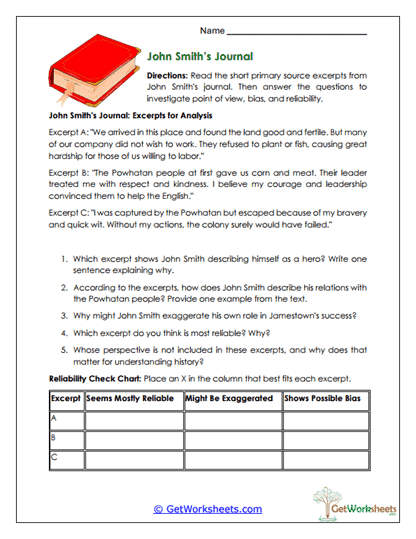
John Smith's Journal
Learners read excerpts from John Smith's writings and evaluate his perspective and bias. They identify exaggeration, tone, and reliability, using a chart to weigh evidence. The exercise develops analytical reading and historical interpretation skills. It provides a real-world introduction to primary source evaluation and author credibility.
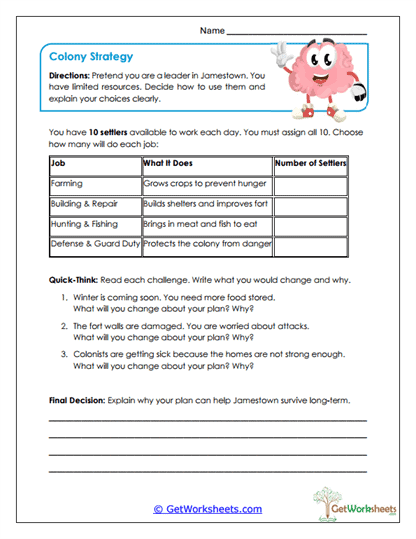
Colony Strategy
In this decision-making simulation, students act as leaders assigning settlers to key tasks like farming, defense, and construction. They justify their plans and adapt when new challenges arise. The worksheet promotes teamwork, reasoning, and problem-solving through historical context. It's a creative way to experience the complexities of early colonial leadership.
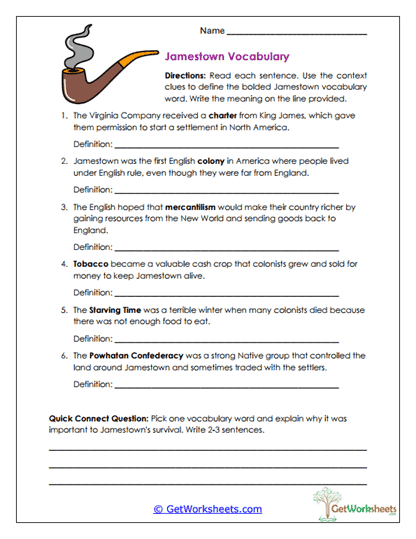
Jamestown Vocabulary
Students learn and apply key terms such as colony, mercantilism, and tobacco using contextual sentences. They infer meaning and explain why one term was vital to Jamestown's success. This vocabulary task builds comprehension of economic and political language. It reinforces both literacy and history content mastery.
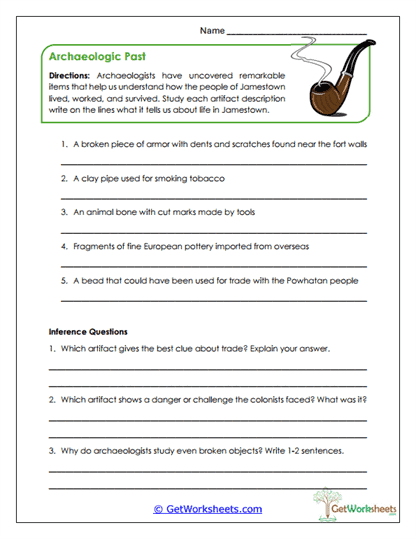
Archaeologic Past
Acting as "junior archaeologists," students interpret artifacts uncovered at Jamestown-from tools to animal remains-to infer daily life in the colony. They draw conclusions about survival, trade, and cultural exchange. The activity nurtures observation, inference, and evidence-based reasoning. It's a discovery-based approach to understanding how historians reconstruct the past.
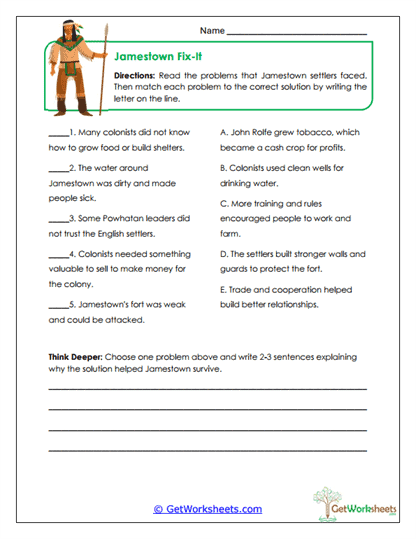
Jamestown Fix-It
This problem-solution matching activity explores how colonists overcame early hardships like famine, unsafe water, and poor shelter. Students pair each problem with the solution that helped Jamestown endure. A reflection prompt deepens analysis of why these changes worked. It's a structured way to illustrate innovation and resilience in history.
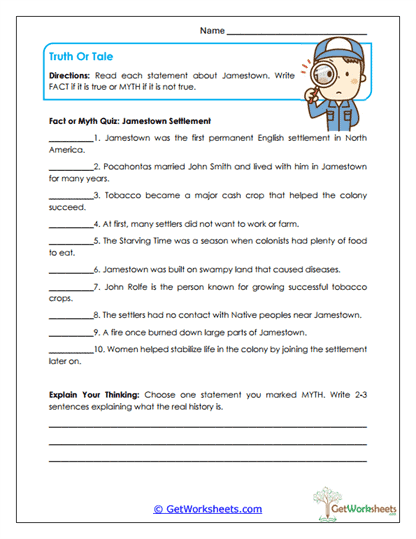
Truth or Tale
Students sort historical facts from common myths about Jamestown, such as clarifying Pocahontas's true story. They justify each answer with reasoning and evidence. This engaging quiz builds accuracy, discernment, and fact-checking skills. It helps students become critical consumers of historical information.
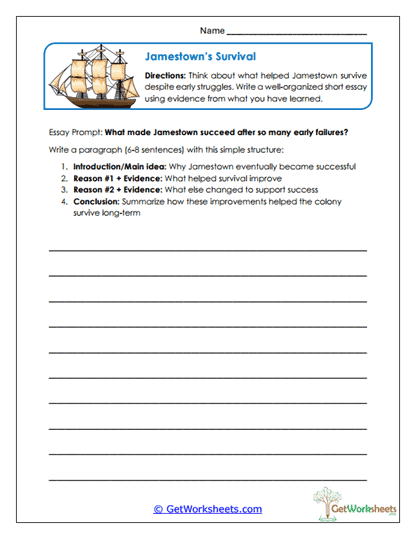
Jamestown's Survival
In this structured writing task, students explain what factors allowed Jamestown to succeed after its early difficulties. They follow a guided paragraph structure with introduction, evidence, and conclusion. The exercise reinforces organized, evidence-based writing. It's a thoughtful reflection on perseverance and adaptation in colonial America.
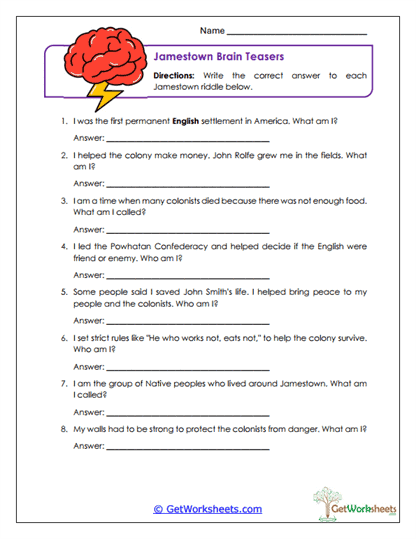
Brain Teasers
Students solve eight riddles that describe key Jamestown facts, figures, and events. They use context clues to identify answers related to leadership, geography, and economy. The activity promotes recall, reasoning, and vocabulary retention. It's a playful yet educational way to review major concepts.
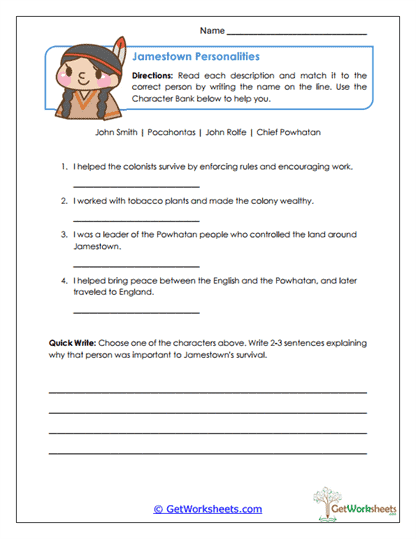
Jamestown Personalities
Learners match historical figures-John Smith, Pocahontas, John Rolfe, and Powhatan-to short descriptions of their roles and achievements. A short writing extension asks which person most influenced Jamestown's success and why. The task supports comprehension, summarization, and evidence-based writing. It's an engaging conclusion that reinforces how individual actions shaped the colony's survival.
Bookmark Us Now!
New, high-quality worksheets are added every week! Do not miss out!