Iterative Refinement Loop Worksheets
About This Worksheet Collection
This collection introduces students to the concept of iterative refinement-an essential process in writing, problem-solving, and AI development. Through engaging activities, learners explore how ideas evolve through cycles of drafting, evaluating, adjusting, and improving. Each worksheet uses relatable examples, hands-on prompt revisions, and interactive scenarios to show that refinement is not just an AI technique but a universal skill for building stronger work.
Across the collection, students practice analyzing prompts, diagnosing ambiguity, applying feedback, revising text, and identifying when a piece is finished. They learn how clarity, specificity, and constraints shape outcomes and how small adjustments can significantly change tone, meaning, or effectiveness. By connecting human revision strategies with AI refinement loops, these worksheets build metacognition, communication skills, and digital literacy.
Detailed Descriptions Of These Worksheets
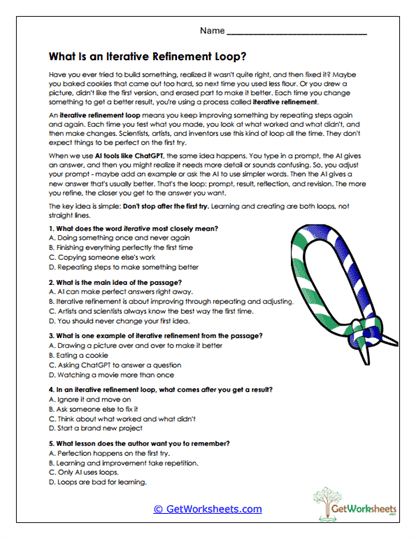
What Is a Refinement Loop?
Students read an informational passage explaining how ideas improve through repeated cycles of revision. They answer questions that help them understand why scientists, artists, and AI systems refine outputs over time. The activity emphasizes the importance of feedback and adjustment. It encourages learners to see revision as a natural-and valuable-part of any creative or academic process.
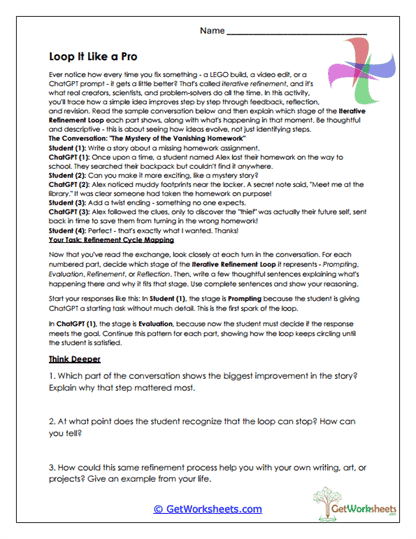
Loop It Like a Pro
This worksheet presents a conversation between a student and ChatGPT that demonstrates each step of an iterative refinement loop. Learners label each exchange with the correct stage of the cycle and examine how the response evolves. Reflection questions invite students to connect refinement strategies to their own writing and projects. It builds awareness of how clarity grows through multiple revisions.
Prompt Surgery
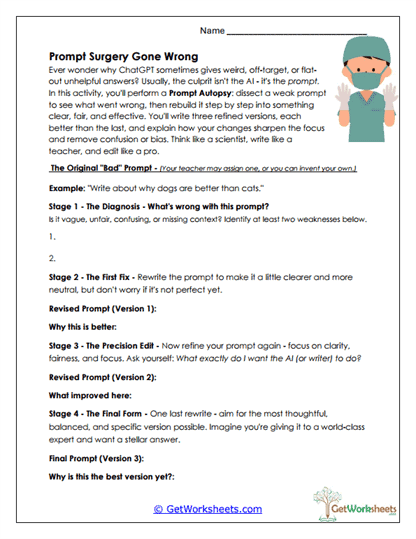
Students identify weaknesses in vague or imprecise prompts and learn to repair them through staged revisions. They rewrite prompts to increase clarity, add context, and reduce bias, explaining why each version is stronger. The activity helps learners understand how wording influences the quality of AI responses. It builds analytical thinking and strengthens revision habits.
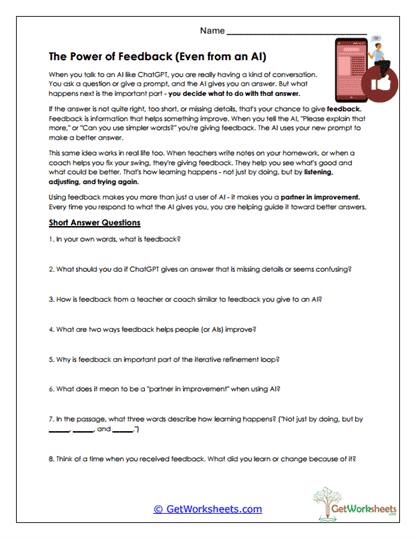
Power of Feedback
This worksheet explains how feedback works like a conversation that improves both human and AI writing. Students answer comprehension questions that require paraphrasing and application of ideas. They reflect on how feedback reveals unclear or missing information. The activity builds reading comprehension and encourages a growth-oriented mindset.
Prompt Constraints
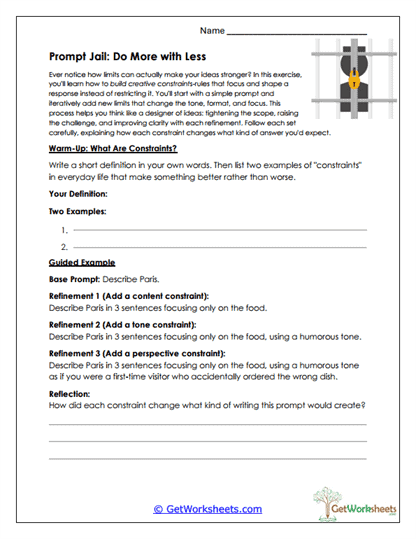
Students explore how adding purposeful limits-such as tone, length, or perspective-can sharpen a prompt. They practice defining constraints and apply them to a base prompt to see how responses change. This task reinforces the value of structure in writing and demonstrates how constraints can promote clarity and creativity.
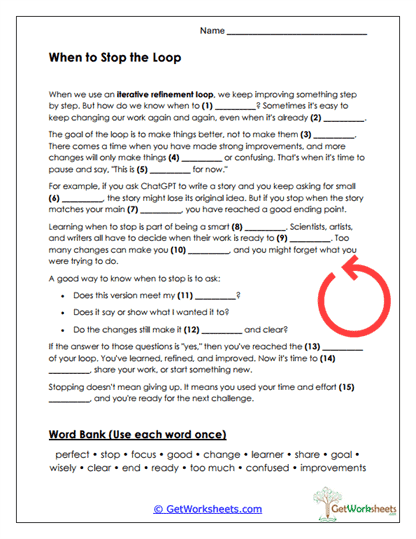
Stop the Loop
Learners examine when iterative revision should come to an end instead of continuing endlessly. They complete fill-in-the-blank questions using a word bank and analyze examples of over-refining. The activity encourages students to judge when a version is complete, clear, and aligned with its purpose. It builds editing confidence and metacognitive skills.
Sculpting Stories
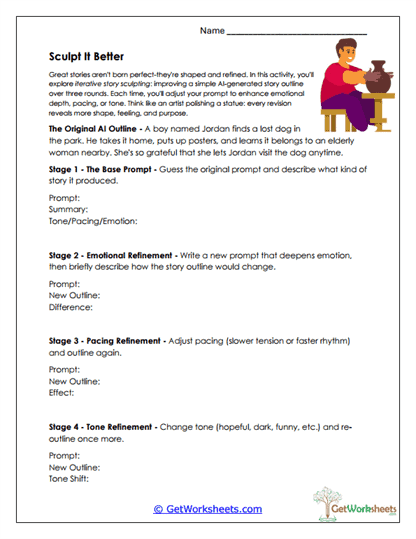
Students refine a story outline by adjusting emotional tone, pacing, and narrative focus. They rewrite prompts in phases and explain how each change shifts the story's direction. The activity deepens understanding of storytelling mechanics and demonstrates how iterative adjustments shape narrative impact.
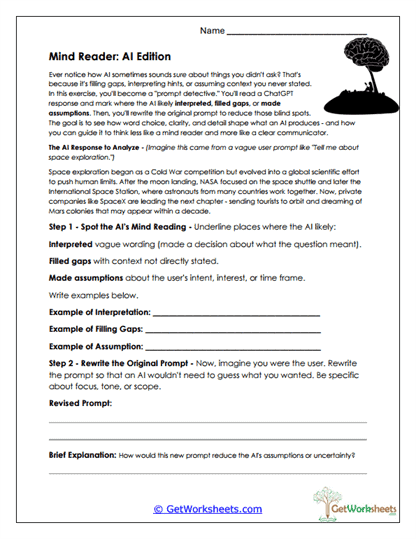
AI Mind Reading
Learners analyze an AI response to identify where the model filled in gaps or inferred details from a vague prompt. They then revise the prompt to reduce ambiguity and improve accuracy. The worksheet strengthens precise writing and teaches students how AI interprets unclear wording.
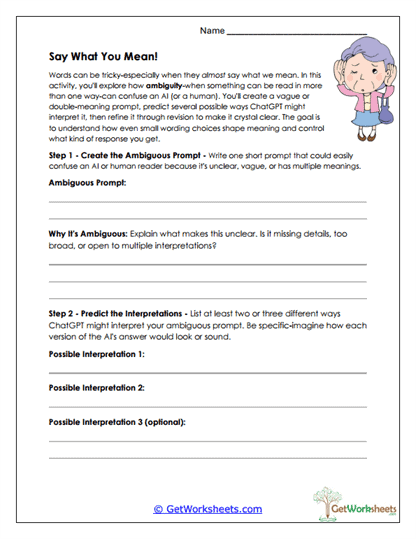
Clear Communication
Students write intentionally ambiguous prompts and explain why they are unclear. They predict multiple interpretations an AI might generate, showing the risks of vague instructions. The activity helps learners appreciate the importance of specificity and clarity in effective communication.
Prompt Quest
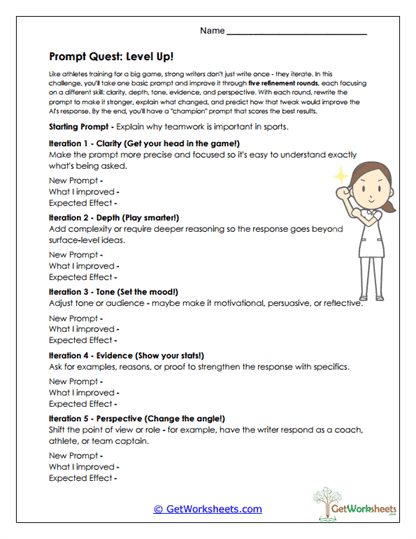
This worksheet guides students through a five-step refinement challenge where a basic prompt is revised repeatedly. Each iteration emphasizes a different writing skill, such as tone, depth, or evidence. Students explain expected improvements, reinforcing their understanding of how targeted adjustments enhance responses.
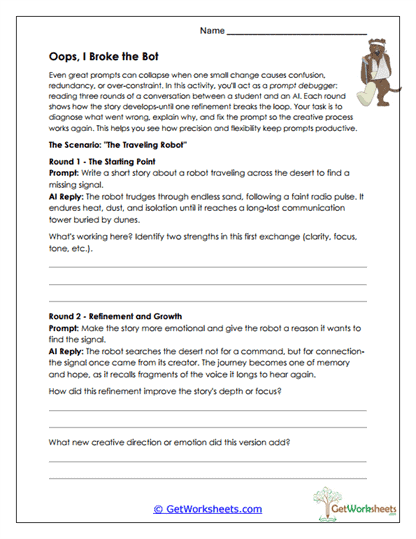
Story Debugging
Learners examine a developing story and evaluate how each refined prompt changes clarity, emotion, and direction. They identify what improved and what new possibilities emerged. This activity encourages students to think flexibly about narrative development and understand how small edits shift meaning.
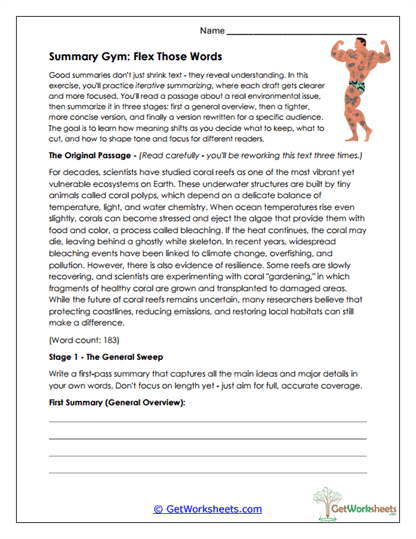
Summary Gym
Students read an informational passage and create three increasingly concise summaries. Each round requires them to refine wording, prioritize key ideas, and eliminate unnecessary detail. The activity strengthens comprehension and teaches students how iterative drafting produces clearer, tighter writing.
Bookmark Us Now!
New, high-quality worksheets are added every week! Do not miss out!