Industrialization and the Gilded Age Worksheets

About This Worksheet Collection
This comprehensive set of Industrialization and Gilded Age worksheets provides educators with a rich mix of historical analysis, primary source interpretation, and critical thinking activities. Each printable resource invites students to explore major technological changes, economic shifts, political developments, and social transformations that defined the late 19th-century United States. Whether used in a full unit, a U.S. history course, or supplemental practice, the worksheets offer clear structure and meaningful learning opportunities that engage students in studying one of the nation's most pivotal eras.
As students progress through the collection, they develop essential academic skills including historical reasoning, chronological sequencing, close reading, evidence-based writing, and analytical comparison. The variety of tasks-from timelines and matching activities to argumentative prompts and perspective-taking-supports learners with diverse strengths and learning styles. By working through these activities, students gain a deeper understanding of how industrial growth reshaped American life while also strengthening literacy, critical thinking, and social studies proficiencies.
Detailed Descriptions Of These Worksheets
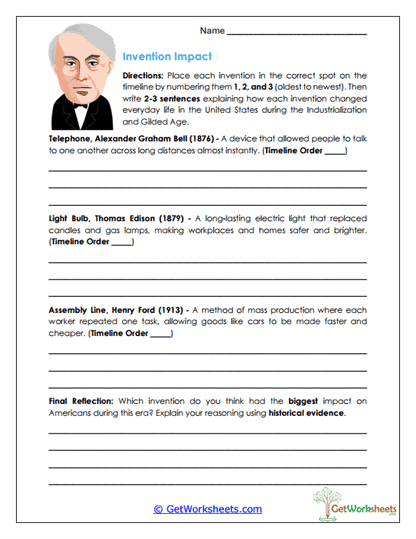
Invention Impact
Students explore how three groundbreaking innovations reshaped daily life during the Industrialization era by placing them in chronological order on a timeline. They then write brief explanations outlining why each invention mattered and how it altered communication, production, or everyday routines. The worksheet concludes with a short reflective task that pushes learners to determine which invention had the most lasting influence and justify their reasoning with historical details. By blending sequencing with explanatory writing, this activity supports both content mastery and thoughtful historical analysis.
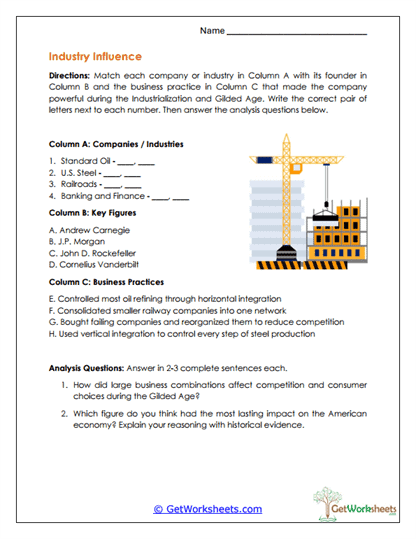
Industry Influence
This worksheet helps students make sense of major Gilded Age companies, their founders, and the business strategies that fueled their rise. Learners complete a matching exercise that clarifies how industrial leaders used practices like vertical and horizontal integration. Afterward, students respond to short analytical questions that encourage them to think about economic power, monopolies, and competition. These tasks prompt learners to connect industrial behavior to broader consequences for consumers and the U.S. economy.
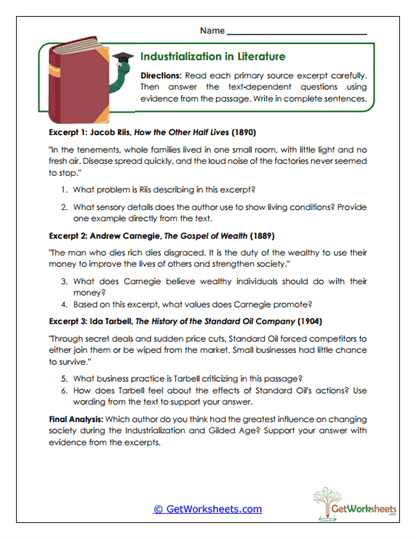
Industrialization in Literature
Students engage with excerpts from Jacob Riis, Andrew Carnegie, and Ida Tarbell to compare different perspectives on life during the Industrialization era. They answer text-dependent questions that require careful reading and precise evidence use. Through this process, learners examine issues such as urban poverty, philanthropy, and the dangers of unchecked corporate power. The final writing prompt asks them to evaluate which author had the strongest societal impact, encouraging well-supported historical interpretation.
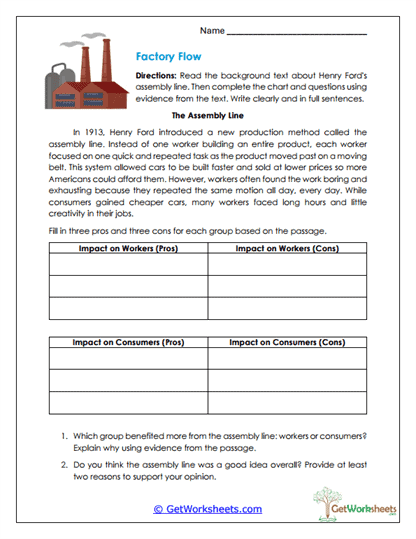
Factory Flow
In this worksheet, students read a clear overview of Henry Ford's assembly line before sorting its advantages and drawbacks for both workers and consumers. The chart format helps them distinguish between multiple viewpoints and understand the trade-offs of mass production. After categorizing the information, students respond to written questions that require them to evaluate the overall impact of Ford's innovation. This activity encourages balanced reasoning and evidence-based judgment about a major industrial development.
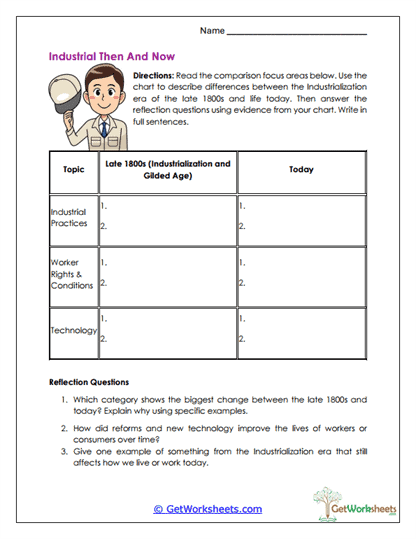
Industrial Then and Now
Learners use a comparison chart to examine how industrial work, technology, and labor conditions have changed from the late 1800s to today. They identify both continuities and major shifts, drawing on historical knowledge as they complete the chart. Reflection questions encourage students to connect past industrial practices to modern workplaces and innovations. This activity sharpens comparative thinking and helps students understand long-term historical influence.
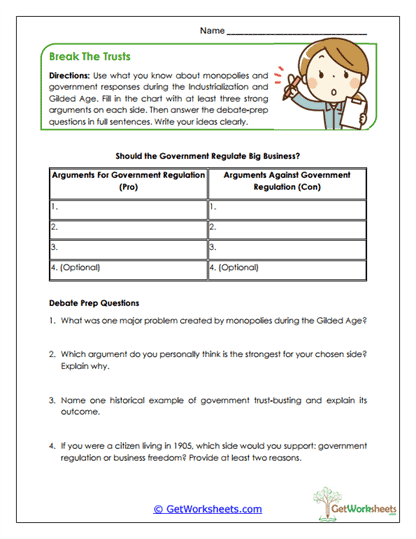
Break the Trusts
Students analyze the role of monopolies in Gilded Age America and build a structured pro-and-con chart evaluating government regulation. They generate multiple arguments on each side, using historical knowledge to support their ideas. After developing their chart, students tackle preparation questions that guide them toward forming and defending a clear position. The worksheet builds essential skills for debate, persuasive reasoning, and evidence-driven argumentation.
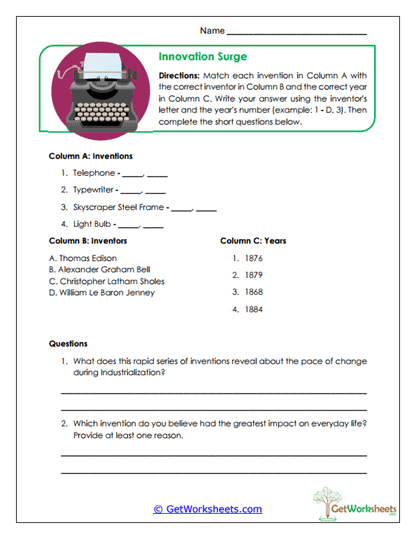
Innovation Surge
Learners match a selection of key Industrialization-era inventions with their inventors and the correct years they were introduced. This activity reinforces chronological reasoning and highlights the rapid pace of technological progress during the period. Students then respond to short-answer prompts that invite them to evaluate how inventions influenced communication, production, or everyday life. The worksheet encourages thoughtful consideration of what drives major societal change.
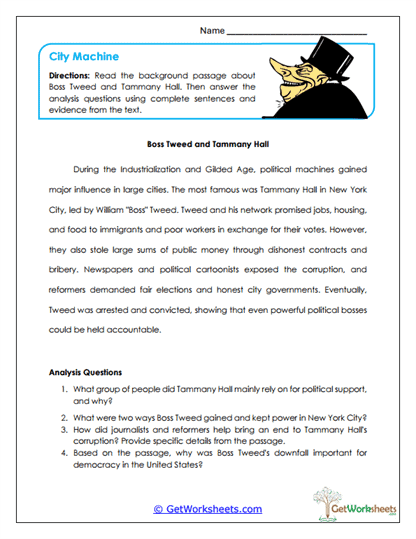
City Machine
Students read an informational passage about Boss Tweed and the political influence of Tammany Hall before answering evidence-based questions. The worksheet guides learners in examining corruption, reform efforts, and the impact political machines had on urban life. Through text analysis, students consider why such systems developed and how they shaped public trust. This activity deepens civic understanding and strengthens informational reading skills.
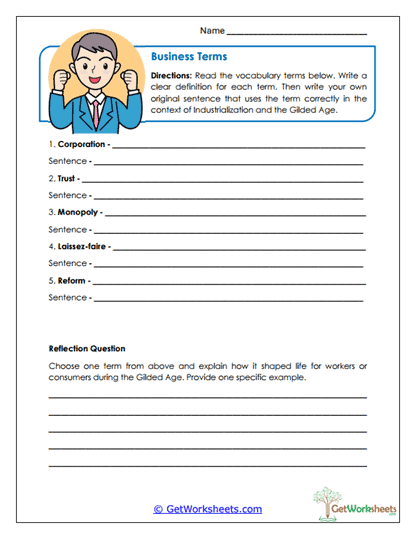
Business Terms
In this vocabulary-focused worksheet, students define key terms related to Industrialization and big business. They then craft original sentences that use each word accurately in a historical context. This dual approach helps learners internalize economic and industrial terminology while reinforcing content knowledge. A final reflective item encourages students to think about how these concepts shaped real historical events.
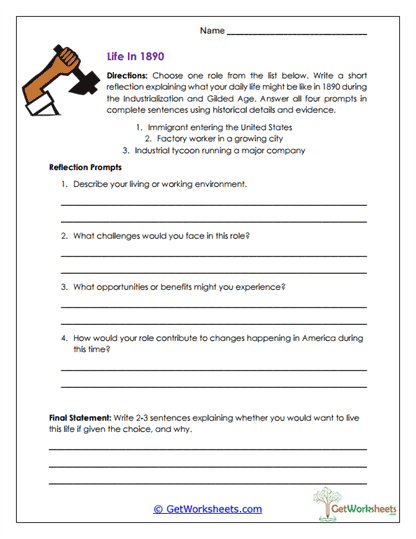
Life in 1890
Students select a perspective-immigrant, factory worker, or industrial tycoon-and write a reflective response describing what daily life might have been like in 1890. Four guiding prompts help them use historical details to explain living conditions, opportunities, and struggles faced by different groups. The activity encourages empathy and perspective-taking while strengthening evidence-based writing skills. It helps students see how broader industrial forces shaped individual experiences.
Hidden Shine
Learners analyze a quote by Mark Twain and use it to explain the deeper significance of the term "Gilded Age." They explore contradictions between outward wealth and underlying social challenges, citing historical examples in their paragraph. The task encourages students to interpret figurative language in a historical context and express their ideas clearly. This worksheet reinforces analytical writing and conceptual understanding.
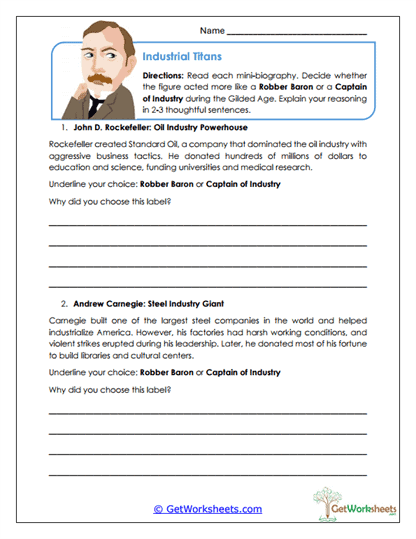
Industrial Titans
Students read short biographies of John D. Rockefeller and Andrew Carnegie before deciding whether each industrial leader should be viewed as a "Robber Baron" or a "Captain of Industry." They underline their chosen label and write a concise explanation supported with textual evidence. This task helps learners grapple with the complexities of industrial leadership, including philanthropic giving, monopolistic behavior, and economic influence. It encourages nuanced judgment and sharpens critical reading skills.
Bookmark Us Now!
New, high-quality worksheets are added every week! Do not miss out!