Immigration and Ellis Island Worksheets
About This Worksheet Collection
The Immigration and Ellis Island worksheet collection immerses students in the powerful stories, challenges, and hopes of immigrants who helped shape America. Through historical fiction, primary-source style readings, vocabulary development, and creative writing, this collection helps learners explore what it meant to arrive at Ellis Island and pursue a new life in the United States. Each activity balances emotional connection with historical accuracy, fostering both empathy and civic understanding.
Across these worksheets, students develop strong reading, writing, and critical-thinking skills while learning about immigration systems, citizenship, and policy. They'll analyze primary details, compare past and present migration experiences, and express their perspectives through argument and narrative writing. Together, these lessons encourage students to view immigration not just as history-but as a living, human story of perseverance, identity, and belonging.
Detailed Descriptions Of These Worksheets
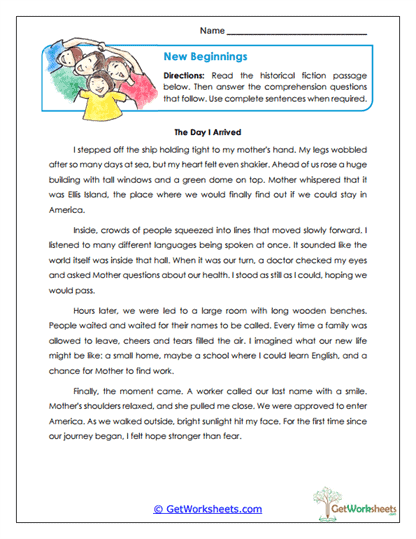
New Beginnings
Students read a touching fictional account of an immigrant's arrival at Ellis Island and answer comprehension questions with text evidence. The narrative builds empathy by illustrating courage, fear, and hope in a new country. Learners strengthen inference and fluency while connecting emotionally to the human side of history. It's an ideal introduction to the immigrant experience.
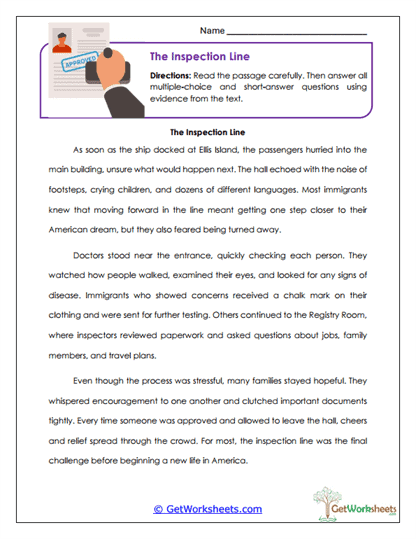
The Inspection Line
In this nonfiction reading, students learn how immigrants were examined and questioned at Ellis Island. They respond to multiple-choice and written prompts that test comprehension and reasoning. The activity highlights the endurance of those seeking opportunity despite strict procedures. It blends factual learning with reflection on fairness and perseverance.
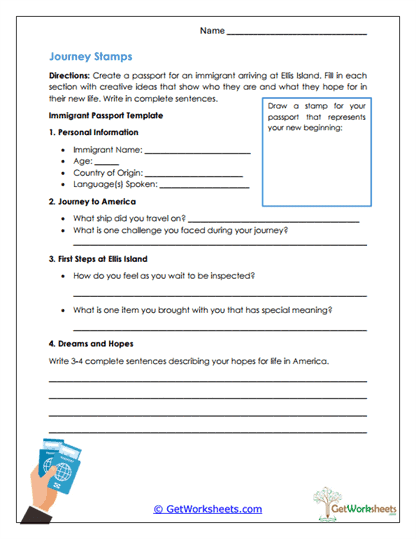
Journey Stamps
Students design an imaginative "immigrant passport" that records their fictional journey to America. They describe travel details, personal dreams, and new goals in creative prose. The exercise merges historical context with storytelling, allowing learners to personalize history. It's a memorable blend of social studies and creative writing.
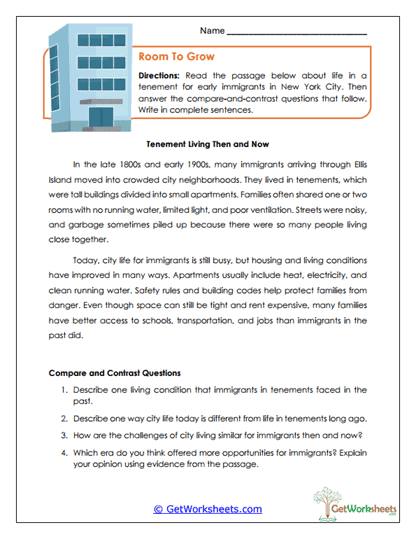
Room to Grow
Through a compare-and-contrast passage, students explore tenement life in early 1900s New York versus modern living conditions. They identify progress and persistent challenges in housing and opportunity. The activity encourages evidence-based comparison and civic reflection. It connects past reform efforts to ongoing discussions about equity.
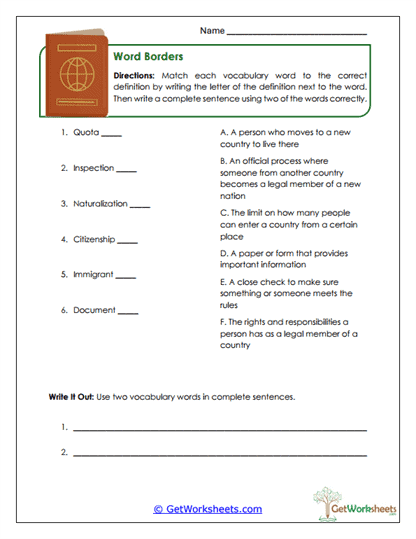
Word Borders
This vocabulary builder introduces key terms like quota, naturalization, and citizenship. Students match each definition and write original sentences to demonstrate understanding. The exercise strengthens domain-specific word knowledge vital for civics and social studies. It helps learners use academic language to discuss immigration with precision.
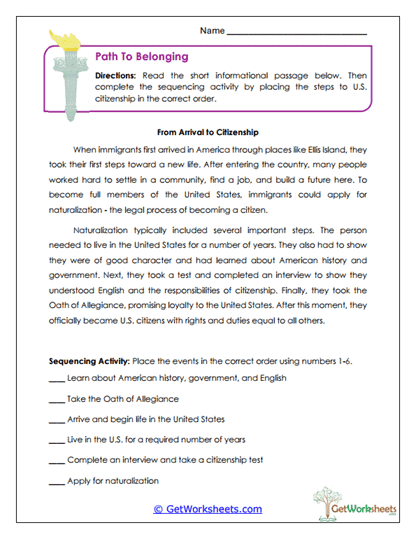
Path to Belonging
Students read a short informational text outlining the naturalization process from arrival to citizenship. They then complete a sequencing activity to reinforce comprehension. The worksheet provides clarity on civic duties and rights while promoting logical organization. It's a practical, informative overview of how immigrants become citizens.
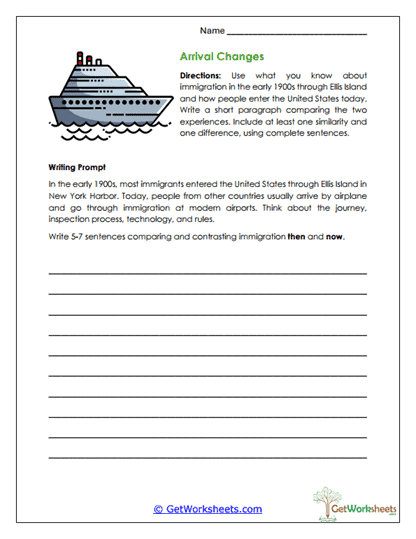
Arrival Changes
In this comparative writing task, learners contrast Ellis Island immigration with modern air travel. They discuss similarities and differences in process, technology, and experience. The exercise supports structured paragraph writing and analytical reasoning. It's an accessible way to bridge historical and contemporary perspectives.
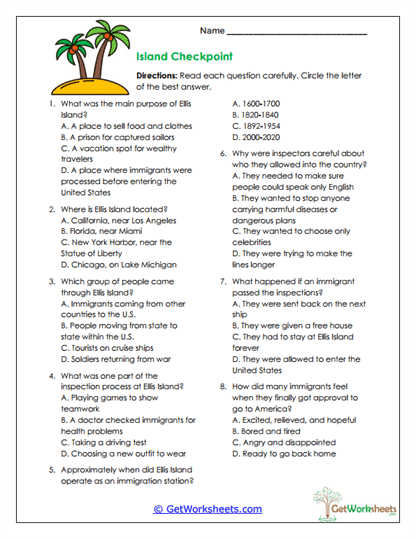
Island Checkpoint
This multiple-choice quiz reviews key facts about Ellis Island, including geography, inspection systems, and immigrant experiences. Students recall information and apply reasoning to confirm understanding. The activity works well as a review or assessment. It ensures mastery of core immigration concepts through factual recall.
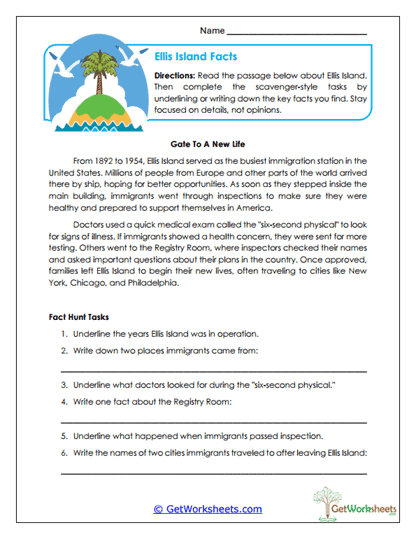
Ellis Island Facts
Students complete a "fact hunt" by locating key details within an informational passage. This interactive format keeps readers engaged while reinforcing text evidence skills. Learners practice identifying important facts about Ellis Island's history and operations. It's an excellent activity for developing accuracy and focus in informational reading.
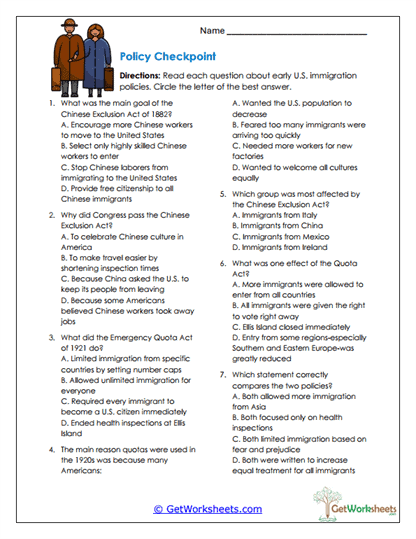
Policy Checkpoint
Learners explore U.S. immigration laws such as the Chinese Exclusion Act and national quota systems. Multiple-choice questions guide them through the social and political implications of each policy. The exercise promotes understanding of fairness and reform in immigration history. It encourages analysis of how legislation reflects public values.
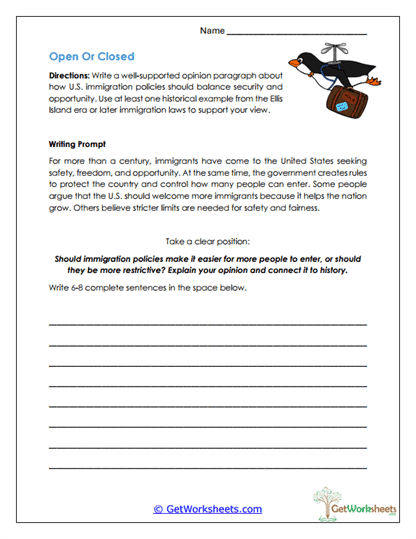
Open or Closed
Students write a persuasive paragraph about how the U.S. should balance security and opportunity in immigration policy. They support arguments with historical examples from Ellis Island and later laws. The task builds evidence-based reasoning and civic engagement. It invites students to think critically about rights and responsibilities in a modern democracy.
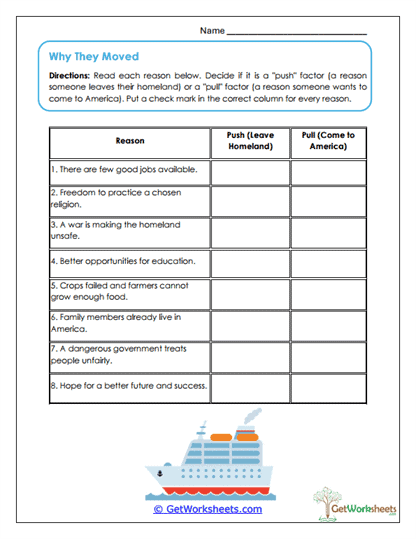
Why They Moved
Learners explore "push" and "pull" factors behind migration using a classification chart. They identify reasons people leave home countries and what attracts them to new ones. This activity promotes comprehension of global migration causes and human motivation. It's a clear, visual approach to understanding movement and opportunity across history.
Bookmark Us Now!
New, high-quality worksheets are added every week! Do not miss out!