Idioms and Expressions Worksheets
About This Worksheet Collection
This Idioms and Expressions worksheet collection provides a comprehensive and engaging set of activities designed to help students interpret, use, and appreciate figurative language. Through tasks such as matching, fill-ins, contextual analysis, rewriting, error checking, scene interpretation, and dialogue completion, students encounter idioms from multiple angles. The worksheets present idioms in relatable, real-life situations and give learners repeated opportunities to decode meaning, compare expressions, and apply them in authentic communication.
As students progress through the collection, they strengthen key literacy skills including inference, context-clue reasoning, vocabulary development, and recognition of nonliteral language. They also sharpen their writing fluency by transforming literal sentences into figurative expressions and explaining idioms in their own words. By exploring idioms creatively—through reading, writing, speaking, drawing, and analytical thinking—learners build confidence and skill with one of the most expressive and memorable features of English.
Detailed Descriptions Of These Worksheets
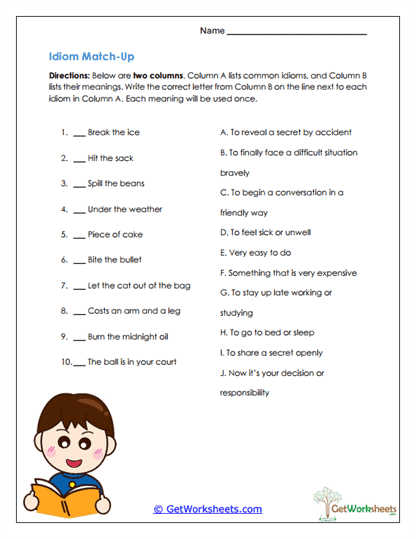
Idiom Match-Up
Students pair common idioms with their correct meanings, encouraging precise interpretation of figurative expressions. The task requires close reading as learners distinguish literal definitions from the idiomatic meanings conveyed by the phrases. By working through the list, students increase familiarity with expressions used in everyday English and strengthen vocabulary comprehension. This matching format also supports critical thinking about metaphorical language and nuance.
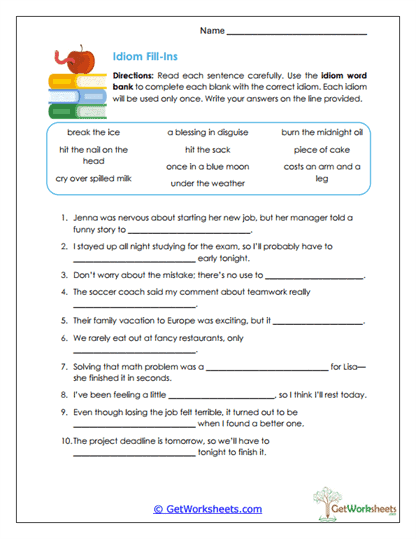
Idiom Fill-Ins
Learners select an appropriate idiom from a word bank to complete each sentence in a logical and natural way. Because each sentence provides contextual clues, students must consider tone, intent, and implied meaning before choosing an expression. The activity reinforces how figurative language functions in real communication and expands students’ working vocabulary. It also helps students differentiate between idioms that share similar themes.
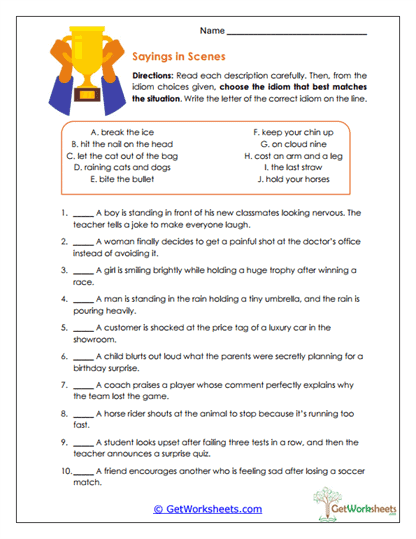
Sayings in Scenes
Students examine brief scenario descriptions and decide which idiom best fits each situation. This activity strengthens inference skills by requiring learners to interpret emotional cues and contextual details before making a selection. As they compare potential answers, students deepen their understanding of how idioms communicate mood, attitude, or implied meaning. The worksheet broadens exposure to figurative expressions and sharpens reading analysis.
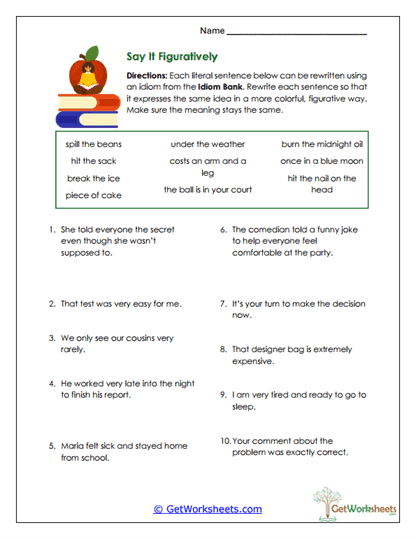
Figurative Rewrite Task
Students transform literal sentences into figurative ones by choosing idioms from an idiom bank. They must preserve the original meaning while crafting a more expressive, idiomatic version. This exercise encourages creative thinking and enhances stylistic flexibility in writing. It also supports vocabulary growth as students learn how to apply idioms to communicate ideas with greater color and personality.
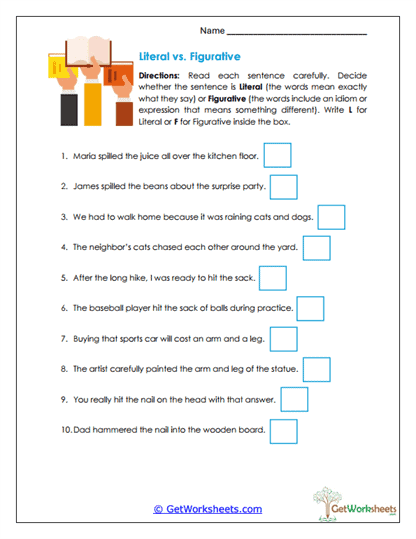
Literal vs. Figurative Sort
Learners read ten sentences and determine whether each one conveys literal meaning or figurative meaning. This classification work builds awareness of how language shifts when idioms are introduced. Students practice distinguishing surface-level descriptions from expressions with nonliteral intent. The activity improves comprehension, interpretation skills, and recognition of figurative language in reading.
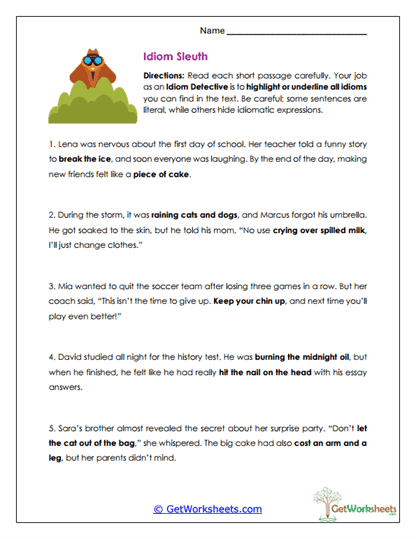
Sleuth
Students read short passages and identify idioms embedded within the text. Because some sentences are literal and others figurative, learners must analyze each line carefully to determine which expressions qualify as idioms. This close-reading task helps students locate figurative language naturally occurring in extended text. It strengthens overall comprehension and highlights how authors use idioms for tone and emphasis.
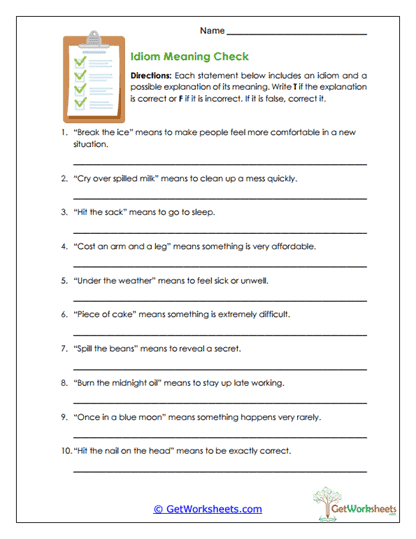
Meaning Check
Students evaluate whether each provided idiom definition is accurate and correct any that are not. This activity ensures learners understand idiomatic expressions precisely and helps clear up common misconceptions. By comparing incorrect and correct meanings, students reinforce vocabulary accuracy and improve their ability to use idioms appropriately. The task encourages critical reasoning about figurative language.
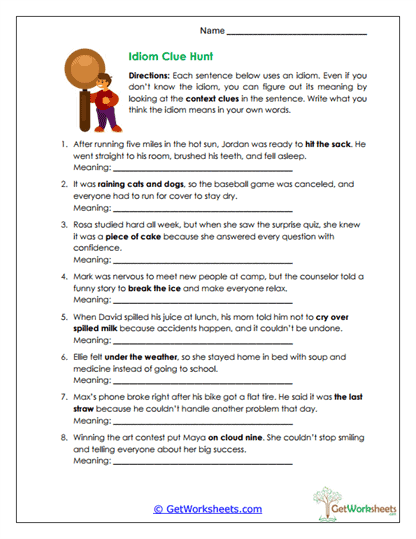
Clue Hunt
Each sentence in this worksheet includes an idiom, and students use context clues to infer its meaning. Learners write the meaning in their own words, showing deep comprehension rather than simple memorization. This process encourages analytical reading and strengthens students’ ability to decode unfamiliar idioms independently. It also enriches vocabulary through authentic application.
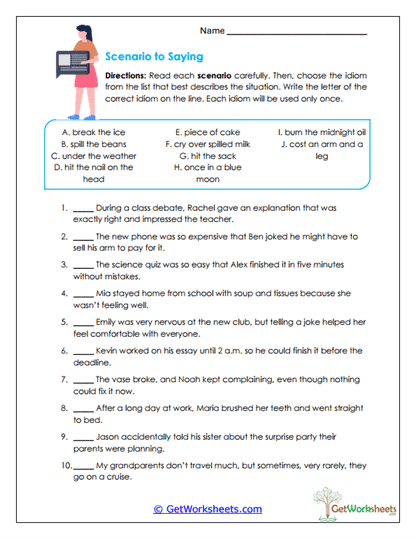
Scenario to Saying
Students read a short scenario and choose the idiom that best describes it. This activity highlights how idioms can succinctly capture emotions, reactions, or situations. Learners must interpret tone and implied meaning before selecting the correct phrase. It supports inference, contextual understanding, and expressive vocabulary development.
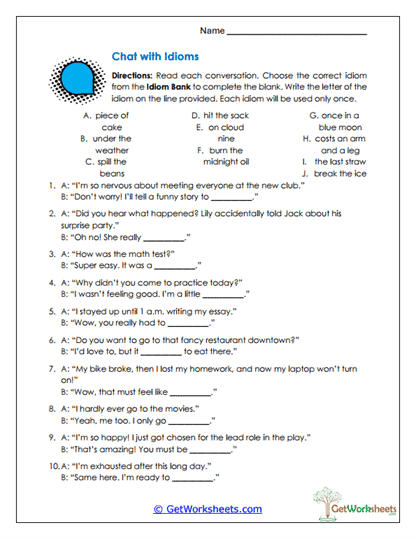
Have a Chat
This worksheet presents short conversational exchanges with blanks for idioms. Students choose idioms that fit naturally into everyday dialogue, reinforcing how expressions sound in spoken English. The task strengthens communication skills by encouraging attention to tone, emotion, and context. It also supports oral language development and vocabulary retention.
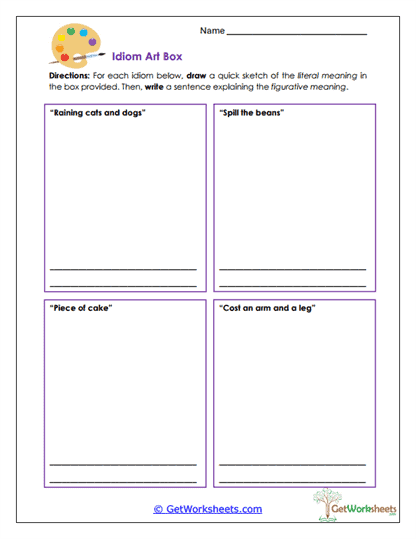
Art Box
Learners draw the literal meaning of an idiom and write a sentence explaining its figurative meaning. This visual-verbal combination deepens understanding by helping students contrast what the words say with what the phrase actually means. The drawing component boosts creativity and memory, while the written explanation reinforces comprehension and expressive skills. This worksheet accommodates multiple learning styles and strengthens vocabulary retention.
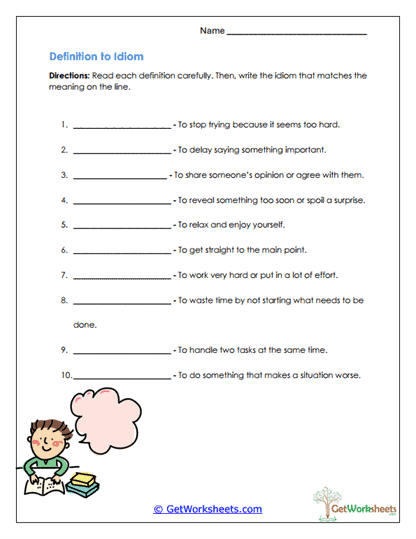
Definition to Idiom
Students read definitions of figurative meanings and supply the idiom that matches each one. This reverse-application task strengthens vocabulary recall and deepens understanding of idioms outside of contextual clues. By connecting precise meanings to the appropriate expressions, learners build stronger mastery of nonliteral language. The activity also boosts critical thinking as students distinguish among idioms with related themes.
Bookmark Us Now!
New, high-quality worksheets are added every week! Do not miss out!