How To Process Writing Worksheets
About This Worksheet Collection
This How To Process Writing worksheet collection teaches students the essential skills needed to write clear, logical, and effective step-by-step instructions. From adding transition words to rewriting vague steps, identifying missing information, and adapting writing for different audiences, these worksheets guide learners through every aspect of procedural writing. Students explore how to use precise vocabulary, logical sequencing, complete materials lists, and smooth transitions-all key elements in crafting accurate, reader-friendly how-to texts.
Across the collection, learners practice foundational and advanced skills such as planning tasks, evaluating incomplete directions, adjusting tone, and writing technical steps. They also analyze branching processes and real-world procedures to understand how instructions vary by purpose. These worksheets build the clarity, logic, and communication abilities needed for both academic and practical writing situations.
Detailed Descriptions Of These Worksheets
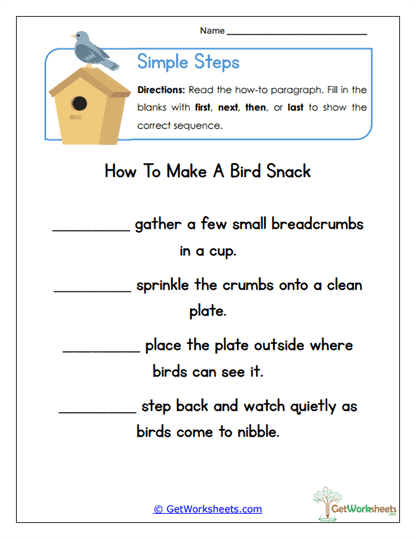
Simple Steps
Students fill in missing sequence words-first, next, then, and last-in a how-to paragraph about making a bird snack. This activity reinforces chronological order and teaches how transitional words guide readers through instructions. It strengthens foundational procedural-writing skills and transitional fluency.
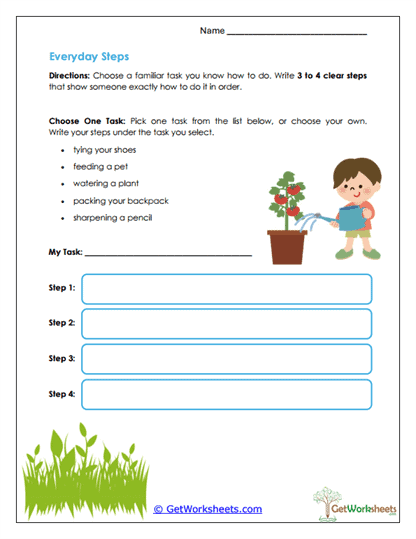
Everyday Steps
Learners choose a familiar task and write 3-4 precise steps someone else could follow. The worksheet emphasizes clarity, sequencing, and breaking tasks into logical parts. Students practice organizing actions and using clear, command-style language in procedural writing.
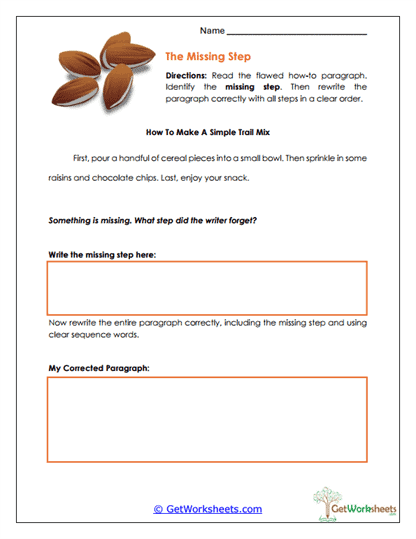
The Missing Step
Students read a flawed how-to paragraph, identify the missing step, and rewrite the entire piece correctly. This teaches evaluation of procedural completeness and reinforces logical sequencing. Learners practice revision and coherence by repairing a faulty process.
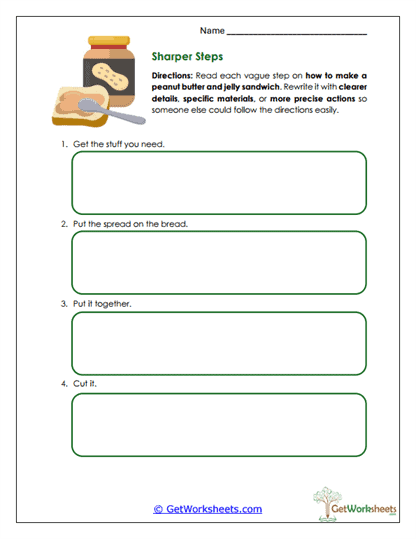
Sharper Steps
Learners rewrite vague instructions for making a peanut butter and jelly sandwich, adding specificity and clear actions. The activity highlights how unclear steps confuse readers and teaches precise verbs, materials identification, and accuracy in instructions.
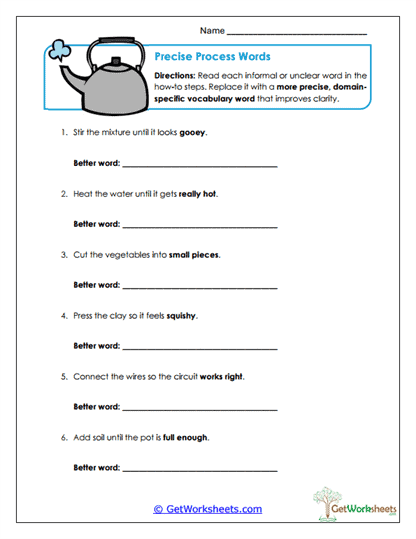
Precise Process Words
Students replace informal or vague wording with domain-specific and precise language appropriate for procedural writing. The task strengthens vocabulary, clarity, and technical accuracy-important for scientific or real-world instructions.
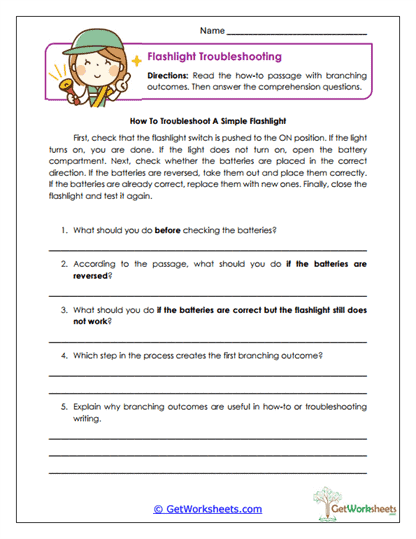
Flashlight Troubleshooting
Students analyze a branching process describing what to do if a flashlight does or does not work. They answer comprehension questions, learning how procedural writing can include conditional pathways. The worksheet builds diagnostic thinking and understanding of non-linear instructions.
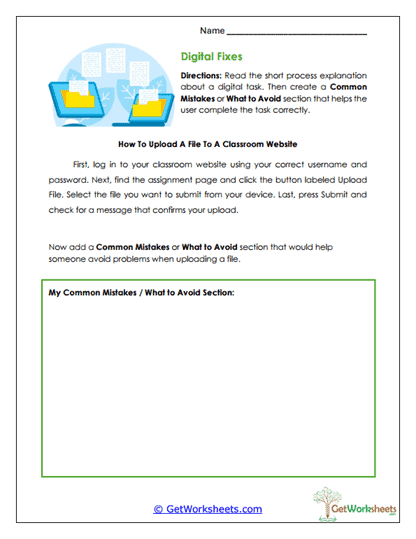
Digital Fixes
Learners read a how-to passage about uploading a file and write a "Common Mistakes / What to Avoid" section. This encourages thinking from the user's perspective, anticipating errors, and refining instructions for clarity and usability.
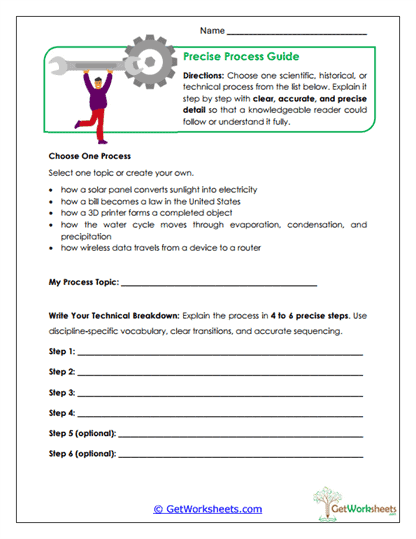
Precise Process Guide
Students select a scientific, technical, or historical process and explain it using 4-6 clear, accurate steps with discipline-specific vocabulary. This strengthens technical communication, sequencing, and explanatory writing skills.
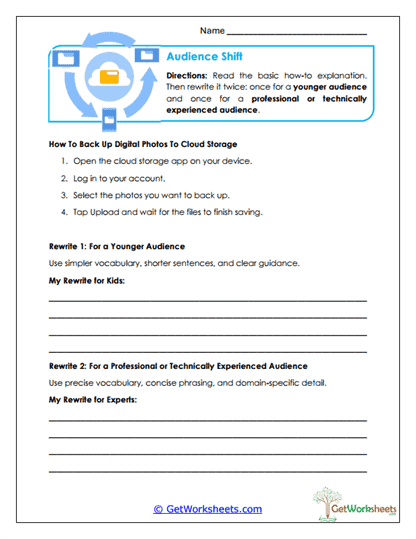
Audience Shift Writing
Learners rewrite the same how-to explanation twice: once for young children and once for professionals. This teaches audience awareness, tone adjustment, and vocabulary control in informational writing. Students see how instructions change based on reader background.
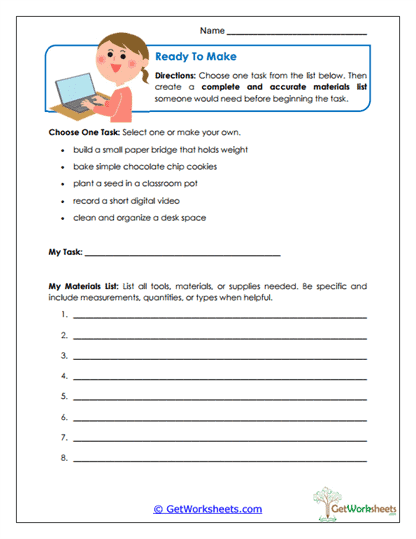
Ready To Make
Students choose a task and create an accurate materials list with tools, ingredients, or supplies-including measurements when needed. This reinforces planning, clarity, and organizational skills important for both school and real-world tasks.
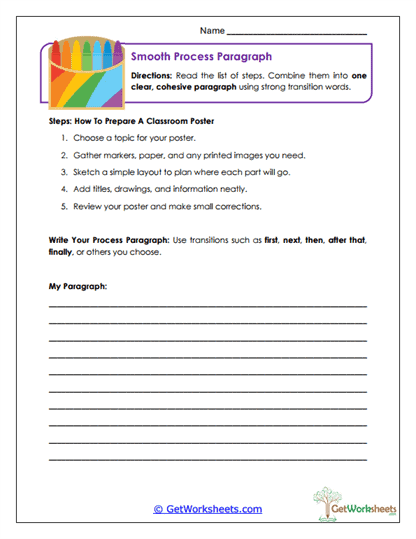
Smooth Process Paragraph
Learners transform a list of poster-making steps into a cohesive paragraph using transitions like first, next, and finally. This teaches how to combine steps smoothly and produce polished process paragraphs with logical flow.
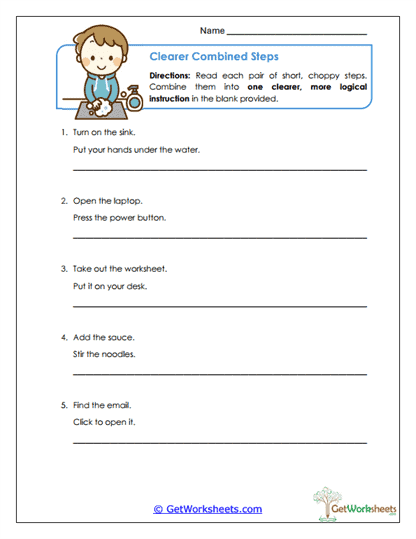
Clearer Combined Steps
Students combine pairs of short, choppy instructions into smooth, concise directions. The activity reinforces fluency, sequencing, and clarity in procedural writing. It helps students eliminate redundancy and write streamlined, effective steps.
Bookmark Us Now!
New, high-quality worksheets are added every week! Do not miss out!