Greenhouse Effect Worksheets
About This Worksheet Collection
This greenhouse-effect worksheet collection brings together a wide range of activities that help students explore one of the most important topics in modern environmental science. The materials balance vocabulary practice, reading comprehension, analytical tasks, and hands-on reasoning so learners can build a multidimensional understanding of climate processes. Whether used for a full lesson sequence or as supplemental practice, these worksheets offer teachers clear, structured support for teaching climate literacy with confidence.
Across the collection, students strengthen essential skills such as interpreting scientific texts, analyzing cause-and-effect relationships, evaluating environmental claims, and organizing information meaningfully. They learn to distinguish natural processes from human-driven changes, classify greenhouse gases, and explain how everyday actions contribute to global warming. The variety of formats-from quizzes to writing prompts to sorting charts-ensures that learners engage with climate science from multiple angles, deepening understanding and promoting critical thinking.
Detailed Descriptions Of These Worksheets
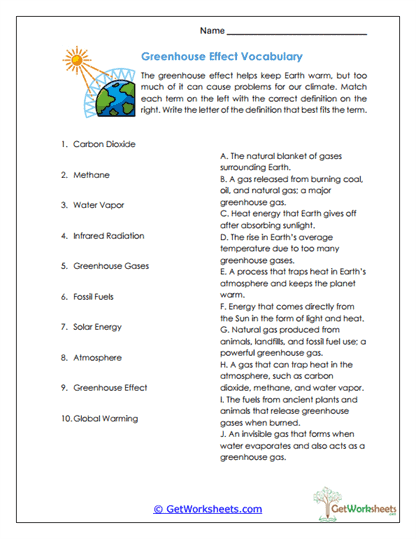
Greenhouse Vocabulary
Learners match key climate-related terms to clear definitions, helping them build a foundation of essential greenhouse-effect vocabulary. As they review terms like methane, fossil fuels, and carbon dioxide, students sharpen their ability to interpret scientific language. The matching format supports comprehension and encourages accuracy in identifying environmental concepts. This activity prepares students for deeper study of atmospheric processes.
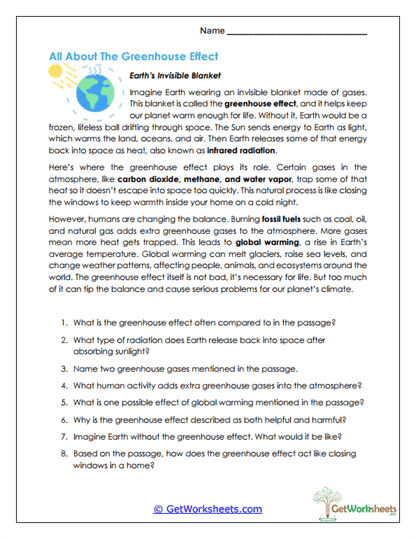
Greenhouse Effect Reading
This worksheet features an engaging passage that explains how the greenhouse effect works and why both natural and human influences matter. Students answer questions that require them to interpret details, connect ideas, and analyze environmental processes. The activity helps learners think critically about topics such as infrared radiation and gas buildup. It also reinforces the importance of understanding real-world climate impacts.
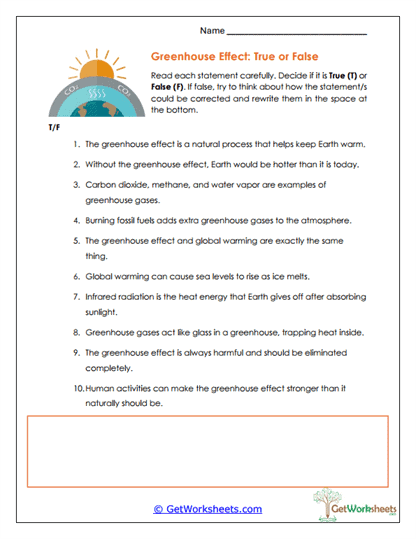
Greenhouse True/False
Students evaluate statements about climate processes and determine whether each one correctly reflects scientific ideas. By reflecting on why certain claims are inaccurate, learners strengthen their grasp of greenhouse gases and temperature changes. This exercise helps clarify misconceptions that commonly arise in environmental discussions. It encourages more precise scientific reasoning and supports long-term retention of accurate information.
Greenhouse Causes & Effects
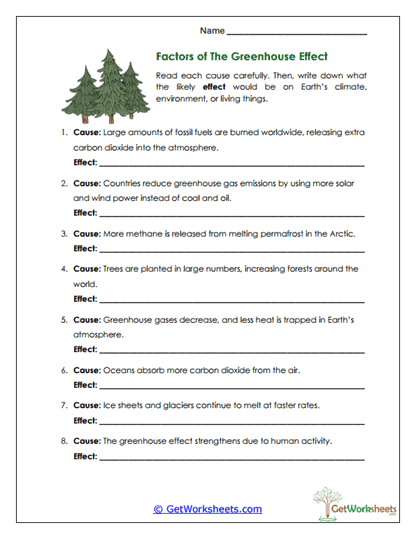
Learners analyze a series of causes related to greenhouse gas emissions and write the corresponding effects on Earth's systems. The task requires thoughtful reasoning about how human actions influence atmospheric conditions. As students complete the chart, they build stronger connections between behaviors and environmental outcomes. This activity provides a clear framework for understanding the chain reactions within climate science.
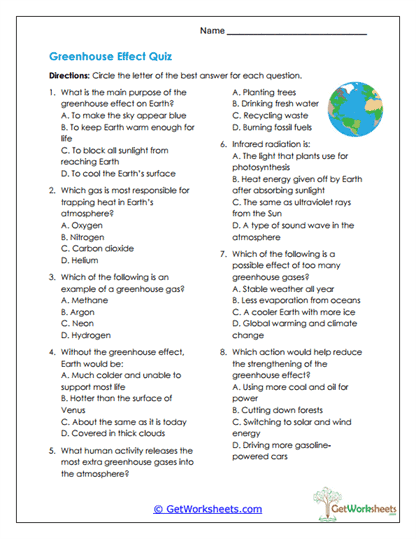
Greenhouse Effect Quiz
This multiple-choice quiz assesses students' understanding of greenhouse gases, radiation types, and sources of emissions. Each question prompts them to apply prior learning to identify accurate scientific explanations. The format helps prepare students for more formal evaluations in climate science. It also offers teachers a quick way to gauge comprehension of key environmental concepts.
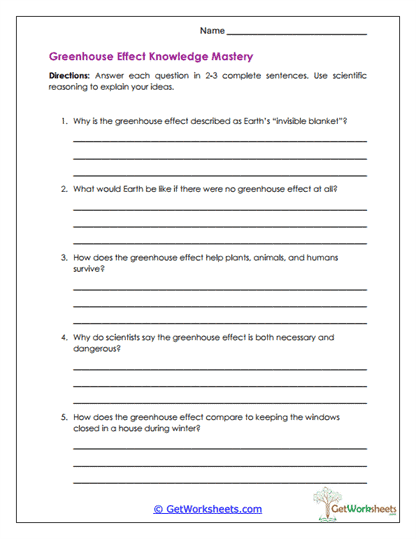
Knowledge Mastery Questions
Students write short, evidence-based responses to prompts about the greenhouse effect and its role in supporting life on Earth. The worksheet guides them to explain scientific ideas in their own words while using accurate terminology. This activity encourages deeper reflection and thoughtful analysis of complex climate concepts. It also strengthens students' ability to communicate scientific understanding clearly.
Gas Sorting Activity
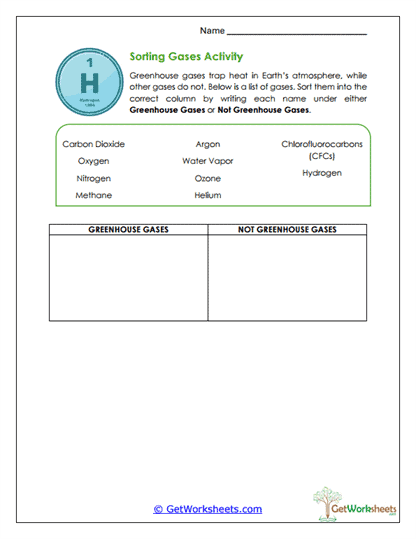
In this sorting exercise, students categorize gases as greenhouse or non-greenhouse based on their properties and roles in atmospheric warming. The task sharpens classification skills and reinforces understanding of Earth's atmospheric composition. Learners develop confidence identifying which gases trap heat and which do not. The activity encourages accuracy and supports foundational knowledge about climate systems.
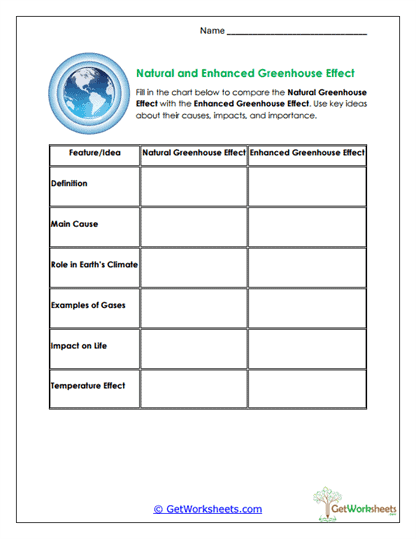
Natural vs. Enhanced Greenhouse Effect
Students complete a comparison chart that outlines important differences between natural atmospheric warming and human-accelerated warming. By contrasting causes, impacts, and examples of greenhouse gases, they build a more nuanced understanding of climate systems. The side-by-side structure helps clarify how human activity can intensify natural processes. This worksheet supports conceptual clarity and encourages analytical thinking.
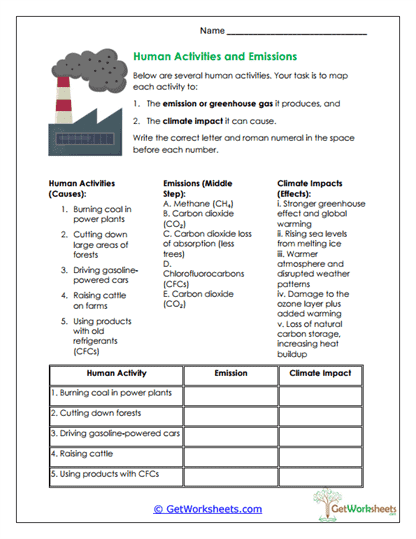
Human Emissions Mapping
This worksheet asks learners to match human activities with the greenhouse gases they release and the climate impacts that follow. Students develop an understanding of how everyday behaviors influence global warming through identifiable emission pathways. The activity builds sequential reasoning and connects science to practical, real-world challenges. By tracing the full chain of cause to effect, students strengthen their environmental awareness.
Greenhouse Gas Impact Analysis
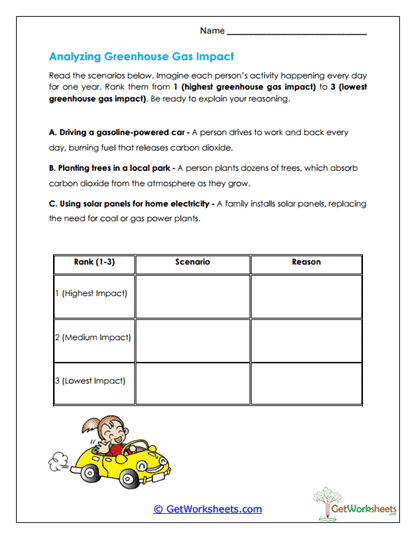
Students analyze three everyday scenarios and rank them based on their greenhouse gas impact. The worksheet encourages thoughtful comparisons of human actions, such as planting trees versus driving gasoline-powered cars. Learners justify their rankings using scientific reasoning, strengthening their ability to evaluate environmental choices. This activity supports decision-making skills rooted in climate knowledge.
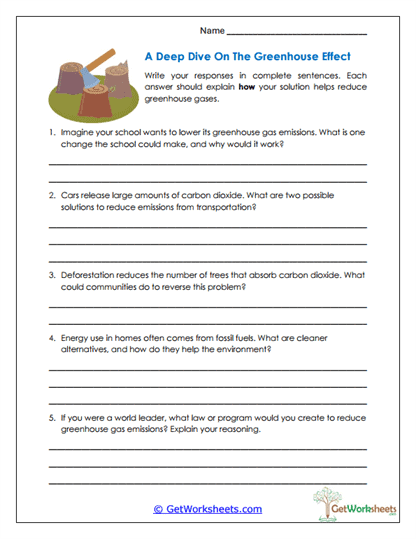
Greenhouse Solutions Writing
Learners respond to open-ended prompts that ask them to propose meaningful solutions for reducing emissions. They consider actions at individual, school, and community levels, applying their understanding of climate processes to real-life decisions. The worksheet encourages thoughtful writing that connects cause-and-effect reasoning with environmental responsibility. It helps students understand how practical steps can lead to measurable reductions in greenhouse gases.
Greenhouse Case Study
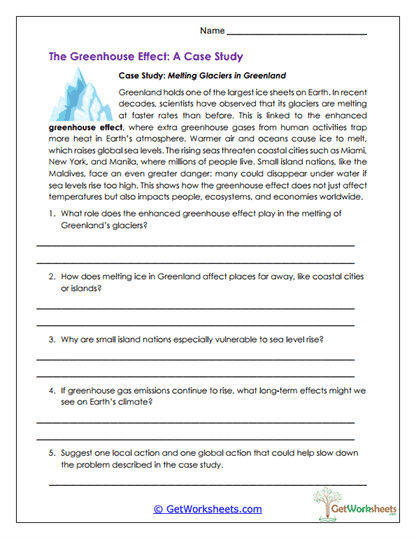
Students examine a case study about melting Greenland glaciers and explore how the enhanced greenhouse effect contributes to rising sea levels. They answer questions that require scientific explanation, analysis of global impacts, and consideration of vulnerable populations. The activity deepens understanding of real-world climate challenges while encouraging critical reflection. It also supports meaningful discussion about actions that could help mitigate further environmental harm.
Bookmark Us Now!
New, high-quality worksheets are added every week! Do not miss out!