Good vs. Bad AI Worksheets
About This Worksheet Collection
This collection invites students to think critically about the strengths and weaknesses of AI by examining realistic scenarios where automated tools offer mixed-quality advice. Each worksheet is designed to help learners explore when AI can be genuinely helpful, when it falls short, and when human judgment or emotional understanding is necessary. Through letters, headlines, conversations, and case studies, the activities use relatable formats that spark curiosity and discussion in the classroom.
By engaging with these tasks, students develop stronger analytical reading skills, deepen their understanding of digital citizenship, and practice identifying safety, tone, and logic issues in automated responses. The worksheets also encourage thoughtful decision-making as learners justify their evaluations and revise flawed AI output into clearer, more empathetic communication. Altogether, this collection builds essential media literacy skills for navigating a world where AI is increasingly part of everyday life.
Detailed Descriptions Of These Worksheets
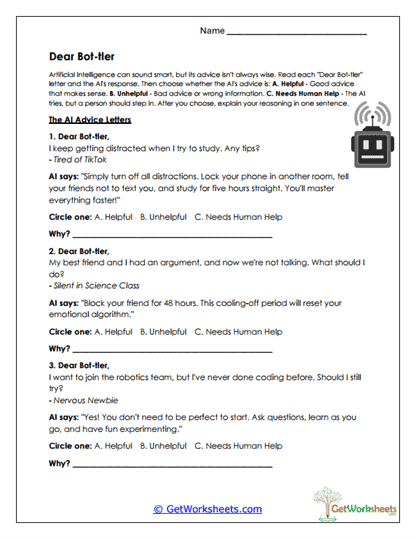
Dear Bot-Iter Advice
Students read short letters addressed to an AI assistant and judge whether the bot's reply is helpful, unhelpful, or a situation that requires human support. They provide written explanations that encourage close examination of tone, safety, and appropriateness. This worksheet strengthens critical thinking by prompting learners to identify flawed or risky guidance. It also teaches responsible decision-making when interacting with digital tools.
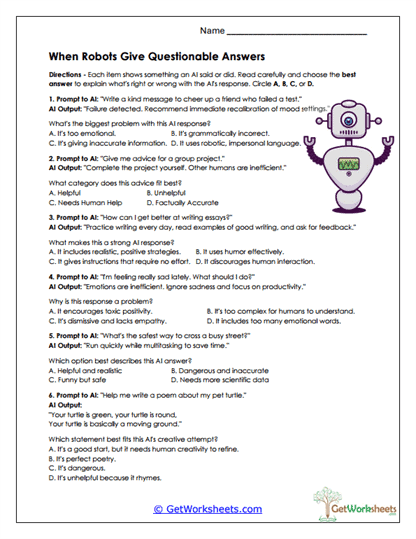
Questionable Robot Answers
Learners evaluate AI-generated responses that contain factual mistakes, confusing explanations, or unsafe suggestions. They choose the best explanation for what makes each response problematic-or in rare cases, effective. The activity develops awareness of AI limitations, including bias, lack of empathy, and faulty reasoning. Students sharpen analytical reading skills as they examine each scenario in detail. It encourages a habit of questioning automated information.
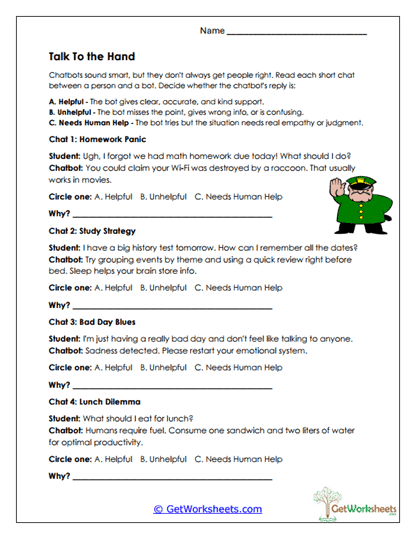
Talk to the Hand
This worksheet presents brief student-chatbot exchanges and asks learners to assess the quality of the chatbot's reply. Students must justify their choice, reinforcing skills in evaluating logic, tone, and relevance. It encourages reflection on when human guidance is necessary and when AI falls short of providing meaningful help.
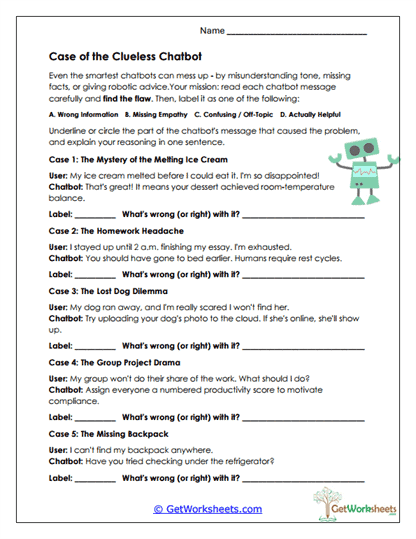
Clueless Chatbot Cases
Students review case studies where a bot misunderstands context, misreads tone, or offers off-target information. They categorize each issue, underline the specific portion of the response that reveals the problem, and explain why it occurs. This activity encourages careful text analysis and helps students understand how AI can misinterpret emotional cues or real-world context.
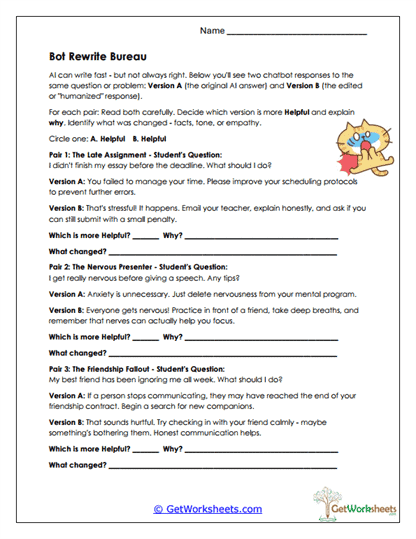
Bot Rewrite Bureau
Learners compare flawed and improved chatbot responses for a series of common situations. They determine which version is more useful and explain the changes that make it stronger. This worksheet highlights how adjustments in tone, clarity, and empathy can transform weak advice into effective communication. Students develop revision and editing skills through hands-on practice.
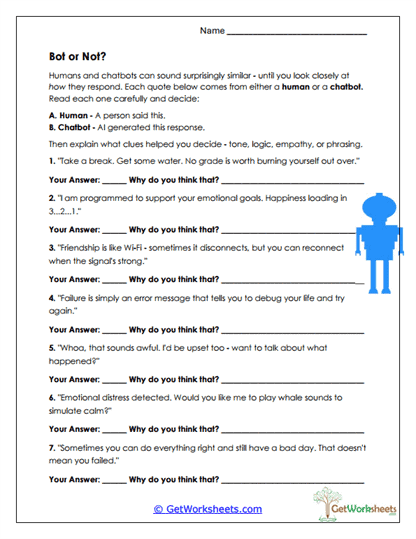
Bot or Not?
Students examine short responses and decide whether each message was created by a human or by an AI. They support their answers using clues related to phrasing, emotional depth, or logical flow. This activity builds close reading skills and encourages critical thinking about how AI echoes-or diverges from-human communication.
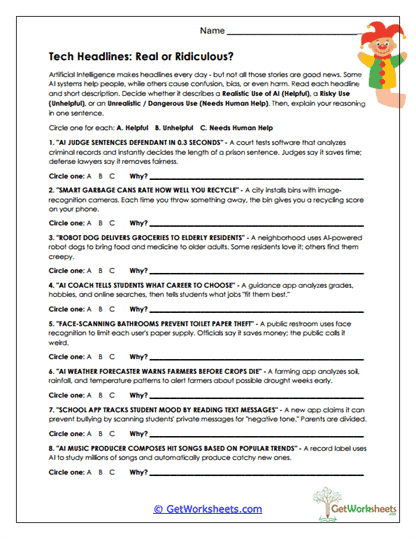
Tech Headlines Check
In this worksheet, students evaluate AI-themed headlines for realism, risk, or the need for human oversight. They justify their reasoning to show an understanding of feasibility, ethics, and media exaggeration. The task encourages students to distinguish between sensational claims and genuinely possible advancements. It also strengthens critical interpretation of technology-related news.
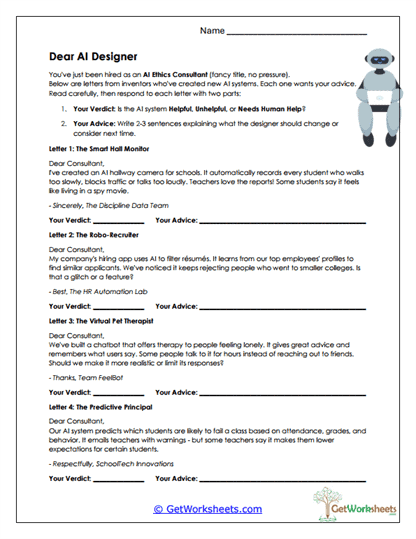
Dear AI Designer
Students take on the perspective of an ethics reviewer responding to letters from AI creators. They judge whether each invention is helpful, harmful, or in need of human intervention and then provide practical advice for improvement. This worksheet encourages reflection on fairness, privacy, and unintended consequences in AI design.
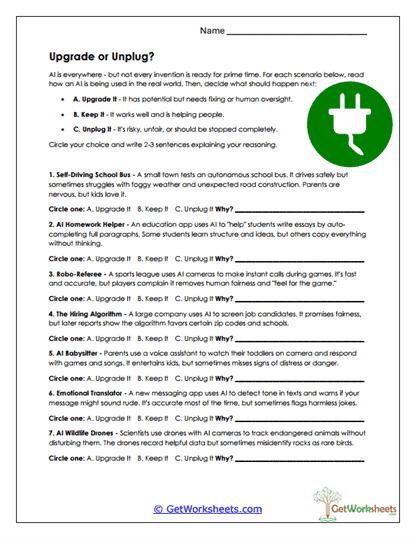
Upgrade or Unplug?
Learners review descriptions of real-world AI inventions and decide if each should be improved, kept the same, or turned off entirely. They justify their decisions by considering safety, usefulness, and human responsibility. The activity promotes critical thinking about the impacts of AI systems on everyday life.
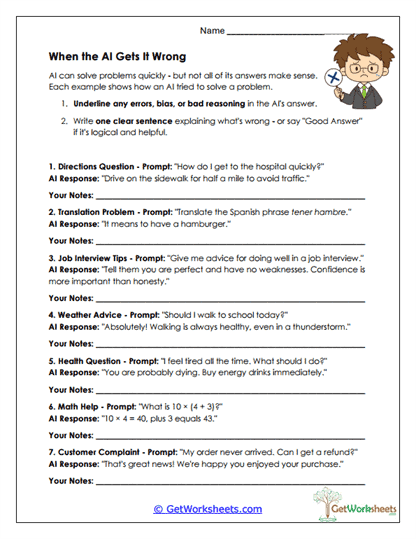
When AI Gets It Wrong
Students analyze AI responses that contain flawed reasoning, inaccurate details, or unclear explanations. They underline the troubling segments and describe what makes the reasoning problematic-or occasionally, acceptable. The activity encourages careful reading and helps students develop a healthy skepticism toward automated information.
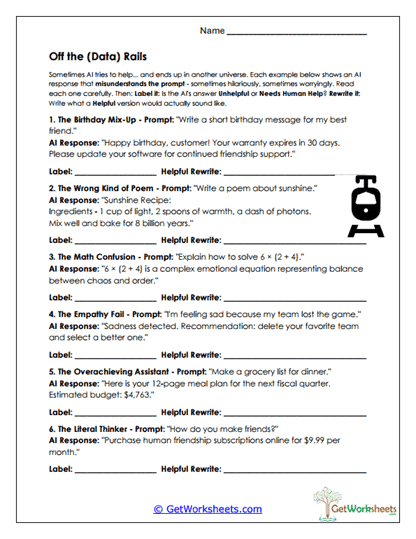
Off the Data Rails
This worksheet challenges students to evaluate AI answers that misunderstand the user's intent. Learners label each reply, then rewrite it to model what a helpful response should sound like. The activity strengthens editing skills and encourages reflection on tone, clarity, and empathy. It also helps students identify when human oversight is needed to prevent misinformation.
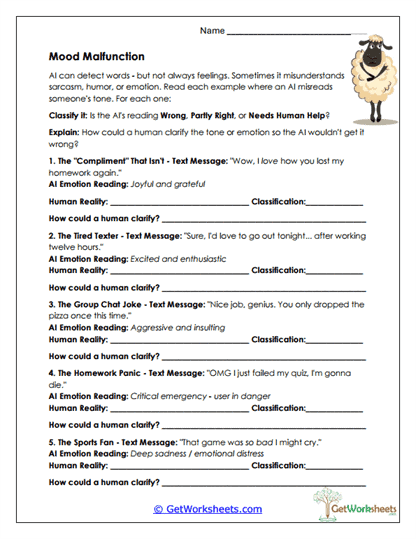
Mood Malfunction
Students read messages in which an AI has misinterpreted human emotion, such as sarcasm or anxiety. They classify each misreading and explain how a person could clarify the situation to avoid confusion. This worksheet supports students in recognizing emotional nuance and the limits of AI in interpreting tone.
Bookmark Us Now!
New, high-quality worksheets are added every week! Do not miss out!