Gettysburg Address Worksheets
About This Worksheet Collection
The Gettysburg Address worksheet collection invites students to explore Abraham Lincoln's timeless speech as both a literary masterpiece and a cornerstone of American civic identity. Each worksheet transforms the Address's powerful words into opportunities for analysis, reflection, and creative expression. Through vocabulary building, rhetorical study, and connections to modern issues, learners uncover how Lincoln's brief remarks at a battlefield dedication reshaped national purpose and redefined freedom for generations to come.
This collection supports the development of advanced reading comprehension, civic literacy, and persuasive communication skills. Students will analyze rhetorical techniques, compare foundational texts, paraphrase historical language, and even compose their own speeches inspired by Lincoln's message. Together, these worksheets help students recognize how language can unite, heal, and inspire change-making the Gettysburg Address as relevant today as it was in 1863.
Detailed Descriptions Of These Worksheets
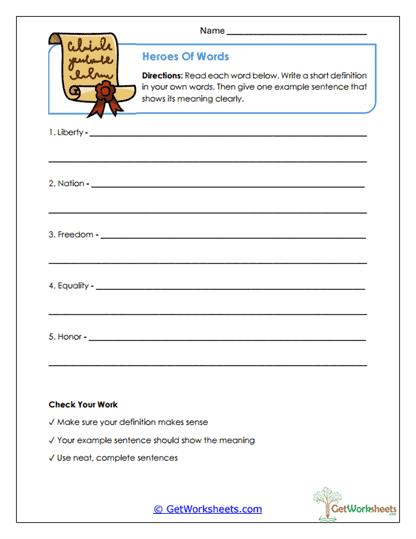
Heroes of Words
Students define key civic ideals-liberty, nation, freedom, equality, and honor-in their own words and use each in an original sentence. This vocabulary-focused activity strengthens comprehension of abstract democratic principles. Learners connect personal meaning to historical language, deepening their grasp of Lincoln's message. It's an ideal starting point for studying moral and civic values through language.
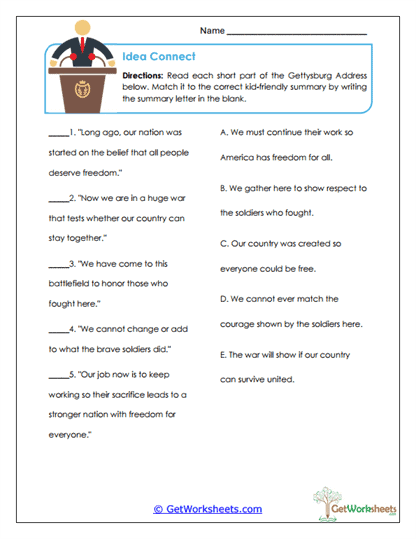
Idea Connect
In this matching activity, students align excerpts from the Gettysburg Address with clear, simplified interpretations. The exercise helps learners decode Lincoln's themes of unity, sacrifice, and perseverance. It strengthens reading comprehension and bridges the gap between historical text and modern understanding. This worksheet makes complex ideas accessible without losing their emotional power.
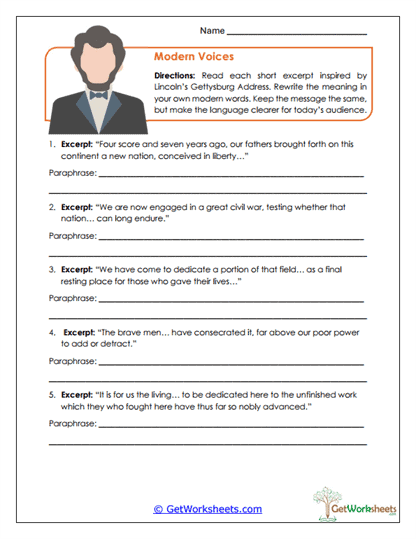
Modern Voices
Students paraphrase iconic lines from Lincoln's speech in contemporary language. This task emphasizes translation of tone and meaning, showing how timeless ideals can be rephrased for modern audiences. Learners build writing flexibility while preserving the speech's intent. It's an engaging activity that links 19th-century rhetoric to 21st-century relevance.
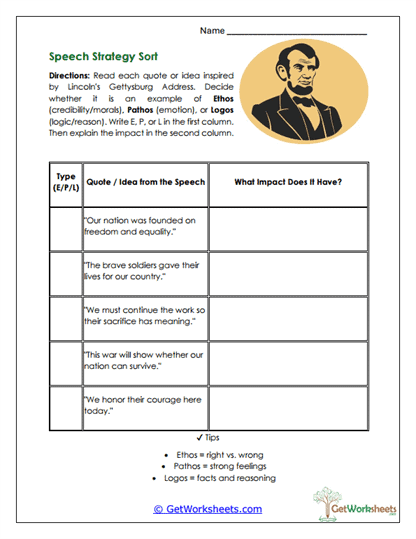
Speech Strategy Sort
Learners study rhetorical appeals-ethos, pathos, and logos-using quotes from the Gettysburg Address. They classify each line based on persuasive technique and explain its effect on the audience. The worksheet sharpens analytical skills in recognizing how emotion, credibility, and logic interact. It's a clear and dynamic way to teach persuasive literacy through history.
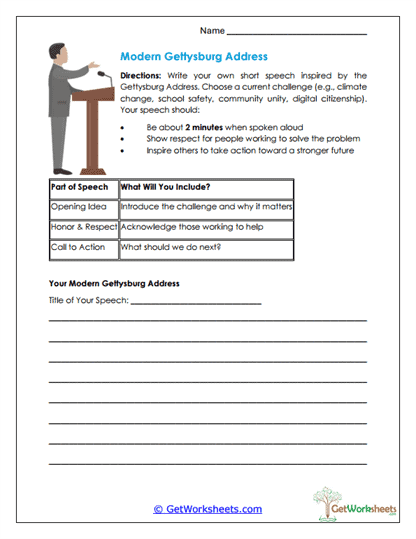
Modern Gettysburg Address
Students channel their inner orator by composing a short, modern speech modeled after Lincoln's. They address current issues such as justice, environment, or equality, while using formal tone and structure. This activity encourages creativity, civic voice, and empathy. It shows how historic speeches can inspire present-day calls to action.
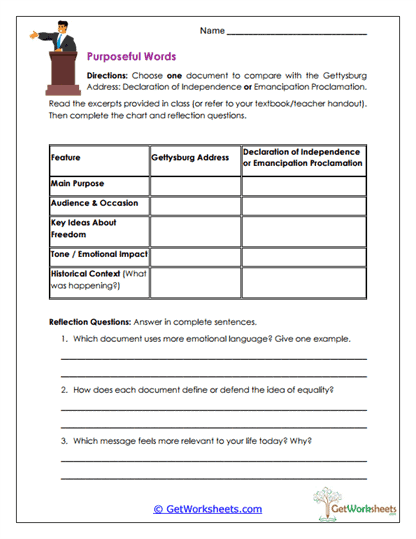
Purposeful Words
By comparing the Gettysburg Address to the Declaration of Independence or the Emancipation Proclamation, students explore continuity in America's ideals. They analyze tone, purpose, and key ideas about freedom and equality. The chart and reflection deepen understanding of how foundational texts build upon one another. It's a thoughtful cross-era study of American ideals.
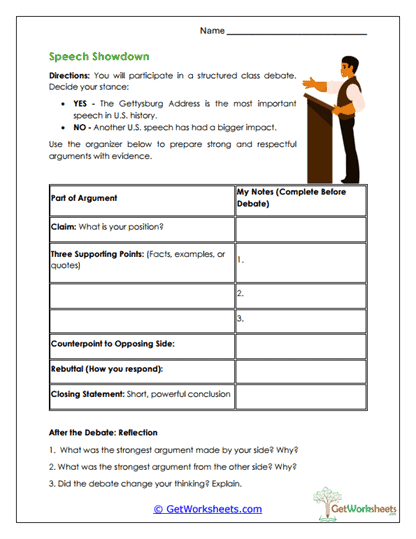
Speech Showdown
Students debate whether the Gettysburg Address is the most significant speech in U.S. history. Using a graphic organizer, they gather evidence, prepare rebuttals, and reflect on their arguments. The activity cultivates civil discourse, persuasion, and evaluative reasoning. It turns speech analysis into an engaging, evidence-based discussion.
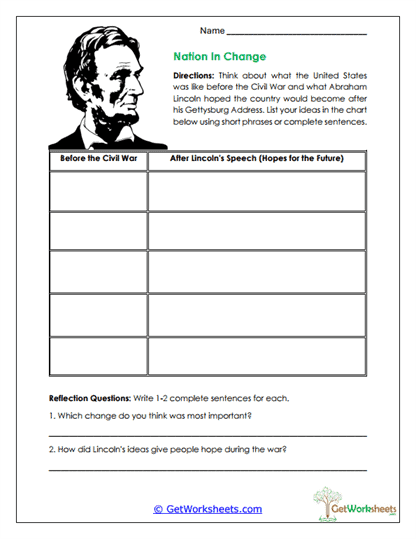
Nation in Change
Learners compare the nation's condition before the Civil War to Lincoln's vision for its future. They chart differences and reflect on how leadership and language can promote unity. This worksheet encourages empathy and historical perspective. It highlights the power of hope and transformation in times of division.
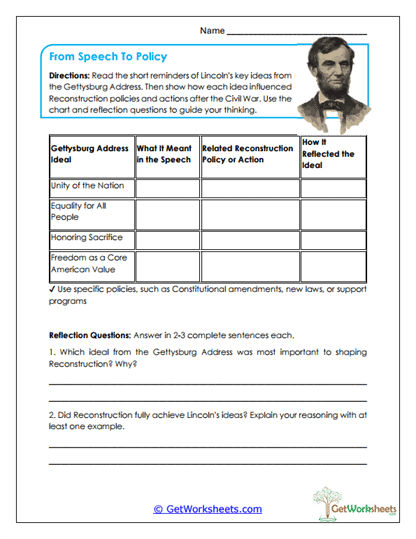
From Speech to Policy
Students connect Lincoln's ideals of unity and equality to Reconstruction-era policies and constitutional amendments. The chart format shows how words can shape real change. Reflection questions push learners to think critically about cause and effect. It's a perfect bridge between rhetoric and reform.
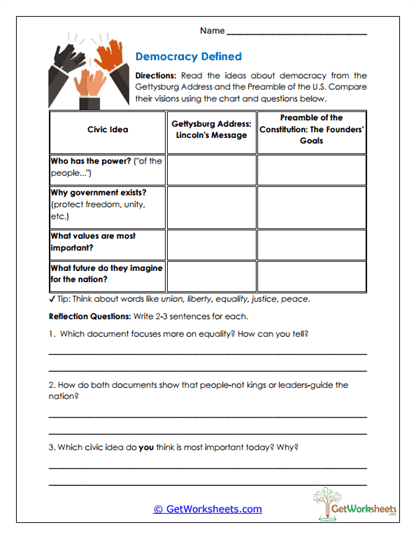
Democracy Defined
This comparative analysis links the Gettysburg Address to the U.S. Constitution's Preamble. Students explore shared democratic principles such as liberty, justice, and popular sovereignty. The reflection task challenges them to evaluate how Lincoln renewed these founding values. It promotes civic understanding through textual comparison.
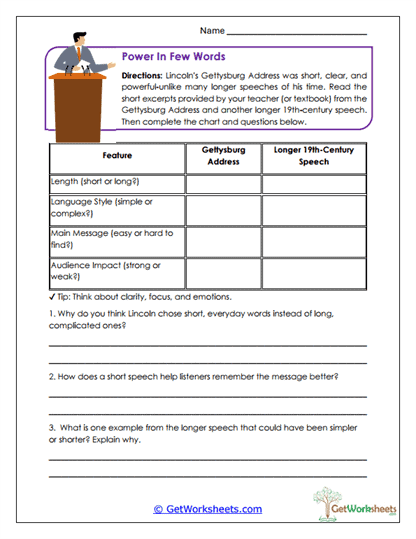
Power in Few Words
Students analyze how Lincoln's brevity and clarity amplified the Gettysburg Address's impact. They compare it to longer speeches of the era and identify why concise language resonates. The exercise strengthens analytical reading and writing about tone and purpose. It's a lesson in how simplicity can hold extraordinary persuasive power.
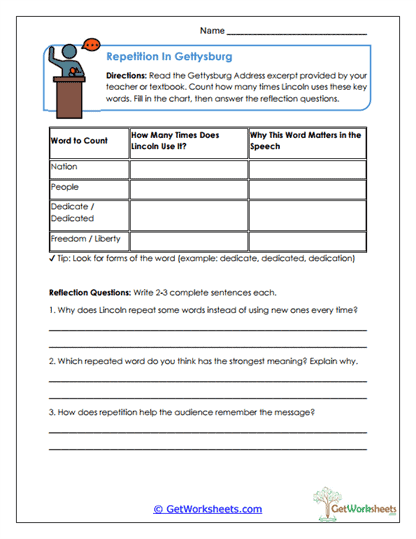
Repetition in Gettysburg
Learners study Lincoln's deliberate use of repetition, focusing on words like nation, people, and freedom. They track frequency, interpret purpose, and reflect on audience impact. The activity builds awareness of rhetorical rhythm and thematic reinforcement. It's an excellent tool for showing how word choice shapes emotion and memory.
Bookmark Us Now!
New, high-quality worksheets are added every week! Do not miss out!