Fahrenheit 451 Worksheets
About This Worksheet Collection
The Fahrenheit 451 worksheet collection offers students a deep, multi-layered exploration of Ray Bradbury's dystopian classic. These worksheets guide learners through essential elements of the novel-character transformation, censorship, symbolism, and the dangers of an unthinking society-using activities that span analytical writing, debate, creative composition, comparative reasoning, and close reading.
Across the set, students practice vital literacy skills such as identifying literary devices, tracing motifs, examining cause-and-effect patterns, interpreting quotes, and connecting themes to the modern world. They also develop expressive abilities through scene writing, letter writing, and reflective responses. By engaging with Bradbury's warnings about distraction, conformity, and the erosion of knowledge, students sharpen both their critical thinking and their understanding of the novel's enduring relevance.
Detailed Descriptions Of These Worksheets
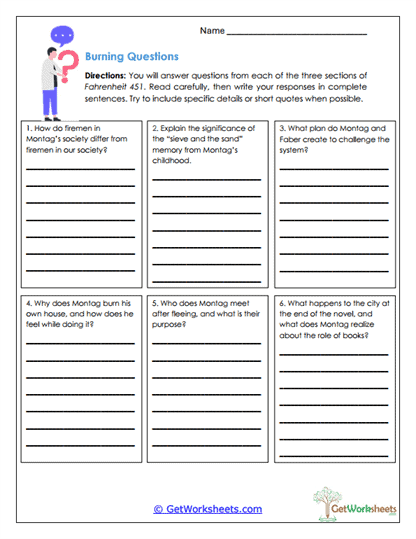
Burning Questions
Students answer six analytical questions spanning all three sections of the novel. They use textual evidence to explain Montag's growth, the role of firemen, the city's downfall, and other key ideas. This builds comprehension, theme interpretation, and evidence-based reasoning. It prepares learners for deeper discussion and analysis.
Vocabulary Context Clues
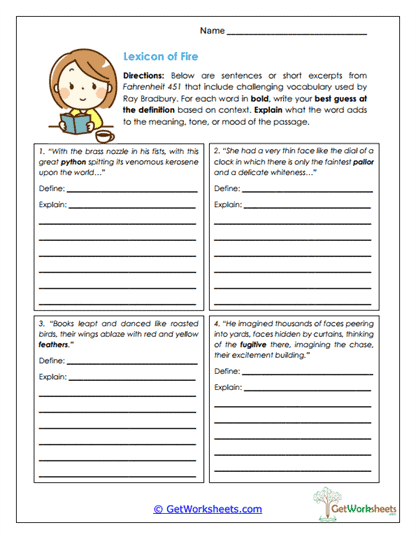
Learners infer the meaning of four challenging vocabulary words from context and explain how each contributes to tone, mood, or imagery. This activity strengthens close reading and helps students understand Bradbury's evocative diction. It enhances vocabulary development and literary interpretation.
Quote Interpretation
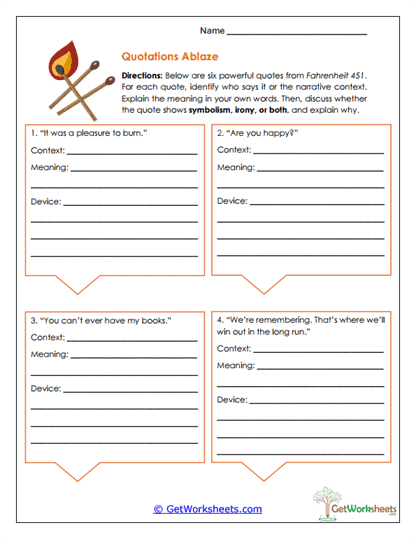
Students analyze six major quotes, identify speakers or narrative placement, paraphrase the meaning, and determine whether symbolism or irony is used. This develops understanding of literary devices and theme. It encourages students to interpret Bradbury's commentary on censorship and individuality.
Recurring Motifs
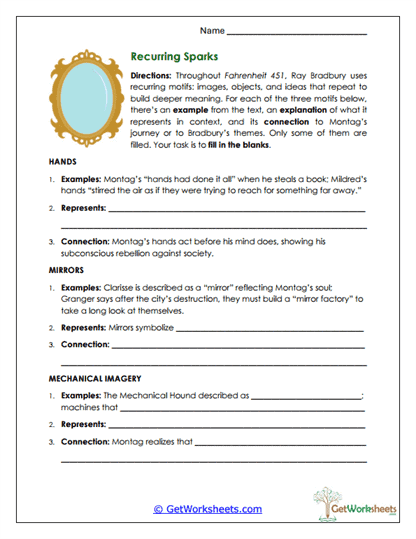
This worksheet examines motifs such as hands, mirrors, and mechanical imagery. Students analyze examples, explain what each motif represents, and connect it to Montag's development. The activity improves motif recognition, thematic interpretation, and textual evidence skills. It deepens literary analysis.
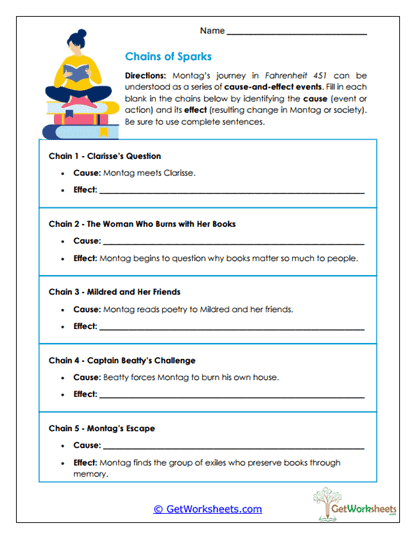
Cause-Effect Chains
Learners trace five key cause-and-effect sequences in Montag's journey, such as meeting Clarisse or witnessing the book woman's sacrifice. This builds understanding of plot structure and character transformation. Students practice concise writing and comprehension of pivotal moments.
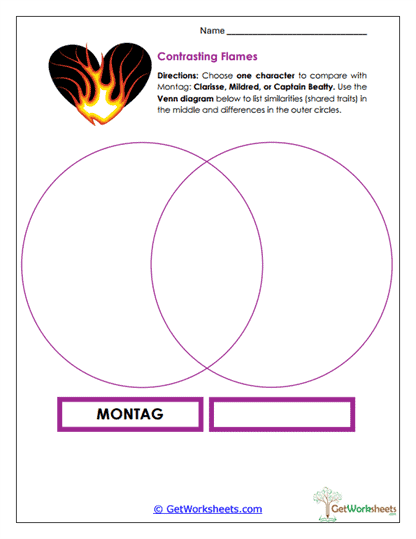
Character Comparison
Using a Venn diagram, students compare Montag with Clarisse, Mildred, or Captain Beatty. They identify similarities and differences to understand motivations, conflicts, and influence. This visual organizer promotes comparative analysis and clarifies how characters shape Montag's change.
Creative Scene Writing
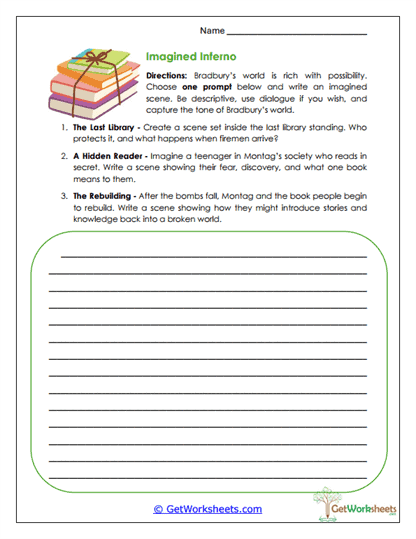
Students write a vivid original scene based on prompts like "the last library" or "the rebuilding of society." This encourages imaginative storytelling rooted in the novel's tone and themes. It strengthens narrative writing, descriptive language, and engagement with Bradbury's world.
Letters in Ashes
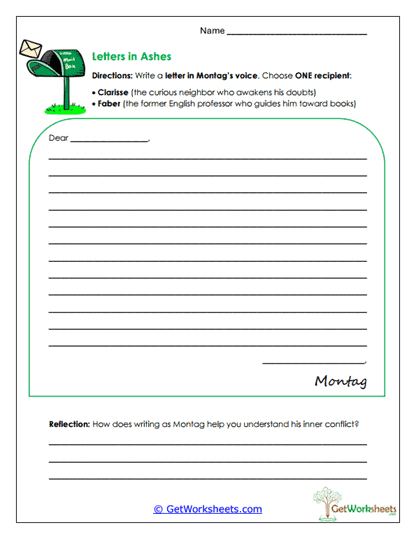
Learners write a first-person letter in Montag's voice to Clarisse or Faber, expressing fears, insights, or moral conflict. This develops perspective-taking and character interpretation. A reflection question helps students solidify their understanding of Montag's emotional journey.
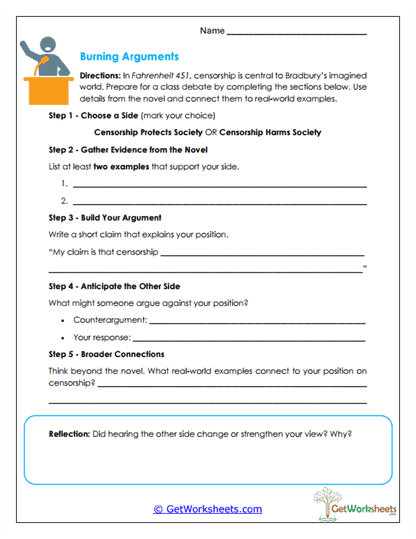
Censorship Debate
Students prepare arguments for a debate on whether censorship protects or harms society. They gather evidence, plan rebuttals, and connect Bradbury's warnings to modern issues. This builds persuasive reasoning, textual support, and speaking and listening skills.
Modern Connections
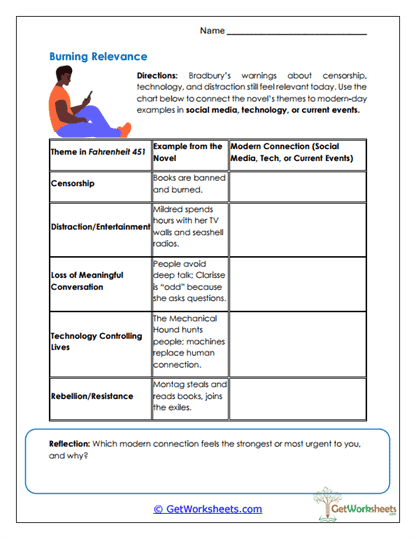
Learners link five themes-censorship, distraction, technology control, loss of conversation, rebellion-to real-world examples. This clarifies the novel's ongoing relevance and builds text-to-world reasoning. Students reflect on which theme feels most urgent today.
Transformation Timeline
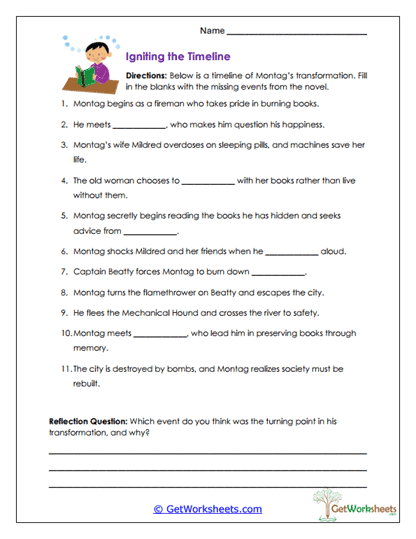
Students complete a timeline of Montag's transformation and identify which moment represents the true turning point. This strengthens understanding of character development and narrative structure. It promotes evidence-based reflection and detailed recall.
Closing Reflection
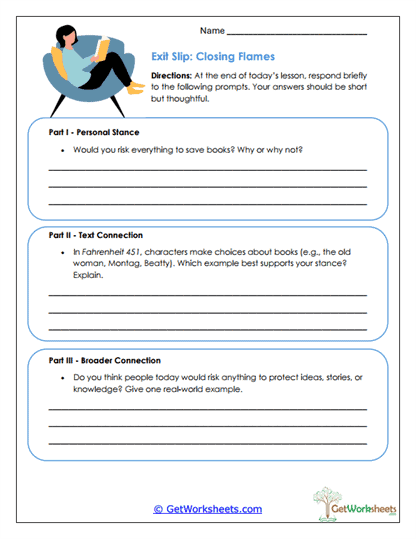
This exit slip prompts students to reflect on whether they would risk their safety for knowledge and draw parallels to real-world examples. It blends text-based reasoning with personal insight. The activity reinforces themes of intellectual freedom, courage, and moral conviction.
Bookmark Us Now!
New, high-quality worksheets are added every week! Do not miss out!