Euphemism Worksheets
About This Worksheet Collection
This Euphemism worksheet collection helps students understand how language can soften meaning, adjust tone, and convey sensitivity in communication. Through matching activities, rewriting tasks, paragraph analysis, headline revisions, and interpretation of workplace, media, and political euphemisms, learners explore the powerful role word choice plays in social interactions. The worksheets guide students to recognize when euphemisms are helpful, when they may be confusing, and how they operate across different contexts-from everyday conversation to professional settings and public communication.
Students develop essential literacy skills as they analyze tone, evaluate intent, interpret figurative meaning, and express ideas clearly and respectfully. These activities strengthen vocabulary growth, critical thinking, context clues, and rewriting ability. By working through the collection, learners grow more confident navigating polite language, understanding hidden meanings, and making thoughtful choices about how to communicate with empathy, clarity, and awareness.
Detailed Descriptions Of These Worksheets
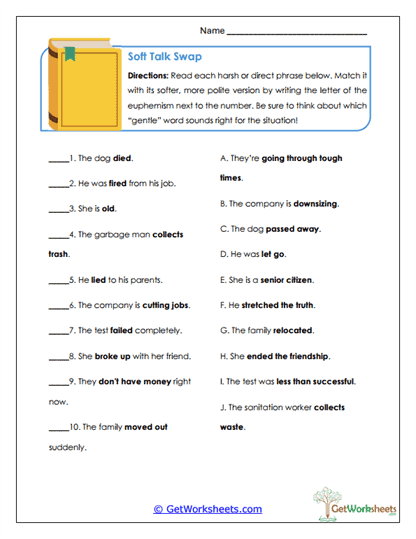
Soft Talk Swap
Students match blunt statements with their euphemistic equivalents, learning how softer phrasing adjusts tone and improves social sensitivity. This activity strengthens vocabulary, tone recognition, and the ability to match language to context. Learners practice identifying gentler ways to express difficult ideas.
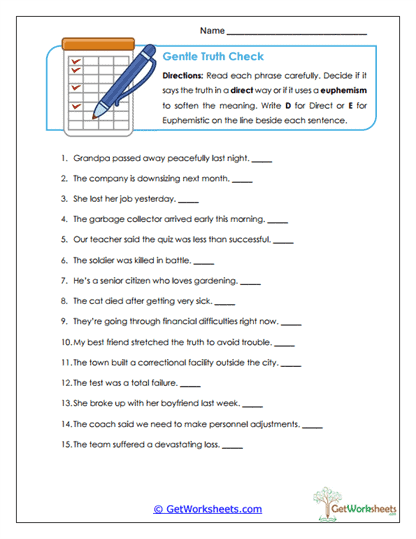
Gentle Truth Check
Learners label each phrase as either Direct (D) or Euphemistic (E), distinguishing literal wording from softened language. This supports skill in detecting intent, tone, and nuance. Students build critical thinking as they analyze how phrasing shapes interpretation.
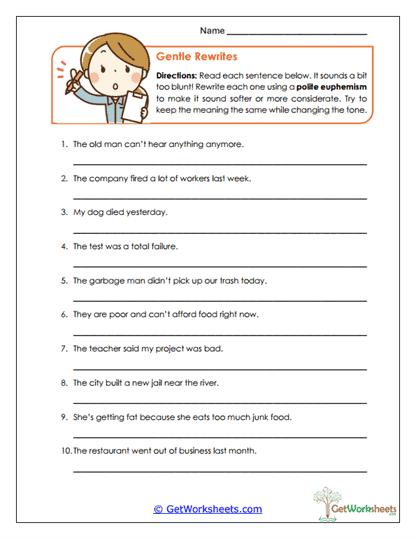
Gentle Rewrites
Students rewrite harsh or insensitive sentences using more polite euphemisms. This reinforces awareness of considerate communication and tone control. Learners practice adjusting language while preserving the original meaning.
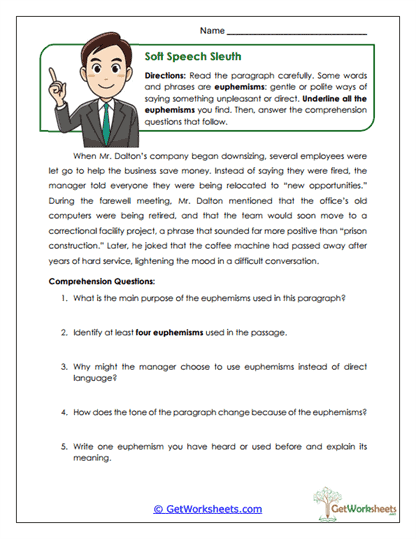
Soft Speech Sleuth
Students underline euphemisms hidden in a paragraph and answer questions about how these word choices affect tone and purpose. This strengthens close reading and comprehension of why writers may soften sensitive topics. Learners develop text analysis and inference skills.
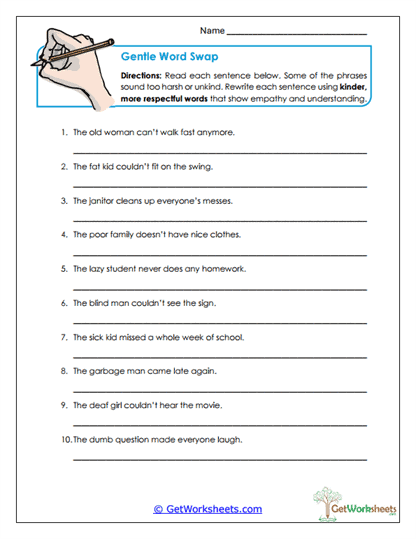
Gentle Word Swap
Learners revise sentences with unkind or insensitive wording, replacing them with more respectful alternatives. This builds empathy and strengthens rewriting and vocabulary skills. Students become more aware of how word choice impacts others.
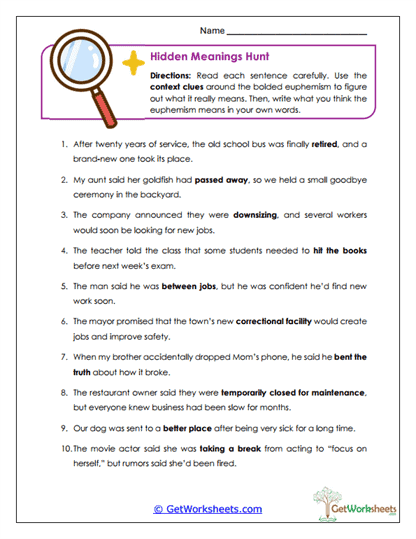
Hidden Meanings Hunt
Students identify euphemisms in bold and use context clues to explain their true meanings. This teaches them how euphemisms mask or soften difficult ideas. Learners practice inference, interpretation, and vocabulary comprehension.
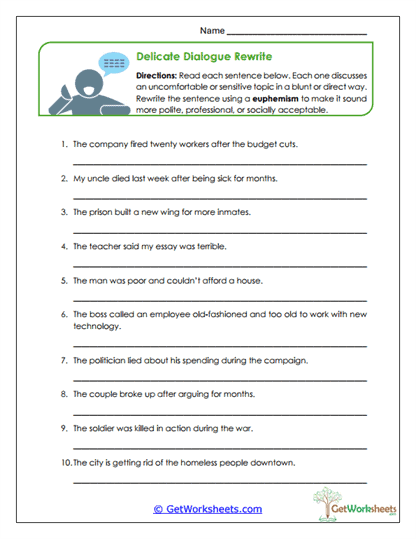
Delicate Dialogue Rewrite
Students transform direct or uncomfortable statements into tactful dialogue using appropriate euphemisms. This activity encourages careful consideration of audience and purpose. Learners improve expressive writing and social awareness.
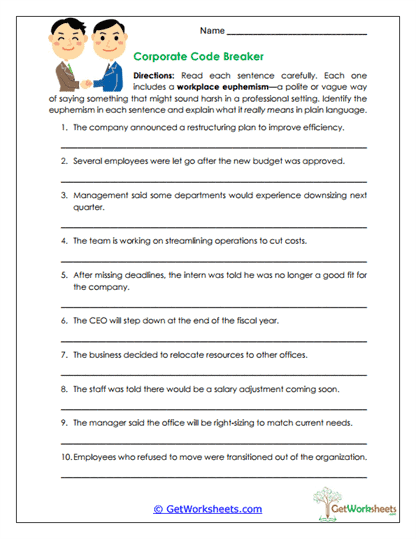
Corporate Code Breaker
Students decode workplace euphemisms often used in professional communication-such as those relating to staffing, restructuring, or performance. They translate polite phrasing into clear, direct meaning. This builds critical literacy and career readiness.
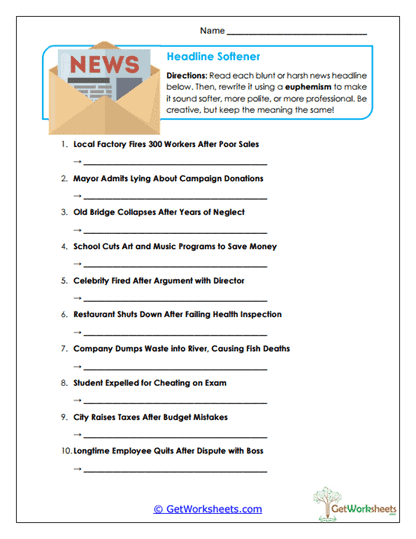
Headline Softener
Learners read blunt news-style headlines and rewrite them using euphemisms to adjust tone. This activity strengthens understanding of media language and its emotional impact. Students practice vocabulary flexibility and rewriting for professionalism.
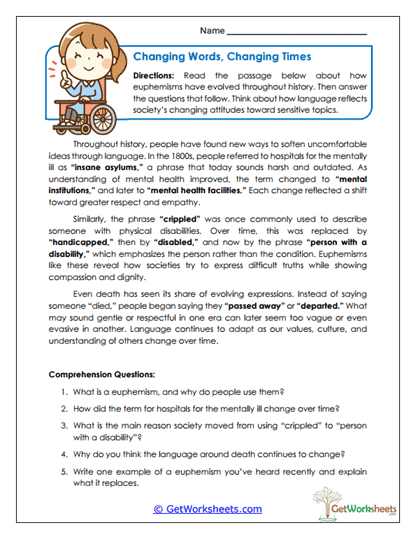
Changing Words, Changing Times
Students read an informational passage about how euphemisms change over time and answer comprehension questions. This helps them understand cultural evolution and shifting social attitudes. Learners analyze examples and reflect on language's role in society.
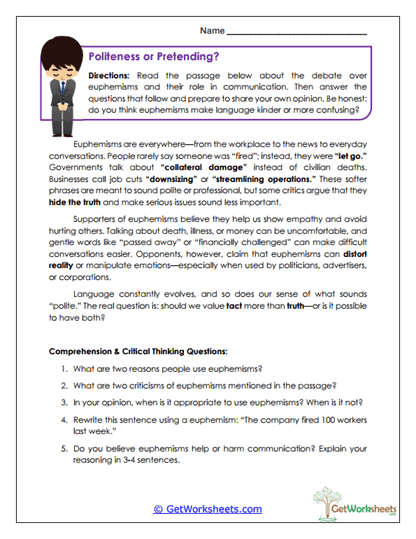
Politeness or Pretending?
Students read a passage examining the pros and cons of euphemisms and answer analysis questions. They evaluate viewpoints on whether euphemisms help communication or hide truth. This strengthens reasoning, evidence-based responses, and nuanced thinking.
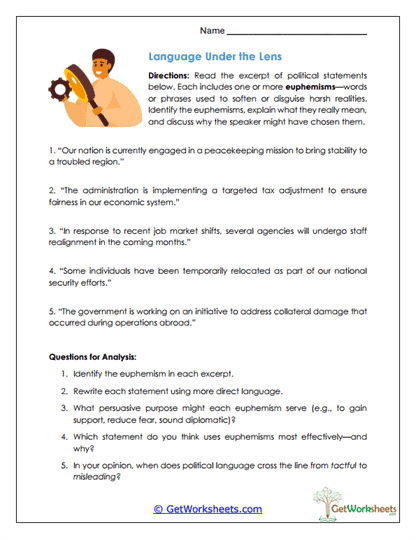
Language Under the Lens
Learners analyze euphemisms in political statements, identify literal meanings, and discuss why the speaker chose them. They also rewrite the statements in more direct language. This develops rhetorical awareness, critical interpretation, and understanding of persuasive communication.
Bookmark Us Now!
New, high-quality worksheets are added every week! Do not miss out!