Esperanza Rising Worksheets





About This Worksheet Collection
The Esperanza Rising worksheet collection offers a rich blend of comprehension, analysis, cultural study, and creative expression. Each worksheet guides students in exploring Pam Muñoz Ryan's novel through its themes of resilience, migration, family, social justice, and personal growth. The activities help learners follow Esperanza's transformation from privilege to perseverance, connecting events to broader historical and emotional contexts.
Students practice essential literacy skills-sequencing, cause-and-effect reasoning, thematic interpretation, symbolism, and evidence-based writing-while also engaging in reflective, narrative, and comparative work. The blend of text-to-self, text-to-world, and text-to-text thinking encourages students to view Esperanza's journey both intimately and expansively. Overall, the collection strengthens comprehension and empathy while fostering a deeper appreciation of the novel's cultural and historical significance.
Detailed Descriptions Of These Worksheets
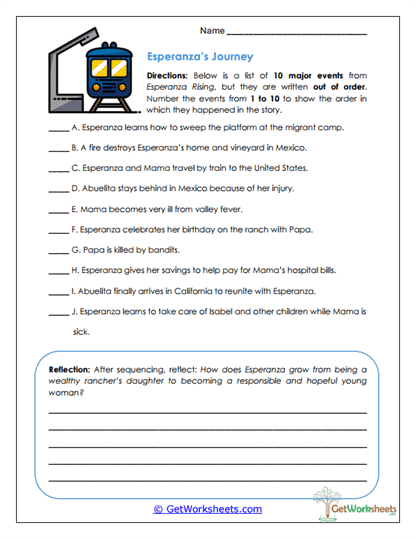
Story Sequencing
Students place ten major events in chronological order, reinforcing understanding of plot progression. A reflection prompt asks learners to analyze Esperanza's growth from privileged child to resilient young woman. This activity builds comprehension of narrative structure, character transformation, and thematic development. It supports evidence-based reflection.
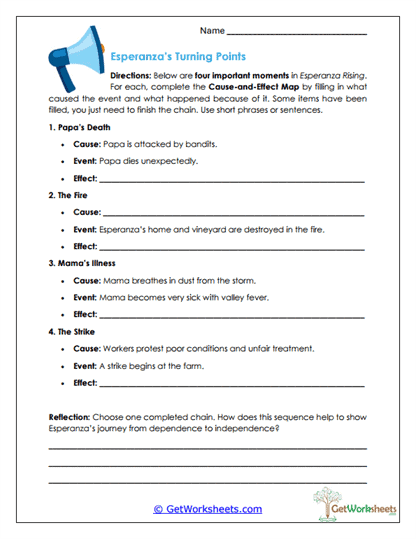
Turning Points
Learners examine four pivotal moments-Papa's death, the fire, Mama's illness, and the strike-by completing cause-and-effect chains. They analyze what leads to each event and what follows from it. The reflection question highlights Esperanza's increasing independence. This strengthens critical thinking and understanding of conflict and outcome.
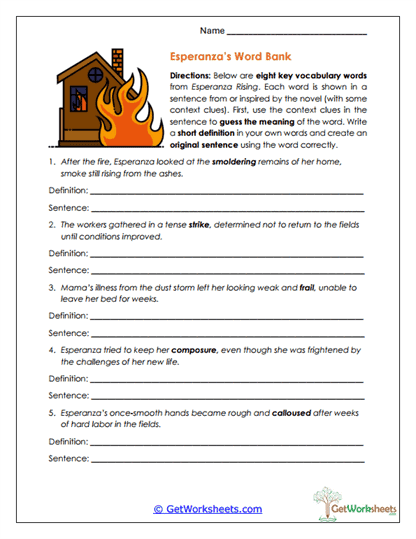
Vocabulary Builder
Students infer meanings of eight vocabulary words from context, write definitions, and craft original sentences. This deepens comprehension of descriptive language related to emotion, setting, and hardship. It supports vocabulary development and confident application in writing.
Literary Symbols
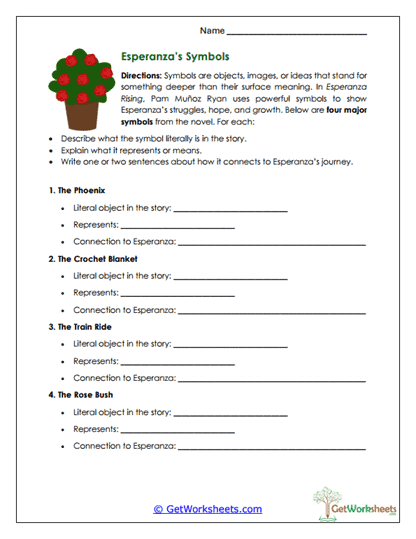
Learners analyze four key symbols-the Phoenix, the Crochet Blanket, the Train Ride, and the Rose Bush. They explain literal meanings, symbolic significance, and thematic connections. This reinforces understanding of rebirth, tradition, resilience, and identity. It promotes close reading and literary analysis.
Traditions Comparison
Students compare Esperanza's traditions with their own, exploring similarities and differences. A reflection prompt asks them to consider the importance of tradition in shaping identity and belonging. This supports cultural awareness, comparative thinking, and text-to-self connection.
Historical Context
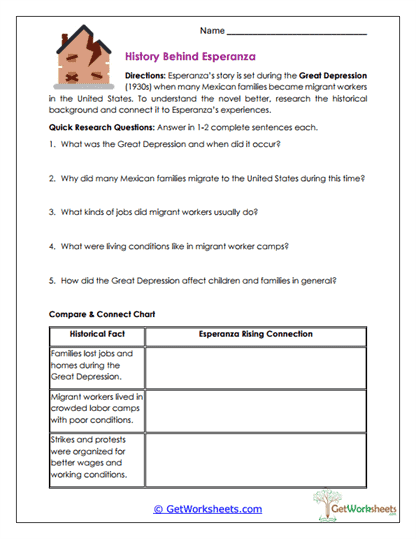
Learners examine the Great Depression and Mexican migration to the U.S., connecting historical facts to scenes in the novel. This bridges fiction and real-world history, strengthening contextual understanding. It reinforces research skills and text-to-world interpretation.
Life Comparison
Students compare Esperanza's life in Mexico with her life in California across multiple categories. The chart highlights shifts in responsibility, family dynamics, and social status. A reflection question encourages analysis of resilience and adaptability. It strengthens compare-and-contrast reasoning.
Personal Journaling
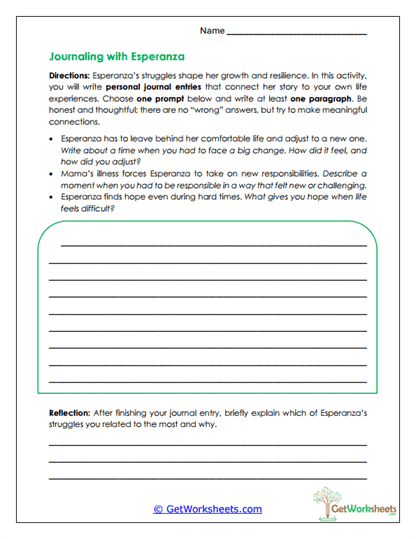
Learners write a personal journal entry connecting Esperanza's struggles to their own experiences. Themes include adjustment, responsibility, and hope. This promotes empathy, introspection, and expressive writing. It enhances social-emotional learning.
Theme and Quote
Students analyze five quotes and match each to a theme such as family, resilience, hope, or justice. They explain how each quote conveys the theme within the story. This reinforces evidence-based interpretation and thematic awareness. It supports literary response writing.
Missing Chapter
Learners write an original "lost chapter," complete with dialogue and sensory details. They place it logically within the story and connect it to a theme. This builds creative writing skills and deepens character and setting understanding. It encourages engagement with narrative structure.
Letter Writing
Students write a letter from Esperanza to Abuelita, capturing Esperanza's emotions, growth, and challenges. This activity strengthens perspective-taking, voice development, and letter-format writing. It deepens character interpretation and theme reflection.
Class Debate
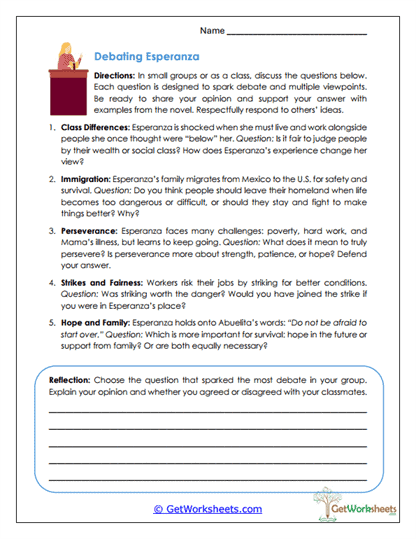
Learners debate topics related to class, immigration, labor strikes, perseverance, and hope. They support points with examples from the novel and reflect on which topic sparked the best discussion. This builds oral communication, critical thinking, and social-issue awareness.
Bookmark Us Now!
New, high-quality worksheets are added every week! Do not miss out!