Dred Scott Decision Worksheets
About This Worksheet Collection
The Dred Scott Decision worksheet collection immerses students in one of the most consequential Supreme Court rulings in U.S. history. Through engaging readings, sequencing tasks, reflection prompts, and legal vocabulary exercises, learners examine how the case unfolded and why its outcome deepened divisions over slavery and citizenship. Each worksheet is designed to make complex constitutional issues accessible to students while encouraging thoughtful engagement with themes of justice, equality, and human rights.
Across this collection, students will develop strong historical reasoning and civic literacy skills. They'll analyze legal arguments, compare majority and dissenting opinions, explore the human impact of judicial decisions, and connect the Dred Scott case to the growing tensions that led to the Civil War. These activities promote critical reading, evidence-based writing, and empathy-helping learners understand how one court case reshaped the nation's moral and political landscape.
Detailed Descriptions Of These Worksheets
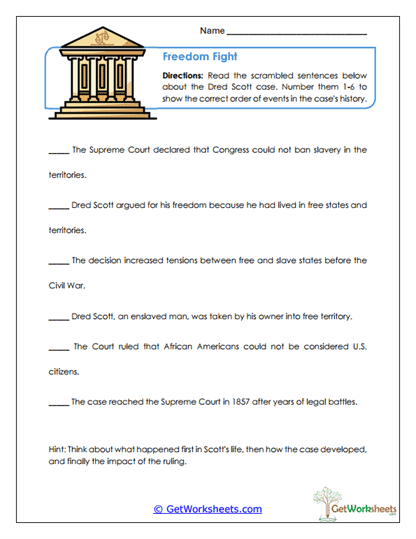
Freedom Fight
Students trace the major events of Dred Scott's legal battle for freedom, organizing them in chronological order. The sequencing exercise helps learners connect cause, event, and consequence within a pivotal Supreme Court case. By following Scott's story, students see how one man's fight became a national controversy. This activity builds historical logic and comprehension of judicial influence on society.
Citizenship Shift
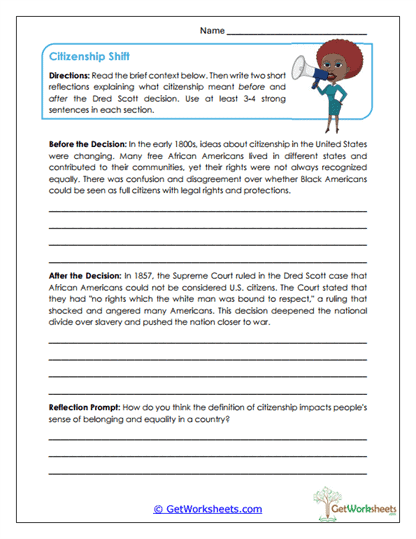
Learners examine how the concept of citizenship changed before and after the Dred Scott decision. Short readings provide historical context that students use to reflect on identity, belonging, and equality. The writing task encourages analysis of justice through civic and moral lenses. It's a meaningful introduction to how law defines and sometimes denies personhood.
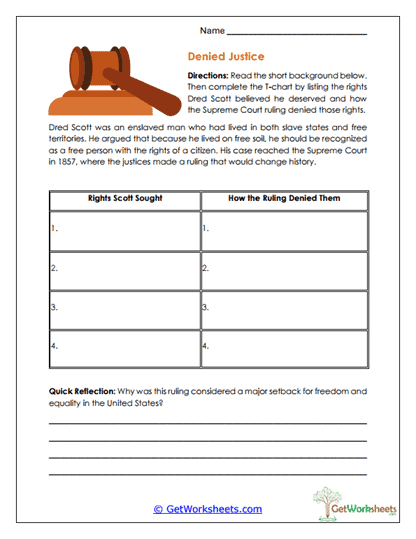
Denied Justice
Using a T-chart, students compare Dred Scott's claims for freedom with the Supreme Court's ruling that denied them. The visual format clarifies the gap between ideals and outcomes. Learners then reflect on why the case marked a setback for equality. This activity cultivates empathy and strengthens understanding of judicial consequences.
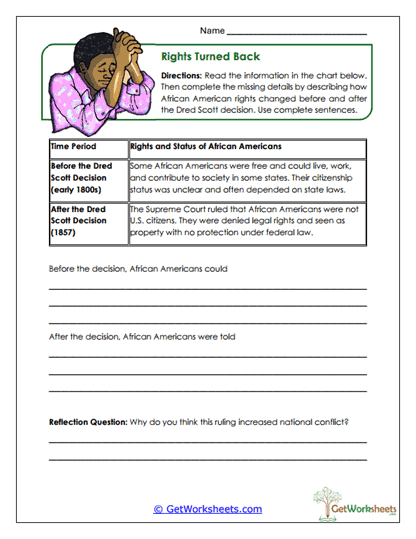
Rights Turned Back
Students complete a chart comparing the legal status of African Americans before and after the Dred Scott decision. They write full-sentence responses explaining the ruling's social and political effects. The activity encourages comprehension of how citizenship was restricted and division intensified. It's a clear, structured way to analyze regression in civil rights.
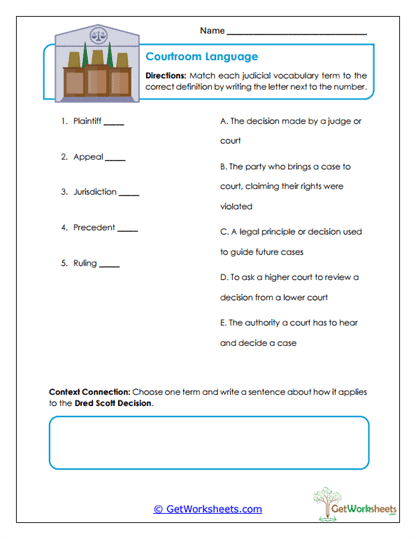
Courtroom Language
This vocabulary worksheet introduces key legal terms like plaintiff, appeal, and precedent. Students match definitions and use one term in a sentence related to the Dred Scott case. The activity supports civic literacy by connecting terminology to real historical events. It's a practical step toward understanding how courts shape history through language.
Civil War Pressure
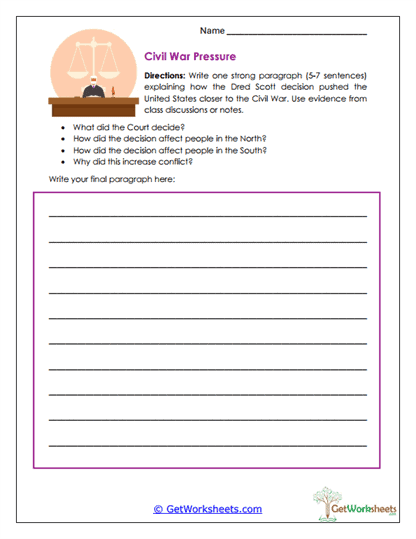
Students write a focused paragraph explaining how the Dred Scott ruling escalated tensions between North and South. Guided questions lead them to connect judicial outcomes to national conflict. The task develops evidence-based writing and historical reasoning. It's ideal for understanding how legal decisions can drive social change-or division.
Conflict Chain
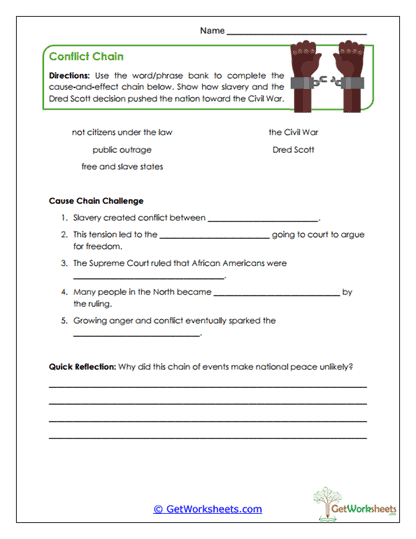
In this cause-and-effect worksheet, learners build a chain linking slavery, court rulings, and the Civil War's outbreak. They fill in missing steps using a word bank and short explanations. The exercise reinforces chronological reasoning and the interconnectedness of historical events. It's a visual way to grasp the ripple effects of judicial rulings.
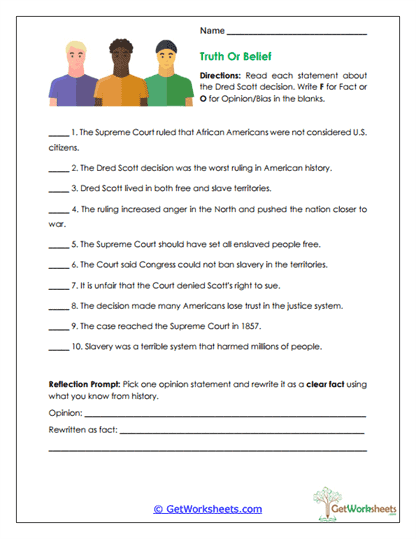
Truth or Belief
Students distinguish between fact and opinion in statements about the Dred Scott case. After labeling each, they rewrite one opinion as a fact supported by evidence. The exercise strengthens critical reading and reasoning skills. It's an engaging way to teach accuracy, bias detection, and historical interpretation.
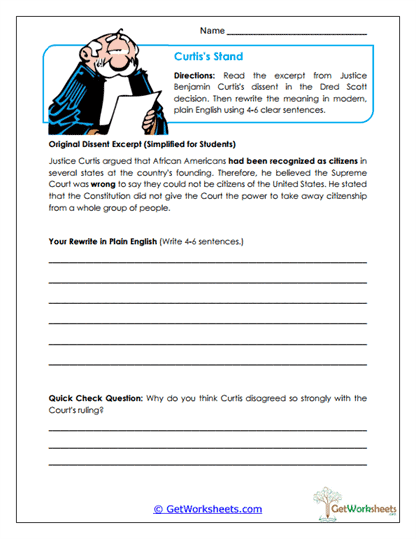
Curtis's Stand
Learners study Justice Benjamin Curtis's dissent from the Dred Scott ruling, rewriting his arguments in plain language. They explain why dissent matters in a democracy and how it represents moral courage. The worksheet builds skills in paraphrasing and civic evaluation. It helps students see how disagreement within the judiciary can uphold justice.
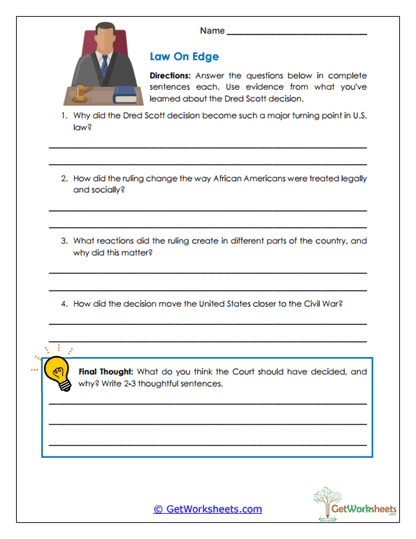
Law on Edge
This reading and writing worksheet guides students through structured questions about the Dred Scott decision's national impact. They analyze how it affected the regions differently and express personal views on what should have happened. The activity promotes reflective thinking and historical empathy. It's an accessible way to connect judicial reasoning with ethical judgment.
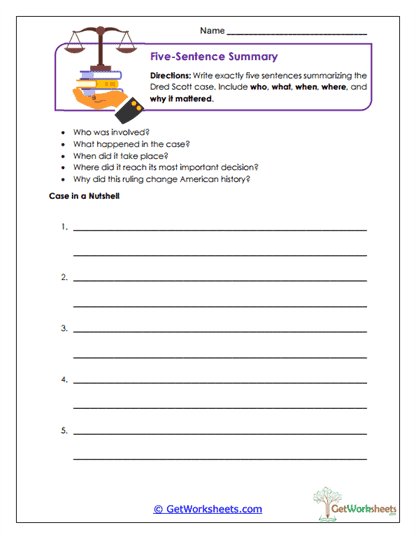
Five-Sentence Summary
Students practice concise writing by summarizing the Dred Scott case in exactly five sentences. Prompts guide them to include who, what, when, where, and why it mattered. The format emphasizes clarity and precision. It's a quick, skill-focused activity for reinforcing comprehension of complex events.
Ask the Justices
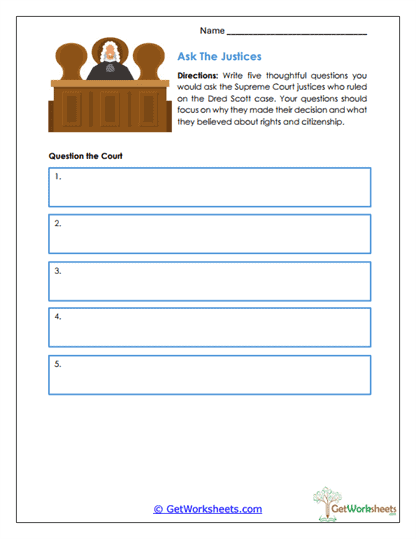
Learners write five thoughtful questions they would ask the Supreme Court justices who decided the case. Each question encourages curiosity about fairness, interpretation, and moral responsibility. This exercise deepens engagement with judicial reasoning and democratic dialogue. It's a creative closing task that transforms passive learning into active inquiry.
Bookmark Us Now!
New, high-quality worksheets are added every week! Do not miss out!