Double Negatives Worksheets
About This Worksheet Collection
This collection of Double Negatives worksheets offers teachers a rich set of tools for helping students master one of the most common-and frequently misunderstood-grammar conventions in English. The activities range from simple sentence corrections to full-paragraph rewrites, as well as engaging tasks that involve dialogue editing, sentence sorting, and creative response components. Together, these worksheets provide structured practice that gradually increases in complexity, making them useful for whole-class instruction, small-group intervention, or independent practice.
As students work through the collection, they sharpen their ability to recognize, correct, and avoid double negatives in their writing and speech. The exercises strengthen grammar awareness, build confidence in sentence editing, and equip learners with skills that support clear and effective communication. Through repeated, varied exposure to negative constructions, students develop stronger proofreading abilities and a deeper understanding of standard English conventions.
Detailed Descriptions Of These Worksheets
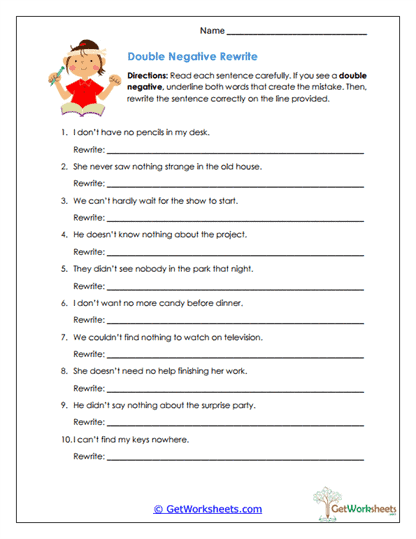
Double Negative Rewrite
This worksheet guides students through the process of spotting negative word pairings that unintentionally cancel each other out. Learners underline the two problematic words and then reconstruct the sentence so that the meaning becomes clear and grammatically sound. By engaging in this targeted correction, students build habits of precision and strengthen their understanding of standard negative usage. It also encourages careful rereading and reflection on sentence structure.
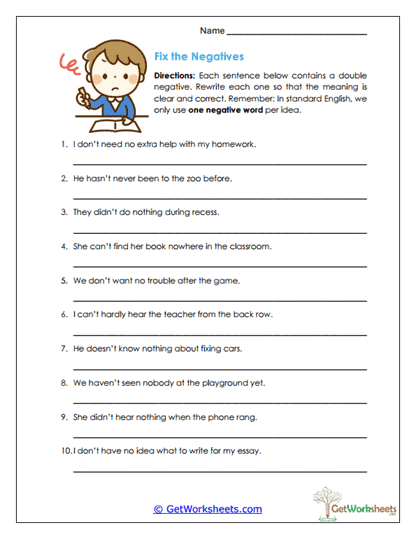
Fix the Negatives
Students are presented with sentences that contain doubled-up negative forms, and their task is to reshape each one into proper standard English. Each rewritten sentence helps reinforce the idea that one negative word is sufficient to express a negative meaning clearly. The exercise develops fluency in self-editing and encourages students to think critically about how word choices affect meaning.
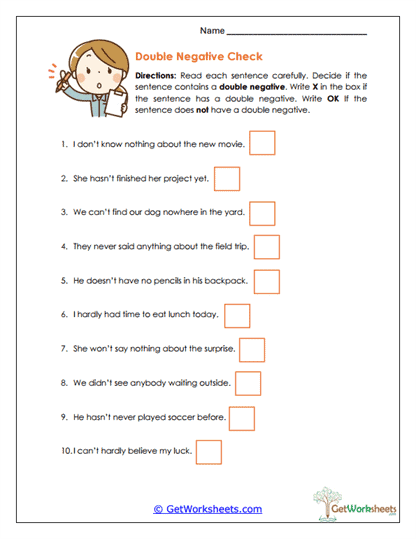
Double Negative Check
In this activity, students evaluate whether a sentence is correct as written or contains an unnecessary pair of negatives. They mark each item as "X" or "OK," encouraging quick but thoughtful decision-making. This format supports the development of strong proofreading habits and helps students differentiate between acceptable usage and common errors.
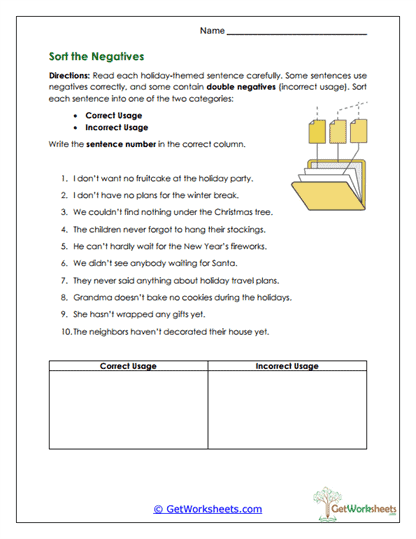
Sort the Negatives
Students review a set of holiday-themed sentences and decide whether each belongs in the Correct Usage or Incorrect Usage category. They then record the sentence numbers in a sorting chart, encouraging analytical thinking. This quick classification task reinforces grammar awareness while giving learners practice in distinguishing accurate negative structures from faulty ones. It also provides a fun seasonal twist that boosts engagement.
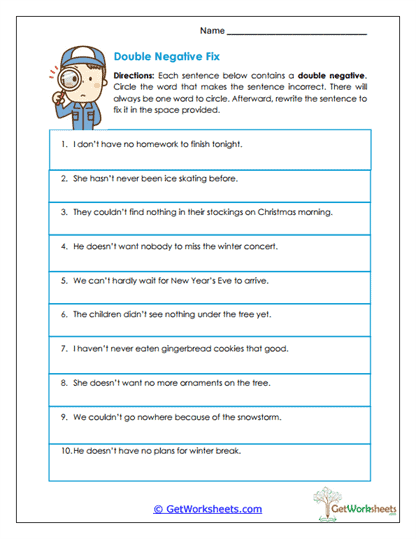
Double Negative Fix
This worksheet asks students to circle the incorrect negative within each sentence and then rewrite the sentence correctly on the provided lines. The revision step ensures learners not only identify the error but also apply a proper construction of the idea. Through this process, students refine their editing accuracy, build grammar confidence, and strengthen their ability to produce clear writing.
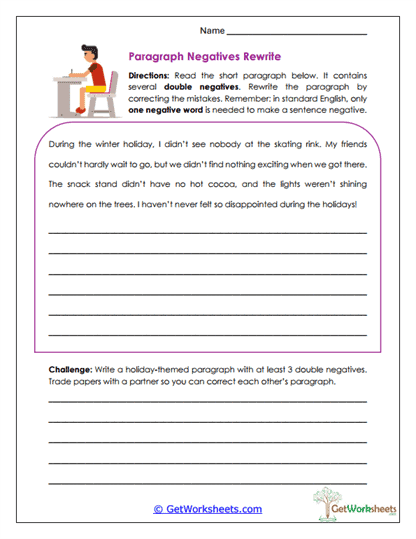
Paragraph Negatives Rewrite
Students examine a paragraph that contains several double negatives and transform it into a clean, standard-English version. Because the corrections span multiple sentences, learners must maintain consistent meaning while adjusting each negative structure. This extended task builds advanced editing fluency and highlights how double negatives can obscure meaning across longer passages. It also gives students an opportunity to reflect on clarity and tone in their writing.
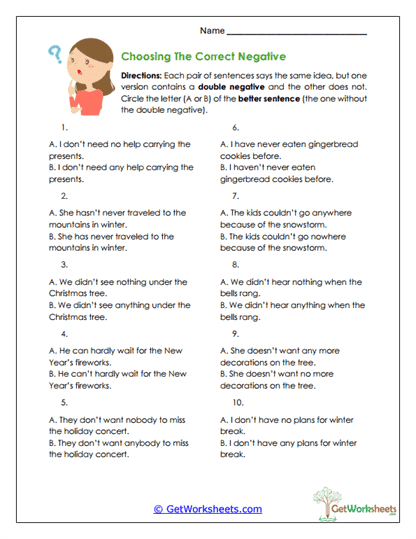
Choosing the Correct Negative
Learners compare two sentences that express the same idea-one using a double negative and one using proper grammar-and they select the correct version. This comparison helps students internalize what proper negative usage looks and sounds like. By evaluating the meaning and clarity of each pair, students gain confidence in choosing effective sentence constructions. The exercise also reinforces critical thinking about grammar choices.
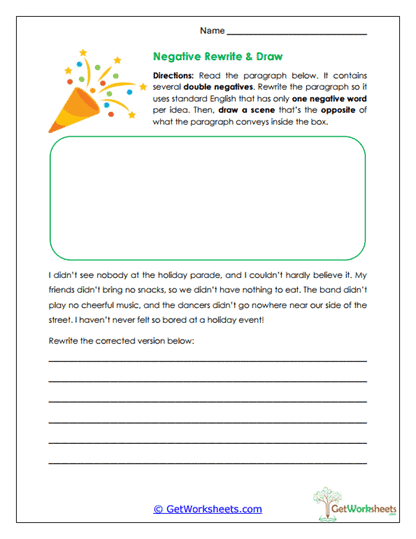
Negative Rewrite & Draw
Students first rewrite a paragraph filled with confusing negative constructions, transforming it into a clear and readable version. Once the text is corrected, they create a drawing that represents the opposite scenario from what the negative-filled paragraph describes. This combination of editing and visual interpretation encourages deeper comprehension and adds a creative dimension to grammar practice. It's a unique activity that blends language skills with imagination.
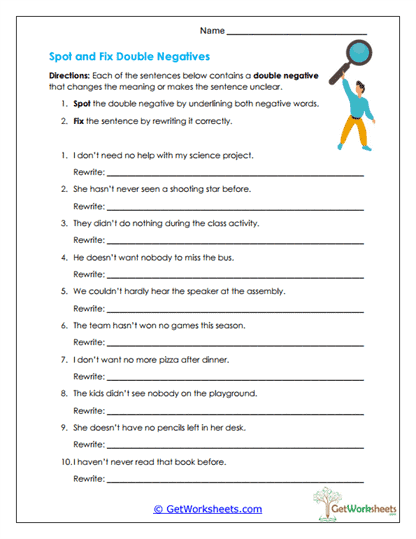
Spot and Fix Double Negatives
Using a two-step approach, students underline each negative word in the sentence and then rewrite the corrected version below. This structure helps them move from identification to application in an organized way. Through repeated practice, they strengthen both recognition and revision skills, ensuring they can handle negative constructions confidently.
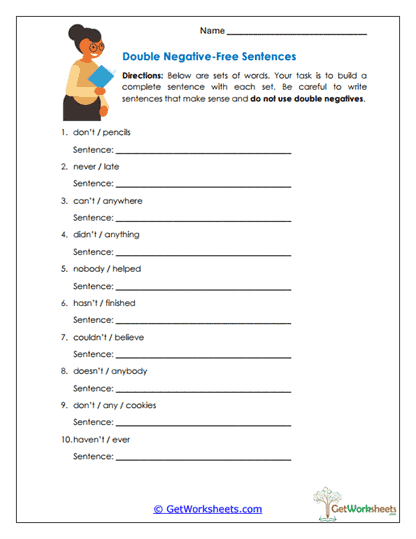
Double Negative-Free Sentences
Students receive sets of required words and must arrange them into meaningful sentences without creating double negatives. This constraint-based task encourages careful sentence crafting and decision-making about structure. Learners practice forming grammatically correct statements while experimenting with word relationships. It also adds a creative challenge that keeps the activity engaging.
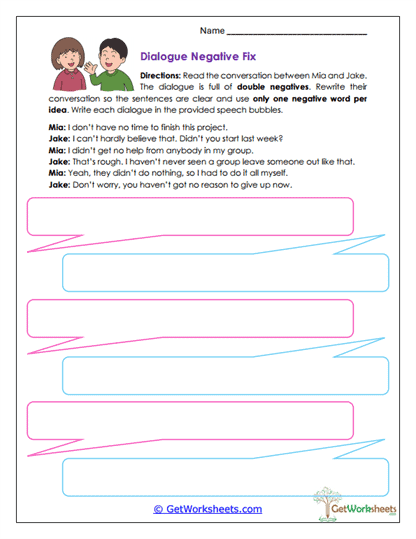
Dialogue Negative Fix
This worksheet presents a short dialogue containing several incorrect negative forms. Students rewrite each line in standard English within the provided speech bubbles, preserving the characters' meaning while improving clarity. Working with dialogue helps learners see how double negatives can affect spoken language and communication. It also provides a relatable context for applying grammar rules to real-world conversation.
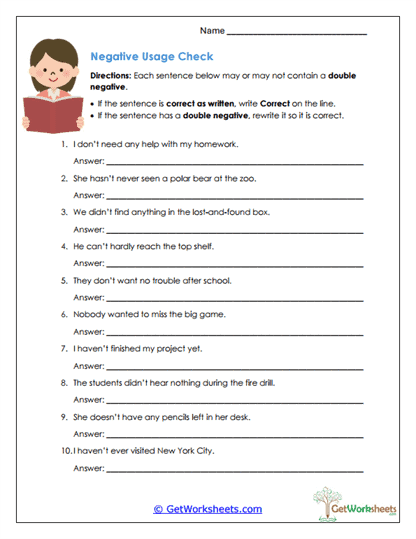
Negative Usage Check
Students examine each sentence and determine whether it is correct or needs revision. If a sentence contains a double negative, they rewrite it using proper standard English. This activity encourages precise evaluation and deeper understanding of how negative structures influence meaning. By revising only the incorrect examples, students strengthen their grammar awareness in a focused, efficient way.
Bookmark Us Now!
New, high-quality worksheets are added every week! Do not miss out!