Don Quixote Worksheets
About This Worksheet Collection
The Don Quixote worksheet collection introduces students to Cervantes' iconic novel through activities that strengthen comprehension, thematic interpretation, historical understanding, and literary analysis. Each worksheet approaches the text from a different angle-character study, sequencing, quote interpretation, moral lessons, and satire-helping learners grasp both the humor and the deeper philosophical questions embedded in the narrative. The variety of tasks allows students to explore how illusion, idealism, realism, and cultural commentary shape the novel's meaning.
Across the collection, students practice key skills such as comparing perspectives, analyzing cause-and-effect patterns, interpreting figurative language, recognizing authorial purpose, and connecting literature to modern issues. They also engage in creative writing, debate preparation, vocabulary practice, and reflective analysis. Together, these worksheets offer a comprehensive and engaging way to study one of the most influential works in world literature.
Detailed Descriptions Of These Worksheets
Character Matching
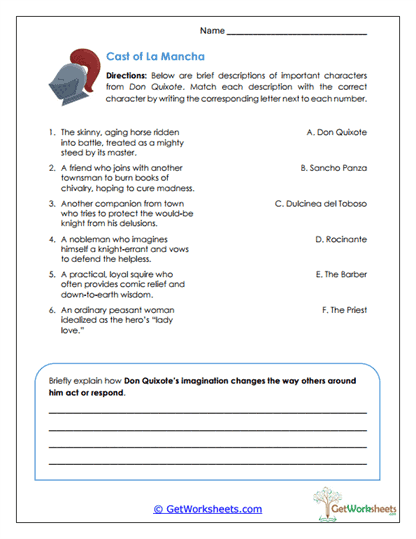
Students match notable characters to short descriptions that highlight their roles and motivations. This reinforces foundational comprehension of relationships and character functions. A brief written reflection asks learners to analyze how Don Quixote's imagination influences others. The activity builds insight into cause-and-effect dynamics within the novel.
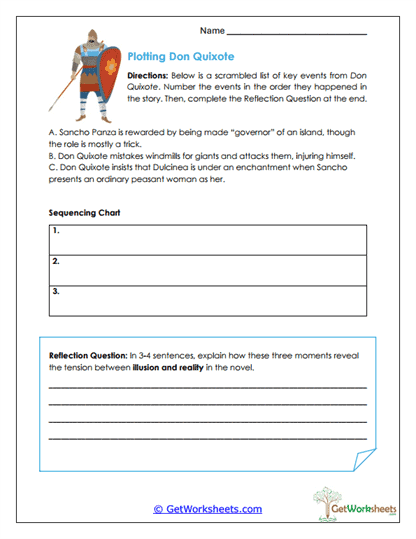
Event Sequencing
Learners place three central events in chronological order and reflect on how they illustrate the tension between illusion and reality. This task strengthens plot comprehension and thematic understanding. Students examine how misinterpretations drive conflict. It encourages careful reading and critical reasoning.
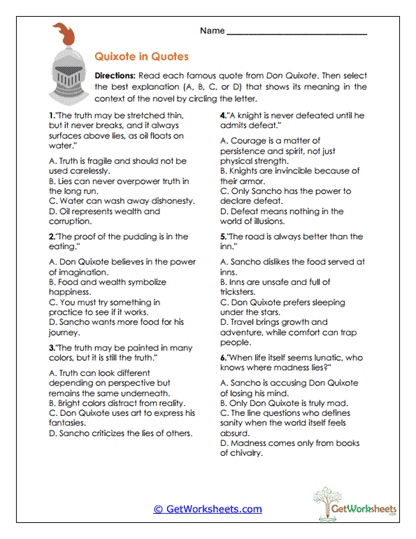
Quote Interpretation
Students choose the best explanation for each of six famous quotes. This activity strengthens close reading and interpretation of figurative language. Learners identify character viewpoints and thematic implications. It deepens understanding of Cervantes' commentary on imagination, morality, and human behavior.
Cause and Effect
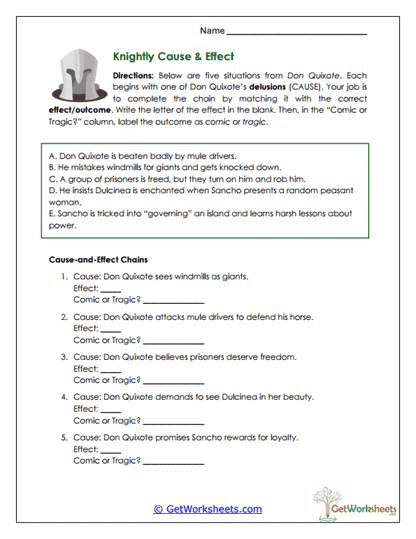
Learners match Don Quixote's misguided actions to their resulting effects and categorize each outcome as comic or tragic. This illustrates how delusion shapes tone and conflict. Students practice plot analysis and tone identification. The activity develops understanding of character-driven consequences.
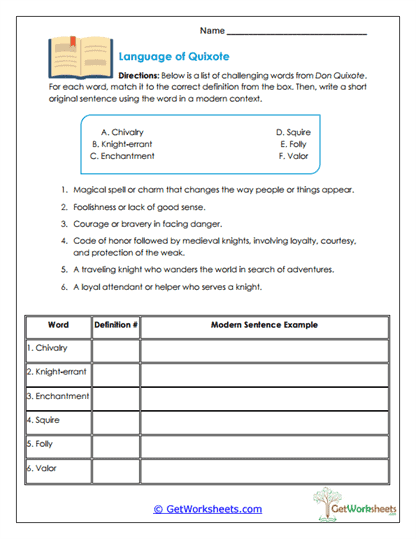
Vocabulary Practice
Students match six challenging vocabulary words to definitions and write original sentences using each term. This builds vocabulary comprehension and supports understanding of literary and historical language. Learners practice applying new words in context. It enhances academic language confidence.
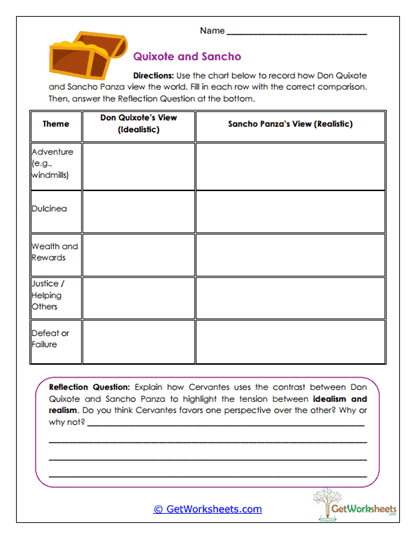
Idealism vs. Realism
Using a comparison chart, students analyze how Don Quixote's idealism contrasts with Sancho Panza's realism across several categories. A reflection prompt encourages thematic interpretation. This builds comparative thinking and clarifies key philosophical tensions. It strengthens character perspective analysis.
Author's Purpose
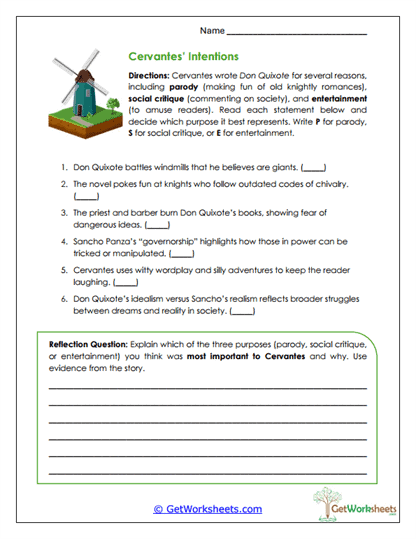
Students classify statements as parody, social critique, or entertainment. This task helps learners understand Cervantes' multiple purposes and how he blends humor with commentary. A reflection question deepens consideration of intent. It supports genre understanding and evidence-based reasoning.
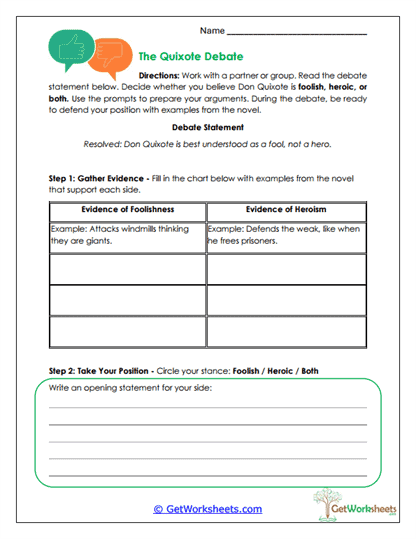
Quixote Debate
Learners gather evidence to argue whether Don Quixote is foolish, heroic, or both. They craft an opening statement for a structured debate. This activity sharpens argumentative reasoning and text-supported interpretation. It develops speaking, listening, and persuasive writing skills.
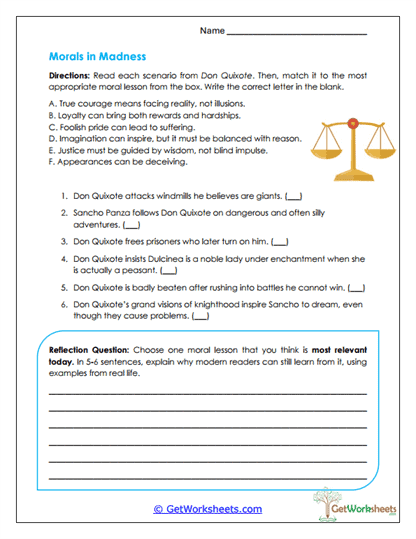
Moral Lessons
Students match scenarios to moral lessons and reflect on which message is most relevant today. The activity reinforces understanding of cause, consequence, and thematic meaning. Learners connect literature to real-world ethics. It encourages reflective interpretation.
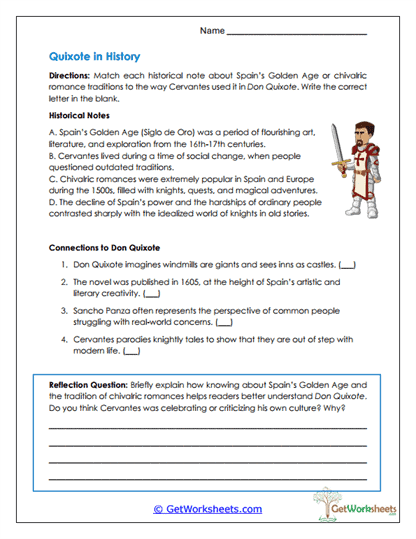
Historical Context
Students match historical notes about Spain's Golden Age and chivalric romance traditions to corresponding aspects of the novel. This deepens cultural and historical understanding. A reflection question asks learners to evaluate Cervantes' view of his society. It fosters contextual reading and analysis of satire.
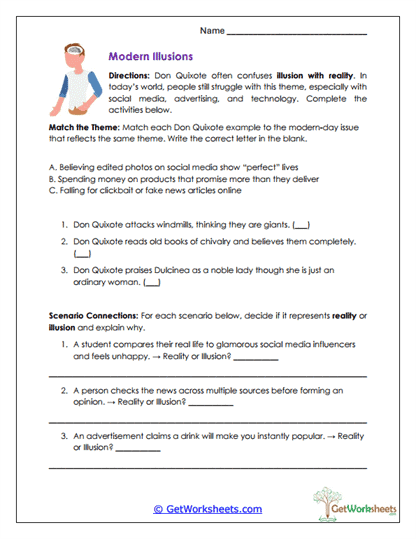
Modern Illusions
Learners connect Don Quixote's delusions to modern-day examples involving media and misinformation. They evaluate scenarios to distinguish illusion from reality. This promotes critical thinking and contemporary application of literary themes. It strengthens text-to-world reasoning.
Alternate Ending
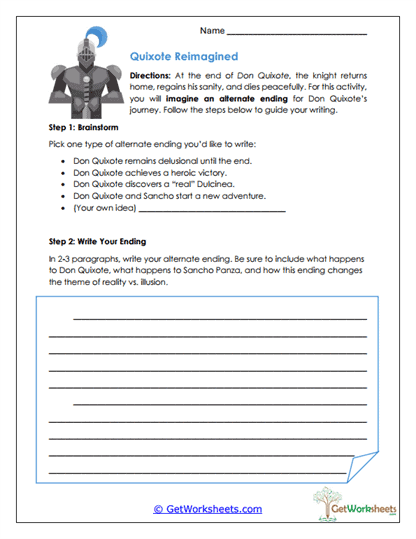
Students write a new ending to the novel, imagining alternative outcomes for Don Quixote and Sancho Panza. This creative exercise encourages narrative composition and thematic exploration. Learners consider how changes in fate affect character development and message. It builds imagination and deep literary engagement.
Bookmark Us Now!
New, high-quality worksheets are added every week! Do not miss out!