Difference Between Robots and AI Worksheets
About This Worksheet Collection
This collection helps students understand the key differences between robots-machines with bodies-and artificial intelligence-software that thinks, learns, or makes decisions. Through case studies, narratives, sorting charts, fill-in-the-blank practice, and comparison tasks, learners explore how robotics and AI work separately and how they combine to power technologies like self-driving cars, delivery robots, and smart assistants. Each worksheet uses age-appropriate explanations and real-world examples to make complex ideas clear and approachable.
As students work through the set, they strengthen reading comprehension, analytical thinking, and STEM literacy. They learn to classify hardware vs. software, detect misconceptions, identify AI functions within machines, and analyze how different technologies contribute to human jobs and daily life. By examining modern tools and historical milestones, learners build a solid foundation for understanding today's hybrid AI-robot systems and the roles they play in society.
Detailed Descriptions Of These Worksheets
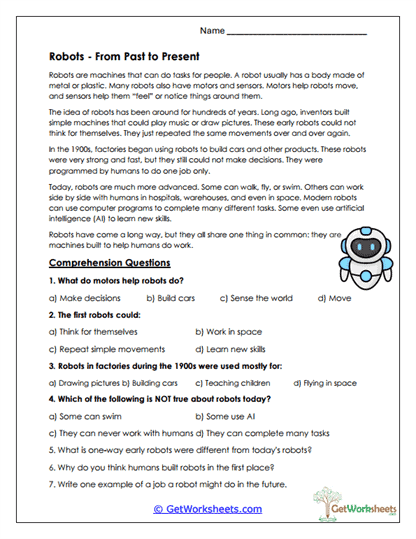
Robots: Past to Present
Students read about the evolution of robots from early mechanical devices to modern, sensor-powered machines. Comprehension questions prompt them to compare past and present capabilities. The activity strengthens understanding of robotics history and highlights how robots assist humans today.
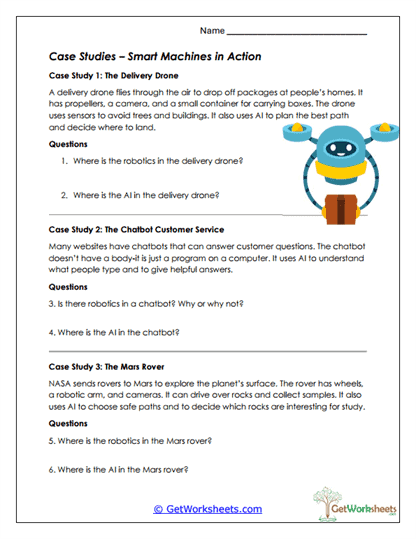
Smart Machines Case Studies
Learners examine scenarios featuring a delivery drone, customer-service chatbot, and Mars rover. They identify which components involve robotics and which rely on AI decision-making. This builds critical thinking and clarifies how physical machinery and intelligent software interact.
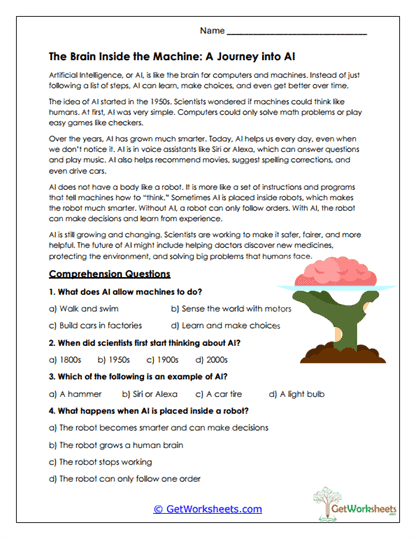
Journey Into AI
Students read an age-friendly explanation of AI as the "brain" behind smart technology. Questions reinforce key concepts like learning, adapting, and making decisions. The worksheet helps learners distinguish AI capabilities from robotic functions.
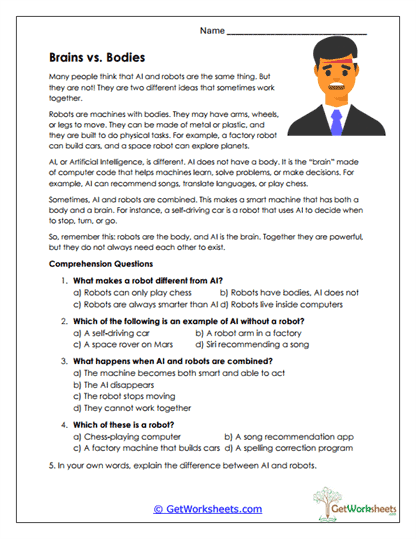
Brains vs. Bodies
This activity explains the separation between robots (physical bodies) and AI (software brains), and how they combine in systems like self-driving cars. Students answer comprehension questions that deepen their understanding of hardware-software relationships.
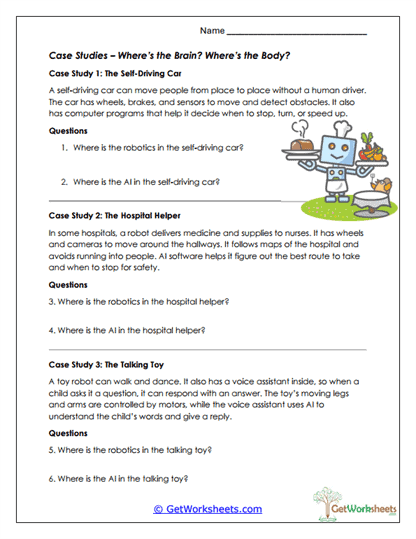
Where's the Brain? Where's the Body?
Learners analyze three real-world examples-a self-driving car, helper robot, and talking toy-to identify hardware vs. software components. This strengthens analytical reasoning and reinforces the concept of hybrid systems.
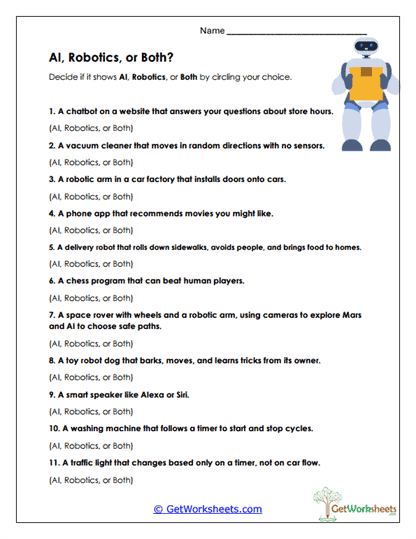
AI, Robotics, or Both?
Students classify everyday technologies into AI, robotics, or combined systems. They justify each choice, building confidence in distinguishing between decision-making intelligence and physical machinery.
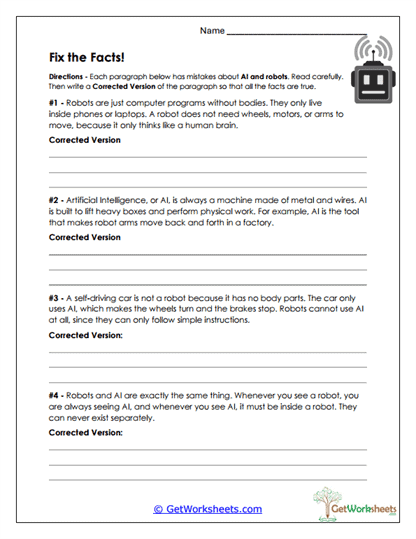
Fix the Facts
Learners correct inaccurate paragraphs containing misconceptions about AI and robots. They rewrite each paragraph with accurate information, building revision skills and reinforcing key conceptual differences.
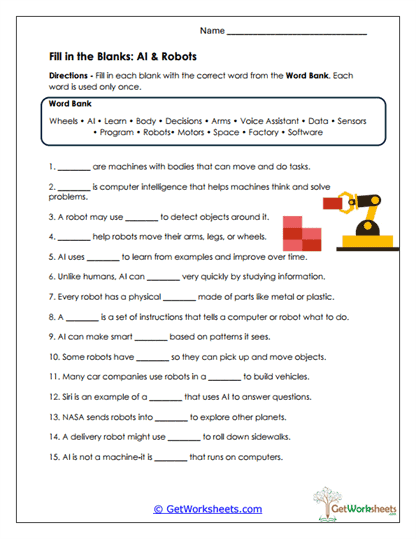
AI & Robots Fill-in-the-Blanks
Students complete vocabulary-based fill-in-the-blank sentences using key technical terms like "motors," "sensors," "program," and "AI." This worksheet builds foundational terminology and strengthens distinctions between physical mechanisms and intelligent software.
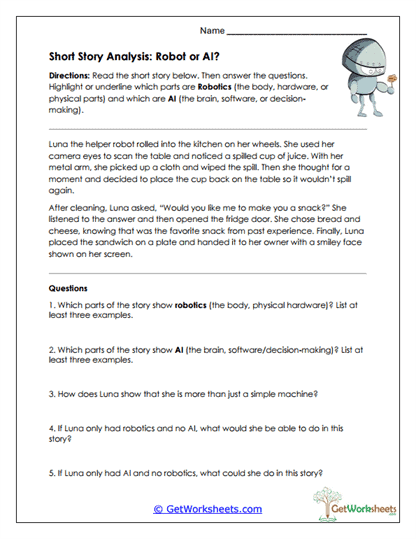
Robot or AI Story Analysis
Students read a narrative featuring a helper robot named Luna and highlight examples of robotics vs. AI within the story. Comprehension questions reinforce analysis and clarify how smart machines combine movement and decision-making.
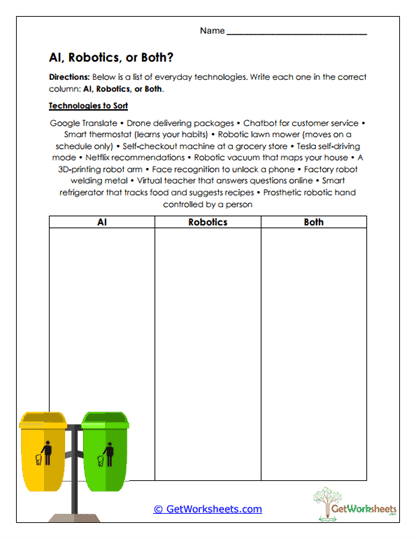
AI-Robotics Sorting Chart
Learners categorize technologies such as Google Translate, drone delivery, and prosthetic hands into "AI," "Robotics," or "Both." This strengthens classification skills and real-world application of concepts.
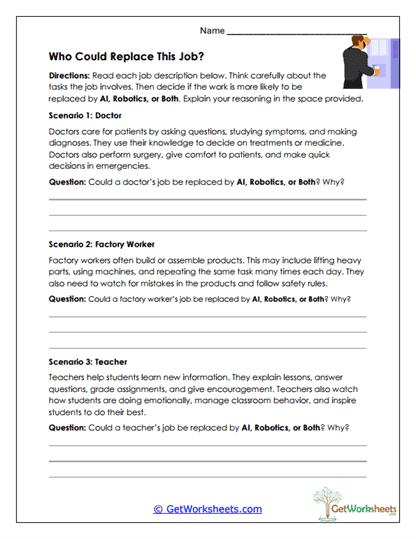
Who Could Replace This Job?
Students analyze three jobs-doctor, factory worker, and teacher-and decide whether AI, robotics, both, or neither could replace certain tasks. This encourages higher-order thinking and promotes responsible discussion about automation and human skills.
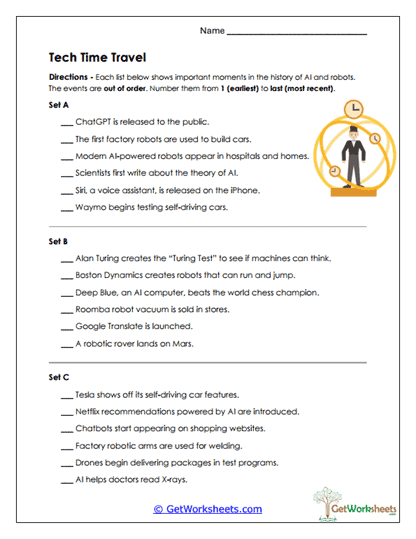
Tech Time Travel
Learners sequence mixed historical events related to AI and robotics, from early robots to modern conversational systems like ChatGPT. This activity strengthens timeline reasoning and helps students understand technological progress over time.
Bookmark Us Now!
New, high-quality worksheets are added every week! Do not miss out!