Descriptive Paragraph Structure Worksheets
About This Worksheet Collection
This Descriptive Paragraph Structure worksheet collection teaches students how to craft vivid, well-organized paragraphs that use sensory detail, strong word choice, and deliberate structure. Through guided sentence rewrites, detail-expansion activities, sequencing challenges, and imagery-centered writing, learners explore how descriptive paragraphs are built from the ground up. The worksheets progress from foundational skills-such as identifying sensory words-to more advanced tasks like analyzing tone, mirroring structural patterns, and aligning description with a theme.
Across the collection, students strengthen key writing abilities including paragraph organization, coherence, sentence fluency, sensory detail integration, and stylistic control. They learn how descriptive paragraphs move from broad impressions to specific details, how transitions improve flow, and how mood, tone, and thematic focus shape the reader's experience. These activities equip students with flexible tools they can apply in narrative, informational, and creative writing.
Detailed Descriptions Of These Worksheets
Sensory Word Sort
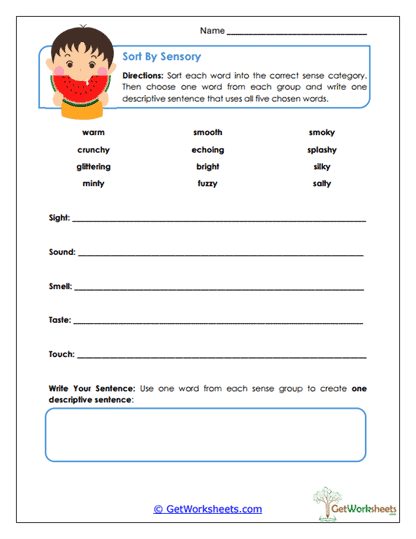
Students sort descriptive words into the five sensory categories-sight, sound, smell, taste, and touch-then write one sentence using selected words. This helps learners recognize how sensory vocabulary contributes to vivid description. The activity blends classification with sentence construction. It strengthens imagery, word choice, and foundational descriptive-writing techniques.
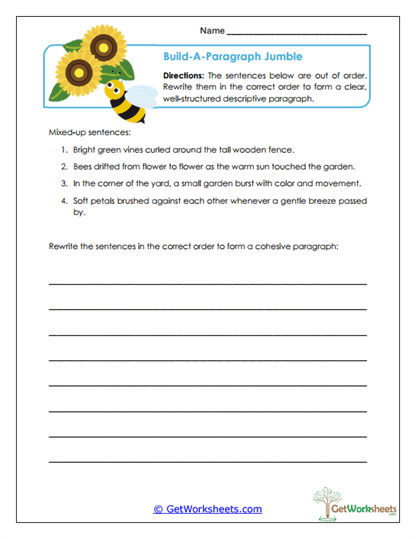
Paragraph Order Jumble
Learners rearrange four out-of-order descriptive sentences into a logical sequence that forms a cohesive paragraph. They determine which sentence introduces the scene, which develop details, and which provides closure. The exercise reinforces organization, flow, and paragraph unity. It sharpens students' understanding of coherent descriptive structure.
Snapshot Scene Writing
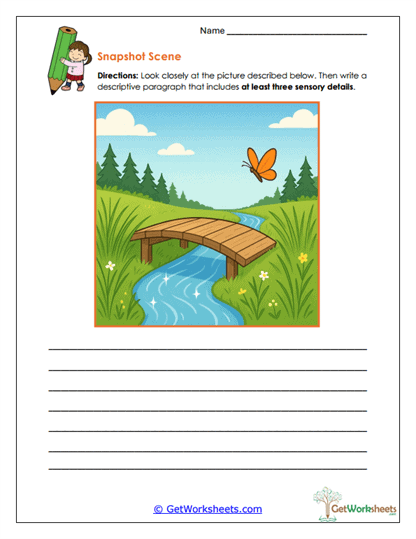
Students study an illustrated scene and write a descriptive paragraph using at least three sensory details. They convert visual observations into rich written imagery. The activity strengthens sensory detail use and unified paragraph composition. It encourages close looking and descriptive precision.
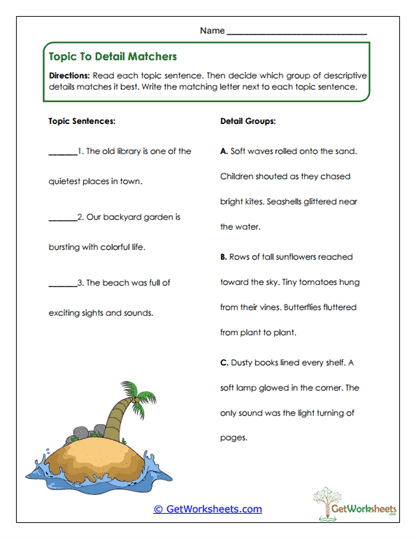
Topic-to-Detail Matching
This worksheet presents topic sentences and groups of descriptive details. Students match each topic to the detail set that best supports it, reinforcing the idea that strong paragraphs rely on relevant, connected information. The task sharpens skills in unity, coherence, and detail recognition. It helps students judge whether details fit an intended focus.
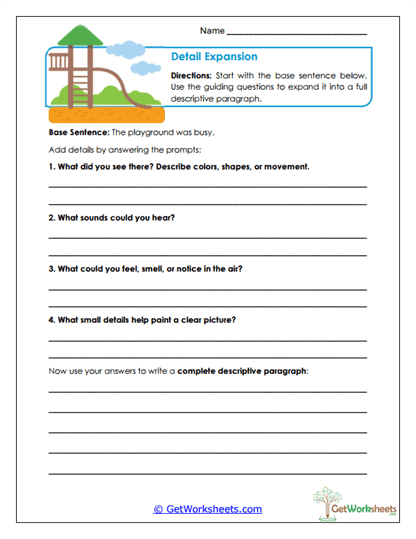
Detail Expansion
Beginning with a simple sentence, students answer guiding questions about what they see, hear, and notice before writing a full paragraph. This activity demonstrates how vague statements expand into vivid descriptions. Learners practice adding concrete observations and sensory imagery. It supports structured paragraph development.
Show It Better
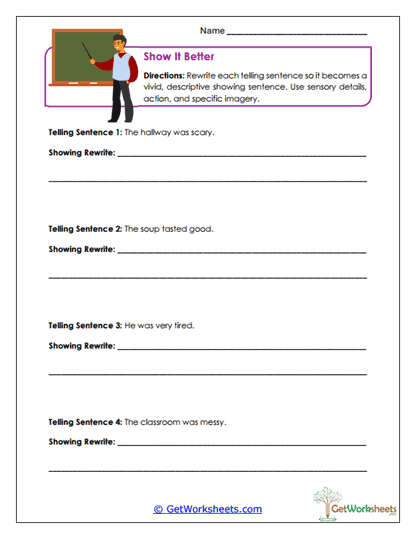
Students rewrite bland "telling" sentences into vivid, sensory-rich "showing" sentences. The activity emphasizes action, imagery, and descriptive precision. It strengthens students' ability to craft engaging scenes and express mood, sound, or texture clearly. This builds essential sentence-level descriptive skills.
Smooth Connections
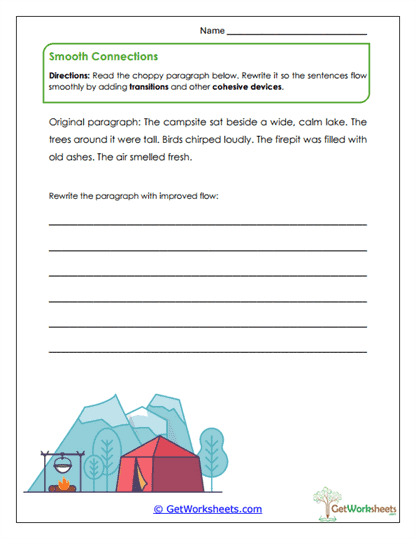
Learners revise a choppy paragraph by adding transitions, combining ideas, and improving flow. The exercise teaches how cohesion transforms writing into smoother, more readable prose. Students practice using transition words effectively. It enhances clarity, organization, and paragraph rhythm.
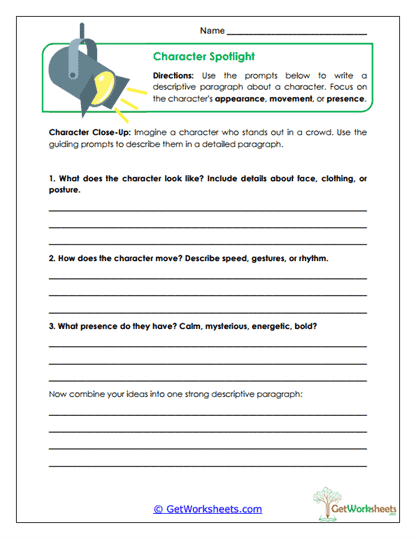
Character Spotlight
Students write a descriptive paragraph focused on a character's appearance, movements, and presence. They develop observations through guiding questions, then combine them into one cohesive passage. The activity strengthens descriptive detail use and narrative clarity. It also builds skill in selecting meaningful character details.
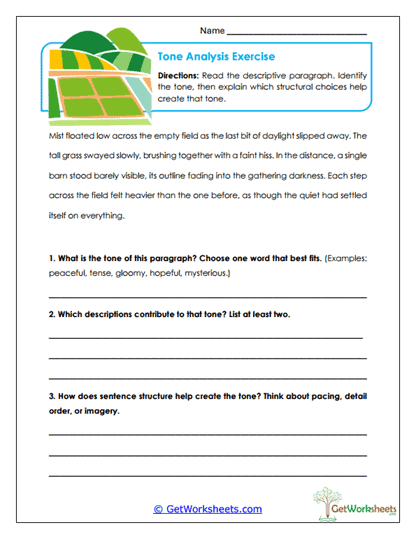
Tone Analysis Exercise
Students analyze a descriptive paragraph to identify its tone and the text features that create it. They examine wording, imagery, and sentence structure to understand how tone is shaped. This activity builds close-reading and interpretive skills. It deepens awareness of how structure and detail influence mood.
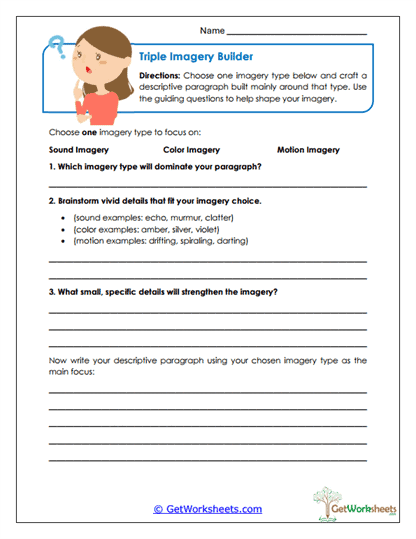
Imagery-Focused Paragraph
Learners select one imagery type-sound, color, or motion-and write a descriptive paragraph built entirely around that focus. They brainstorm specific details, then organize them into a unified scene. This reinforces intentional imagery use and paragraph coherence. It helps students understand how focused sensory choices elevate descriptive writing.
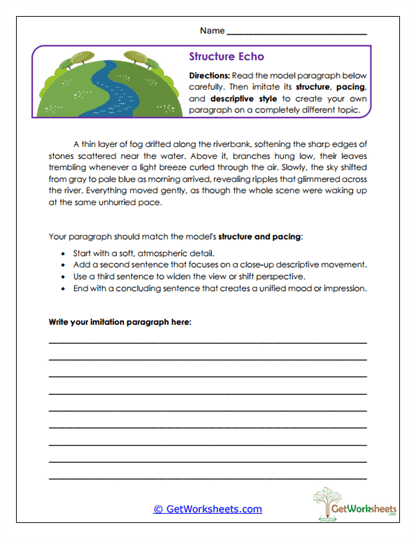
Structure Echo
Students read a model paragraph and imitate its structure, pacing, and descriptive pattern without copying its content. The task teaches how paragraph architecture guides reader experience. Learners practice pacing, movement, and layered detail. It develops advanced descriptive-writing skills through structural mimicry.
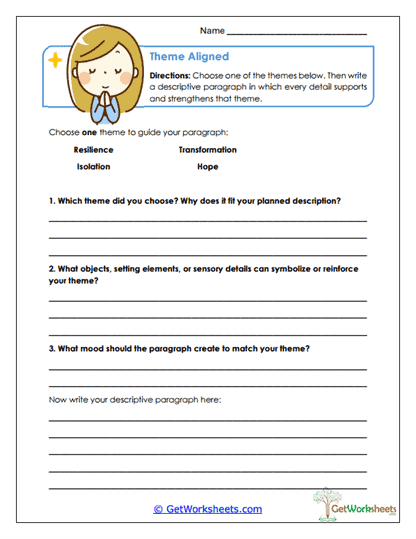
Theme-Aligned Description
Learners write a descriptive paragraph centered on a chosen theme, using objects, details, and mood to reinforce that theme. They plan connections between imagery and message, then craft a unified paragraph where each choice supports the central idea. This worksheet strengthens symbolic thinking and purposeful descriptive writing. It teaches students to align description with deeper meaning.
Bookmark Us Now!
New, high-quality worksheets are added every week! Do not miss out!