Describing Settings Worksheets
About This Worksheet Collection
This Describing Settings worksheet collection helps students develop the essential skills needed to craft vivid, sensory-rich environments in their writing. Through guided prompts, sentence rewrites, seasonal contrasts, figurative language practice, and mood-based revisions, learners explore how writers bring places to life on the page. These worksheets encourage students to think carefully about what a setting looks, sounds, and feels like-whether it's a real location or an imagined one-and to communicate those impressions with clarity and creativity.
Across the collection, students strengthen descriptive writing, narrative development, and close-reading skills. They learn how sensory details, mood, point of view, and precise word choice influence the atmosphere of a scene. By experimenting with zoom levels, rewriting neutral passages into emotional ones, and blending figurative language with concrete detail, students gain the tools needed to construct rich, immersive settings that enhance storytelling.
Detailed Descriptions Of These Worksheets
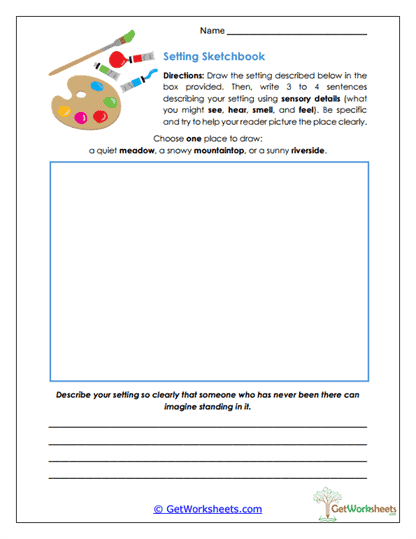
Setting Sketchbook
Students choose one setting to sketch, then write 3-4 descriptive sentences using sensory details to bring the scene to life. This activity connects visual interpretation with written imagery. It strengthens sensory writing and helps learners practice clear, specific description. Students gain confidence turning observations into vivid narrative settings.
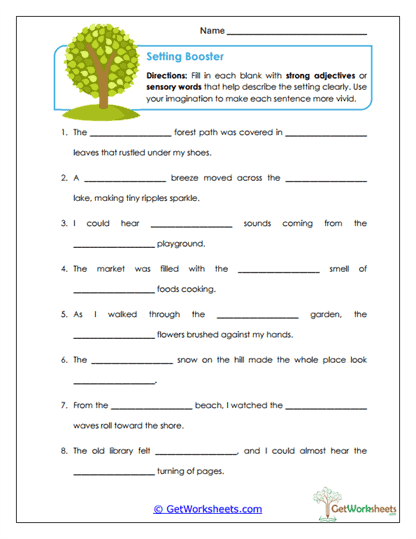
Setting Booster
Learners complete partially written sentences by adding strong adjectives or sensory words that enhance the scene. The prompts guide students toward more precise, expressive language. This worksheet builds confidence in choosing vivid descriptors and improves clarity in descriptive sentences. It supports tone and mood development in setting writing.
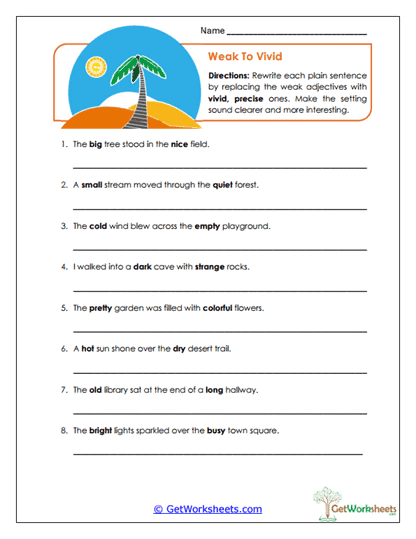
Weak to Vivid
Students revise bland, vague descriptions by replacing weak adjectives with vivid, precise alternatives. This task reinforces the impact of word choice and shows how stronger vocabulary improves imagery. Learners practice transforming flat sentences into dynamic descriptions. It enhances fluency in crafting more compelling narrative settings.
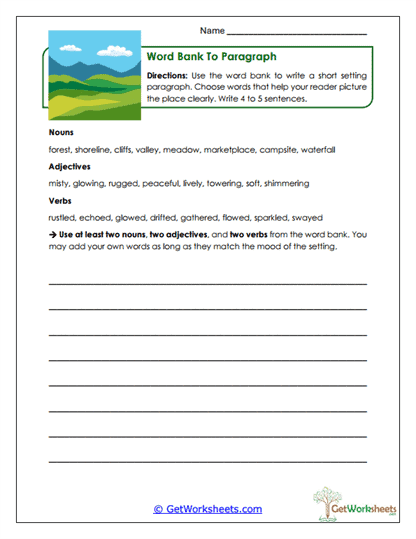
Word Bank Paragraph
Students use a provided word bank of nouns, adjectives, and verbs to write a 4-5 sentence descriptive paragraph. The structure teaches how different word types contribute to setting creation. Learners practice blending sensory language with purposeful vocabulary choices. It reinforces paragraph organization and imagery.
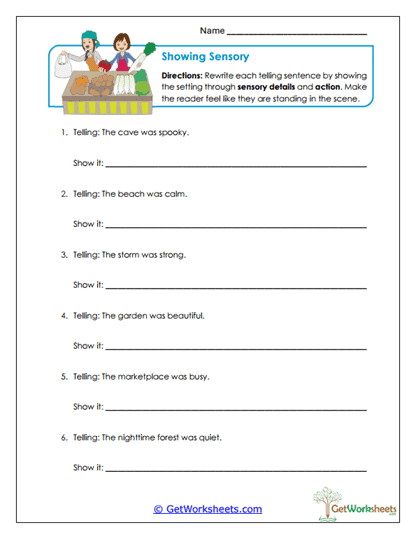
Showing Sensory
Learners rewrite telling sentences into showing descriptions filled with sensory detail and action. This activity focuses on immersing the reader in the scene using clear, vivid imagery. It deepens understanding of "show, don't tell" techniques and improves descriptive fluency. Students practice making settings feel more immediate and engaging.
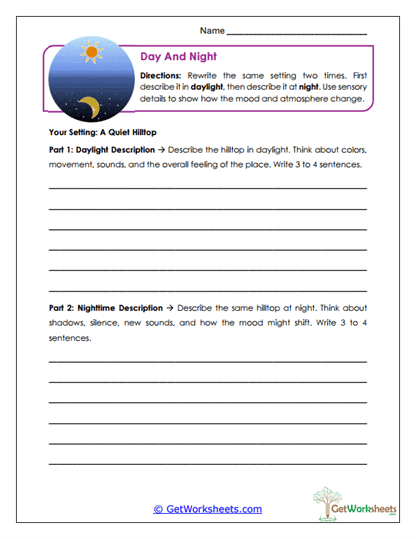
Day and Night Descriptions
Students describe the same hilltop twice-once in daylight and once at night-exploring how mood and atmosphere shift over time. They use sensory details to illustrate changes in color, sound, and feeling. The worksheet strengthens comparative thinking within a single setting. It teaches students how time of day affects tone and imagery.
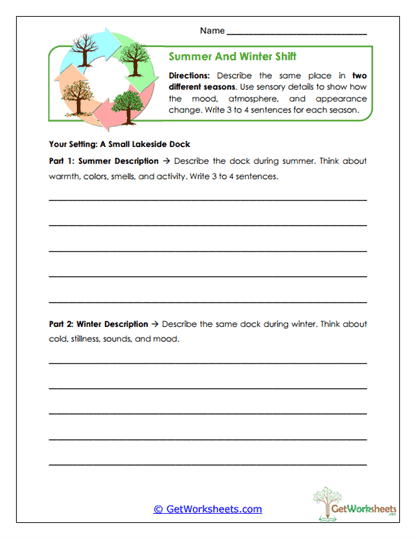
Summer and Winter Shift
Learners describe a lakeside dock in two different seasons using sensory and atmospheric details. They observe how environmental changes influence mood and scene description. This activity reinforces seasonal contrasts and narrative tone. It builds skill in writing distinct versions of the same place.
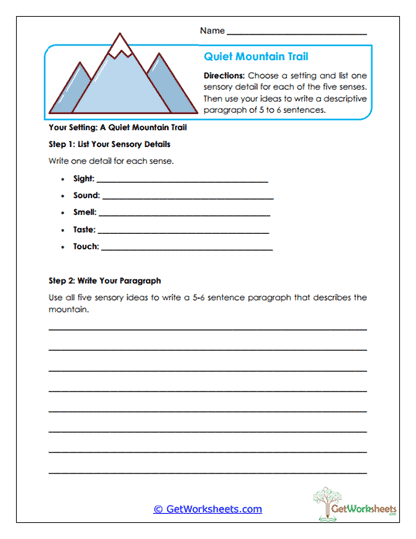
Quiet Mountain Trail
Students list sensory impressions for each of the five senses, then write a descriptive paragraph incorporating all of them. The worksheet shows how combining small details creates immersive imagery. It strengthens organization, sensory integration, and paragraph fluency. Learners practice building a setting from brainstorming to full description.
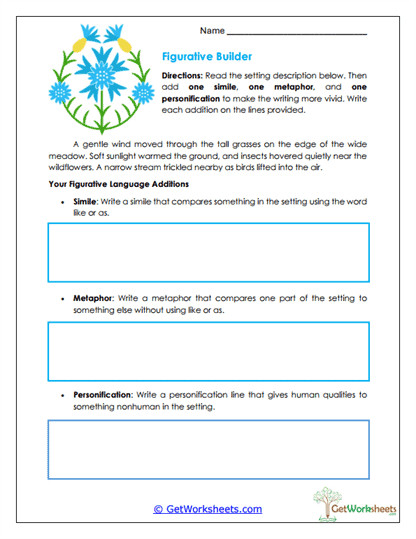
Figurative Builder
Students enhance a meadow description by adding a simile, a metaphor, and personification. This task encourages experimentation with figurative language to enrich imagery. It reinforces understanding of expressive literary devices and how they amplify setting details. Learners strengthen creative writing and descriptive style.
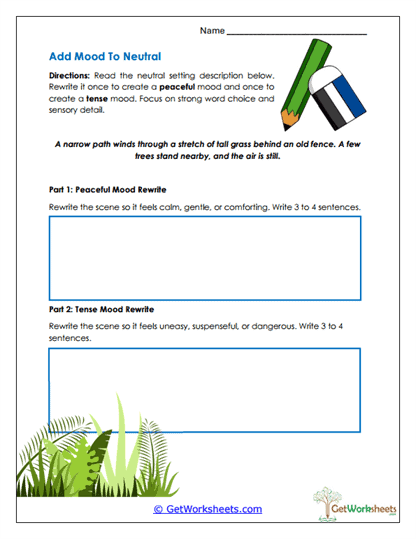
Add Mood Rewrite
Students revise a neutral description twice to create two contrasting moods-such as peaceful and tense. They change vocabulary, imagery, and sensory elements to shift the emotional tone. This activity highlights how word choice influences atmosphere. It develops narrative versatility and mood creation skills.
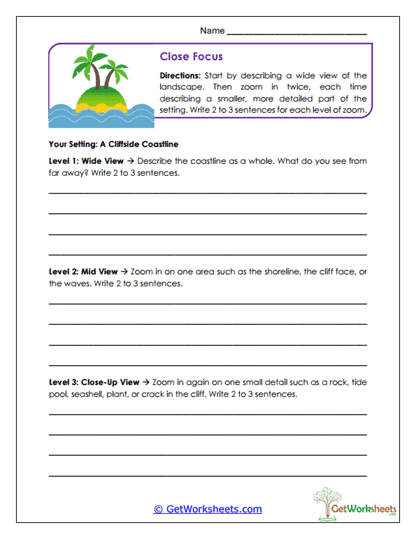
Close Focus Writing
Learners describe a coastline at three zoom levels: wide view, mid view, and close-up. This structured task teaches how detail grows more specific as writers narrow the focus. It strengthens descriptive precision, observation, and the layering of imagery. Students gain insight into scale and perspective in setting development.
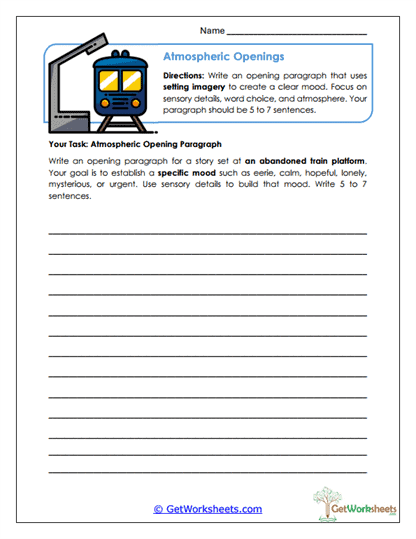
Atmospheric Openings
Students write an opening paragraph set on an abandoned train platform using a chosen emotional tone. They incorporate sensory details and precise language to establish atmosphere. The worksheet reinforces strong narrative beginnings and tone control. It helps learners craft compelling scene-setters that anchor a story effectively.
Bookmark Us Now!
New, high-quality worksheets are added every week! Do not miss out!