Describing Places Worksheets
About This Worksheet Collection
This Describing Places (Real and Imaginary) worksheet collection helps students build the foundational skills needed to craft vivid, sensory-rich settings in their writing. Through a progression of activities that explore adjectives, sensory details, verb choice, viewpoint, mood, and worldbuilding, learners gain the tools to describe places with clarity and imagination. The worksheets balance creativity with structure, giving students guided opportunities to practice descriptive techniques while also encouraging original thinking.
Across the collection, students strengthen essential literacy skills such as imagery, sensory language, narrative tone, perspective, revision, and descriptive paragraph writing. They learn how to "show, not tell," identify setting details in texts, compare environments, and transform simple statements into vivid language. These worksheets support both reading and writing development, helping students understand how authors craft place-based imagery and how they can apply similar techniques in their own narratives.
Detailed Descriptions Of These Worksheets
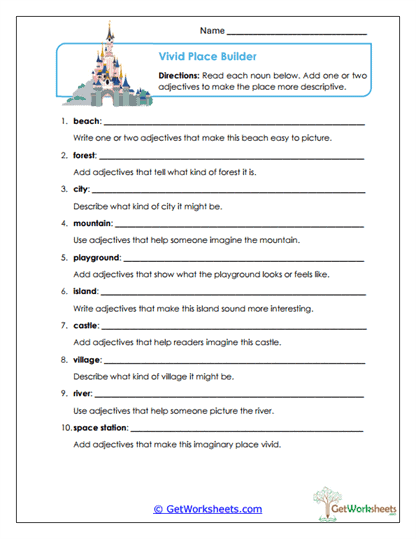
Vivid Place Builder
Students enhance a list of place nouns by adding one or two vivid adjectives to each. The activity teaches learners how specific word choice can bring settings to life and make descriptions more engaging. It builds foundational vocabulary skills and supports awareness of imagery. Students gain practice crafting clearer mental pictures through precise adjectives.
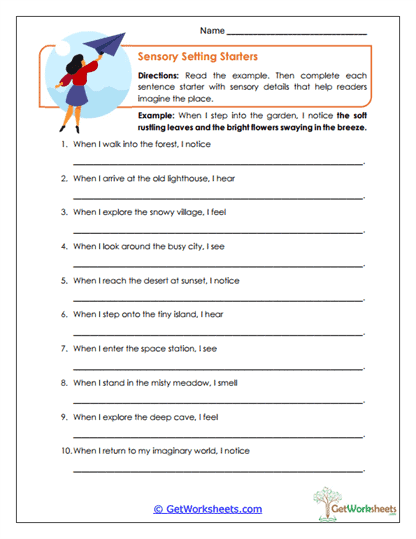
Sensory Setting Starters
Learners complete sentence starters using sensory details connected to sight, sound, smell, taste, or touch. This activity guides students in writing immersive, showing-style sentences. It strengthens imagery and encourages visualization of different places. Students build essential narrative-writing skills by practicing sensory awareness.
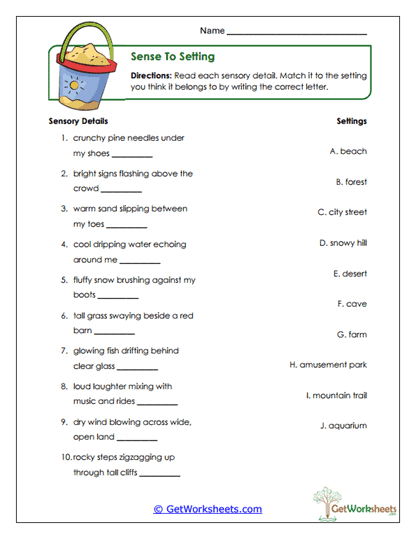
Sense-to-Setting Match
Students match sensory clues with the correct setting, interpreting descriptive hints to determine where each detail belongs. The worksheet reinforces inferencing and comprehension of sensory vocabulary. It helps learners understand how details evoke specific environments. Students deepen their grasp of descriptive techniques used in setting creation.
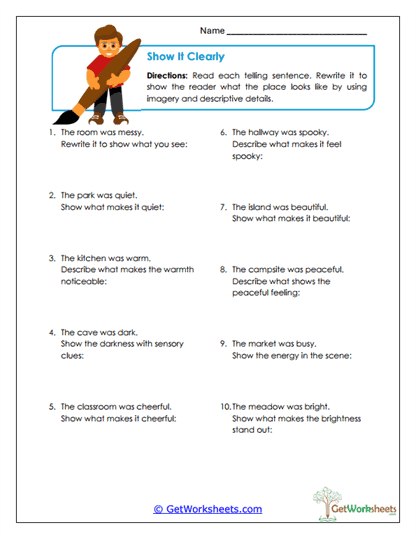
Show It Clearly
This activity asks students to transform telling sentences into vivid, detailed descriptions using imagery and sensory detail. Learners expand basic statements into expressive sentences or short descriptive passages. The worksheet builds "show, not tell" skills and strengthens setting development. It encourages students to identify what makes a place feel a certain way and articulate those qualities clearly.
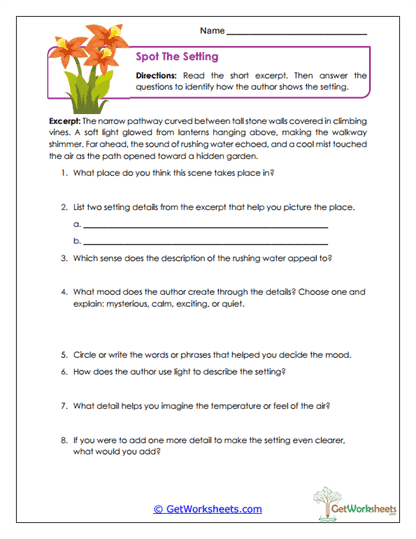
Spot the Setting
Students read a descriptive excerpt and analyze how the author reveals the setting through sensory cues, mood, and detail. They identify the place, list key features, and explain the atmosphere created. The worksheet develops close reading and text-evidence skills. It prepares students to recognize effective setting writing in literature.
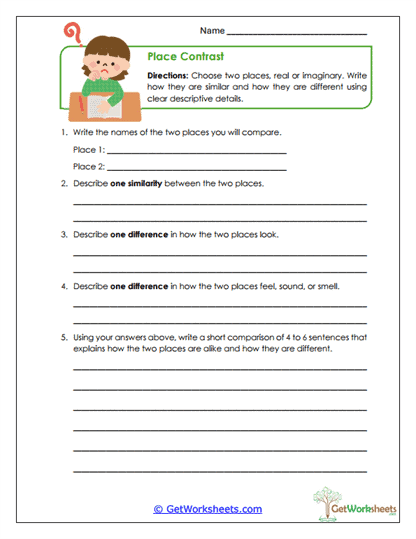
Place Contrast
Learners choose two places-real or imagined-and compare them using descriptive details. They identify similarities, differences, and sensory elements before writing a comparative paragraph. This activity blends descriptive writing with compare-and-contrast thinking. It strengthens paragraph organization and attention to detail.
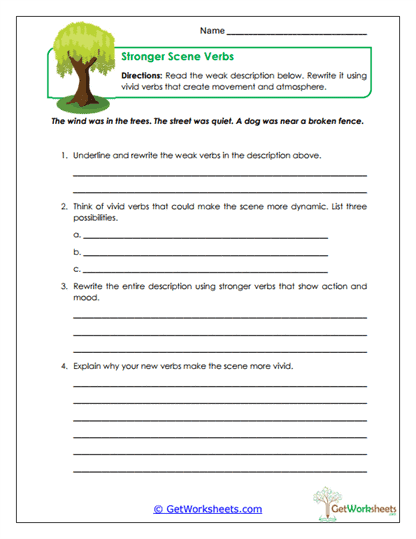
Stronger Scene Verbs
Students identify weak verbs in a sample description and revise the passage using more vivid, dynamic verbs. The worksheet emphasizes how verb choice affects mood, clarity, and energy. It teaches students to revise for stronger imagery and more engaging scenes. This builds confidence in improving descriptive writing.
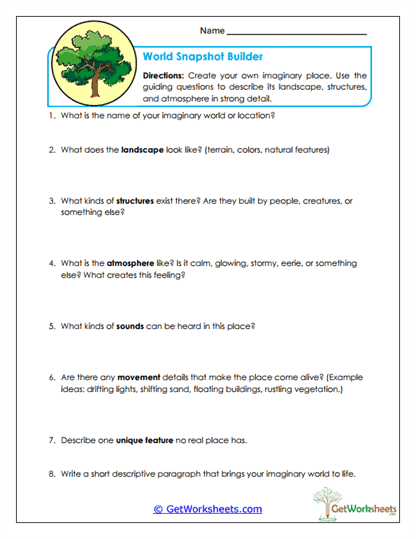
World Snapshot Builder
Learners build an original imaginary world by describing its landscape, sounds, structures, and atmosphere. They create one unique feature that sets the world apart and then write a descriptive paragraph using the details they generated. The activity encourages creativity while teaching structured worldbuilding. It strengthens sensory writing and coherent paragraph development.
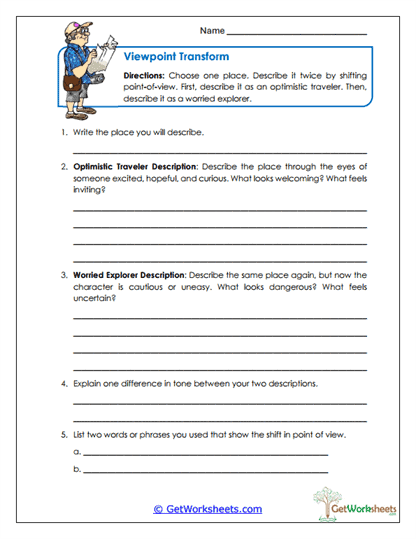
Viewpoint Transform
Students describe the same place twice from different perspectives-an optimistic traveler and a worried explorer. They analyze how tone and mood shift with viewpoint. This activity reinforces understanding of narrative voice and emotional influence on description. Students practice intentional word choice to reflect character attitudes.
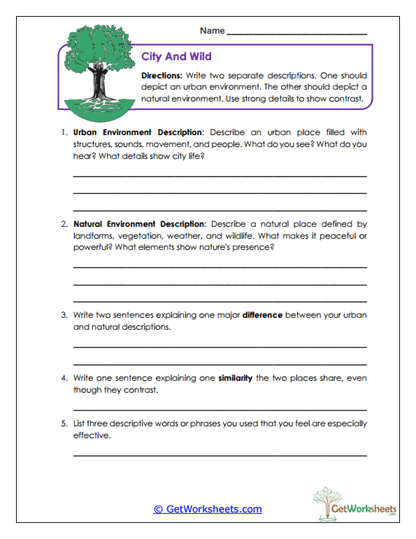
City and Wild
Learners write paired descriptions of an urban environment and a natural one, using sensory details and vivid imagery in both. They then compare the two settings by identifying one similarity and one major difference. The worksheet develops descriptive skill and helps students contrast man-made and natural spaces. It supports vocabulary development and clear descriptive structure.
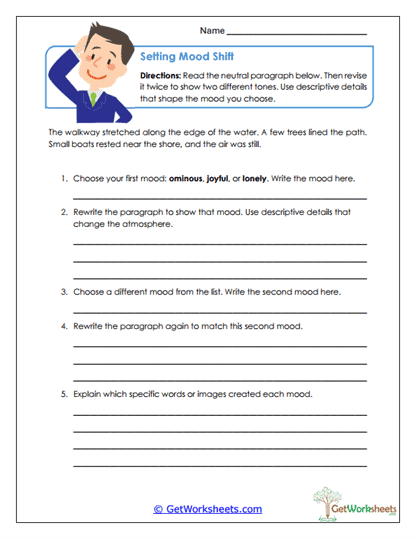
Setting Mood Shift
Students revise a neutral setting paragraph twice to create two distinct moods, such as ominous or joyful. They adjust word choice and imagery to transform the atmosphere, then explain how specific details created each mood. This activity strengthens revision skills and deepens understanding of how language shapes tone. It reinforces the connection between descriptive detail and emotional impact.
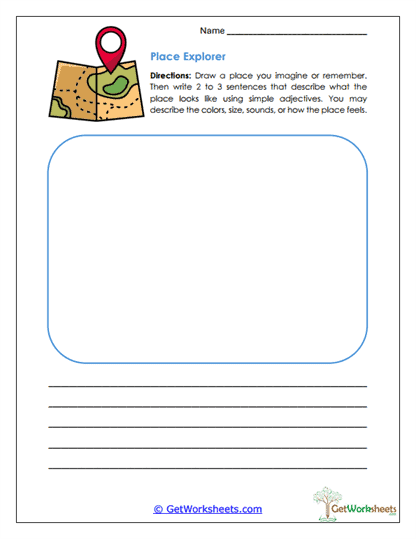
Place Explorer
Students draw a real or imagined place and write a short description featuring vivid adjectives and sensory details. The visual component encourages imaginative thinking, while the writing portion reinforces descriptive clarity. The worksheet helps learners connect visual imagery to written expression. It builds confidence in crafting simple but effective setting descriptions.
Bookmark Us Now!
New, high-quality worksheets are added every week! Do not miss out!