Describing Emotions Worksheets
About This Worksheet Collection
The Describing Emotions worksheet collection guides students in transforming raw feeling into expressive, artful language. These activities help writers move beyond simply telling that a character is sad, excited, or afraid-and instead show those emotions through movement, voice, and imagery. Through analysis, rewriting, and creative construction, learners gain mastery over emotional nuance in both reading and writing.
This collection integrates literacy and empathy. Students learn to infer emotional states from context, identify tone and mood, and build sentences that pulse with authenticity. From revising dull lines to crafting entire emotional scenes, these worksheets provide a progression from analytical reading to cinematic storytelling-helping students understand how emotion drives narrative and connects readers to characters.
Detailed Descriptions of These Worksheets
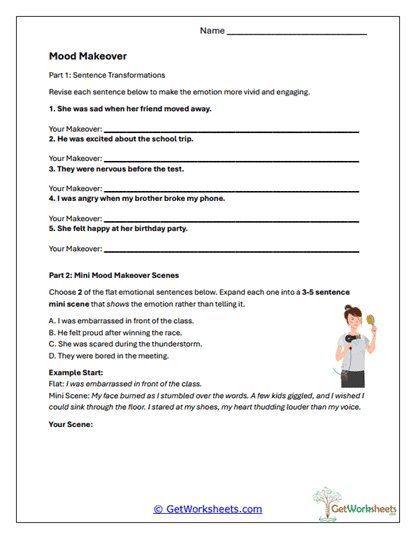
Mood Makeover
Students begin by transforming emotionless sentences into ones that feel alive. A line like "He was scared" becomes "His fingers trembled against the doorknob as a shadow moved across the hall." In the second part, learners expand their rewrites into 3-5 sentence mini-scenes that "show" emotion through imagery and sensory cues. This exercise develops narrative fluency, creative confidence, and an intuitive grasp of the show, don't tell principle-turning flat statements into cinematic writing.
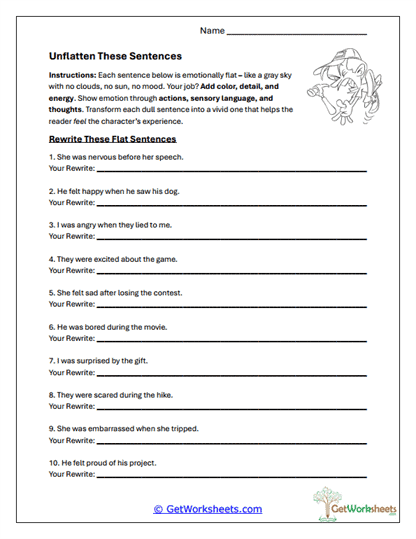
Unflatten These Sentences
In this creative revision task, students take on bland sentences and infuse them with energy, depth, and imagery. They practice layering description with internal thought, sensory language, and metaphor to make emotions vivid. The goal isn't just to expand but to enrich-transforming plain text into expressive, emotional writing. By rewriting "Emma felt lonely" into "Emma's laughter echoed back at her from empty walls," students learn how diction, rhythm, and imagery shape tone.
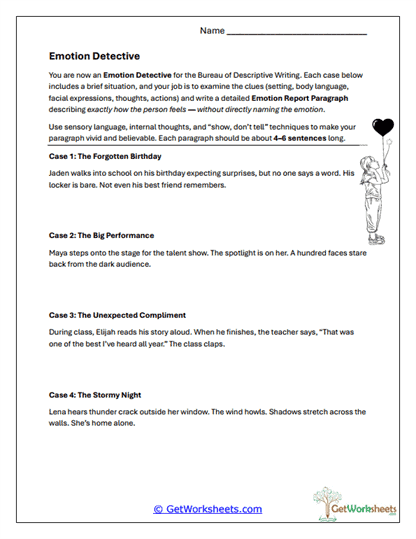
Emotion Detective
Learners become "Emotion Detectives," reading short narrative "case files" and inferring characters' emotions through dialogue, gesture, and environment. Instead of being told how a character feels, students interpret clues-like posture, silence, or choice of words-and write short paragraphs describing those emotions indirectly. This worksheet strengthens inferential reasoning, empathy, and textual evidence use while blending emotional literacy with analytical reading.
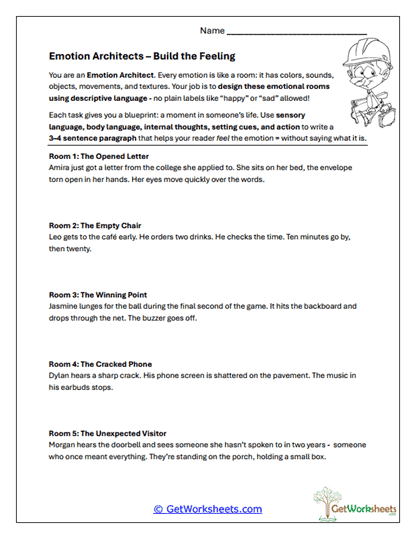
Emotion Architects - Build the Feeling
Here, students design entire scenes around emotions-without naming them outright. Acting as "Emotion Architects," they build emotional "rooms" using sensory and environmental detail. A tense scene might include flickering lights and clipped speech, while a joyful one could sparkle with warmth and rhythm. This worksheet merges creativity and craft, helping students understand that mood is an architectural feature of good writing: it surrounds readers and makes emotion tangible.
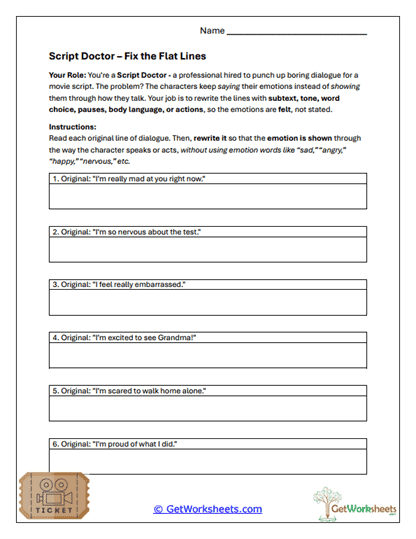
Script Doctor - Fix the Flat Lines
Students act as "script doctors," revising lifeless movie dialogue into lines that breathe with subtext and emotion. By rewriting direct statements like "I'm mad at you!" into layered exchanges that show tension through pauses, sarcasm, or tone, learners grasp how great dialogue conveys feeling beneath the surface. This exercise bridges writing and performance, improving students' understanding of pacing, realism, and emotional authenticity in dialogue.
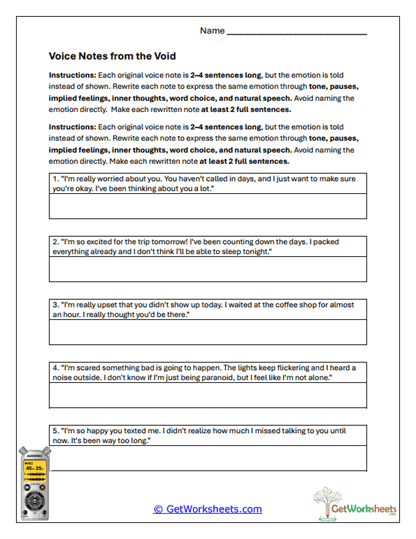
Voice Notes from the Void
In this creative monologue exercise, students rewrite short "voice notes" into emotionally expressive recordings. They experiment with rhythm, hesitation, and implied tone to capture sadness, excitement, or frustration. The focus is on natural voice and psychological realism-how people reveal emotion indirectly through language and structure. This worksheet is perfect for developing voice, tone, and character realism in both narrative and script writing.
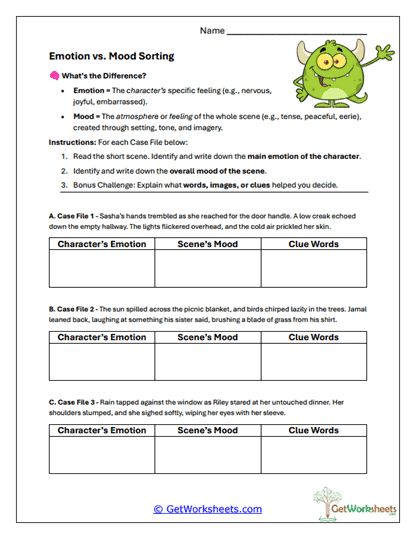
Emotion vs. Mood Sorting
Students learn to separate emotion (what a character feels) from mood (what the reader feels). By analyzing short passages, they identify both elements and cite evidence to support each. This exercise clarifies how imagery, pacing, and diction affect emotional atmosphere. It's a crucial step toward literary analysis, helping students understand how writers manipulate reader experience through emotional contrast.
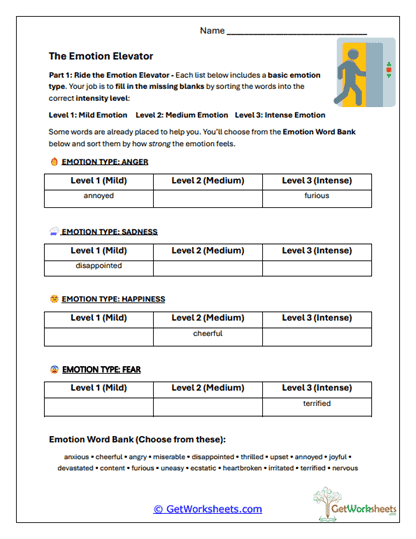
The Emotion Elevator
This interactive vocabulary builder helps students classify emotions by intensity-for instance, annoyed → angry → furious or nervous → afraid → terrified. Organizing emotions on an "elevator" diagram helps learners see gradations in feeling, enhancing descriptive precision and emotional vocabulary. It's equally effective for writers seeking variety and for readers decoding subtle character shifts.
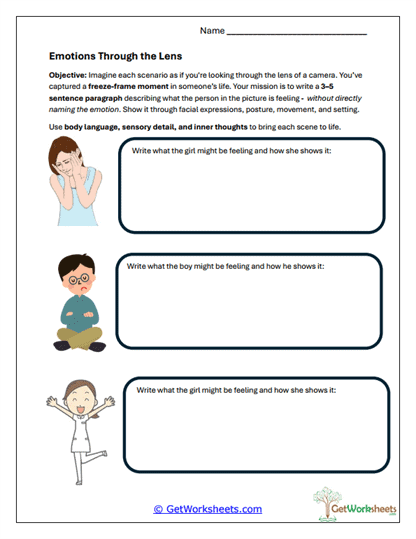
Emotions Through the Lens
Students "zoom in" on emotion like cinematographers, using visual cues to interpret illustrated scenes. Without naming feelings, they write short paragraphs that describe what the characters might be experiencing through gesture, gaze, and setting. This task merges visual literacy with descriptive writing, sharpening observation skills while teaching students to translate imagery into expressive prose.
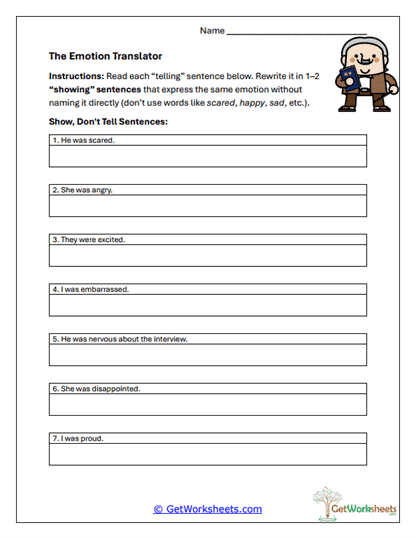
The Emotion Translator
This show, don't tell challenge turns students into language interpreters. Given plain sentences like "He was sad," learners rewrite them into vivid emotional scenes that reveal sadness through detail and action. By "translating" simple emotions into complex expression, students strengthen descriptive fluency, narrative rhythm, and stylistic voice-key elements of compelling storytelling.
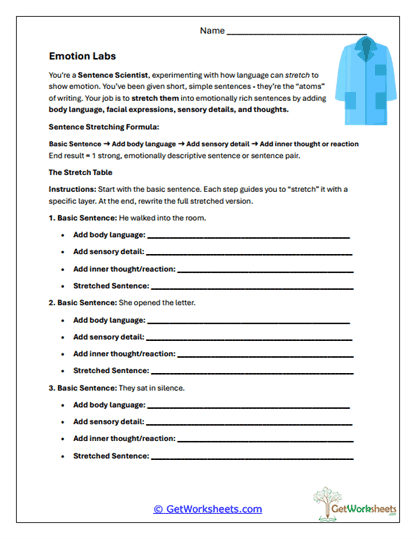
Emotion Labs
Students experiment like "sentence scientists," adding body language, sensory cues, and inner monologue to expand simple sentences into emotionally rich expressions. They discover how structure and word choice transform a reader's perception of feeling. This hands-on approach to sentence crafting reinforces the writing process: expansion, revision, and style development-all through the lens of emotional writing.
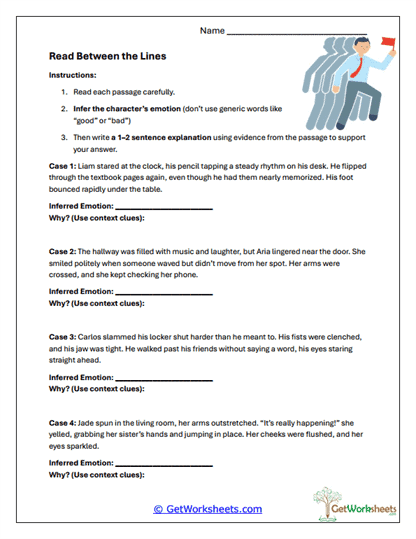
Read Between the Lines
In this inferential reading activity, students interpret emotional subtext in short narrative snippets. They determine what characters are feeling-not by what's said, but by how it's shown. By citing textual clues such as tone, gesture, or rhythm, learners practice analytical thinking and emotional inference, building the same interpretive awareness that skilled readers use when analyzing fiction or real-world interactions.
Bookmark Us Now!
New, high-quality worksheets are added every week! Do not miss out!