Describing Characters Worksheets
About This Worksheet Collection
The Describing Characters worksheet collection transforms the way students think about people in stories-from static labels like "nice" or "angry" to living, breathing personalities revealed through words, gestures, and choices. These worksheets guide learners to infer traits, interpret dialogue, and express emotion through language. Instead of memorizing adjectives, students see how description operates in fiction: how behavior, tone, and detail make a character real.
Each activity blends literary analysis with creative expression. Students read, infer, write, and imagine-sometimes stepping into the role of author, director, or even talk-show host-to practice characterization as both readers and writers. Together, these exercises build empathy, textual reasoning, and stylistic confidence while fostering a genuine appreciation for storytelling craft.
Detailed Descriptions Of These Worksheets
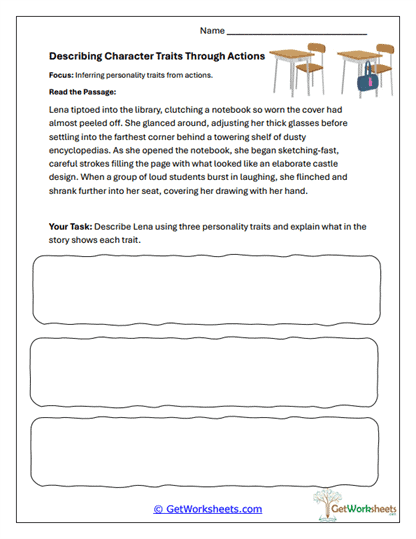
Describing Character Traits Through Actions
Students read a short vignette about Lena-a quiet artist sketching in the library-and infer her personality through observation. Rather than being told what Lena is like, learners must read between the lines, citing textual evidence for traits such as shy, thoughtful, or observant. This activity sharpens inferential comprehension and models how small narrative clues-body language, habits, or choices-reveal character depth. It's an excellent entry point for evidence-based literary analysis.
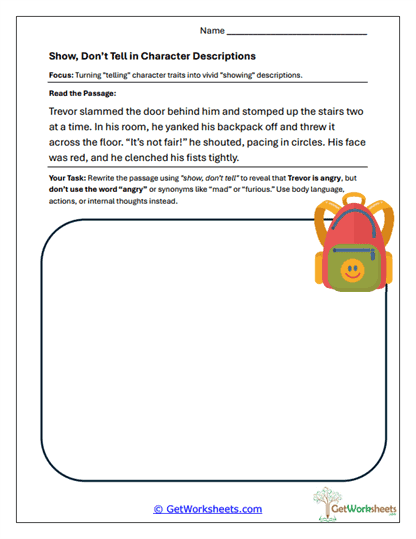
Show, Don't Tell in Character Descriptions
This creative rewriting task trains students to "show" emotions instead of stating them. Given a blunt line like "Trevor was angry," learners must depict anger through clenched fists, short dialogue, or slammed doors. The exercise teaches that action and sensory detail make writing cinematic. It's a practical bridge between grammar and artistry, helping students transform flat sentences into expressive prose.
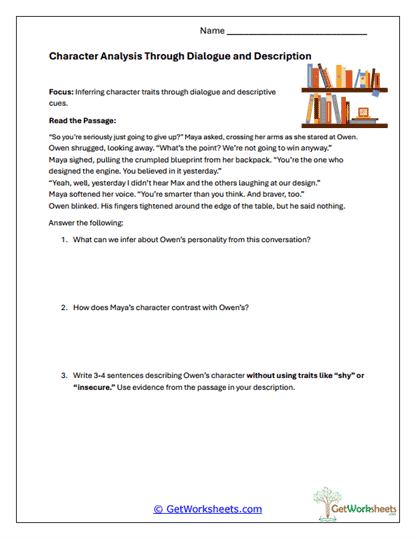
Character Analysis Through Dialogue and Description
Students analyze a short dialogue between two peers, Maya and Owen, identifying what their tone, word choice, and reactions reveal about their personalities. Through guided questions, they compare traits and motivations, learning that dialogue is not filler-it's character insight in disguise. This worksheet strengthens both reading comprehension and analytical writing by grounding interpretations in textual evidence.
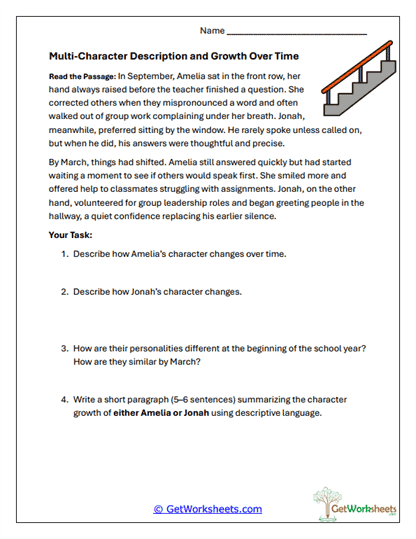
Multi-Character Description and Growth Over Time
Here, learners trace the development of two characters-Amelia and Jonah-across a school year, comparing how their attitudes and traits evolve. Students identify evidence of growth, then compose a short analytical paragraph explaining that evolution. This activity introduces dynamic characterization, helping students distinguish between static and developing characters while practicing comparative writing and reflection.
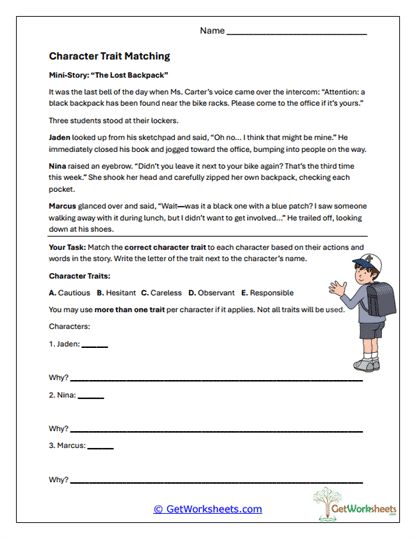
Character Trait Matching
In the short narrative "The Lost Backpack," students connect actions and dialogue to specific traits like responsible, careless, cautious. They must justify each match with text evidence, promoting logical reasoning and interpretive reading. The clear structure of the task makes it ideal for introducing textual analysis skills in middle grades.
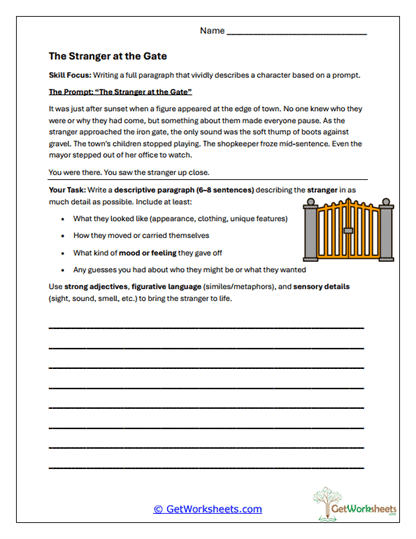
The Stranger at the Gate
Students imagine a mysterious traveler arriving at the edge of town and craft a vivid descriptive paragraph that captures appearance, mood, and emotion. By focusing on sensory imagery-how the air feels, what shadows look like, what townsfolk sense-learners transform abstract imagination into concrete language. This worksheet builds fluency in figurative language and atmosphere-setting, guiding students toward the sophistication of literary prose.
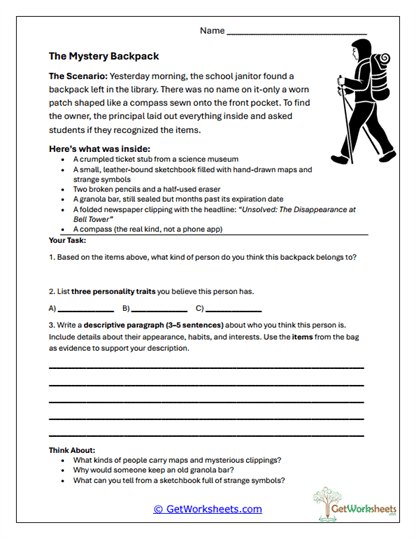
The Mystery Backpack
Acting as detectives, students infer what kind of person owns a backpack filled with unusual items. Using clues, they deduce personality traits and write a short analysis describing the unseen owner. The activity teaches indirect characterization: how objects, habits, and environment reveal who a character is. It's a creative synthesis of inference, logic, and description that strengthens both analytical and narrative skills.
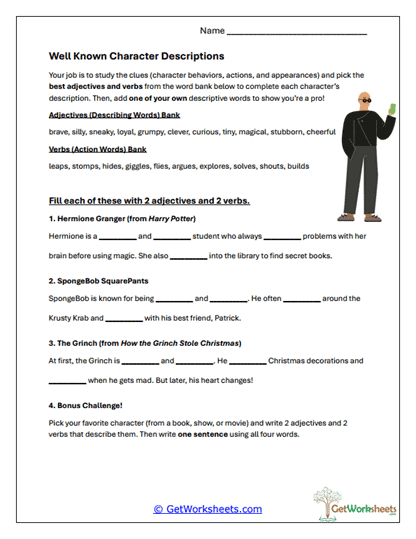
Well-Known Character Descriptions
Learners describe iconic fictional figures-like Hermione Granger or the Grinch-using precise adjectives and action-based clues. The mix of familiar pop-culture and literary examples keeps engagement high while reinforcing vocabulary and character-trait vocabulary. A "create-your-own" challenge encourages students to describe a favorite character from memory, blending recognition with creative output.
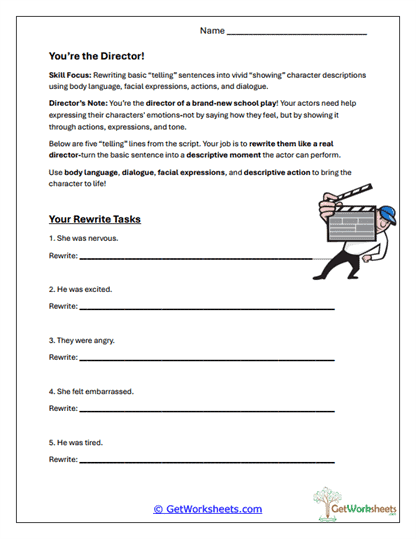
You're the Director!
Students take on the role of a film director rewriting lines like "She was nervous" into vivid stage directions-pacing, fidgeting, adjusting sleeves, avoiding eye contact. The activity shows how gesture and movement can convey emotion more powerfully than adjectives alone. This worksheet bridges literary analysis and performance writing, empowering learners to think visually about character creation.
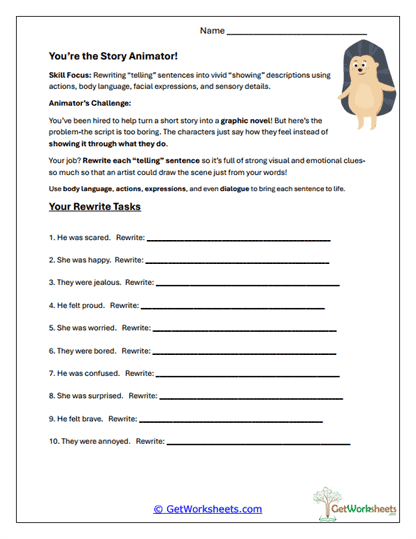
You're the Story Animator!
Building on the "director" concept, students now animate emotional scenes. They rewrite flat sentences to make readers see feelings-fear, pride, confusion-through context and sensory language. Acting as "story animators," they learn how writers choreograph motion, rhythm, and dialogue to make scenes come alive. It's a hands-on workshop in pacing, atmosphere, and emotional nuance.
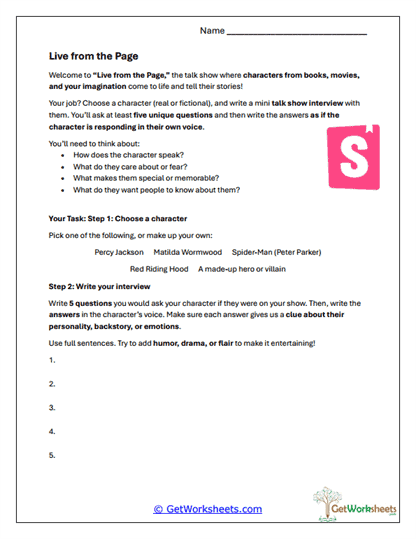
Live from the Page
In a lively twist on perspective writing, students imagine interviewing a character from literature, film, or their own imagination on a talk show. They craft both interviewer questions and character responses, practicing voice, tone, and humor. This activity blends analysis and creativity, helping students demonstrate deep character understanding while experimenting with dialogue and personality-driven writing.
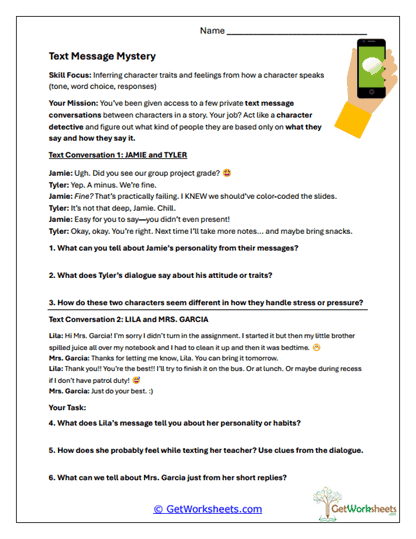
Text Message Mystery
Students decode personality and tone through fictional text-message exchanges. Each chat thread becomes a modern miniature story: through brevity, emojis, and subtext, learners infer relationships, motivations, and emotions. This contemporary format develops digital literacy alongside traditional analysis, showing that character voice exists even in the language of screens.
Bookmark Us Now!
New, high-quality worksheets are added every week! Do not miss out!