Declaration of Independence Worksheets
About This Worksheet Collection
The Declaration of Independence worksheet collection helps students explore one of the most influential documents in world history through engaging, interactive lessons. From understanding the preamble's meaning to tracing grievances and key events leading to independence, these resources allow learners to connect revolutionary ideas with the human stories and struggles behind them. The collection supports both classroom instruction and independent study by combining factual learning with creative and reflective writing opportunities.
As students move through these worksheets, they will develop a deeper understanding of civic ideals, cause-and-effect reasoning, and the evolution of democratic principles. Activities strengthen literacy skills through paraphrasing, sequencing, vocabulary, and analysis while encouraging learners to link the Declaration's values to modern issues of freedom and justice. Together, these worksheets offer a well-rounded approach to teaching how the pursuit of liberty shaped both the past and the ongoing story of American democracy.
Detailed Descriptions Of These Worksheets
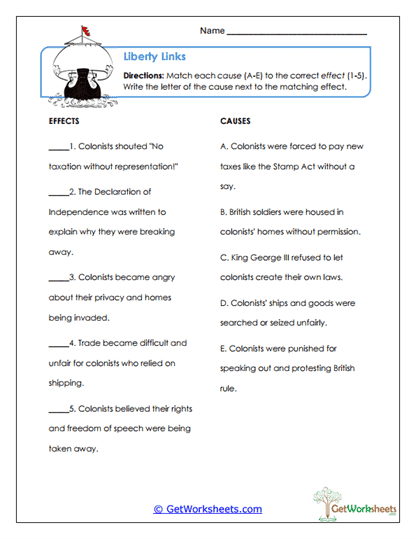
Liberty Links
Students match key British policies with the colonial responses they triggered, from taxation protests to the push for independence. The exercise helps learners visualize how escalating restrictions led to revolutionary unrest. It strengthens understanding of cause-and-effect in history and builds critical thinking about civic resistance. This is an excellent foundation for studying the origins of American liberty.
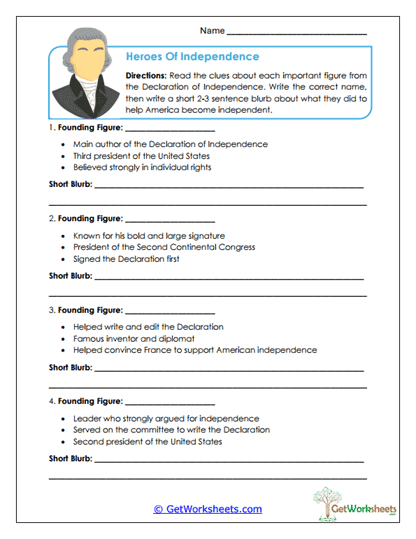
Heroes of Independence
Learners identify important Founding Fathers using descriptive clues about their roles and accomplishments. After matching names like Jefferson and Franklin, students summarize each leader's contributions in their own words. This activity blends biography and comprehension, reinforcing how individual effort shaped national independence. It also encourages students to see leadership as both collaborative and visionary.
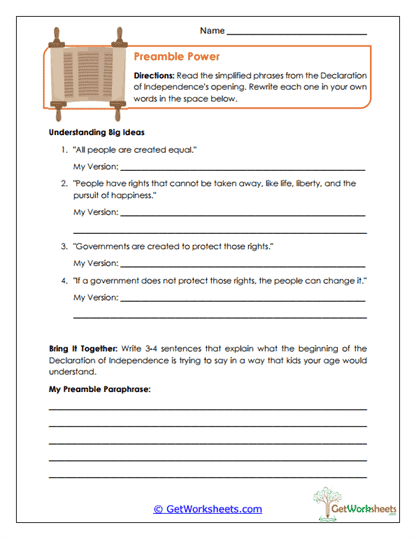
Preamble Power
Students analyze simplified lines from the Declaration's preamble and restate them in modern language. They discuss concepts such as natural rights, equality, and the people's power to change unjust governments. The final reflection asks learners to summarize the preamble's meaning in their own words. It's a thoughtful exercise in translating historical ideals into contemporary understanding.
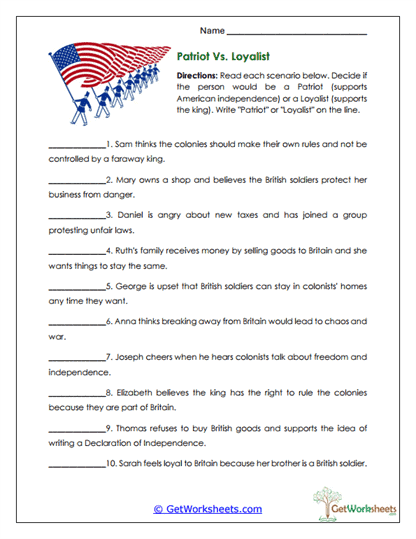
Patriot vs. Loyalist
Through brief scenarios, students determine whether each character supports the British crown or the Patriot cause. The exercise emphasizes how perspectives on loyalty and rebellion divided colonial society. Learners justify their reasoning using textual clues, building empathy and historical interpretation. It's an engaging introduction to the complexity of revolutionary opinions.
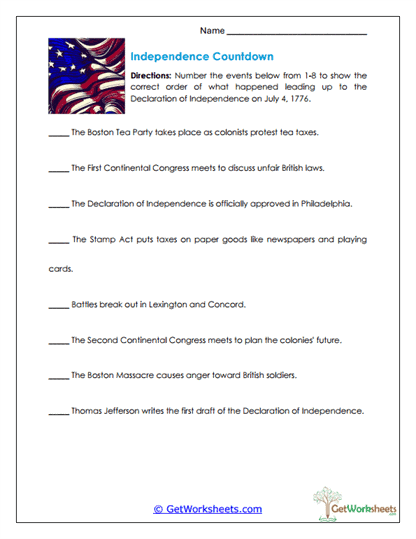
Independence Countdown
This sequencing worksheet guides students through eight major events that led to the Declaration of Independence. Learners arrange actions like the Stamp Act and Continental Congress in order, reinforcing cause-and-effect reasoning. The task strengthens chronological thinking and comprehension of revolutionary momentum. It's perfect for visualizing how independence unfolded step by step.
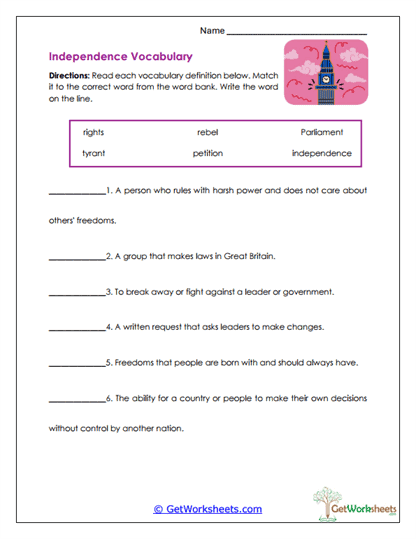
Independence Vocabulary
Students match key Revolutionary terms-such as tyrant, petition, and Parliament-to their correct definitions. Each word reinforces understanding of political and civic language used in the 18th century. The activity boosts academic vocabulary and historical literacy. It's a concise yet powerful way to strengthen comprehension of independence-era terminology.
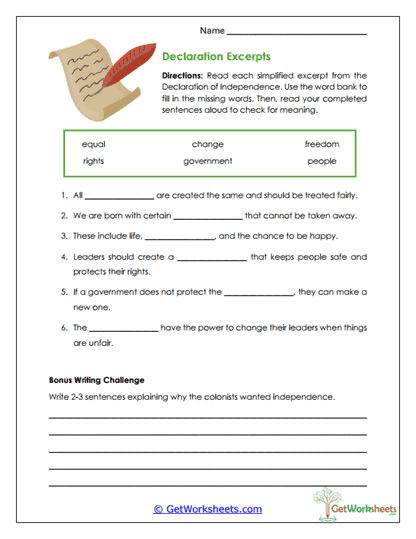
Declaration Excerpts
Using simplified phrases from the Declaration, learners fill in missing words with help from a word bank. They then write a short response explaining why colonists chose to declare independence. The activity combines context-based learning with written reflection. It's both an analytical and creative approach to exploring the document's central themes.
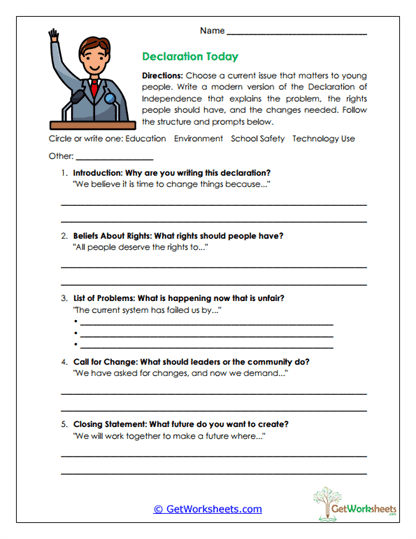
Declaration Today
Students apply the structure of the Declaration of Independence to write about a modern issue that matters to them. Guided prompts help them express beliefs, outline grievances, and call for change respectfully and persuasively. The exercise connects historical reasoning with civic writing. It empowers learners to see the timeless relevance of democratic expression.
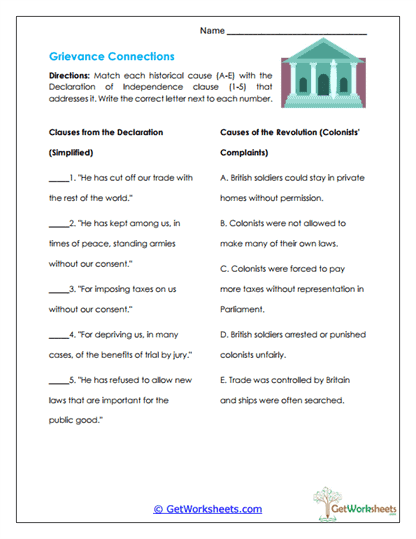
Grievance Connections
Learners link simplified grievances from the Declaration to the colonial injustices that inspired them. This matching exercise clarifies how real experiences shaped the document's arguments. It encourages critical thinking and comprehension of how language reflected protest and purpose. Students gain insight into the structure and logic behind the Declaration's claims.
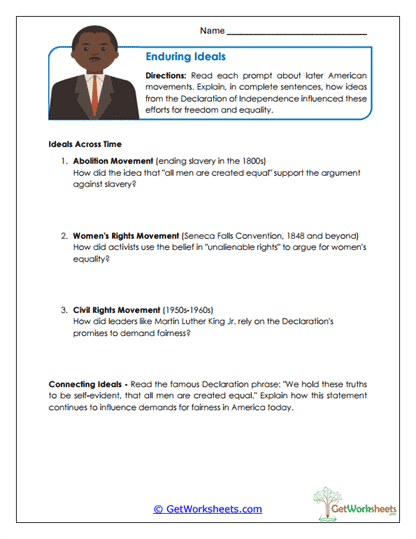
Enduring Ideals
This reflective activity explores how the Declaration's message influenced later movements like abolition, women's rights, and civil rights. Students analyze how "all men are created equal" evolved across generations. The worksheet fosters analytical thinking and appreciation for the continuity of democratic ideals. It's a meaningful way to connect the 18th century to modern social progress.
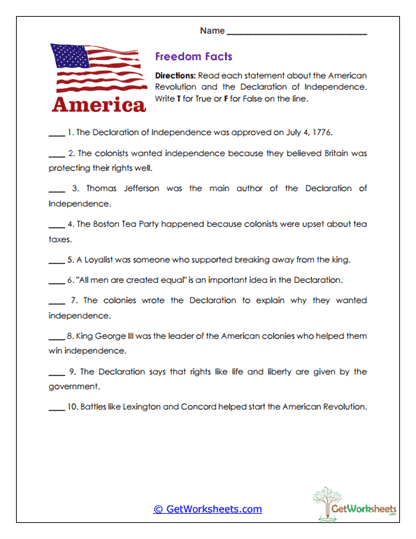
Freedom Facts
Students evaluate true-or-false statements about the Revolution and the Declaration to test factual accuracy. Topics include major figures, events, and political principles. The task reinforces recall, comprehension, and historical precision. It's ideal as a review or assessment activity to close a unit on independence.
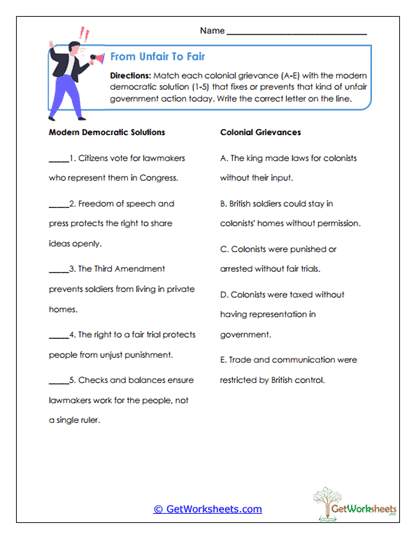
From Unfair to Fair
This matching worksheet bridges colonial history with the U.S. Constitution by comparing old grievances to modern legal protections. Students link complaints like "taxation without representation" to freedoms such as due process and free speech. The activity highlights how early injustices inspired democratic reform. It's an insightful conclusion showing the lasting impact of the Declaration's principles.
Bookmark Us Now!
New, high-quality worksheets are added every week! Do not miss out!