Death of a Salesman Worksheets
About This Worksheet Collection
The Death of a Salesman worksheet collection offers an in-depth exploration of Arthur Miller's iconic American tragedy through activities that emphasize character complexity, thematic analysis, dramatic structure, and critical interpretation. These worksheets guide students in unpacking Willy Loman's illusions, the pressures facing the Loman family, and the broader critique of the American Dream woven throughout the play. By combining analytical tasks with creative writing, debate preparation, and text-to-world connections, the collection supports a multifaceted understanding of the drama.
Throughout the set, students practice key academic skills: citing evidence, comparing characters, analyzing symbols, examining narrative structure, and constructing arguments. They also engage in perspective writing, vocabulary development, thematic reasoning, and personal reflection. Together, these activities help students grasp Miller's commentary on ambition, identity, family loyalty, and disillusionment-while strengthening their ability to interpret complex literature with depth and clarity.
Detailed Descriptions Of These Worksheets
Character Motivations
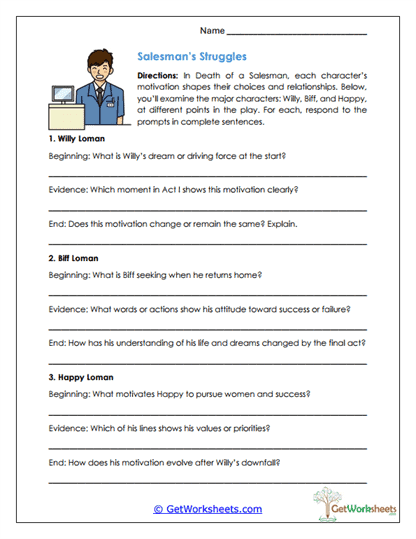
Students analyze the evolving motivations of Willy, Biff, and Happy, citing Act I evidence and noting how each character's goals shift by the end of the play. This deepens comprehension of psychological nuance and family dynamics. The activity reinforces text-based explanation and helps students track character arcs. It supports thematic interpretation and thoughtful written analysis.
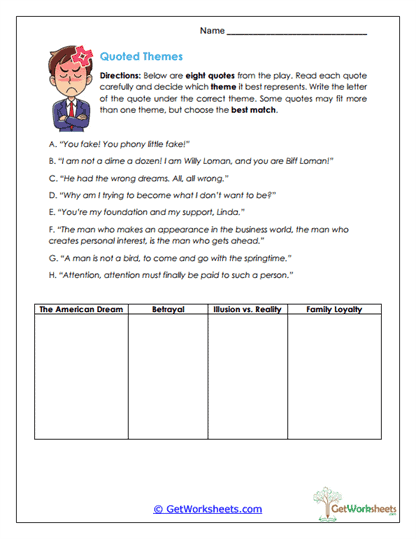
Theme Matching
Learners read eight key quotes and match each to one of four major themes. This encourages close reading and comparison across passages. Students develop skill in interpreting dialogue and recognizing how thematic ideas surface throughout the play. The activity strengthens the ability to connect text evidence to broader meanings.
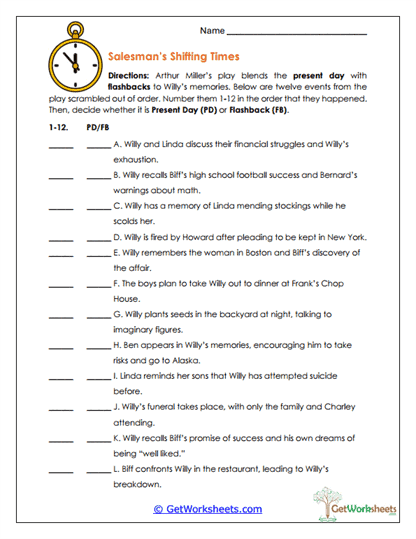
Timeline Sorting
Students sort twelve events into chronological order, identifying whether each is Present Day or a Flashback. This task clarifies Miller's nonlinear structure and helps students distinguish memories from current events. It supports comprehension of dramatic form and the psychological blending of time within the play. Learners improve sequencing and analytical categorization.
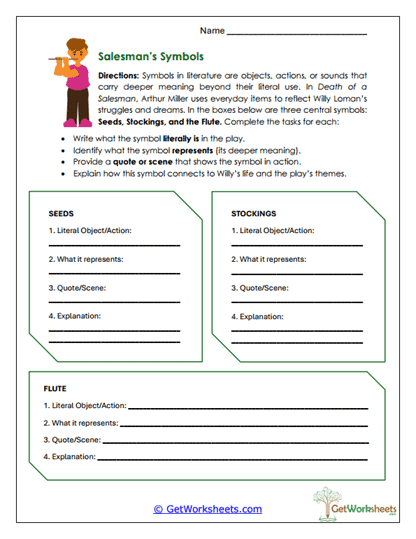
Literary Symbols
Learners interpret three major symbols-Seeds, Stockings, and the Flute-by describing their literal form, deeper meaning, and relevant textual moments. This activity builds understanding of how everyday objects gain symbolic weight. Students explore connections between symbol, character struggle, and theme. It strengthens interpretive writing and evidence use.
American Dream Message
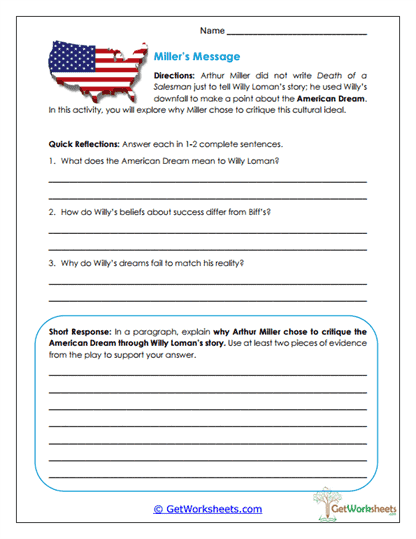
Students analyze how Miller critiques the American Dream by comparing Willy's beliefs with Biff's realizations. They answer reflection questions and write a focused paragraph on why Willy is central to Miller's cultural critique. This task fosters argument development and thematic comprehension. It encourages recognition of authorial purpose.
Character Comparison
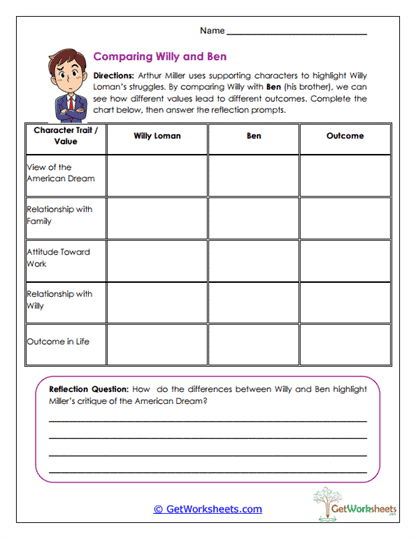
Learners compare Willy Loman and his brother Ben through a structured chart and reflection question. This contrast highlights conflicting views of success, risk, and ambition. Students practice analytical comparison and evidence gathering. The worksheet deepens understanding of how character contrasts support thematic meaning.
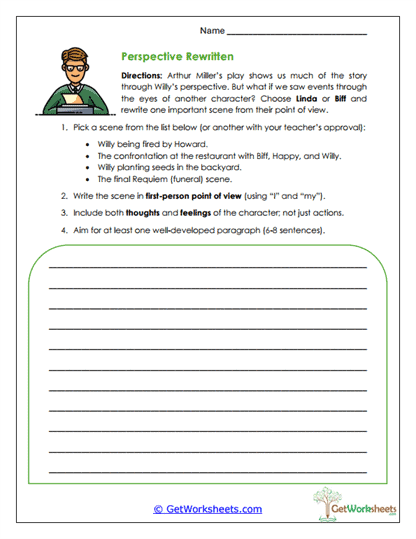
Point-of-View Rewrite
Students retell a major scene through the eyes of Linda, Biff, or another character, using first-person narrative. This creative exercise strengthens empathy, perspective-taking, and comprehension of emotional subtext. Learners practice narrative voice and descriptive detail. It reinforces deeper character interpretation.
Debate Preparation
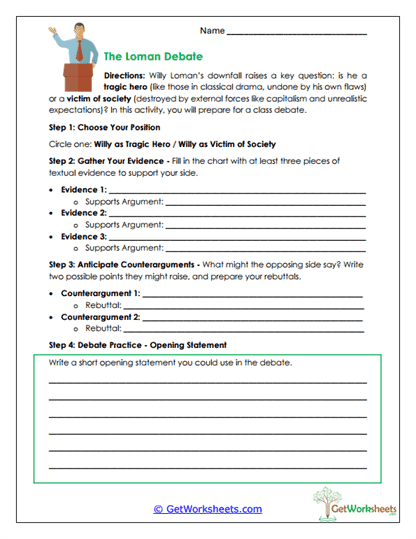
Students prepare for a debate on whether Willy is a tragic hero or a victim of society. They gather evidence, anticipate counterarguments, and craft an opening statement. This activity develops persuasive reasoning and text-supported argumentation. It also builds speaking and listening skills essential for academic discourse.
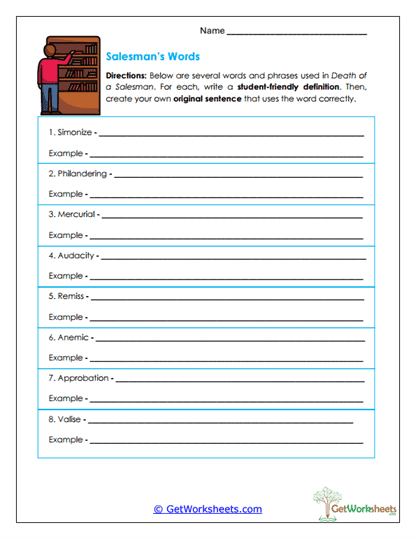
Vocabulary Practice
Learners define challenging vocabulary from the play and create original sentences using each term. This supports comprehension of dramatic language and improves academic word usage. Students strengthen contextual understanding and sentence fluency. The worksheet enhances vocabulary mastery.
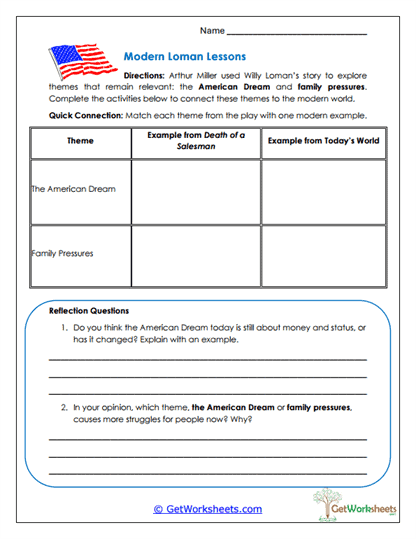
Modern Connections
Students compare a theme from the play to a modern example of their choosing, then reflect on how these issues appear in today's world. This helps learners make text-to-world connections and evaluate contemporary relevance. The activity encourages cultural interpretation and reflective writing. It highlights the play's lasting societal resonance.
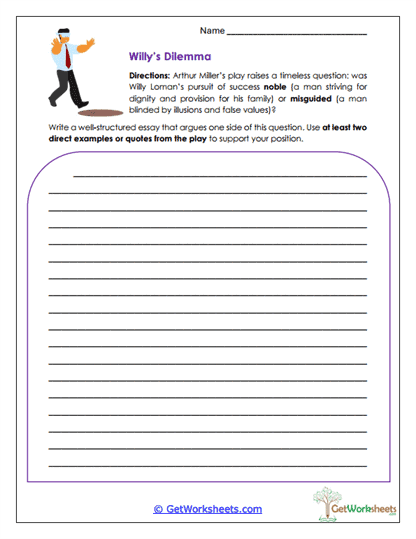
Willy's Argument
Students write a full argumentative essay addressing whether Willy's pursuit of success is noble or misguided. They support their claim with quotes and examples from the play. This task builds literary analysis, evidence citation, and coherent essay structure. It deepens interpretive reasoning and persuasive writing skills.
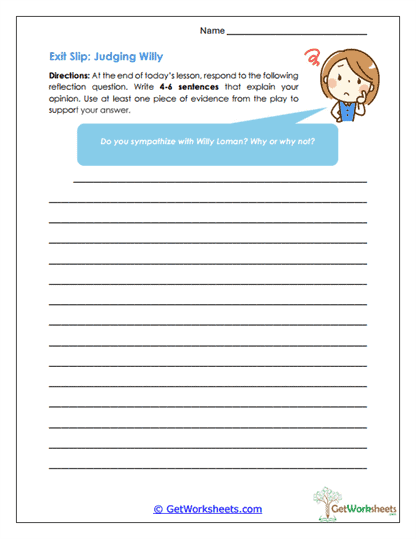
Judging Willy
Learners write a short reflective response explaining whether they sympathize with Willy Loman, supported by textual evidence. This exit-slip-style activity encourages personal interpretation grounded in the text. Students practice clarity, coherence, and evidence-based justification. It reinforces understanding of character complexity and emotional impact.
Bookmark Us Now!
New, high-quality worksheets are added every week! Do not miss out!