Crime and Punishment Worksheets
About This Worksheet Collection
The Crime and Punishment worksheet collection engages students with Dostoevsky's psychological masterpiece through a wide variety of analytical, reflective, and interpretive activities. The worksheets examine character motivation, ethical dilemmas, symbolism, theme, and narrative structure, helping learners unpack the novel's philosophical depth. Each task is designed to guide students beyond plot recall and into a richer understanding of the text's moral questions, psychological tensions, and cultural context.
Across the collection, students practice evaluating character choices, comparing philosophies of suffering, tracing consequences, interpreting setting as symbol, categorizing conflicts, and preparing arguments grounded in textual evidence. They also explore broader thematic issues such as justice, morality, alienation, and redemption. These worksheets offer a comprehensive toolkit for developing critical thinking, literary interpretation, academic writing skills, and an appreciation for Dostoevsky's exploration of human nature.
Detailed Descriptions Of These Worksheets
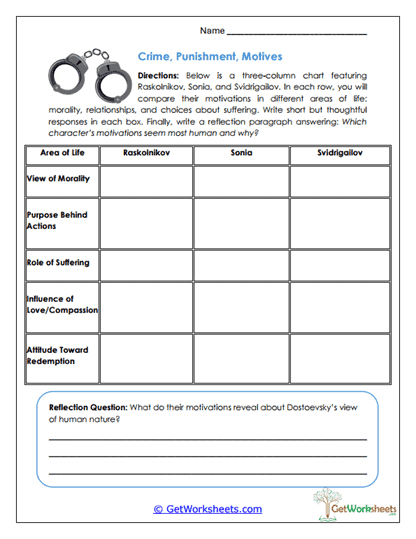
Character Motivation Chart
Students compare Raskolnikov, Sonia, and Svidrigailov by examining five major dimensions of motivation. This chart-based activity strengthens skills in character comparison and thematic interpretation. Learners analyze morality, purpose, compassion, and views of redemption with close text attention. A reflective paragraph deepens engagement with psychological characterization.
Moral Dilemma Scenarios
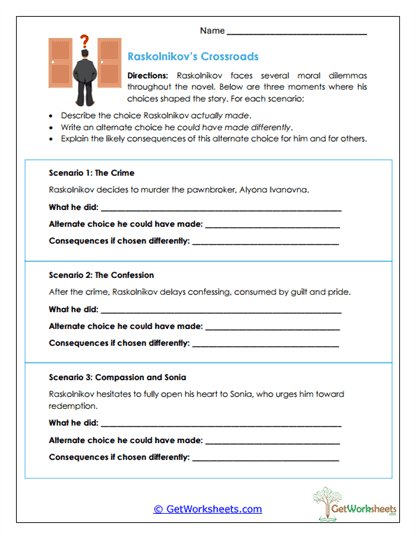
Learners study three key moral dilemmas Raskolnikov faces and consider alternative choices and outcomes. The activity strengthens cause-and-effect reasoning while encouraging ethical analysis. Students explore how different decisions might have reshaped the narrative. It supports deeper insight into character motivation and conflict.
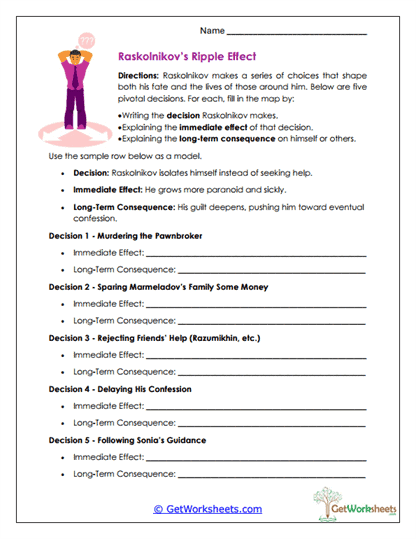
Consequence Mapping
This worksheet guides students in mapping short-term and long-term consequences of major decisions. Learners trace how Raskolnikov's choices drive his psychological unraveling and influence other characters. The task reinforces plot structure and the interconnectedness of events. It develops strong reasoning and narrative comprehension.
Quote Interpretation
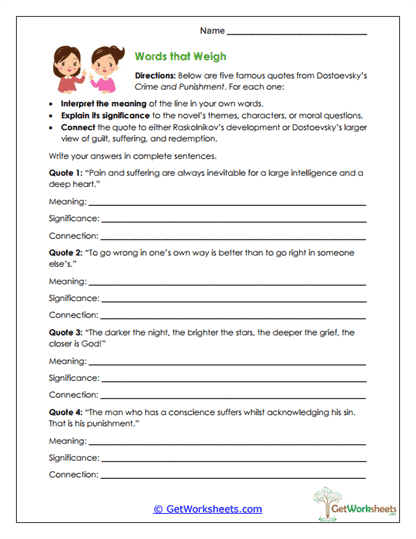
Students interpret five significant quotes, connecting each to broader themes or character development. They practice explaining meaning, analyzing significance, and linking ideas to guilt, suffering, or redemption. This activity reinforces close reading and philosophical reflection. It strengthens analytical writing skills.
Setting and Psychology
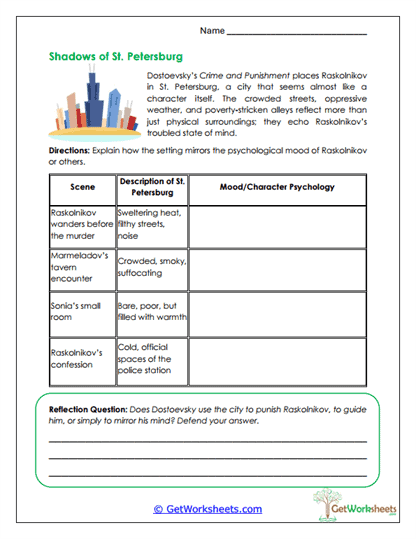
Learners explore how St. Petersburg mirrors characters' emotional states. By analyzing four scenes, students examine setting as symbolic of guilt, tension, or moral decay. A reflection prompt challenges them to evaluate the city's thematic role. This worksheet promotes nuanced interpretation of mood, tone, and psychology.
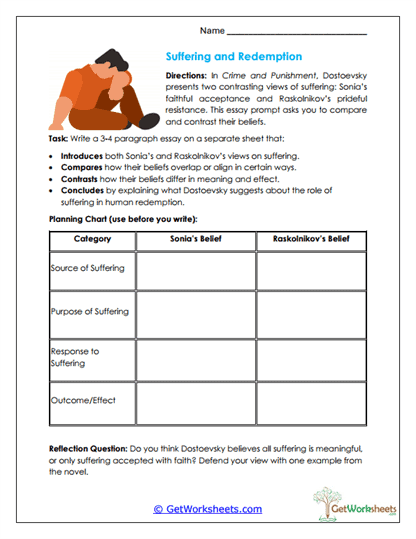
Comparative Essay Planner
Students prepare a multi-paragraph essay comparing Sonia's and Raskolnikov's views of suffering. The planning chart supports organization of ideas, evidence selection, and thematic analysis. Learners evaluate similarities and differences in their philosophies. It strengthens literary comparison and essay-writing skills.
Internal vs. External Conflict
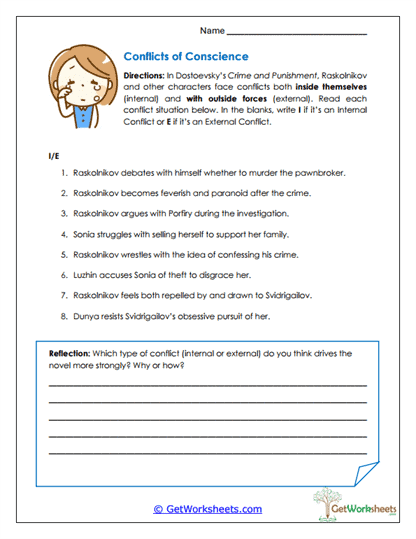
Students classify conflicts as internal or external and reflect on which type affects the novel most deeply. This task builds understanding of how conflict shapes character behavior and plot progression. Learners analyze motivations and thematic implications. It supports clearer interpretation of narrative dynamics.
Justice Debate Prep
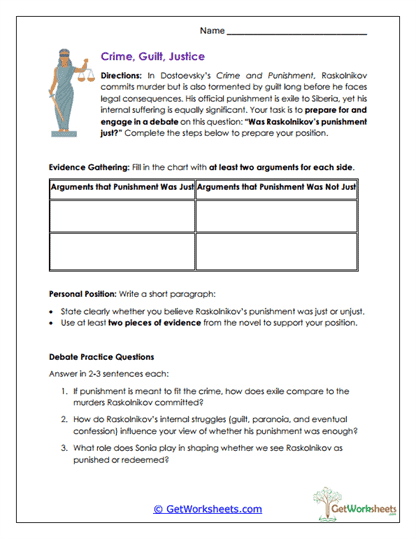
Learners collect evidence on both sides of the question of whether Raskolnikov's punishment was just. They write a position paragraph supported by textual evidence and explore related debate prompts. This activity builds argument-writing skills and reinforces justice themes. It supports preparation for discussion and critical evaluation.
Event Sequencing
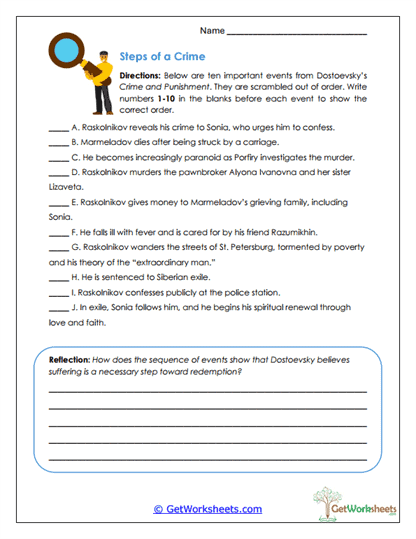
Students arrange ten major events in chronological order to deepen understanding of plot progression. This reinforces recall, structure, and recognition of turning points. A reflective question links sequencing to themes of suffering and redemption. The task supports comprehension and thematic insight.
Theme Classification
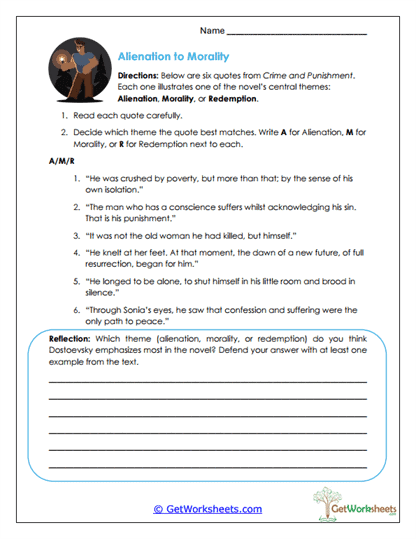
Learners classify quotes according to three central themes-alienation, morality, and redemption. The activity builds interpretive reading skills and thematic recognition. Students support their choices with reasoning. A reflection prompt encourages deeper evaluation of the novel's dominant theme.
Psychological Comparison
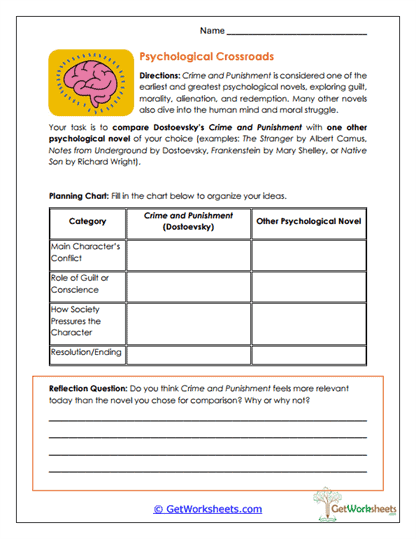
Students compare Crime and Punishment with another psychological novel, analyzing conflict, conscience, social pressure, and resolution. This structured chart encourages cross-textual thinking and evaluation of psychological depth. Learners reflect on contemporary relevance of Dostoevsky's themes. It promotes advanced comparative analysis.
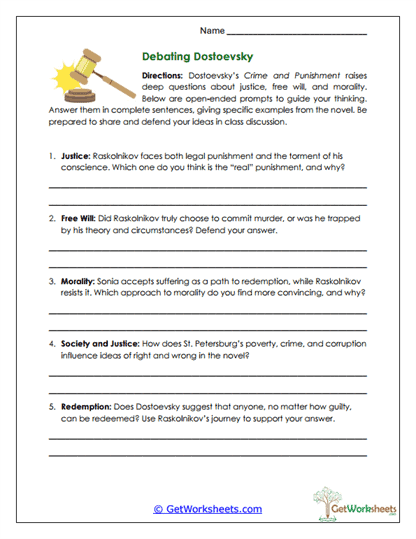
Dostoevsky Debate
Learners answer five open-ended prompts exploring themes such as justice, free will, society, and morality. They support interpretations with textual evidence while engaging with philosophical questions central to the novel. This activity strengthens argumentative writing and literary inquiry. It encourages thoughtful engagement with Dostoevsky's exploration of human behavior.
Bookmark Us Now!
New, high-quality worksheets are added every week! Do not miss out!