Context Packing Worksheets
About This Worksheet Collection
The Context Packing collection teaches students how to write clear, detailed, and purpose-driven prompts that produce stronger, more accurate AI responses. Through comparison tasks, revision challenges, checklists, tone transformations, and audience-based rewrites, students learn how each element of context-such as purpose, audience, tone, and detail-shapes the quality of communication. These worksheets make the invisible skills behind effective prompting visible, giving students structured practice in crafting instructions that guide AI toward useful results.
As students progress through the collection, they build writing clarity, editing skills, and confidence in prompt creation. They learn to diagnose missing context, analyze vague instructions, identify audience needs, and refine tone to match specific tasks. The activities blend reading comprehension, critical thinking, and writing development, helping learners understand that strong prompts mirror strong writing: precise, purposeful, and audience-aware. This collection equips students with essential literacy skills for effective communication in both academic and digital environments.
Detailed Descriptions Of These Worksheets
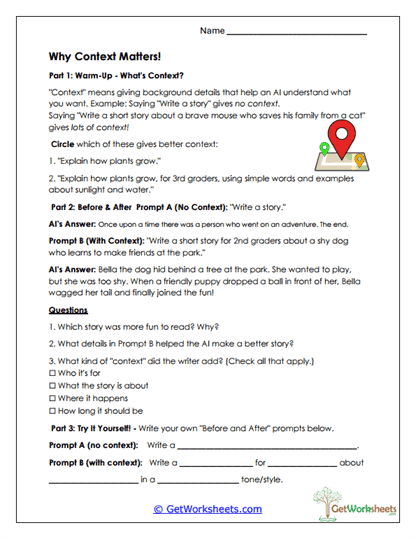
Why Context Matters
Students compare vague and detailed prompts to see how context affects AI responses. They answer comprehension questions about clarity and identify key elements such as audience, purpose, and topic. The worksheet ends with a before-and-after prompt writing task that reinforces context-rich communication. It strengthens analytical thinking and detailed writing skills.
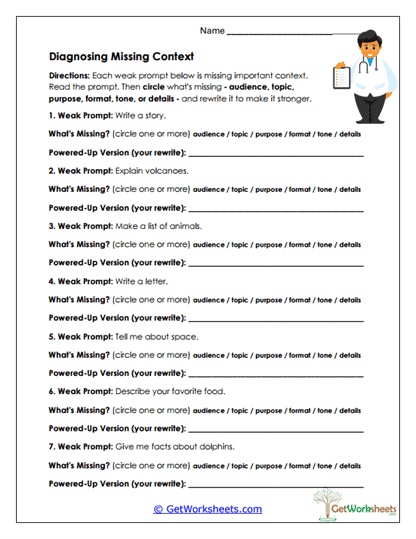
Diagnosing Missing Context
Learners examine weak prompts and identify what crucial context is missing-such as tone, detail, or purpose. They then rewrite each prompt into a clearer, stronger version. This activity develops revision skills and teaches students how to detect gaps in instructions. It also builds awareness of how added information improves AI output quality.
Context Packing Checklist
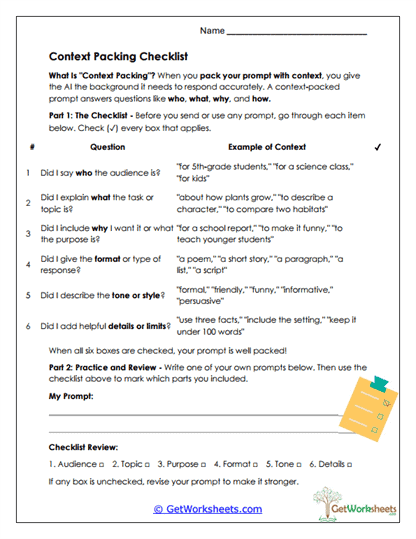
Students learn to use a checklist that highlights essential context elements for any prompt, including audience, task, tone, and details. After reviewing examples, they apply the checklist to their own writing. This builds strong habits for preparing effective prompts. It encourages self-evaluation and thoughtful revision.
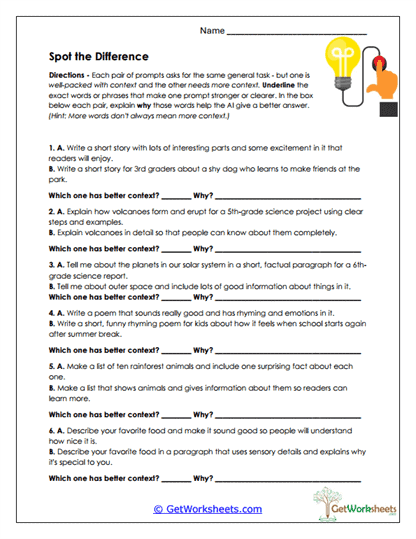
Spot the Difference
This worksheet presents pairs of prompts, one well-packed and the other vague. Students underline key context words and choose which prompt will lead to a better AI answer. They explain their reasoning, reinforcing their understanding of specificity and clarity. The task improves prompt comparison and recognition of strong writing.
Audience Switch Challenge
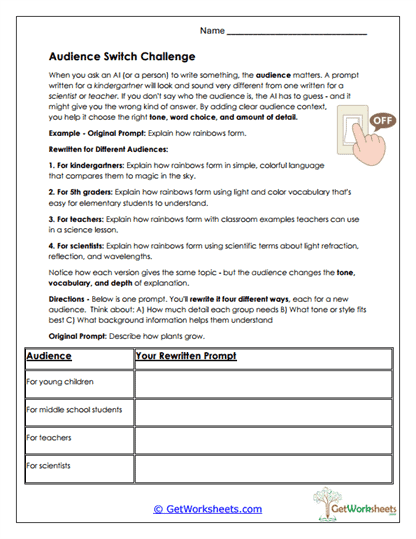
Students rewrite the same prompt four different ways-for young children, middle schoolers, teachers, and scientists. They adjust vocabulary, tone, and detail to suit each audience. The activity strengthens audience awareness and teaches students how context changes depending on who the message is for. It supports flexible and purposeful writing.
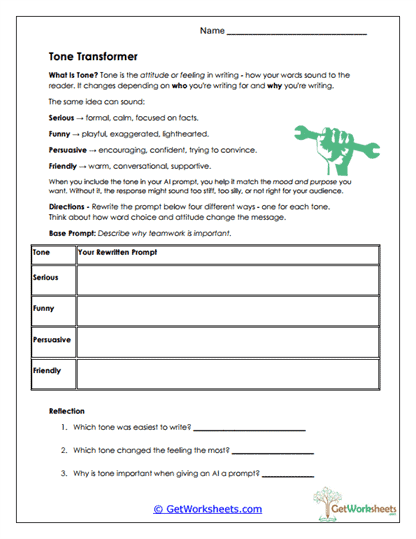
Tone Transformer
Learners rewrite a single prompt in four tones: serious, funny, persuasive, and friendly. They reflect on how tone changes meaning and influences audience perception. This worksheet enhances stylistic flexibility and emotional nuance in writing. It also reinforces tone selection when crafting AI prompts.
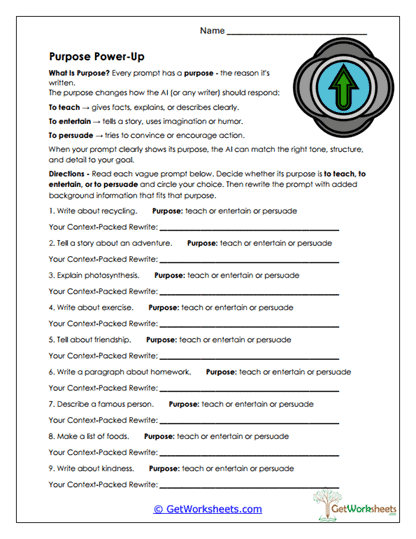
Purpose Power-Up
Students determine the purpose-teach, entertain, or persuade-behind vague prompts and rewrite each one with added context. The task strengthens understanding of how purpose shapes tone, detail, and structure. It develops skills in rewriting prompts to better match intended outcomes. Students practice alignment between purpose and prompt clarity.
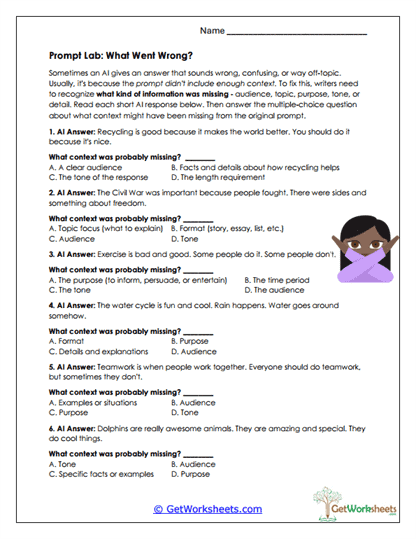
Prompt Lab Analysis
Learners analyze flawed AI answers to diagnose what context was missing from the original prompts. Multiple-choice questions guide them toward recognizing issues with audience, purpose, tone, or detail. This reinforces how weak instructions lead to weak responses. The worksheet builds analytical reading and prompt-revision skills.
Audience Guess Game
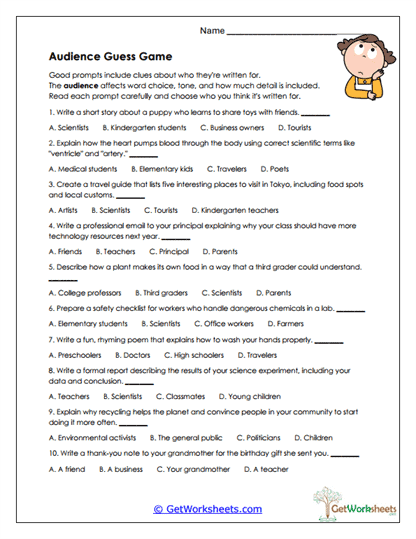
Students identify the intended audience of prompts by analyzing vocabulary, detail level, and tone. They choose from multiple audience options and justify their selections. This activity sharpens interpretation of writing style and intended readership. It also teaches students how audience expectations shape prompt construction.
Add Three Details
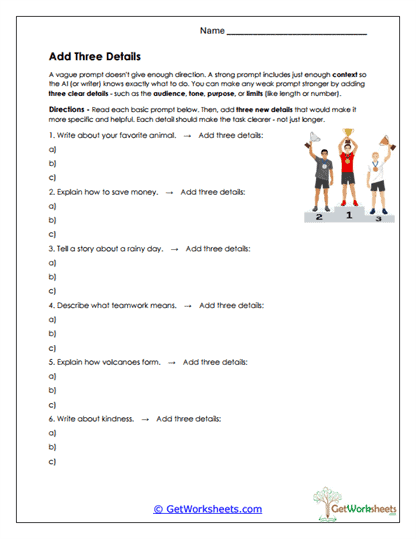
Each vague prompt in this worksheet must be expanded with three meaningful details that improve clarity and usefulness. Students practice adding purpose, limits, tone, or audience information. The activity trains them to produce precise, descriptive wording. It reinforces elaboration and effective prompt-building techniques.
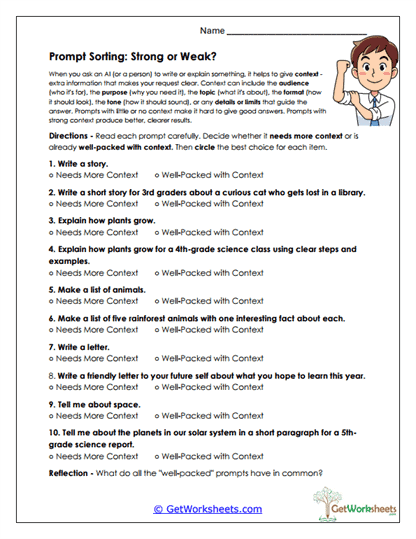
Prompt Sorting Practice
Students decide whether each sample prompt has enough context or needs more. They circle their choice based on clarity, audience fit, and detail. The activity helps learners judge the quality of written instructions. It builds discernment in crafting prompts that balance completeness and simplicity.
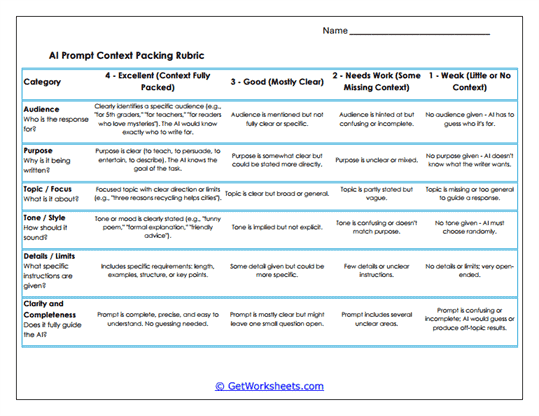
Context Packing Rubric
Learners review a rubric that defines excellent, good, needs-work, and weak prompts based on factors like audience, purpose, tone, and clarity. They use the rubric to evaluate sample prompts and reflect on their own. This worksheet strengthens self-assessment and understanding of writing quality. It encourages students to internalize the traits of a strong, well-contextualized prompt.
Bookmark Us Now!
New, high-quality worksheets are added every week! Do not miss out!