Connotation vs. Denotation Worksheets
About This Worksheet Collection
This connotation vs. denotation collection teaches students how to distinguish between a word's literal meaning (denotation) and the emotional or cultural associations it carries (connotation). By recognizing these differences, learners gain stronger control over tone, nuance, and precision in both reading and writing. The worksheets help students see how similar words can create very different impressions-and why writers must choose vocabulary carefully to shape meaning.
Across the collection, students practice matching words to definitions, sorting vocabulary by tone, analyzing context clues, rewriting sentences with altered connotation, and explaining how word choices shift mood or emotional impact. These activities strengthen vocabulary depth, close-reading skills, and deliberate, thoughtful writing. Learners become more aware of how language influences interpretation and how subtle word choices can change a reader's response.
Detailed Descriptions Of These Worksheets
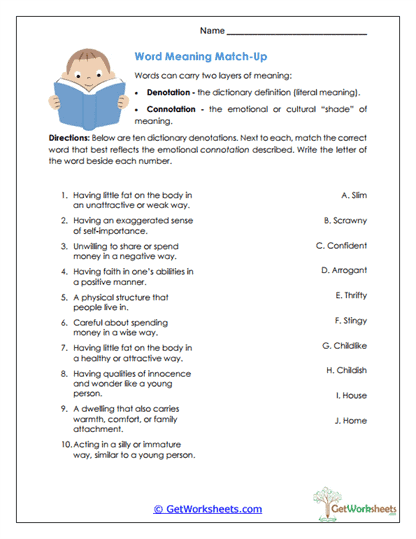
Word Meaning Match-Up
Students match neutral dictionary definitions to words whose emotional connotations align with the described tone. This helps learners see how words with similar denotations differ in emotional impact. The activity builds vocabulary awareness and deepens understanding of nuance in word choice.
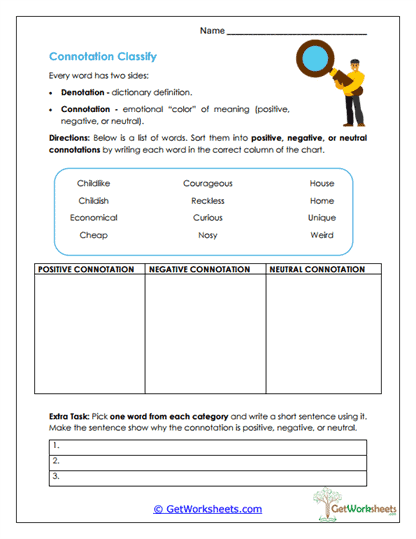
Connotation Classify
Learners sort words into positive, negative, and neutral categories, analyzing each word's emotional "color." A follow-up writing task asks students to use selected words in original sentences. This develops tone recognition and helps students practice purposeful vocabulary selection.
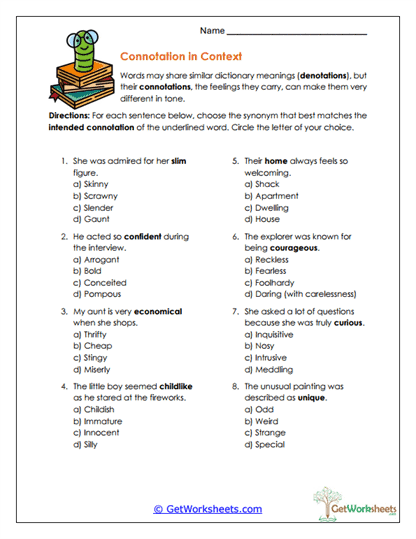
Connotation in Context
Students read sentences with underlined words and choose synonyms that match the intended emotional meaning. Multiple-choice items highlight subtle distinctions between words that seem similar. This worksheet strengthens context-clue reading and promotes precision in vocabulary interpretation.
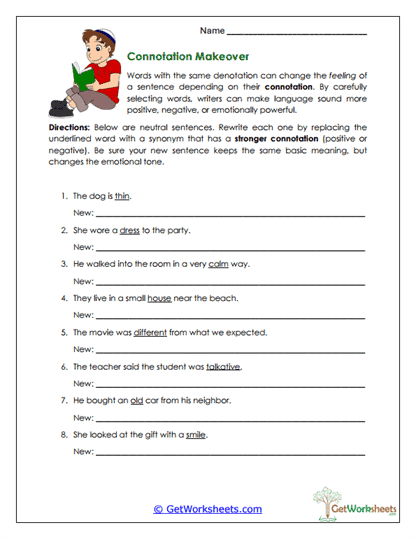
Connotation Makeover
In this rewriting task, students replace underlined neutral words with synonyms that carry stronger connotations, either positive or negative. They maintain the basic meaning while shifting the tone. This exercise builds editing skills, strengthens tone awareness, and encourages creative word choice.
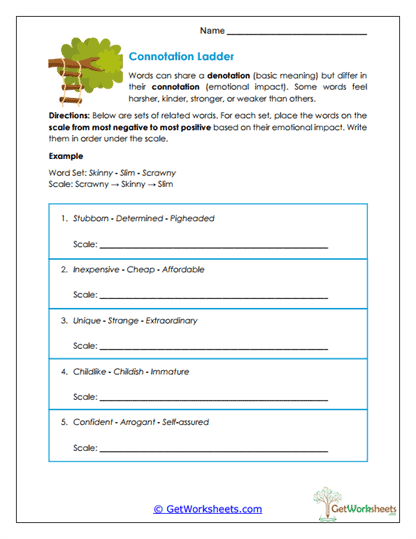
Connotation Ladder
Students arrange groups of related words on a scale from most negative to most positive. This ranking task teaches learners how intensity and emotional strength vary across vocabulary sets. It reinforces analytical reasoning and helps students refine their sense of nuance.
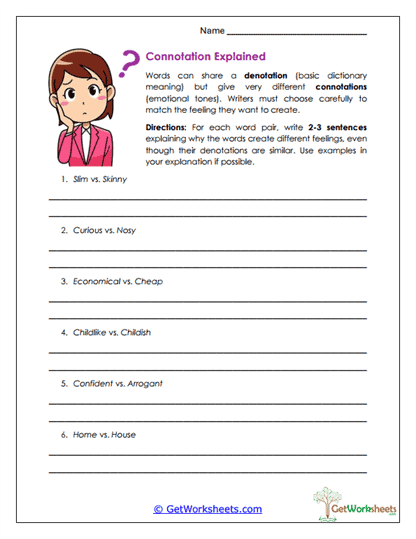
Connotation Explained
Learners analyze pairs of words with similar denotations and write 2-3 sentences explaining how their connotations differ. This deepens metacognitive thinking about vocabulary and strengthens students' ability to justify word choice with clear reasoning.
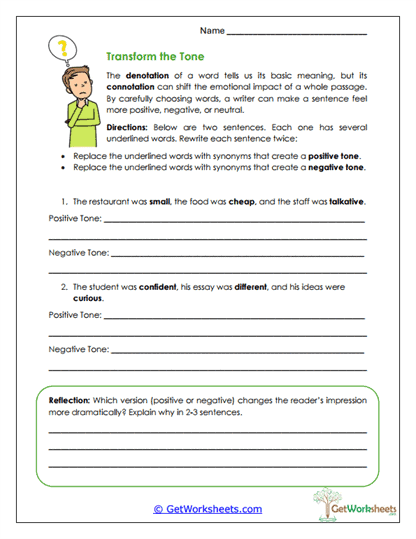
Transform the Tone
Students rewrite two sentences twice-once with a positive tone and once with a negative tone-using appropriate synonyms. A reflection question asks which version creates the strongest impact. This worksheet highlights the power of word choice in shaping emotional effect and message.
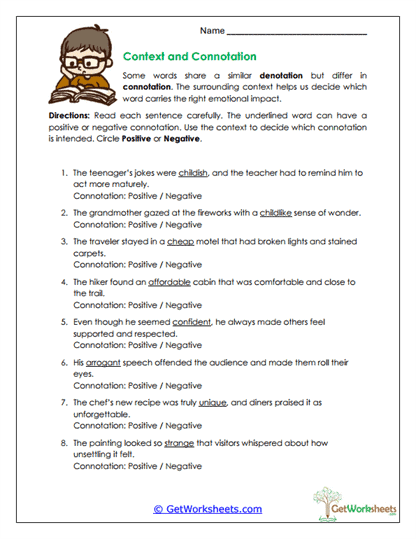
Context and Connotation
Learners determine whether underlined words in sentences carry a positive or negative connotation based on context. This task teaches them to read carefully for tone cues and interpret emotional meaning using surrounding details.
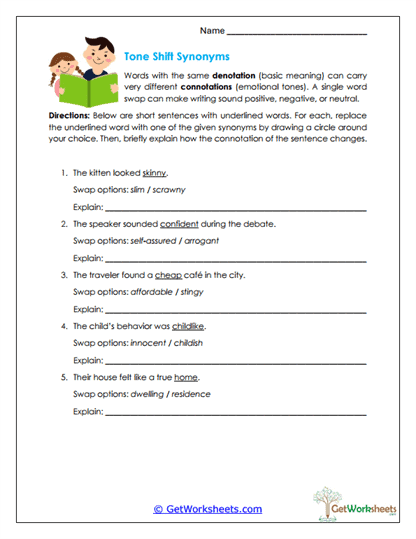
Tone Shift Synonyms
Students choose synonyms to replace underlined words in sentences and then explain how the tone changes. This activity reinforces recognition of how vocabulary substitution alters meaning, attitude, and emotional effect.
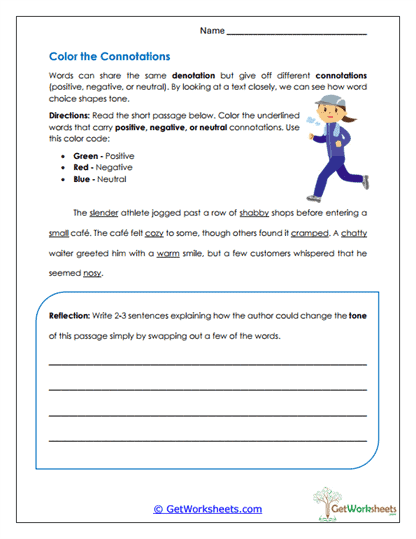
Color the Connotations
Students color-code underlined words in a passage according to positive, negative, or neutral connotation. This visual approach strengthens comprehension of tone and vocabulary and helps learners see how word choice shapes a text's overall mood.
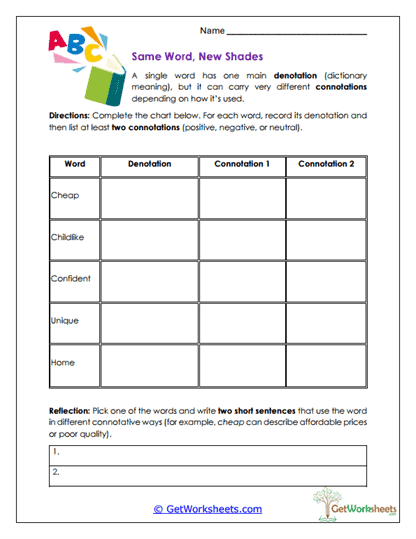
Same Word, New Shades
Learners analyze how a single word can have one denotation but multiple connotations depending on context. They list potential connotations and write two sentences using the same word in different emotional ways. This task strengthens understanding of flexible word meaning and context-driven interpretation.
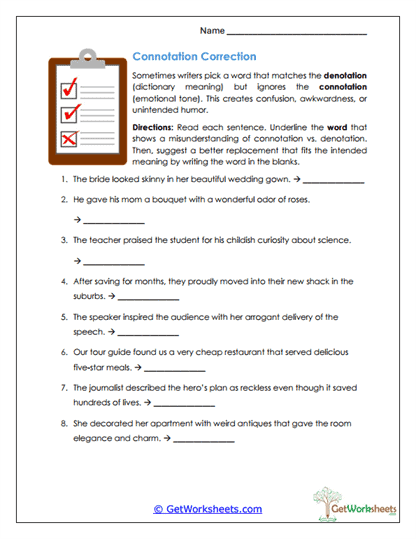
Connotation Correction
Students identify incorrect or awkward word choices caused by mixing up connotation and denotation. They underline the problematic word and replace it with a more fitting option. This editing-focused worksheet sharpens tone awareness, vocabulary precision, and sentence-level revision skills.
Bookmark Us Now!
New, high-quality worksheets are added every week! Do not miss out!