Concrete vs. Abstract Nouns Worksheets
About This Worksheet Collection
The Concrete vs. Abstract Nouns collection helps students understand how language bridges the physical and conceptual worlds. Through creative, analytical, and interactive activities, learners explore how some nouns name tangible, sensory objects while others express intangible emotions, ideas, or values. Each worksheet offers a unique approach-from sorting and labeling to creative sentence transformations-that deepens comprehension of how these two noun types function in writing. The engaging themes, such as "Word Mountain," "Noun Factory," and "Grounding Station," make abstract grammar ideas concrete, accessible, and enjoyable for students.
Across this collection, learners strengthen both their grammatical and cognitive skills. They learn to classify, compare, and connect nouns by analyzing meaning and context, while developing an appreciation for how abstract language shapes thought and expression. Through reading passages, writing expansions, and concept-mapping exercises, students refine vocabulary precision, symbolic reasoning, and descriptive writing abilities. These worksheets promote deeper literacy understanding by showing how concrete and abstract words work together to make language rich and expressive.
Detailed Descriptions Of These Worksheets
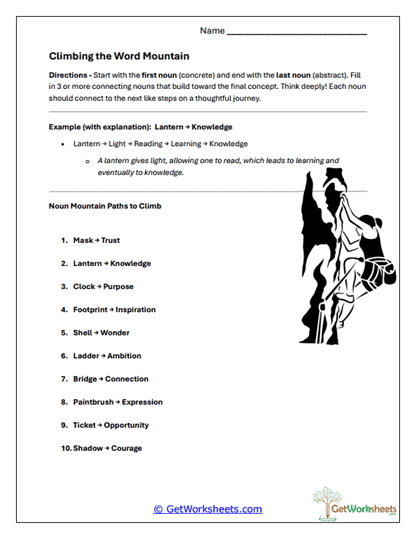
Word Mountain Nouns
Students climb a "Word Mountain" by connecting a concrete noun to an abstract noun through a logical chain of related words. This creative challenge builds conceptual reasoning and word association skills. Learners explore how physical and abstract ideas are linked in language. It's an imaginative vocabulary builder that promotes critical thinking and reflection.
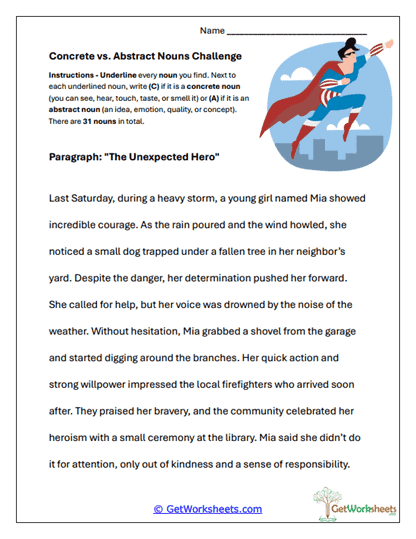
Noun Challenge Passage
Learners read a short story titled The Unexpected Hero and label each noun as concrete or abstract. The passage offers context for distinguishing tangible things from intangible qualities. This reading-based activity combines grammar analysis with comprehension and character education. It's an engaging way to apply grammar to meaningful text.
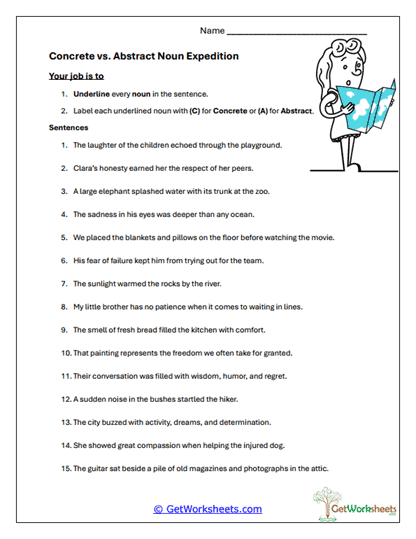
Noun Expedition Practice
Students underline all nouns in varied sentences and label them as concrete (C) or abstract (A). The blend of descriptive and emotional examples encourages close reading and grammar accuracy. This activity supports recognition of how nouns function differently in language. It's perfect for reinforcing precision in word identification.
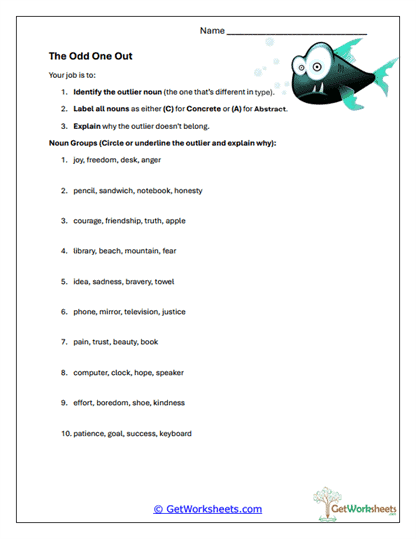
Odd One Out Nouns
In this analytical task, learners decide which noun in each set doesn't belong based on type. They label words with "C" or "A" and explain their reasoning. The comparison format promotes critical thinking and conceptual understanding. It's a fun and thought-provoking way to deepen noun classification skills.
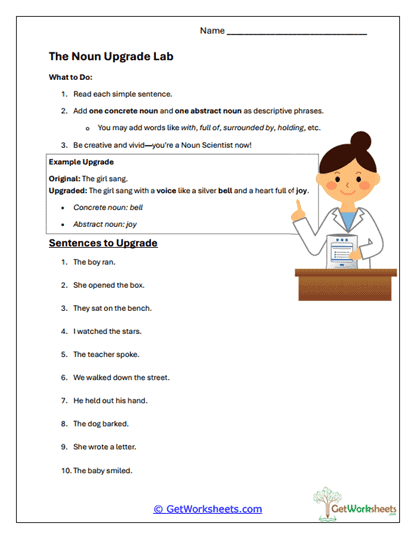
Noun Upgrade Lab
Students expand simple sentences by adding one concrete and one abstract noun to enrich meaning. The exercise balances creative writing with grammar practice. Learners explore how tangible and emotional language work together to create vivid expression. It's an ideal activity for developing sentence variety and descriptive fluency.
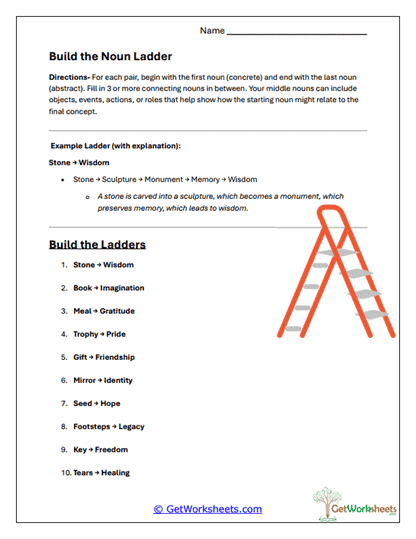
Build the Noun Ladder
Learners construct "noun ladders" linking a concrete noun at the base to an abstract one at the top through intermediate steps. This process fosters logical connections and creative thinking. It helps visualize how language evolves from physical to conceptual meaning. The activity develops vocabulary flexibility and conceptual awareness.
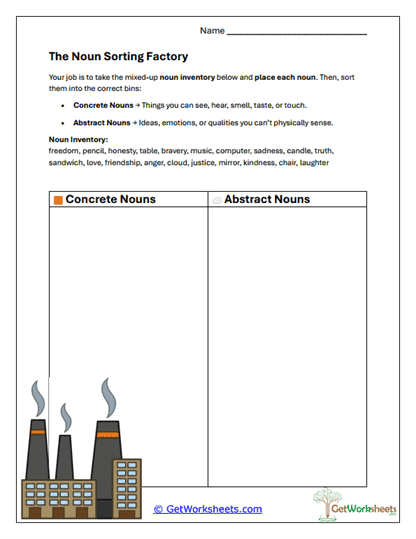
Noun Sorting Factory
Students sort a mix of nouns into two labeled columns-Concrete and Abstract. This foundational task reinforces categorization and visual organization. It enhances grammar awareness while clarifying how sensory and conceptual words differ. It's a simple, effective sorting challenge for building understanding.
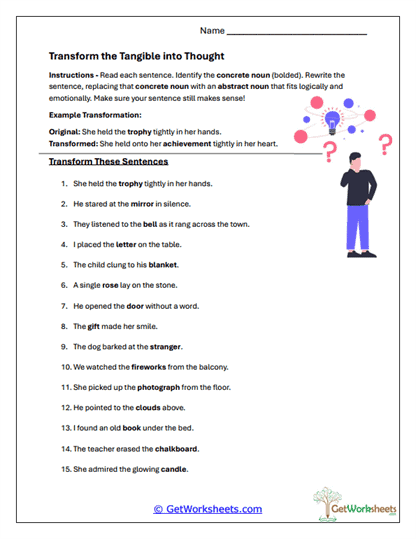
Transform the Tangible
Students replace highlighted concrete nouns in sentences with abstract ones that preserve meaning. The task encourages flexible thinking about word choice and symbolism. It develops creativity and the ability to move between literal and conceptual expression. It's a writing exercise that strengthens figurative understanding and grammar precision.
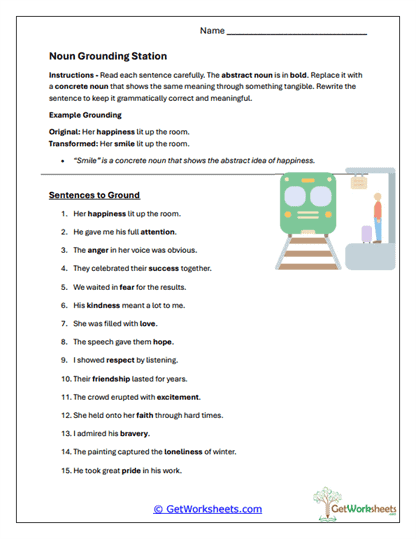
Noun Grounding Station
This worksheet reverses the previous concept, asking students to replace abstract nouns with concrete equivalents. Learners practice grounding abstract ideas in sensory imagery to improve clarity. The task builds descriptive skill and creative thinking. It's excellent for showing how physical details make writing more vivid.
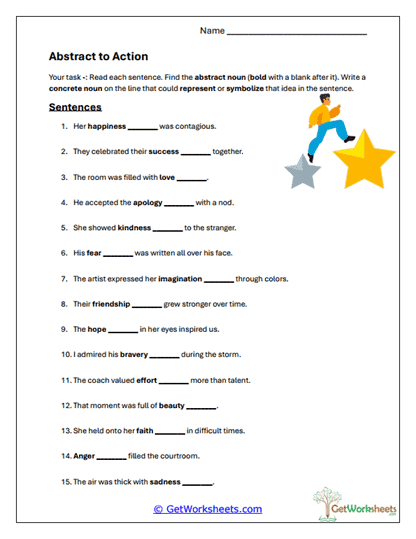
Abstract to Action
Students link abstract nouns to concrete representations that symbolize them. The task blends grammar, symbolism, and vocabulary reasoning. Learners explore how ideas like courage or friendship can be represented physically. It's a creative language exercise that bridges grammar and interpretation.
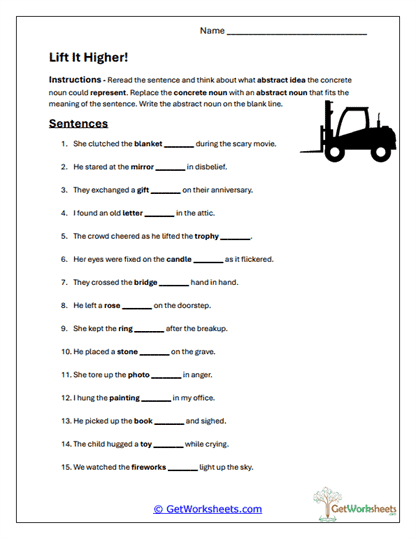
Lift It Higher!
In this sentence-revision task, students replace concrete nouns with abstract ones to express broader meaning. The activity enhances symbolic and expressive language use. Learners experiment with tone and interpretation through rewording. It's a powerful exercise in conceptual thinking and writing craft.
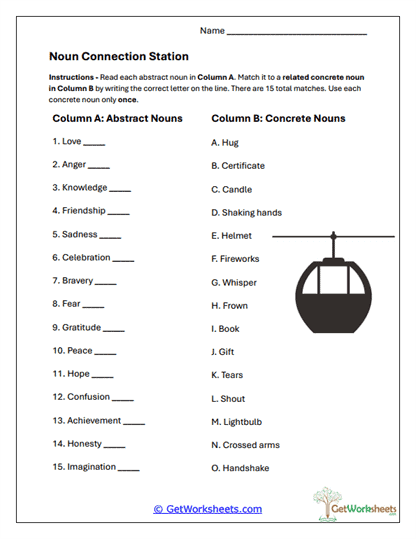
Noun Connection Station
Students match abstract nouns with related concrete nouns to show how ideas and objects connect. This associative reasoning task reinforces understanding of symbolic language. It encourages logical thinking and vocabulary development. It's a strong capstone activity for mastering concrete and abstract noun relationships.

Bookmark Us Now!
New, high-quality worksheets are added every week! Do not miss out!