Common Expressions Worksheets
About This Worksheet Collection
This Common Expressions worksheet collection provides educators with a rich variety of activities designed to help students master idiomatic language, figurative meaning, and everyday phrases they encounter in conversation and text. Through matching tasks, context-based interpretation, rewriting exercises, origin explanations, tone analysis, and editing challenges, students learn how common expressions function, why they are used, and how they shape communication. The worksheets offer an engaging approach to vocabulary development, supporting learners as they move from literal understanding to flexible and confident use of figurative language.
As students progress through the collection, they build essential language skills including paraphrasing, contextual inference, style adjustment, tone interpretation, and precise word choice. The activities also strengthen reading comprehension and writing fluency by requiring students to analyze meaning, compare formal and informal expressions, revise sentences for clarity, and apply idioms correctly. These worksheets support students in becoming more expressive, adaptable communicators who understand how figurative language enriches everyday English.
Detailed Descriptions Of These Worksheets
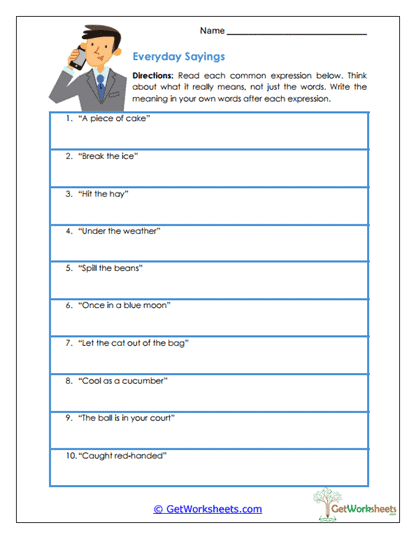
Everyday Sayings
Students read a list of familiar expressions and explain each one in their own words. This encourages them to move beyond literal meaning and practice interpreting idiomatic language. The activity builds vocabulary knowledge and flexible thinking about how language works. Learners strengthen clarity and explanation in written responses.
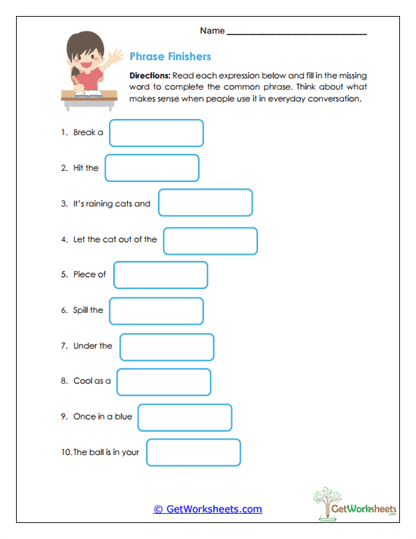
Phrase Finishers
Learners complete well-known expressions by filling in missing words, using memory and context to identify each idiom. This strengthens recognition of everyday phrases and reinforces spelling and vocabulary recall. Students develop fluency with expressions they may encounter in speech and reading. The task supports confidence with idiomatic language patterns.
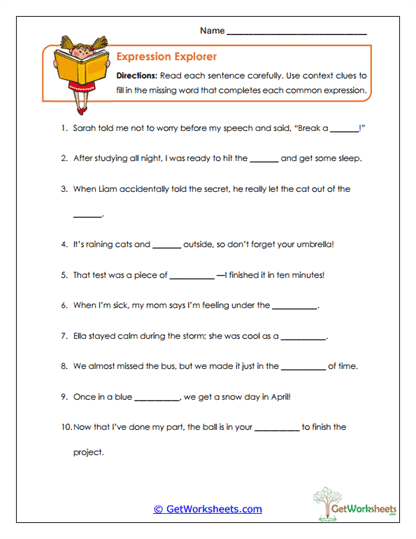
Expression Explorer
Students examine sentences containing missing idiomatic words and use context clues to determine the correct expression. They analyze meaning at the sentence level, improving their ability to interpret figurative language naturally. The activity promotes reasoning and deepens comprehension. It supports interpretation of idioms based on real-world usage.
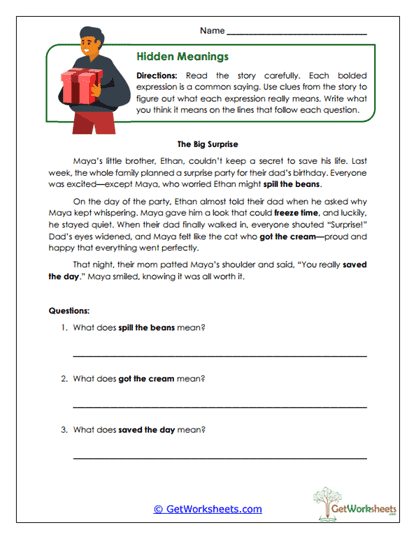
Hidden Meanings
Learners read a short story that includes bolded expressions and use narrative context to determine their meanings. This strengthens close reading and understanding of how idioms enhance storytelling and reveal character reactions. Students practice writing clear explanations grounded in context. The activity reinforces figurative language analysis.
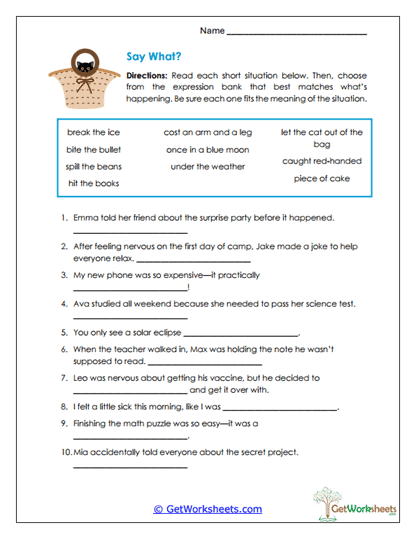
Say What?
Students choose the idiom that best fits each scenario from a provided word bank. They compare options and match expressions to situations described in short readings. The activity builds comprehension, decision-making, and vocabulary application. Learners practice identifying the most meaningful figurative fit for each context.
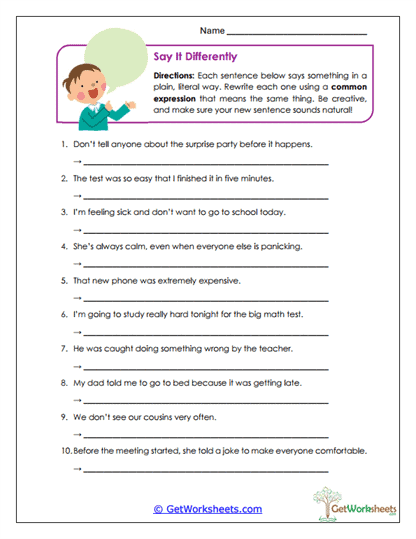
Say It Differently
Learners rewrite plain sentences using common expressions to express the same ideas more figuratively. This encourages creative language use and strengthens paraphrasing skills. Students practice matching idioms with meaning while improving writing fluency. The activity promotes expressive, natural-sounding communication.
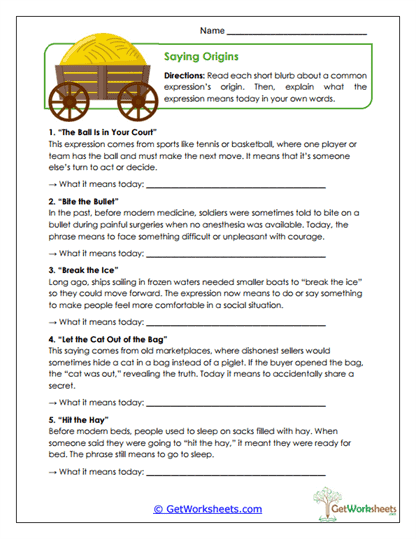
Saying Origins
Students read brief explanations of the origins of several expressions and write the modern meaning for each one. They connect historical context with contemporary usage, deepening understanding of language evolution. The worksheet strengthens informational reading skills and vocabulary interpretation. It encourages summarizing and critical thinking about idioms.
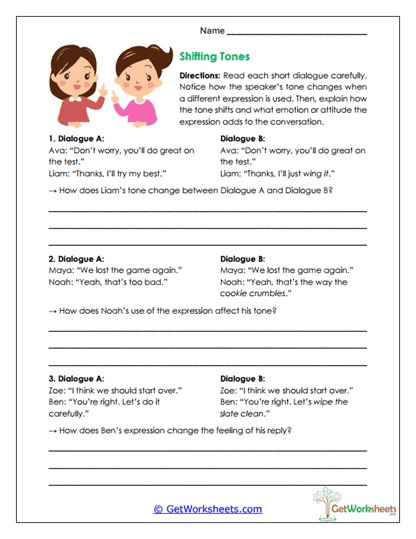
Shifting Tones
Learners compare dialogue pairs to analyze how an idiom changes tone, attitude, or emotion. They explain how the expression shifts the speaker's message or mood. This builds inferential comprehension and understanding of tone in communication. Students develop analytical writing that interprets subtle language differences.
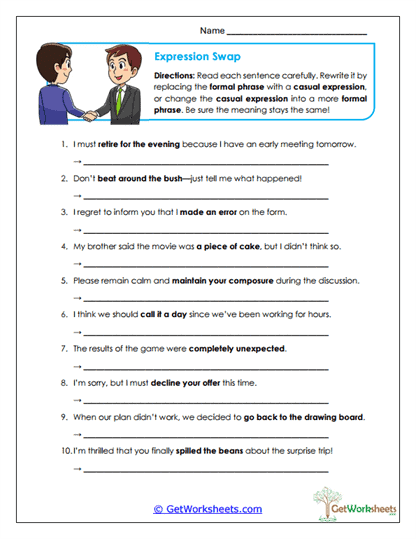
Expression Swap
Students revise sentences by replacing formal language with casual expressions or vice versa. They maintain the original meaning while adjusting tone and register. The activity strengthens vocabulary flexibility and awareness of audience. Learners practice stylistic choices and precise word selection.
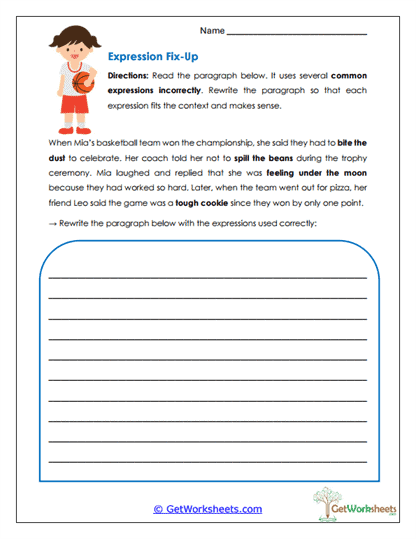
Expression Fix-Up
Learners read a paragraph containing misused idioms and rewrite it so each expression is used properly. They identify incorrect usage, correct it, and improve clarity. This strengthens editing and comprehension of figurative language. Students build skill in producing coherent, accurate writing.
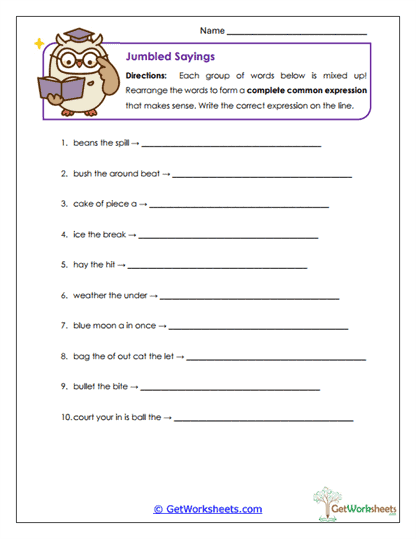
Jumbled Sayings
Students rearrange mixed-up words to form complete idiomatic expressions. This challenges them to recall structure, meaning, and familiar phrasing. The activity supports decoding, spelling, and pattern recognition. Learners reinforce understanding of how idioms are constructed.
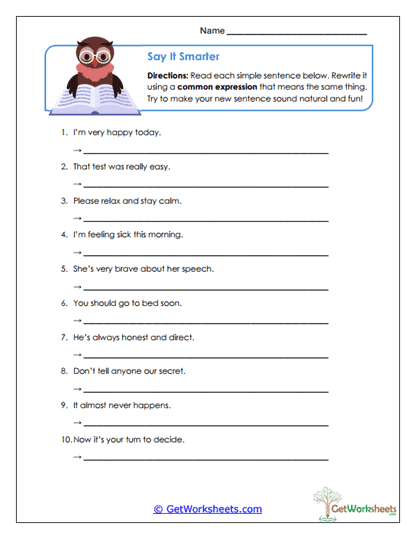
Say It Smarter
Students rewrite literal sentences using figurative expressions that convey the same message. This promotes creativity and encourages confident use of idiomatic language. Learners strengthen paraphrasing, vocabulary application, and writing fluency. The activity helps students communicate with natural tone and expressive variety.
Bookmark Us Now!
New, high-quality worksheets are added every week! Do not miss out!