Colonial America Worksheets
-
Colonial Brain Teasers
-
Colonial Jobs and Trades
-
Colonial Mock Trial
-
-
Colonial Primary Source Reading
-
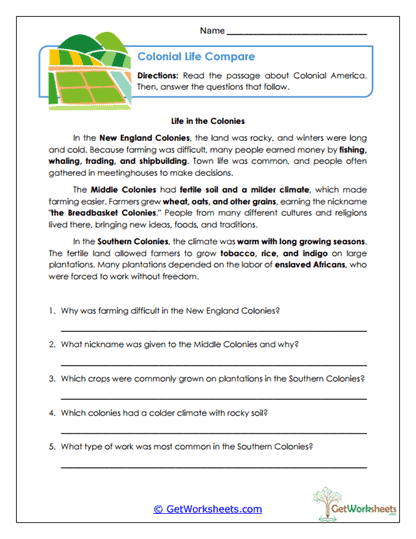
Colonial Regions Comparison
-
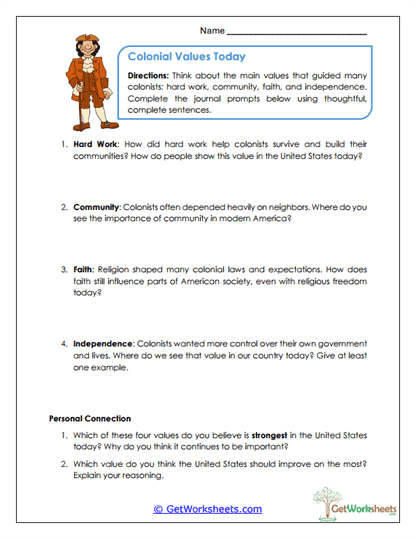
Colonial Values Today
-
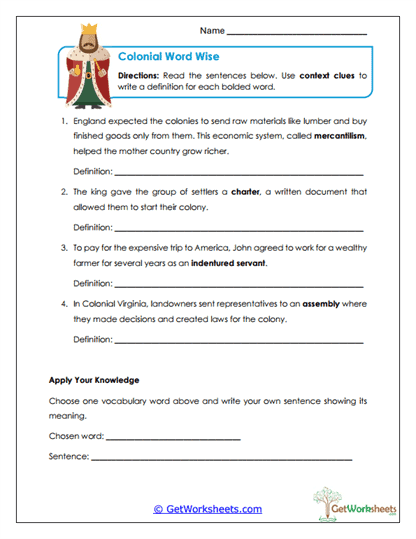
Colonial Vocabulary in Context
-
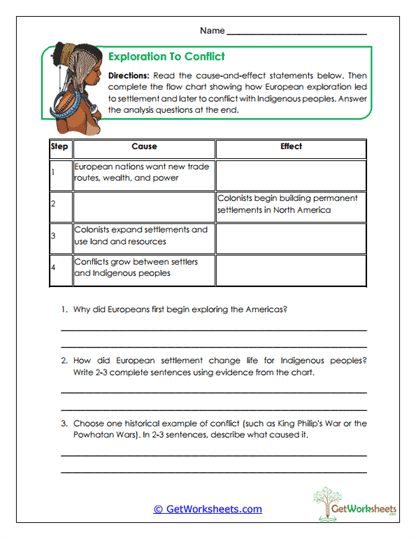
Exploration and Indigenous Conflict
-
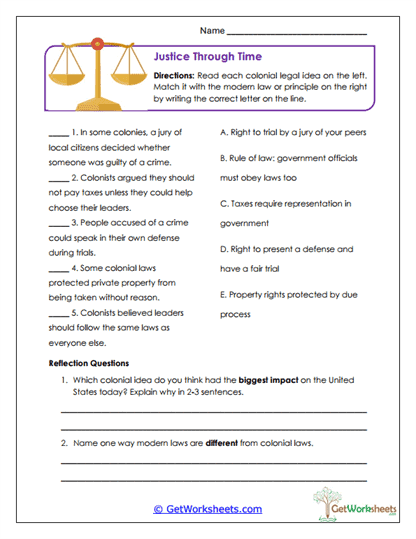
Justice Through Time
-
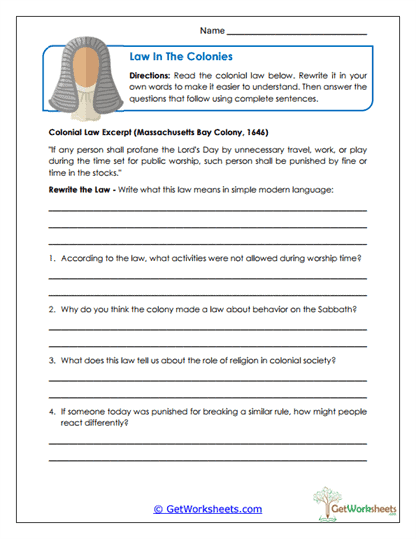
Law in the Colonies
-
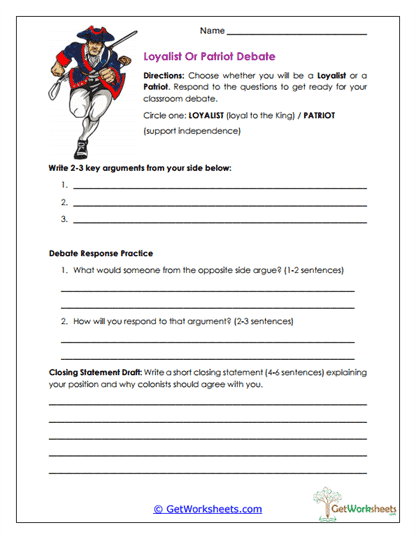
Loyalist vs. Patriot Debate
-
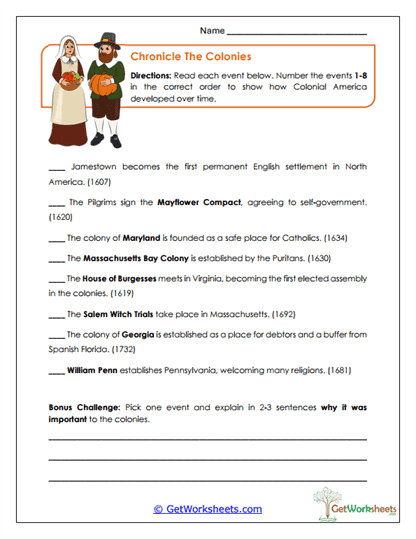
Timeline of Colonial Events
About This Worksheet Collection
The Colonial America worksheet collection immerses students in the people, places, and ideas that shaped early American life. Through rich reading passages, analytical exercises, and interactive simulations, learners explore how geography, economy, and belief systems influenced the colonies' development. These thoughtfully crafted worksheets help students connect social structures, trade, and governance to the founding of a new society, fostering curiosity about the roots of American culture and democracy.
Students will strengthen key academic skills including reading comprehension, comparison, historical sequencing, and reflective writing. From decoding primary sources to reenacting trials and debates, they'll develop civic understanding, empathy, and the ability to draw connections between past and present. Each activity balances factual learning with inquiry-based exploration, ensuring that learners grasp both the details and the enduring legacies of colonial history.
Detailed Descriptions Of These Worksheets
Colonial Regions Comparison
Students explore the distinct characteristics of the New England, Middle, and Southern Colonies. The reading passage explains how climate, geography, and economy shaped each region's culture and daily life. Learners answer questions to strengthen comprehension and practice comparison skills. This activity helps students see how environment influenced identity in early America.
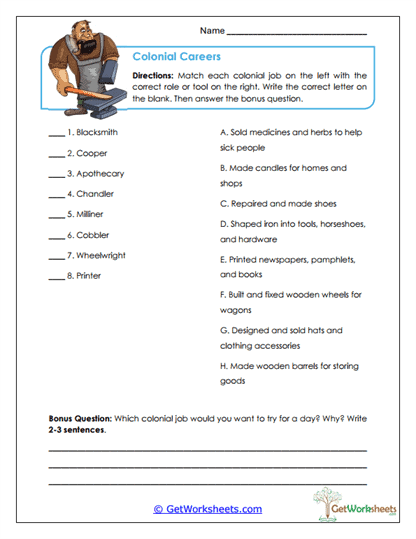
Colonial Jobs and Trades
This engaging worksheet introduces students to the many professions that sustained colonial towns. Learners match trades like blacksmith, cooper, and apothecary to their roles in the community. A reflective question invites them to imagine which trade they might have pursued. The activity blends vocabulary, history, and creativity while illustrating early economic life.
Timeline of Colonial Events
Students arrange eight major colonial milestones-from Jamestown to Georgia-into chronological order. Each event summary helps them visualize the progression of early settlement and expansion. A reflection question encourages them to evaluate the importance of one event. The exercise develops sequencing, reasoning, and cause-and-effect understanding.
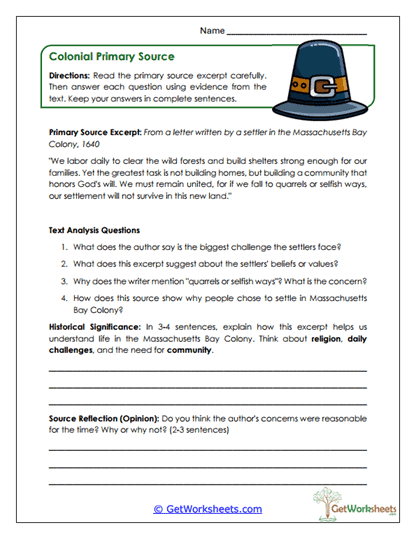
Colonial Primary Source Reading
In this reading activity, students examine a genuine 1640 settler's letter from the Massachusetts Bay Colony. Through close reading, they identify key details about daily struggles, values, and beliefs. The guided questions build historical empathy and interpretation skills. This exercise introduces primary source analysis in an accessible, human-centered way.
Colonial Vocabulary in Context
Students encounter essential colonial terms like "mercantilism" and "indentured servant" in short contextual passages. They use clues to infer definitions and write sentences applying each term. This dual focus on comprehension and application supports deeper vocabulary mastery. It's ideal for linking language skills with historical understanding.
Loyalist vs. Patriot Debate
In this role-play activity, students take sides as Loyalists or Patriots and prepare arguments to defend their views. They anticipate counterpoints and craft persuasive closing statements. The task encourages empathy and strengthens argumentative writing and oral reasoning. It's a lively introduction to the political divisions leading to revolution.
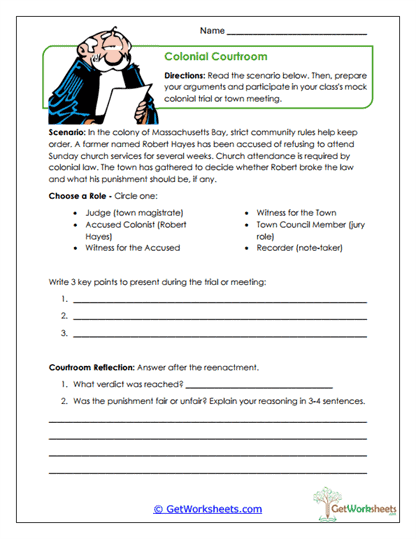
Colonial Mock Trial
Students step into a simulated courtroom in the Massachusetts Bay Colony, assuming roles like judge, witness, or accused colonist. Working from a fictional case, they present evidence and make reasoned judgments. The worksheet builds collaboration, communication, and civic reasoning. It transforms abstract history into a hands-on learning experience.
Exploration and Indigenous Conflict
Learners trace how exploration and settlement led to both opportunity and conflict. They complete a flow chart showing cause-and-effect relationships between European arrival and Indigenous resistance. Reflection questions prompt analysis of motives and consequences. This activity promotes critical thinking about cultural contact and historical complexity.
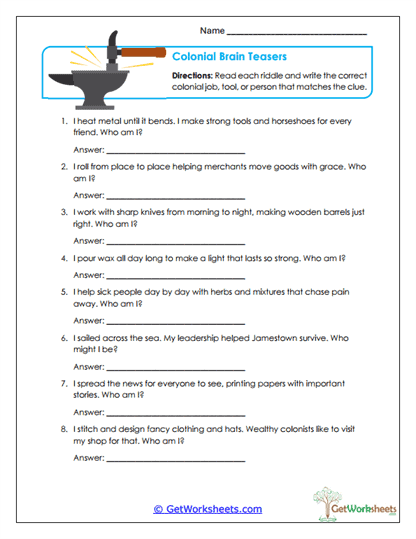
Colonial Brain Teasers
Students solve riddles describing colonial tools, jobs, and figures, using logic and historical knowledge to find answers. The creative format engages curiosity and reinforces understanding of daily colonial life. Each clue encourages contextual reasoning and vocabulary recall. It's a fun, brain-stretching way to blend history with problem-solving.
Law in the Colonies
Through a 1646 legal excerpt, students explore how religion shaped colonial law. They paraphrase the text, answer comprehension questions, and reflect on how the same rule would be viewed today. This activity sharpens interpretation and comparative analysis skills. It connects early legal systems to evolving ideas about freedom and authority.
Justice Through Time
Learners match colonial legal practices to their modern counterparts, then reflect on how justice has evolved. Examples include trial by jury and property rights. The exercise promotes understanding of continuity in American legal traditions. It's an effective bridge between civics, history, and ethical reflection.
Colonial Values Today
Students examine four foundational colonial values-faith, hard work, community, and independence-and consider their influence on modern life. Reflective prompts guide learners to connect historical ideals with current civic attitudes. The activity nurtures critical thinking and personal expression. It's a thoughtful conclusion to a unit on Colonial America's enduring legacy.
Bookmark Us Now!
New, high-quality worksheets are added every week! Do not miss out!