Civil Rights Movement Worksheets
-
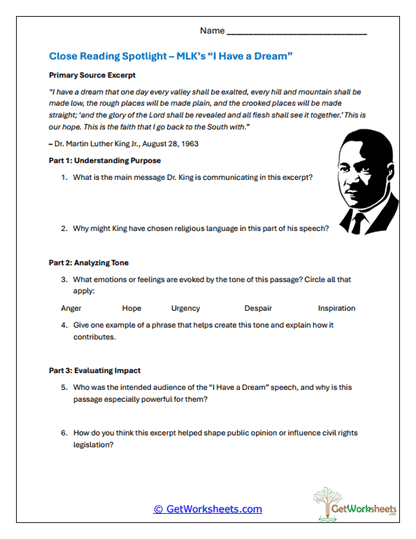
“I Have a Dream” Close Reading
-
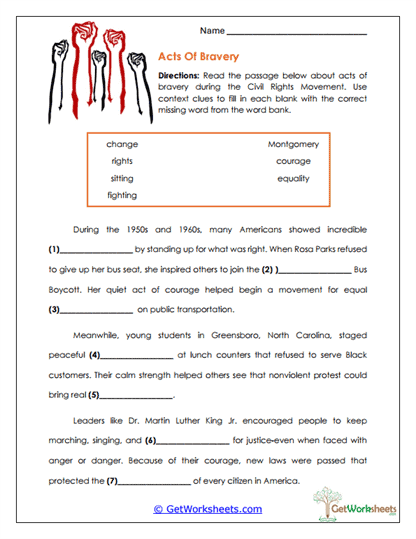
Bravery Cloze
-
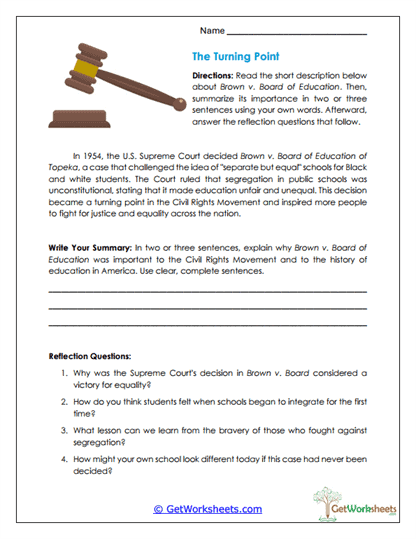
Brown v. Board Summary
-
-
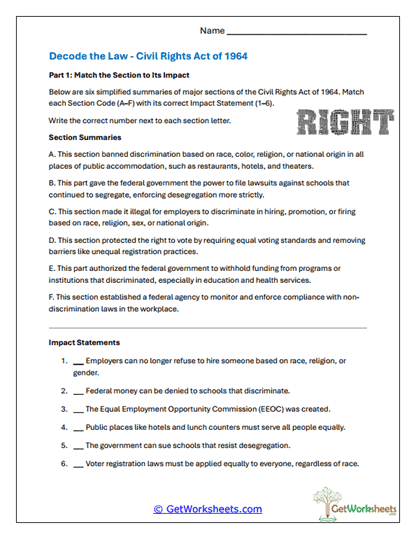
Civil Rights Act Analysis
-
Civil Rights Laws
-
Civil Rights Leaders
-
Civil Rights Riddles
-
Civil Rights Vocabulary
-
Comparing MLK and Malcolm X
-
Echoes of Equality
-
Freedom Rides
-
Freedom Rides Legacy
-
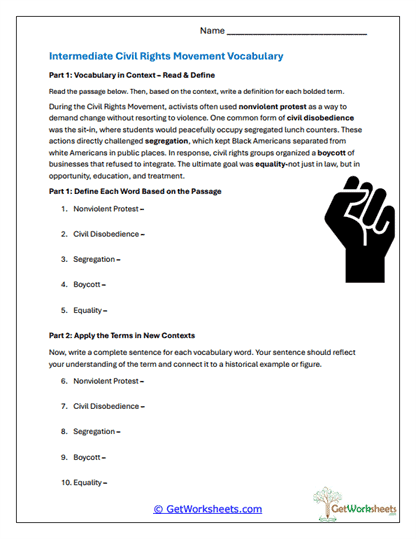
Intermediate Vocab
-
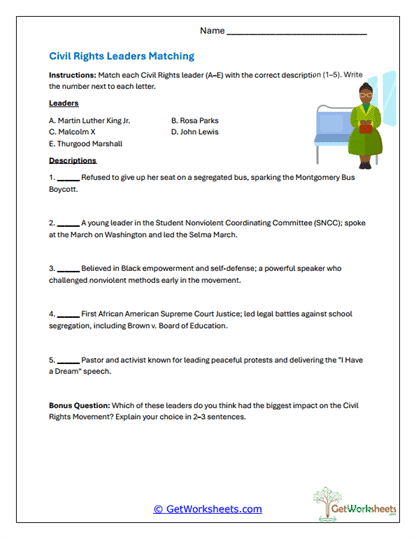
Leaders Matching
-
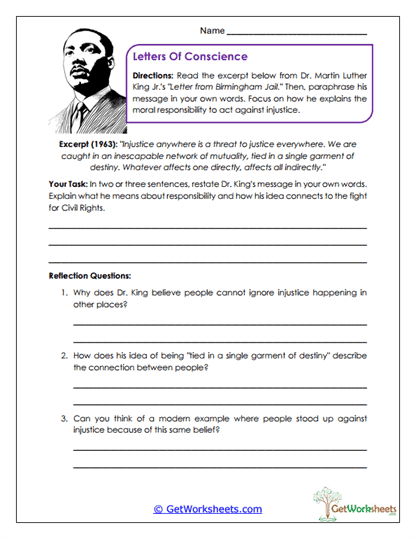
Letters of Conscience
-
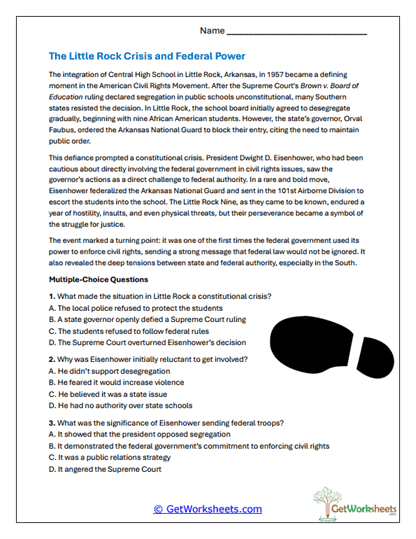
Little Rock Crisis
-
Media Bias Analysis
-
Movement Timeline
-
Protest Methods Analysis
-
Stand or Sit
-
Strategy Choices
-
The Little Rock Nine
-
Trailblazer Quotes
-
Voices of the Movement
About This Worksheet Collection
The Civil Rights Movement worksheet collection brings one of America's most defining eras to life through thoughtful readings, analytical activities, and reflection-based writing. Each worksheet captures a unique moment-from the bravery of the Little Rock Nine to the eloquence of Dr. King and the persistence of Freedom Riders-helping students see how ordinary citizens changed the course of history. Teachers can use these materials to foster meaningful classroom conversations about equality, justice, and the power of collective action.
Students engaging with this collection will develop a wide range of academic and civic skills. They'll strengthen their comprehension of informational texts, refine their analytical writing, and learn to interpret historical figures' words and motives with empathy and depth. Through vocabulary development, primary source study, and comparison exercises, learners build not only historical knowledge but also the moral reasoning and communication skills central to active citizenship.
Detailed Descriptions Of These Worksheets
The Little Rock Nine
This reading passage introduces students to the courage of the nine Black students who integrated Central High School in 1957. Learners trace the conflict, analyze government actions, and reflect on the social tension surrounding desegregation. The worksheet combines factual recall with emotional insight, developing empathy and comprehension. It's an essential foundation for studying modern civil rights history.
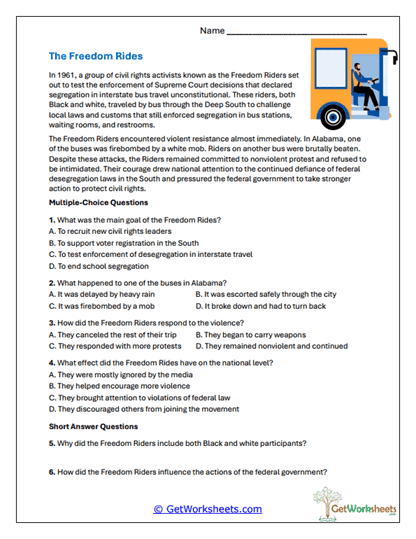
The Freedom Rides
Students read about the Freedom Riders who risked their lives to challenge segregation in interstate travel. The passage highlights acts of courage, violent backlash, and the critical role of media attention. Learners answer comprehension questions emphasizing cause and effect and government responsibility. This activity connects activism with constitutional rights in an accessible and engaging way.
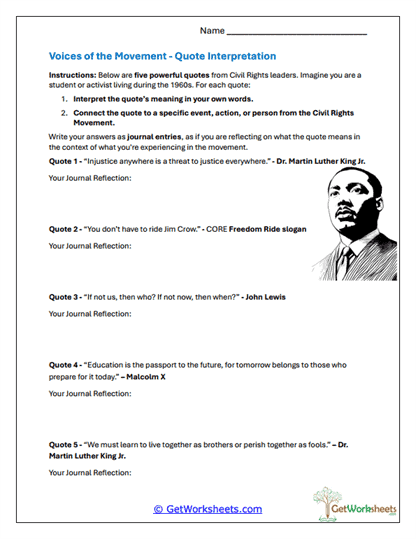
Voices of the Movement
In this reflective writing exercise, students interpret quotes from Civil Rights leaders such as Martin Luther King Jr., Malcolm X, and John Lewis. Each prompt encourages personal connection and historical context, helping students understand moral leadership and persuasive language. The activity fosters empathy, civic awareness, and expressive writing. It's ideal for journal-based or discussion-centered lessons.
Civil Rights Act Analysis
Learners study the 1964 Civil Rights Act by matching simplified legal sections with their real-world impacts. Through this exercise, students discover how legislation combats discrimination across public life. The task encourages comprehension of civic law and its application. It's a practical way to connect abstract policy to lived experience.
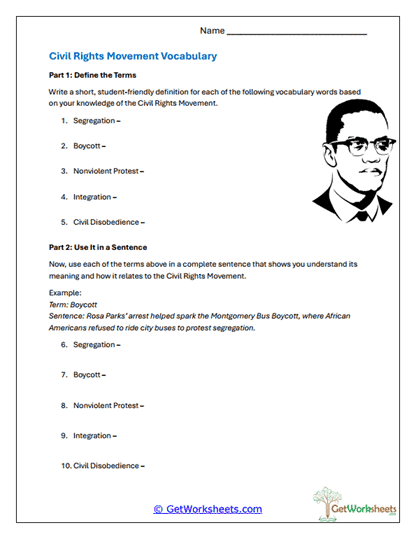
Vocabulary
This worksheet introduces foundational terms such as "boycott," "integration," and "civil disobedience." Students define each word and use it in a meaningful sentence tied to history. The activity reinforces vocabulary retention and historical comprehension. It helps learners articulate civil rights concepts with clarity and confidence.
Intermediate Vocabulary
Building on prior knowledge, this worksheet presents more complex terms within short readings that show their historical use. Students define words like "equality" and "nonviolent protest" using textual context. They then craft original sentences that connect language to activism. The task supports both literacy and civic understanding through applied vocabulary work.
Leaders Matching
Students identify major figures of the Civil Rights Movement by pairing names such as Rosa Parks, Malcolm X, and Thurgood Marshall with their contributions. A follow-up writing prompt invites reflection on leadership and legacy. The activity promotes recall, recognition, and critical evaluation of influence. It's both an educational review and an inspiring look at personal courage.
MLK's "I Have a Dream" Close Reading
This worksheet focuses on Dr. Martin Luther King Jr.'s iconic speech, guiding students through an analysis of tone, emotion, and purpose. Learners interpret how King's words appealed to justice and unity. The activity strengthens close reading and rhetorical analysis. It's a powerful way to connect language with leadership.
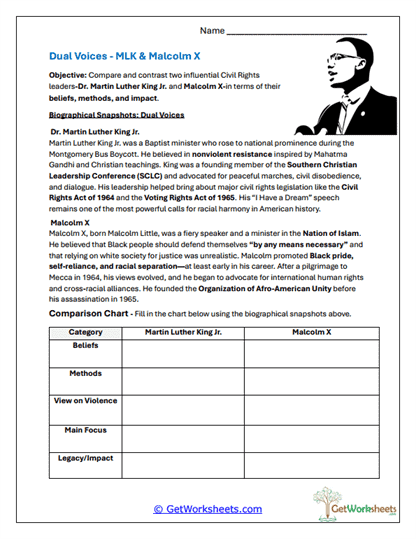
Comparing MLK and Malcolm X
Students compare two of the Civil Rights Movement's most influential voices-Dr. Martin Luther King Jr. and Malcolm X. Using a side-by-side chart, they explore differing philosophies and shared goals for equality. The worksheet sharpens analytical reasoning and compare-and-contrast writing skills. It also encourages discussion about strategy and ideology in social reform.
Protest Methods Analysis
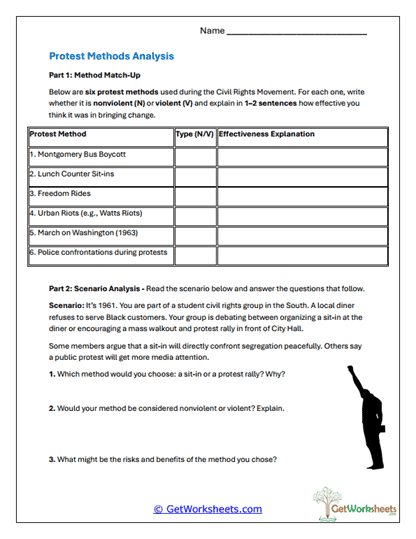
Learners evaluate six protest strategies used during the Civil Rights era, classifying them as nonviolent or violent and debating their effectiveness. The writing extension asks students to apply their reasoning to new scenarios. This task builds persuasive thinking and moral judgment. It's ideal for connecting history to civics and ethics lessons.
Little Rock Crisis and Federal Action
Students read about the confrontation between state and federal authority during the 1957 Little Rock Crisis. They examine President Eisenhower's decision to send federal troops and discuss the meaning of constitutional enforcement. The comprehension questions focus on cause, effect, and leadership. This worksheet highlights how federal power can uphold civil rights in times of conflict.
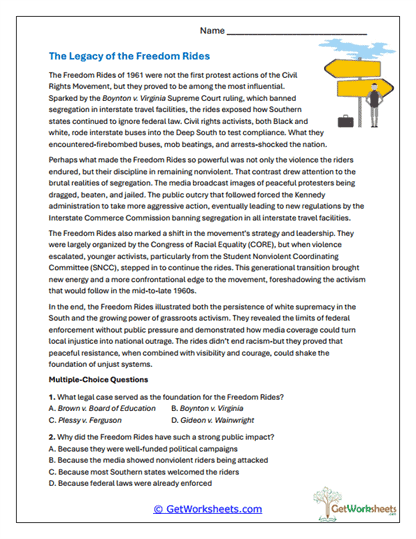
Freedom Rides Legacy
This reading examines how the Freedom Rides transformed both law and public opinion in the 1960s. Students learn about the riders' perseverance, national media coverage, and the federal government's response. The activity promotes comprehension of activism's long-term effects. It's an inspiring conclusion to the study of nonviolent protest and social change.
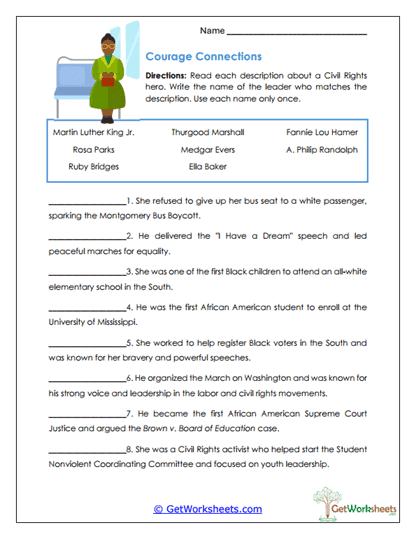
Civil Rights Leaders
Students read concise descriptions of major Civil Rights leaders and match each one to the correct individual. They connect key accomplishments-such as organizing boycotts, arguing court cases, advancing voting rights, and leading marches-to influential figures like Rosa Parks, Thurgood Marshall, and Fannie Lou Hamer. This strengthens comprehension of leadership roles and highlights the diverse contributions that advanced equality. Learners build recognition of key details and deepen knowledge of historical heroes.
Movement Timeline
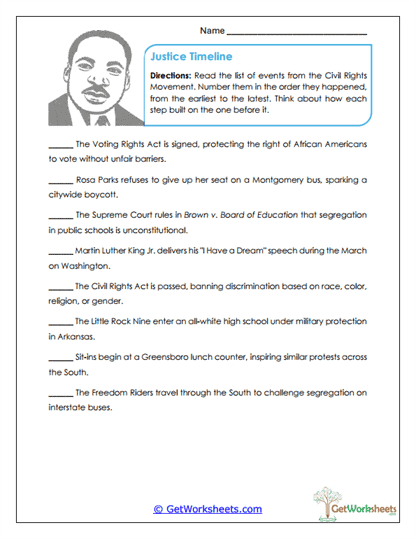
Learners place major events of the Civil Rights Movement in chronological order, from early court victories to nationwide demonstrations and landmark legislation. As they sequence events, they analyze how earlier actions inspired later successes. This develops strong cause-and-effect reasoning and reinforces understanding of momentum within social movements. Students gain a clear picture of how the fight for civil rights progressed.
Bravery Cloze
Students complete a passage about courageous actions during the Civil Rights Movement using vocabulary from a word bank. Context clues guide them to terms related to equality, protest, and nonviolence. The activity reinforces key concepts such as sit-ins, boycotts, and Dr. King's leadership. Learners strengthen reading comprehension and build vocabulary tied to social justice.
Trailblazer Quotes
Students analyze quotes from Civil Rights leaders and match them to the events or actions they relate to, such as the March on Washington or Freedom Summer. They interpret meaning and connect messages to real historical outcomes. This encourages thoughtful reading and understanding of how rhetoric inspired activism. Students sharpen their skills in identifying context and underlying themes.
Brown v. Board Summary
Learners read a brief explanation of the Brown v. Board decision and summarize its significance in two to three sentences. Reflection prompts guide them to consider issues of equality and integration. The worksheet strengthens summarizing skills and builds understanding of a landmark Supreme Court case. Students engage with concepts of fairness and lasting societal impact.
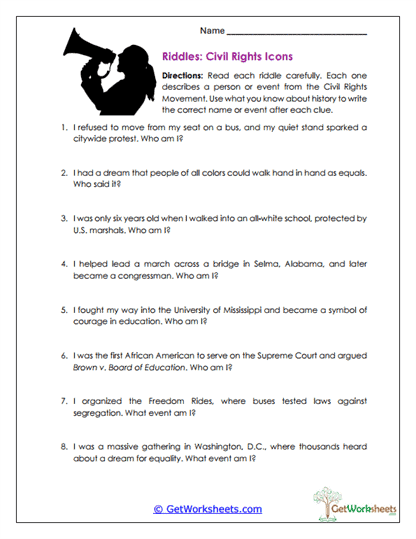
Civil Rights Riddles
In this puzzle-style activity, students solve riddles describing key people and events such as the Freedom Riders, the March on Washington, or Ruby Bridges. They apply prior knowledge to identify each clue's subject. The format makes content review engaging and memorable. It supports comprehension and reinforces historical recall.
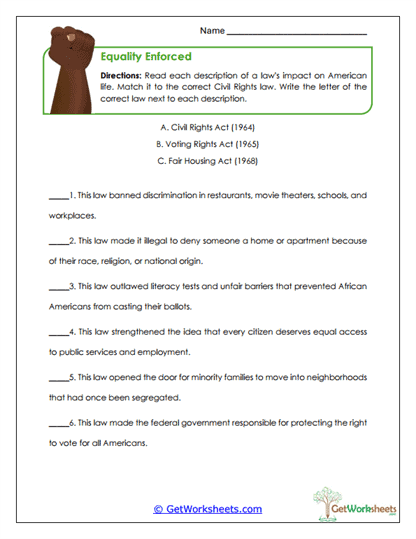
Civil Rights Laws
Students match descriptions of major federal civil rights laws to the correct acts from the 1960s. They analyze how each law protected equality in voting, employment, and housing. This builds classification skills and strengthens understanding of federal efforts to end discrimination. Learners see how legislation shaped social change.
Media Bias Analysis
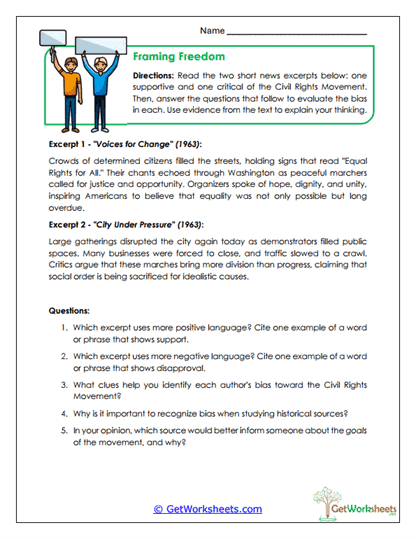
Learners compare two short news excerpts-one supportive and one critical-in order to evaluate tone, language, and bias. They identify word choices that reveal perspective and explain why bias matters when studying history. The activity strengthens media literacy and critical reading. Students learn to evaluate competing portrayals of the same event.
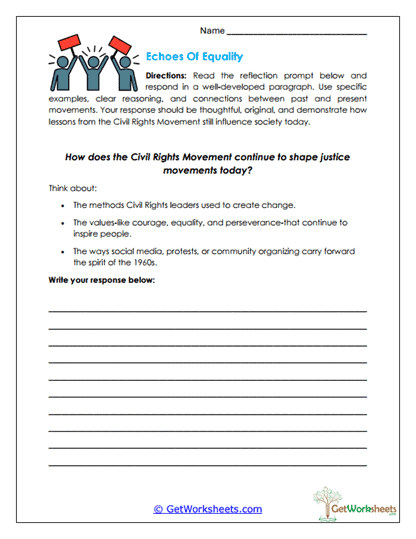
Echoes of Equality
Students write a well-developed paragraph analyzing how the Civil Rights Movement continues to influence modern justice movements. They make connections between past activism and current tools like social media or community organizing. This activity encourages deep reflection and evidence-based reasoning. Learners strengthen analytical writing while exploring continuity in civic engagement.
Stand or Sit
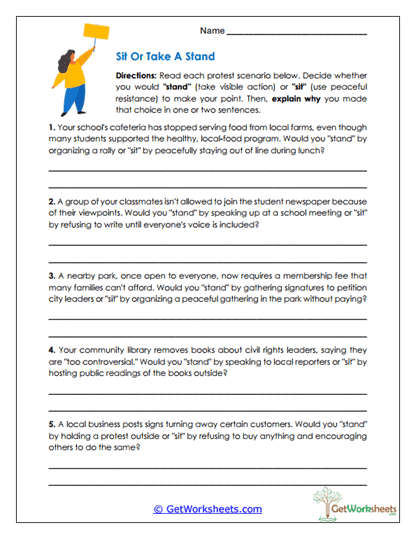
Learners review modern protest scenarios and decide whether they would "stand" (take visible action) or "sit" (use peaceful resistance). They explain their reasoning in short written responses, connecting past tactics such as sit-ins and marches to present-day dilemmas. This builds decision-making and understanding of activism strategies. Students practice applying historical insight to real-world situations.
Letters of Conscience
Students paraphrase an excerpt from Dr. King's "Letter from Birmingham Jail" and answer thoughtful questions about moral duty and justice. They interpret King's arguments and relate them to modern examples of confronting inequality. The activity deepens comprehension of complex primary-source language. It strengthens paraphrasing and civic reasoning.
Strategy Choices
Learners analyze statements about nonviolence and self-defense-two contrasting approaches used during the Civil Rights Movement-and explain which strategy they believe was more effective. They use reasoning supported by historical evidence to justify their choice. This strengthens comparative thinking and persuasive explanation. Students develop a clearer understanding of debates within the movement and the impact of different advocacy methods.
Bookmark Us Now!
New, high-quality worksheets are added every week! Do not miss out!