Charlotte's Web Worksheets
About This Worksheet Collection
The Charlotte's Web worksheet collection offers a full range of activities that guide students through E.B. White's classic novel with depth, creativity, and analytical rigor. The worksheets invite learners to explore character traits, plot structure, themes of friendship and sacrifice, and the emotional impact of key story events. Activities span reading comprehension, perspective writing, symbolism analysis, and opinion development, ensuring that students engage with the text from multiple angles.
As students complete the collection, they strengthen essential literacy skills including inference, textual evidence, narrative writing, theme tracking, and character comparison. They practice adopting character perspective, analyzing literary symbols, organizing ideas, and expressing personal interpretations. Together, these worksheets support a rich reading experience that nurtures both critical thinking and imaginative engagement with the novel.
Detailed Descriptions Of These Worksheets
Character Matching
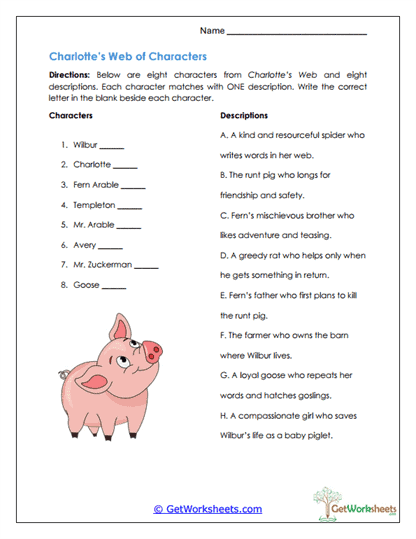
Students match eight characters to their correct descriptions, using contextual clues and story knowledge to identify each figure. This activity reinforces comprehension of character roles and traits while promoting inference. Learners deepen understanding of how characters shape the novel's events. It supports careful reading and attention to detail.
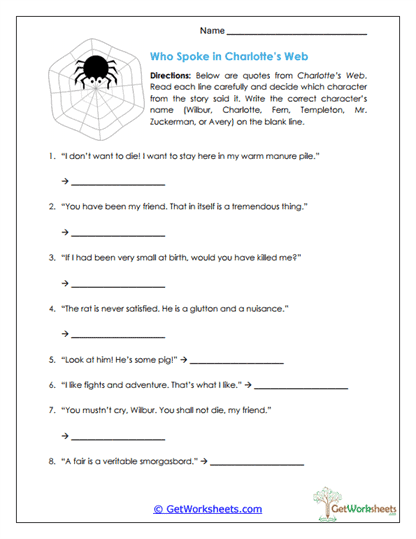
Quote Attribution
Learners determine which character spoke each quoted line by analyzing voice, tone, and context. This task strengthens close reading and helps students recognize how dialogue reveals personality. It encourages interpretation and critical thinking. The worksheet builds familiarity with important moments in the text.
Events Sequencing
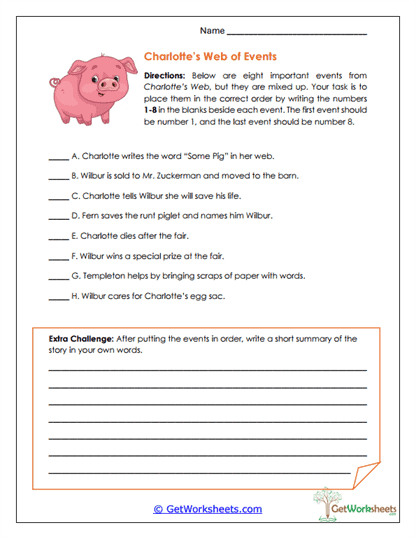
Students place major story events in chronological order, reinforcing their grasp of narrative structure. This sequencing task supports memory of key developments and highlights cause-and-effect relationships. An optional summary offers additional practice in retelling. It strengthens comprehension and organizational skills.
Character Traits
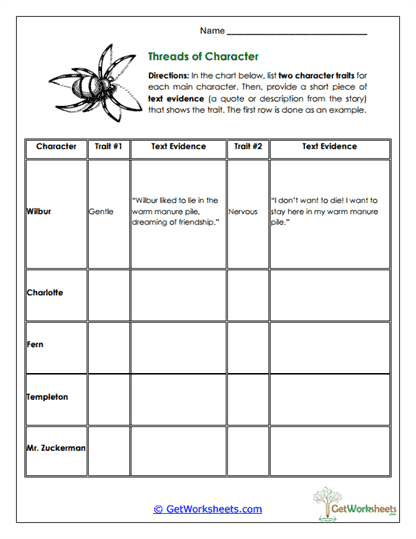
Learners identify two traits for each major character and provide supporting evidence from the text. This chart-based activity develops analytical reading and shows how authors reveal personality through actions and dialogue. It reinforces evidence-based reasoning. Students gain a clearer understanding of character motivation.
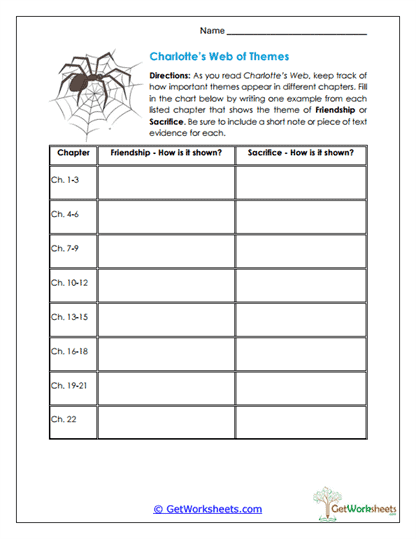
Theme Tracking
Students trace the development of friendship and sacrifice across different chapter groups. By recording examples and brief text evidence, learners explore how themes evolve throughout the story. This activity encourages close reading and thematic awareness. It supports deeper analysis of recurring ideas.
Character Letter Writing
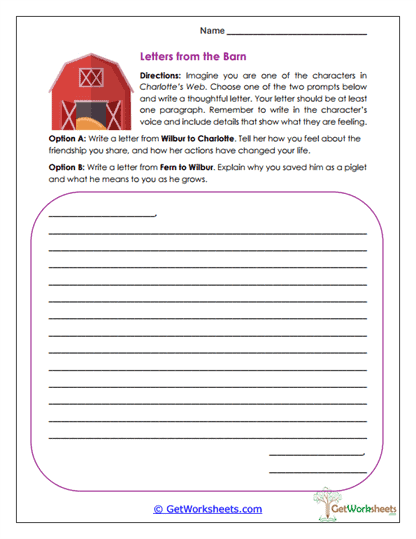
Students write a letter from the perspective of Wilbur or Fern, adopting the character's voice and referencing specific events. This creative activity blends narrative writing with textual understanding. Learners practice expressing feelings and point of view authentically. It builds empathy and engagement with the story.
Opinion Writing Chart
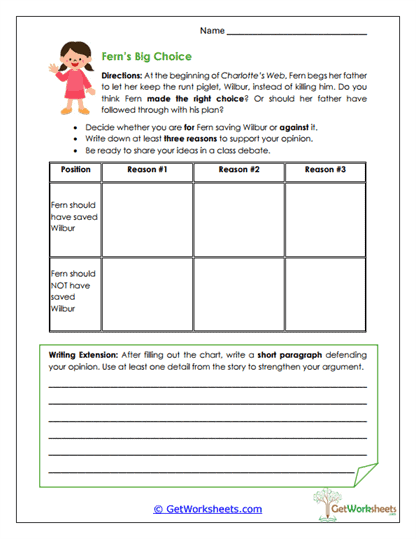
Learners evaluate Fern's choice to save Wilbur by choosing a stance and listing three supporting reasons. The chart prepares students to write an opinion paragraph using text evidence. It encourages thoughtful judgment and structured argumentation. This activity strengthens persuasive thinking.
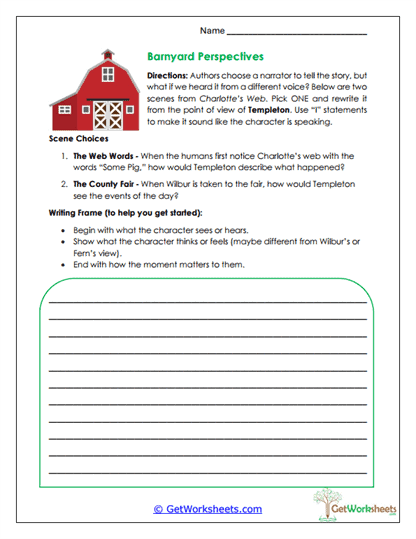
Point-of-View Rewrite
Students rewrite a selected scene from Templeton's perspective, using first-person narration to imagine his thoughts and reactions. This task reinforces understanding of character personality and viewpoint. It promotes creative expression and descriptive detail. Learners deepen insight into narrative perspective.
Diary Entry Writing
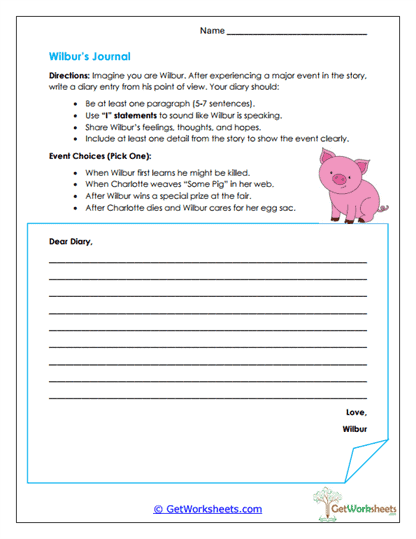
Learners write a diary entry from Wilbur's perspective after a major event, using first-person voice to show emotions and thoughts. This activity encourages reflective writing and an intimate understanding of character experience. Students incorporate story details for accuracy. It strengthens expressive and narrative skills.
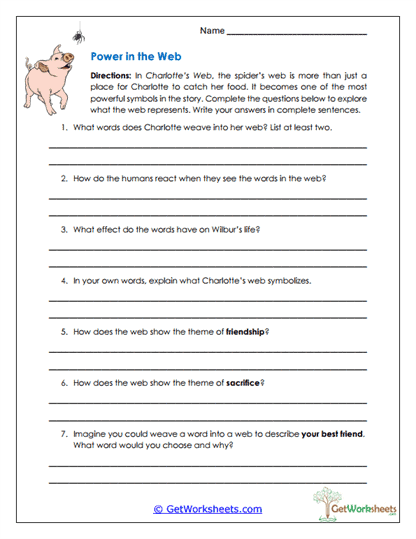
Symbolism Questions
Students answer comprehension questions about the symbolic meaning of Charlotte's web, exploring how the woven words affect characters and themes. This activity deepens understanding of symbolism and literary meaning. It promotes critical thinking and clear written explanation. Learners reflect on friendship, sacrifice, and hope.
Comprehension Questions
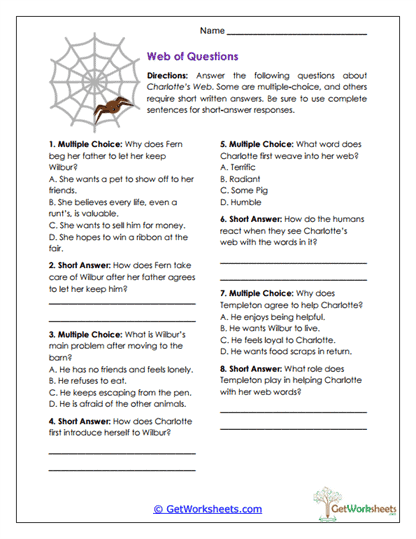
Students respond to multiple-choice and short-answer questions covering plot, character motivations, vocabulary, and themes. This mixed-format worksheet supports careful reading and detailed recall. It strengthens sentence construction and evidence-based response. The activity encourages thoughtful interpretation of the novel.
Alternate Ending Writing
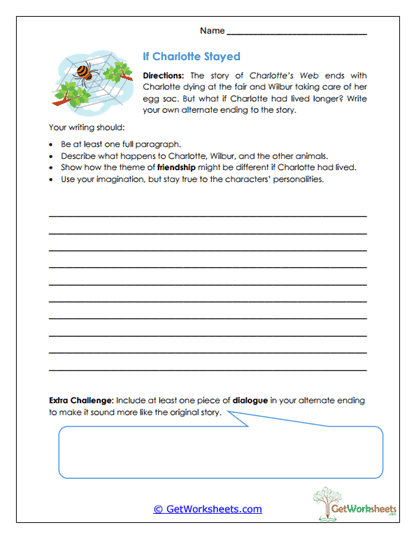
Learners imagine a new ending in which Charlotte survives, examining how the story's emotional and thematic elements would shift. Students write a paragraph describing the consequences and may include dialogue for authenticity. This creative task reinforces narrative structure and character understanding. It promotes imaginative thinking and strong written expression.
Bookmark Us Now!
New, high-quality worksheets are added every week! Do not miss out!