Charlie and the Chocolate Factory Worksheets
About This Worksheet Collection
The Charlie and the Chocolate Factory worksheet collection invites students to explore Roald Dahl's imaginative world through character study, thematic interpretation, plot understanding, writing practice, and creative design. Each worksheet approaches the novel from a different angle-riddles, timelines, quotes, moral dilemmas, and figurative language-helping learners engage with the text in both analytical and playful ways. The activities are structured to reinforce comprehension while encouraging students to think critically about the story's deeper messages.
Across the collection, students strengthen key literacy skills such as inference, cause-and-effect reasoning, character analysis, and narrative writing. They learn to identify textual clues, interpret dialogue, compare characters, explore themes of greed and kindness, and even imagine alternate endings. By combining creativity with structured analysis, these worksheets support a well-rounded understanding of the novel and build skills that transfer to broader literary study.
Detailed Descriptions Of These Worksheets
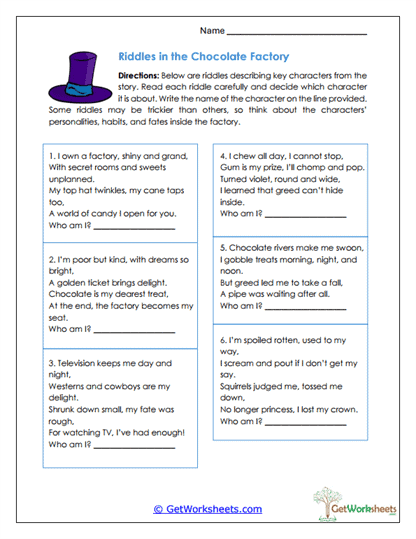
Riddles in the Chocolate Factory
Students read riddles that reference character traits and memorable events, identifying which character each one describes. This activity strengthens inference skills and reinforces recall of important plot moments. Learners practice analyzing descriptive language to uncover meaning. It deepens understanding of character motivations and roles within the story.
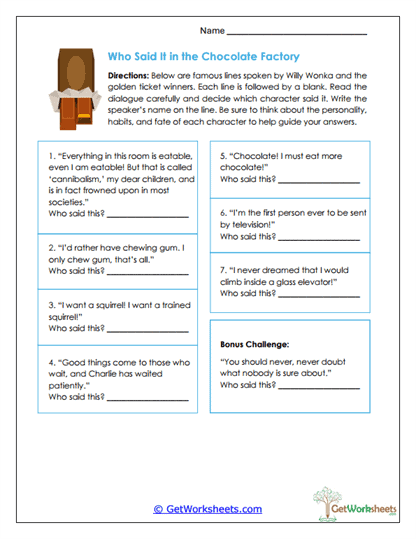
Who Said It in the Chocolate Factory
Learners examine lines of dialogue and determine which character spoke each one. The exercise encourages close reading and analysis of personality through voice. Students make connections between a character's behavior and how they express themselves. A bonus challenge invites them to stretch their recall even further.
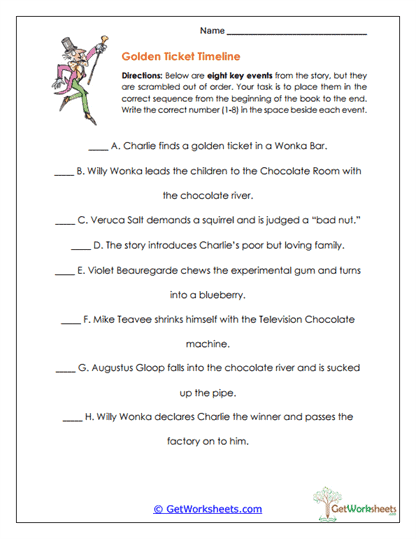
Golden Ticket Timeline
Students place eight key events in chronological order, strengthening comprehension of narrative structure. This sequencing exercise helps learners understand cause-and-effect relationships across the story. It reinforces memory of major plot points and supports a clear view of story progression. The activity builds confidence in understanding how events connect.
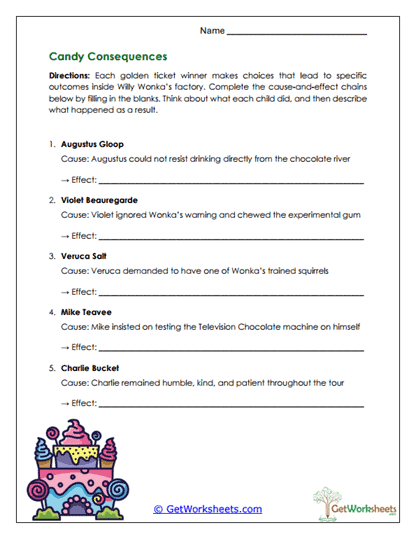
Candy Consequences
Learners analyze each golden ticket winner's behavior and identify what happened as a result of their choices. This task reinforces cause-and-effect thinking and highlights character flaws. Students articulate consequences using clear written explanations. It encourages reflection on moral lessons embedded in the story.
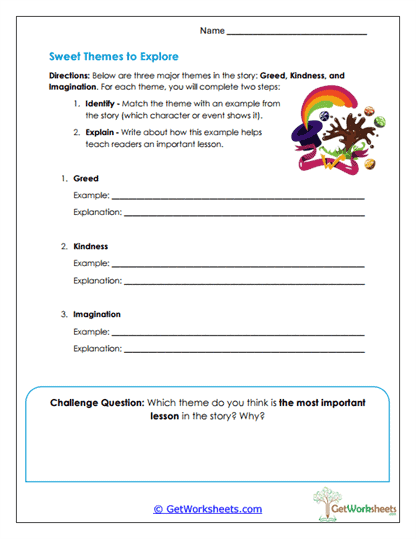
Sweet Themes to Explore
Students explore themes such as greed, kindness, and imagination by selecting textual examples and explaining the lesson each conveys. This activity strengthens thematic analysis and the use of evidence. Learners make connections between story events and larger moral messages. It promotes thoughtful interpretation of the novel's core ideas.
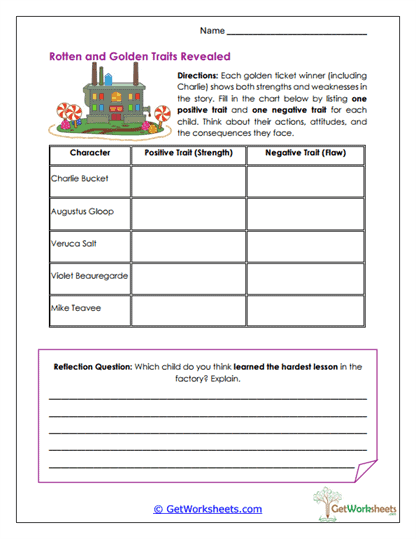
Rotten and Golden Traits Revealed
Students chart positive and negative traits for each golden ticket child, analyzing personalities and motivations. This supports deeper understanding of how traits lead to consequences. A reflection question encourages students to evaluate character growth. It builds insight into characterization and moral development.
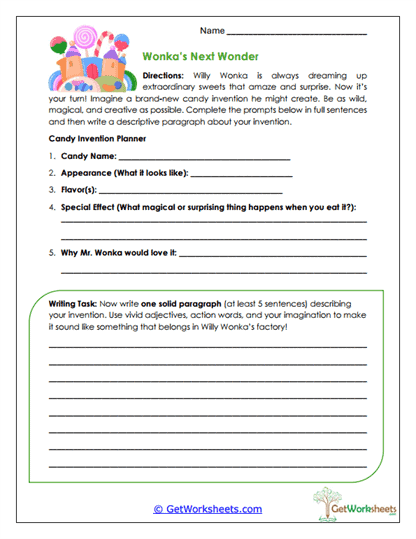
Wonka's Next Wonder
Learners design an original candy invention inspired by Willy Wonka, then write a descriptive paragraph that brings it to life. This creative task develops imaginative thinking and vivid descriptive writing. Students practice using sensory details and organized planning. It blends creativity with structured composition.
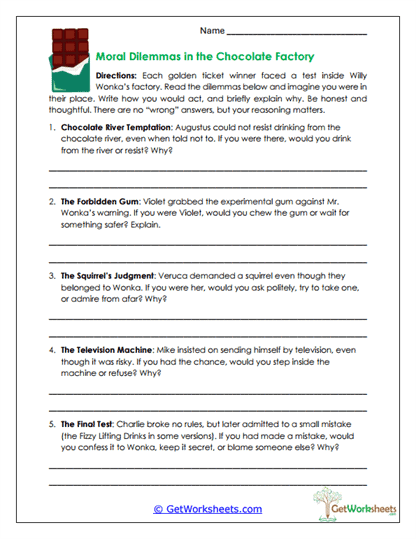
Moral Dilemmas in the Chocolate Factory
Students place themselves in the golden ticket winners' situations and explain how they would respond to each challenge. This activity fosters ethical reasoning, empathy, and personal reflection. Learners justify their decisions using clear written explanations. It connects literature to real-life values and choices.
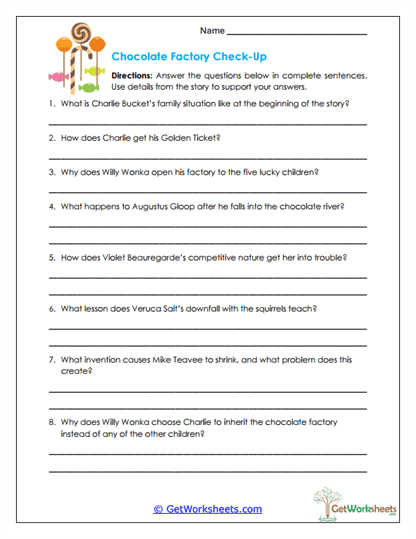
Chocolate Factory Check-Up
Students answer comprehension questions in complete sentences, using textual evidence to support their responses. This reinforces accuracy, clarity, and attention to detail. Learners deepen understanding of characters, plot events, and lesson outcomes. It strengthens written expression and close reading.
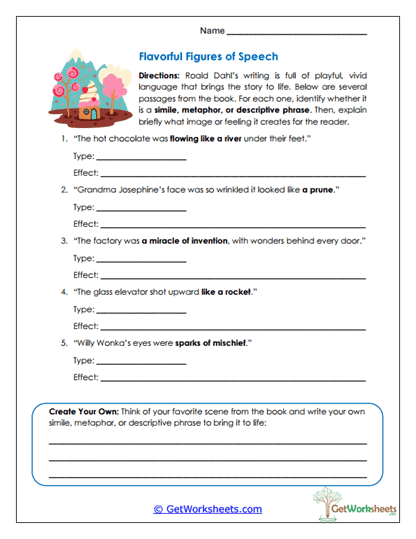
Flavorful Figures of Speech
Learners identify similes, metaphors, and descriptive phrases from the novel and explain their effects. This exercise builds appreciation for Dahl's playful, vivid language. Students analyze how figurative language creates imagery and mood. It supports literary analysis and understanding of author's craft.
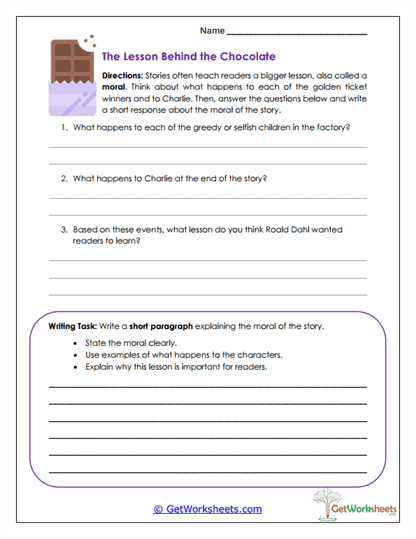
The Lesson Behind the Chocolate
Students explore the story's moral by analyzing consequences for each child and Charlie's ultimate reward. Guided questions help them articulate the novel's message clearly. They then write a paragraph summarizing the moral. This activity supports theme identification and reflective writing.
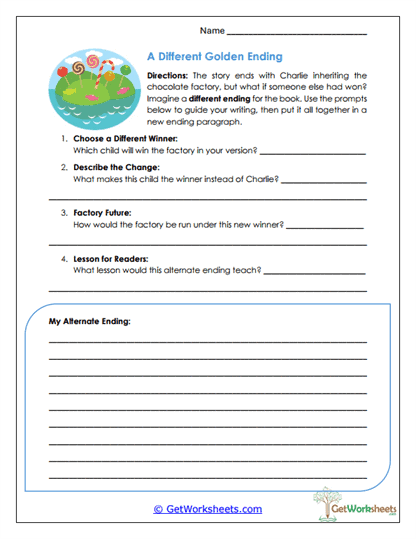
A Different Golden Ending
Learners imagine a new ending in which a different child inherits the factory, using prompts to guide their ideas. They write a revised conclusion that reflects character choice, theme, and narrative structure. This task blends creativity with analytical reasoning. It develops storytelling skills and encourages exploration of alternative perspectives.
Bookmark Us Now!
New, high-quality worksheets are added every week! Do not miss out!