Character Development Worksheets
About This Worksheet Collection
This Character Development worksheet collection helps students explore how fictional characters are built, shaped, and transformed within stories. Through activities that examine traits, emotions, reactions, motivations, and changes over time, learners gain a deeper understanding of how authors craft believable characters. The worksheets blend reading comprehension, narrative reasoning, descriptive writing, and analytical thinking, giving students multiple pathways to understand how characters function within a narrative.
Across the collection, students strengthen essential literacy skills as they interpret dialogue, analyze actions, explain motivations, and write scenes that demonstrate growth or conflict. They practice identifying internal and external traits, using evidence from text, crafting character arcs, and exploring the effects of relationships and values. These worksheets support both creative and analytical skills, helping students become stronger readers and more intentional writers.
Detailed Descriptions Of These Worksheets
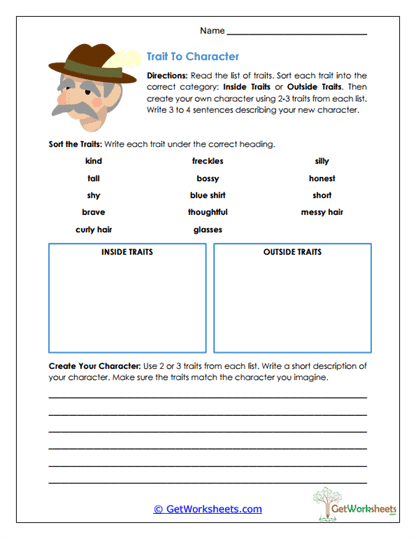
Trait Sorting
Students sort a list of traits into inside and outside categories, distinguishing personality qualities from physical characteristics. After organizing the traits, they create an original character description that blends selected traits from both lists. The activity encourages careful analysis of how authors build characters and strengthens descriptive writing. It also supports vocabulary understanding and helps students justify their classification choices.
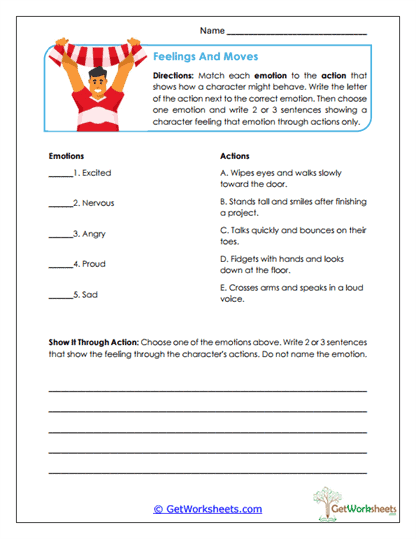
Emotion to Action
Learners match emotions with actions that logically express those feelings, helping them infer character states through behavior. They then write a short passage showing a character experiencing a chosen emotion without naming it directly. This exercise builds "show, don't tell" writing skills and strengthens inferencing about emotional cues. It encourages students to write clear, expressive sentences that reveal feelings through action.
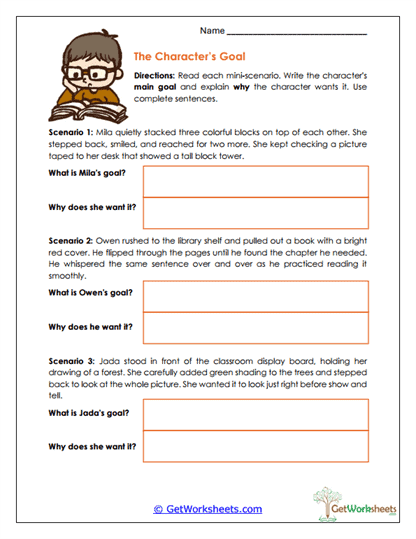
Character Goals
Students read three mini-scenarios and identify what each character wants and why. They support their answers with clues from the text, strengthening their ability to analyze motivation. The worksheet promotes careful reading, evidence-based explanation, and understanding of how goals drive character behavior. It helps students grasp an essential element of narrative structure.
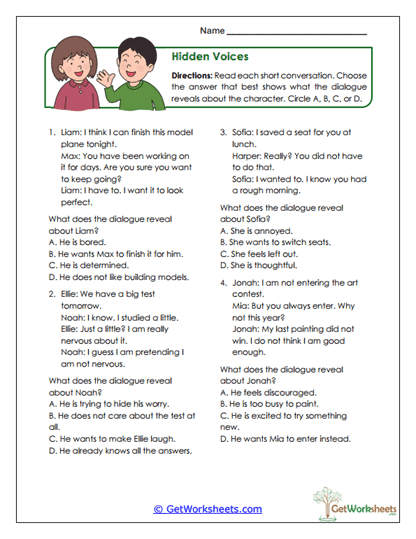
Dialogue Interpretation
Learners read short dialogues and select the answer that best explains what the exchange reveals about each character. By analyzing subtext and tone, students infer personality traits, emotions, or motivations. The multiple-choice format allows for quick checks of understanding while still requiring thoughtful interpretation. It builds skill in recognizing how dialogue conveys character information.
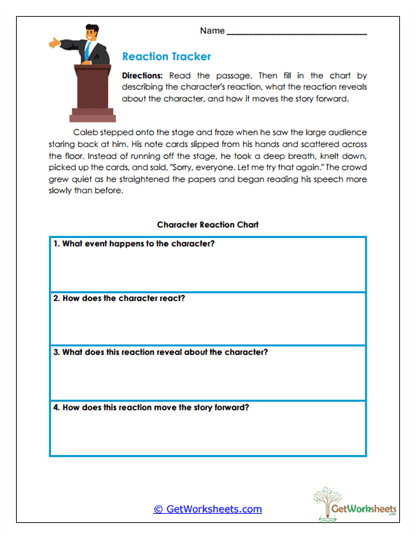
Reaction Tracker
Students read a narrative passage and fill in a chart tracking a character's reaction to a key event. They identify the event, describe the character's immediate response, explain what the reaction reveals about the character, and note how it affects the plot. This activity deepens comprehension of cause and effect in literature. It also encourages organized, text-based explanation.
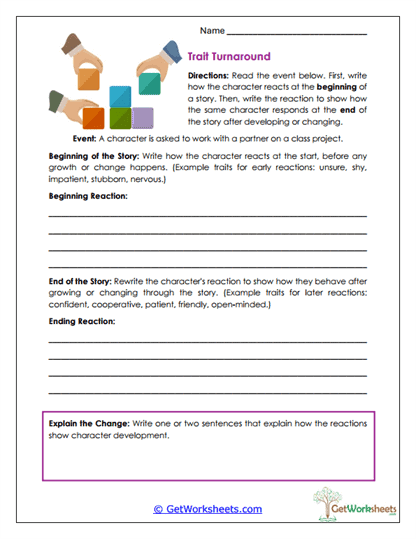
Trait Turnaround
Learners examine a character's behavior early in a story and rewrite the reaction to show how the character responds after developing or changing. The activity highlights how personality traits evolve over time and reinforces understanding of character arcs. Students compare early and later reactions to show transformation. It supports analytical thinking and narrative writing skills.
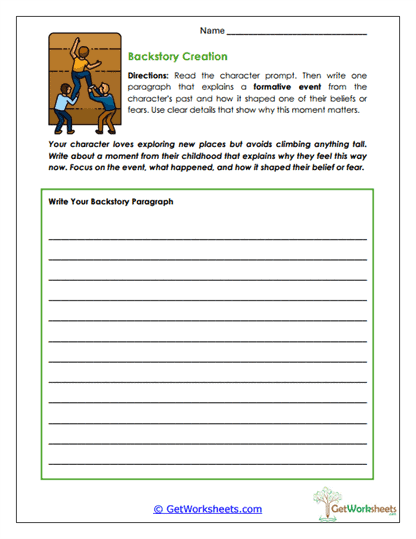
Backstory Creation
Students write a paragraph describing a childhood event that shaped a character's present-day fear or belief. The prompt encourages them to use descriptive details and clear cause-and-effect reasoning. The activity helps learners understand how backstory influences character identity. It strengthens narrative paragraph writing and character reasoning.
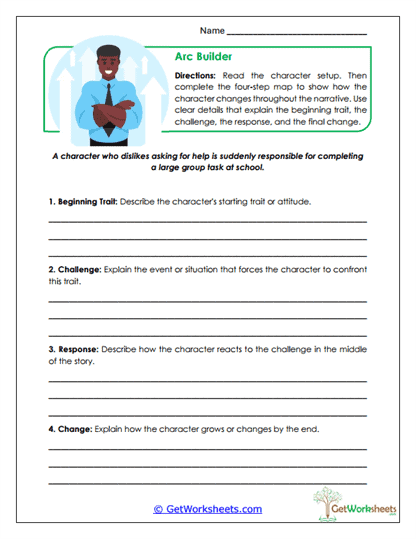
Arc Builder
This worksheet guides students through a four-step character arc by identifying a beginning trait, the challenge faced, the character's response, and the final change. Learners describe how internal traits interact with events to shape growth. The activity organizes thinking about transformation and clarifies how arcs structure narratives. It promotes clear, analytical writing.
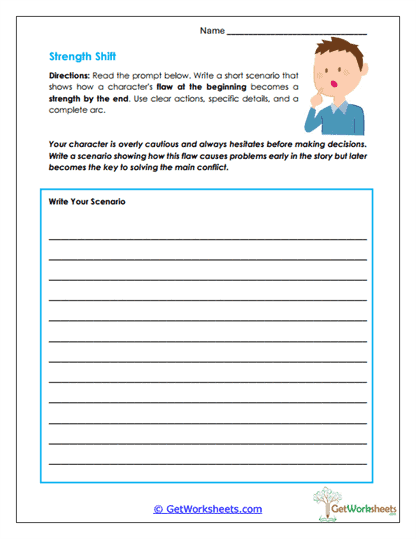
Strength Shift
Students write a narrative showing how a character's flaw becomes a strength by the story's end. They craft a scenario that demonstrates early struggles and a later turning point where the flaw becomes essential to solving the conflict. This activity develops understanding of dynamic traits and redemptive arcs. It encourages creative thinking, problem-solving, and detailed descriptive writing.
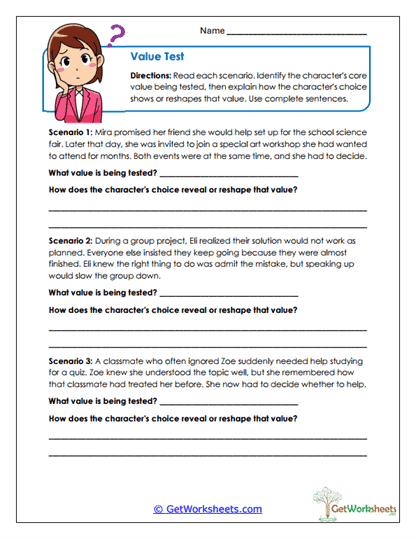
Value Test
Learners read scenarios in which a character's values are challenged and identify which value is being tested. They explain how the character's choice either reinforces or reshapes that value, supporting their reasoning with evidence. The worksheet deepens analysis of internal conflict and ethical decision-making. It strengthens interpretation, inference, and evidence-based explanation.
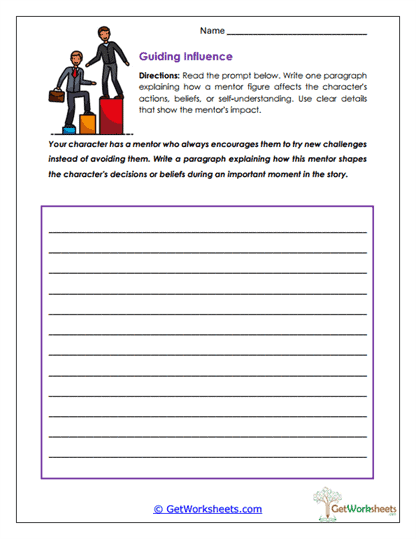
Mentor Influence
Students write a paragraph explaining how a mentor figure shapes a character's decisions or beliefs during a pivotal moment. They use details from a provided scenario to illustrate the mentor's impact. The activity builds understanding of external influences on character growth and encourages thoughtful cause-and-effect reasoning. It also supports coherent paragraph writing.
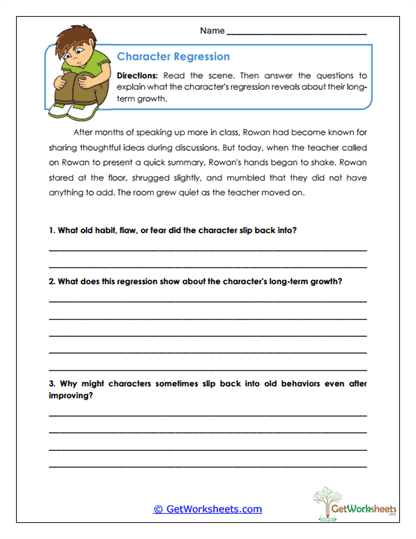
Character Regression
Learners analyze a scene in which a character momentarily slips back into an old behavior or fear. They identify the outdated habit, explain what the regression reveals about the character, and consider why setbacks occur even when growth has taken place. This worksheet builds nuanced comprehension of non-linear character development. It strengthens written expression and interpretation of subtle emotional cues.
Bookmark Us Now!
New, high-quality worksheets are added every week! Do not miss out!