Boston Tea Party Worksheets
About This Worksheet Collection
This Boston Tea Party worksheet collection provides educators with an engaging set of activities that guide students through the causes, viewpoints, consequences, and historical significance of one of the most iconic acts of colonial protest. Through perspective-taking, cloze passages, rumor evaluation, debate preparation, narrative writing, and primary-source interpretation, students gain a fuller picture of why the event occurred and how different groups experienced it. The worksheets encourage learners to think critically about economic tensions, British authority, and colonial resistance as they explore the path to the American Revolution.
Across the collection, students strengthen core literacy and social studies skills such as identifying bias, distinguishing fact from opinion, analyzing viewpoints, sequencing events, and crafting persuasive arguments. They also practice explaining historical motivations, interpreting 18th-century language, and connecting actions of the past to broader civic themes. By blending reading comprehension with creative and analytical tasks, these worksheets help students develop a deeper, more nuanced understanding of colonial protest and its role in shaping American identity.
Detailed Descriptions Of These Worksheets
Harbor Perspectives
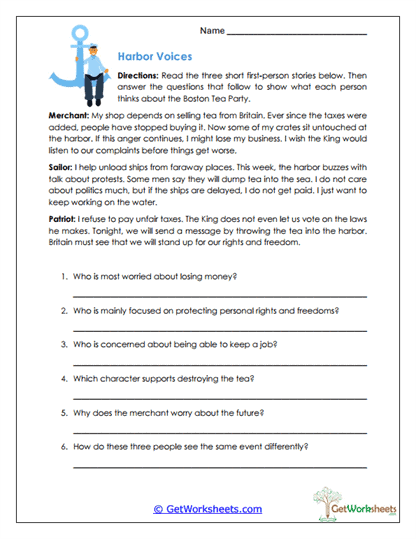
Students read three short first-person accounts-a merchant, a sailor, and a patriot-and analyze how each individual views the Boston Tea Party differently. They answer questions about concerns such as money, rights, and job security while exploring motivations tied to protest and loyalty. The activity develops strong perspective-taking skills and highlights the complexity of responses to political unrest. It reinforces close reading, tone interpretation, and historical context analysis.
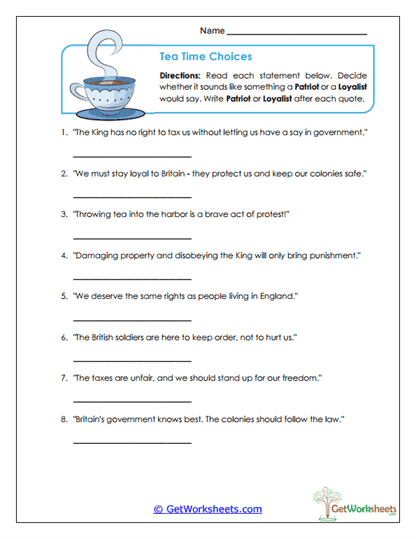
Patriot or Loyalist
Learners classify eight statements as belonging to either a Patriot or a Loyalist viewpoint. They evaluate ideas about taxation, government authority, and colonial loyalty to understand why colonists disagreed so sharply. The activity strengthens point-of-view recognition and reinforces knowledge of pre-Revolutionary political ideologies. Students build critical reasoning by analyzing bias and motivation.
Tea Party Cloze
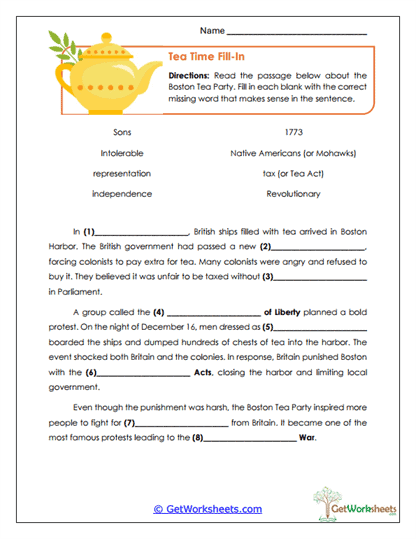
Students complete a cloze passage using vocabulary related to the Boston Tea Party and the broader American Revolution. They use context clues to correctly insert terms such as Sons of Liberty, Intolerable Acts, and representation. This reinforces historical understanding while strengthening vocabulary application. The activity supports comprehension of both causes and consequences.
Colonial Newswriting
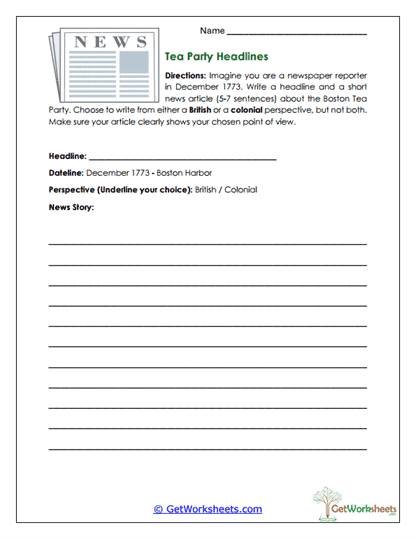
Learners step into the role of a colonial newspaper reporter and write a headline and short article about the Boston Tea Party. They choose either a British or Colonial perspective, practicing tone, viewpoint, and factual accuracy. The task encourages clear informational writing and historical empathy. It helps students understand how perspective shapes reporting.
Bias in Journals
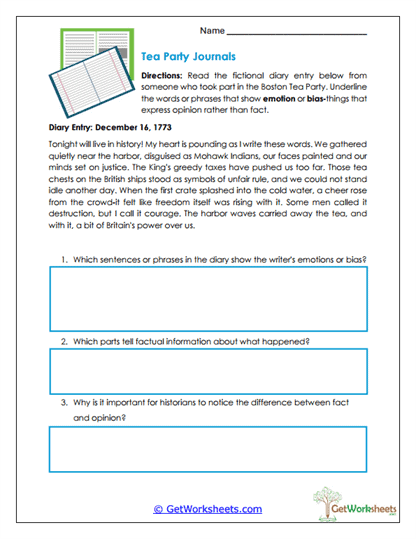
Students read a fictional diary entry from a Tea Party participant and underline biased or emotional language. They then identify factual details and reflect on why distinguishing fact from opinion matters in historical study. The worksheet strengthens skills in recognizing bias and evaluating source reliability. It supports historical literacy and critical thinking.
Tea Party Debate
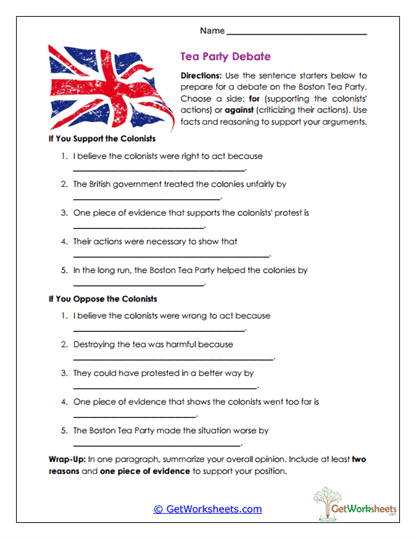
Students prepare for a debate about whether colonists were justified in their actions during the Tea Party. Sentence starters guide them in forming claims, selecting evidence, and constructing counterarguments. This supports persuasive writing and structured reasoning. Learners deepen their understanding of resistance, protest, and colonial grievances.
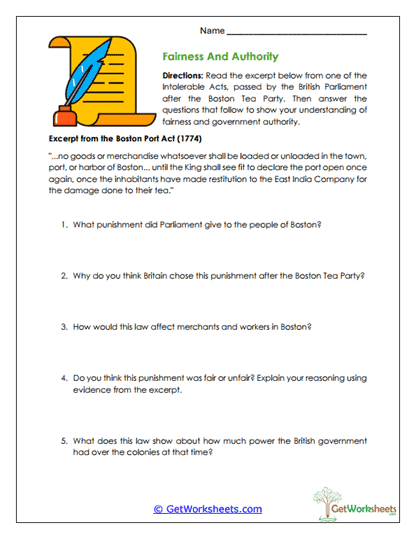
Intolerable Acts Reading
Learners analyze an excerpt from the Boston Port Act and answer comprehension questions about British punishment and colonial reactions. They examine how the law affected merchants and workers and interpret broader consequences for British-colonial relations. The activity builds close reading skills and strengthens understanding of escalating tensions. It supports evidence-based written responses.
Witness Account
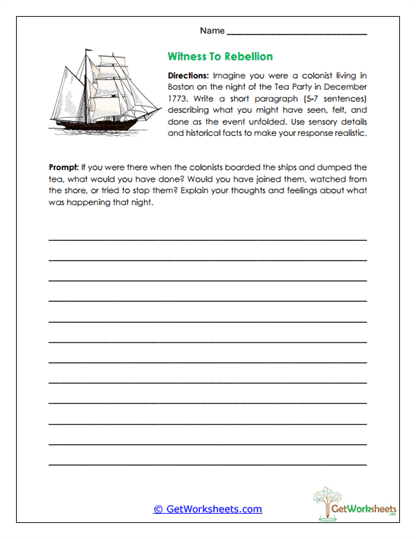
Students imagine observing the Boston Tea Party and write a descriptive paragraph with sensory details and historical accuracy. This narrative activity deepens empathy and helps students visualize the event's atmosphere. It reinforces descriptive writing and connection to historical context. Students strengthen understanding of protest motivations and colonial identity.
Fact or Exaggeration
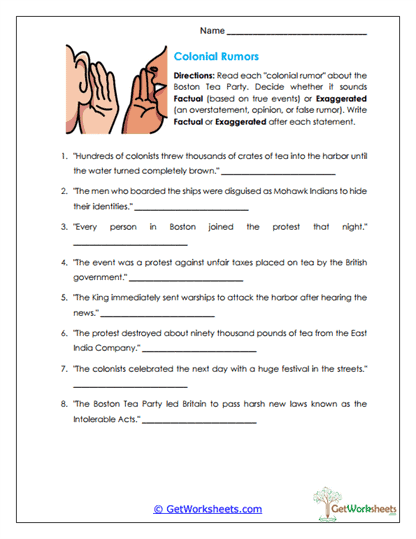
Learners review eight "colonial rumors" and decide whether each statement is factual or exaggerated. They analyze claims about participation, destruction, and British reactions to separate accurate information from myth. This builds critical evaluation skills and promotes historical accuracy. Students practice identifying exaggeration and understanding how stories evolve.
Tea Party Timeline
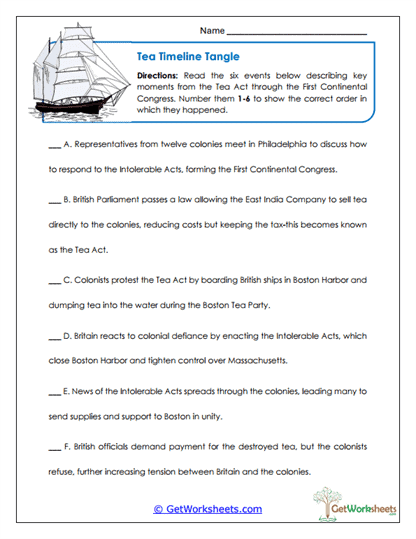
Students sequence six events leading from the Tea Act to the Intolerable Acts and the First Continental Congress. The activity clarifies cause-and-effect relationships and reinforces understanding of events that heightened revolutionary tensions. It strengthens timeline skills and fosters logical reasoning. Students gain a clearer picture of how policies and protests escalated.
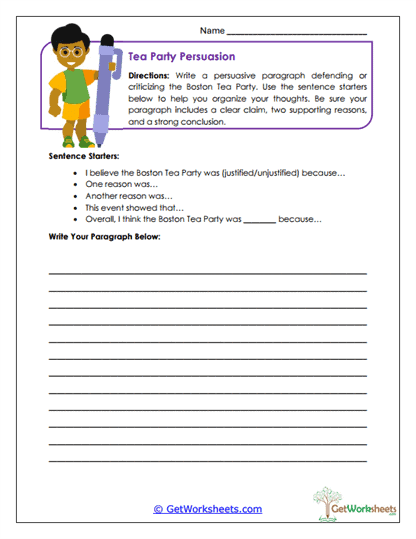
Persuasive Writing
Learners write a persuasive paragraph either supporting or criticizing the Boston Tea Party. Sentence starters help them organize a clear claim, provide two supporting reasons, and craft a strong conclusion. The activity develops argumentative writing and deepens comprehension of colonial motivations. Students practice organizing ideas and defending a position with evidence.
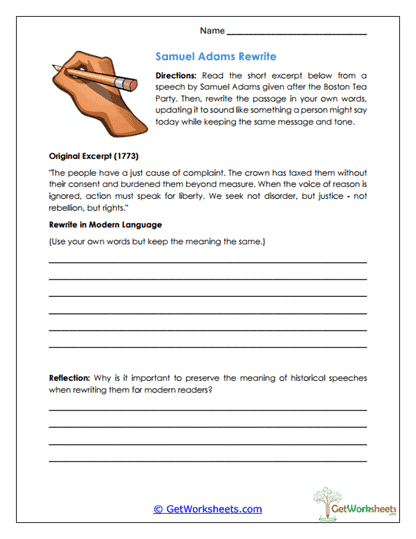
Speech Rewrite
Students read a Samuel Adams speech excerpt and rewrite it in modern language while preserving the original intent. They reflect on why historical meaning must remain intact when updating older texts. This activity reinforces paraphrasing, interpretation, and understanding of revolutionary rhetoric. It encourages thoughtful consideration of how language and ideas evolve across time.
Bookmark Us Now!
New, high-quality worksheets are added every week! Do not miss out!