Beowulf Worksheets
About This Worksheet Collection
The Beowulf worksheet collection offers a rich set of activities designed to guide students through one of the most influential works in Anglo-Saxon literature. From character matching and quote interpretation to conflict classification and cultural analysis, these worksheets help learners engage deeply with the poem's themes, structure, and stylistic features. The variety of tasks supports comprehension of epic elements while encouraging students to explore both literal meaning and symbolic significance.
Across the collection, students build skills in close reading, critical thinking, and literary interpretation. They analyze heroic traits, trace plot development, interpret Old English poetic devices, and compare Beowulf with heroes across cultures and eras. Whether responding to constructed questions, creating original kennings, or organizing ideas visually, learners strengthen their understanding of the epic while developing tools for thoughtful literary analysis.
Detailed Descriptions Of These Worksheets
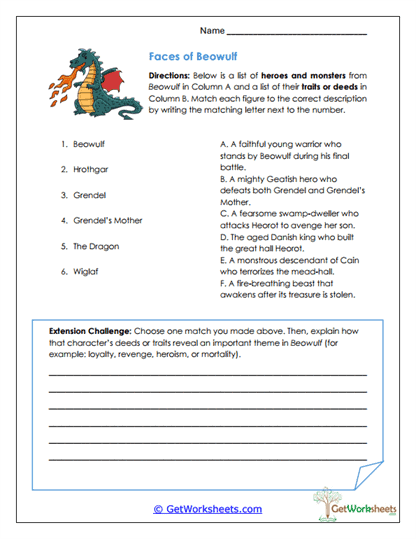
Faces of Beowulf
Students match major characters to their correct descriptions, reinforcing understanding of heroes, monsters, and supporting figures. This activity deepens knowledge of character roles and traits across the epic. Learners also reflect on how specific actions connect to broader themes. It promotes both comprehension and thematic insight.
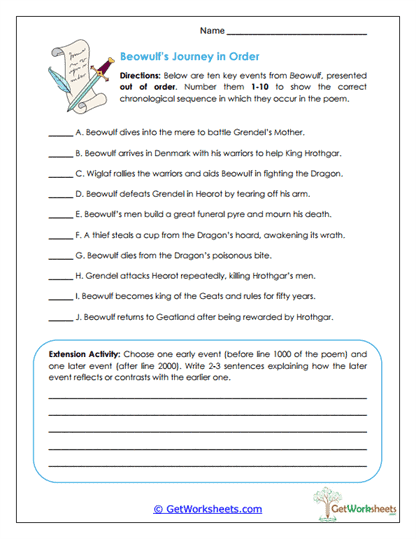
Beowulf's Journey in Order
Learners sequence ten key events, building a clearer understanding of the epic's plot progression. The task encourages analysis of cause-and-effect relationships and major turning points. Students strengthen comprehension of narrative structure. An optional comparison extension supports deeper thematic reflection.
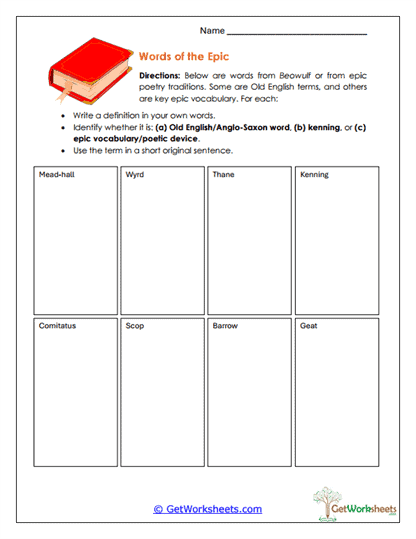
Words of the Epic
Students define vocabulary from Beowulf, identify each term's literary function, and use it in an original sentence. This task builds understanding of kennings, poetic devices, and Old English terminology. Learners gain familiarity with epic diction while practicing vocabulary in context. It enhances appreciation of the poem's linguistic artistry.
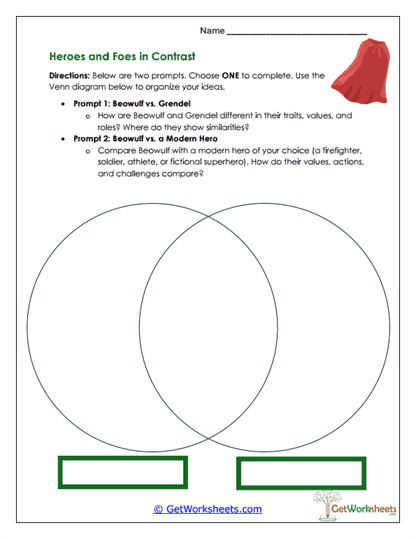
Heroes and Foes in Contrast
Using a Venn diagram, students compare either Beowulf and Grendel or Beowulf and a modern hero. This visual organizer helps them evaluate traits, motivations, and cultural values. The activity strengthens analytical thinking and prepares learners for comparative writing. It supports both literary and cross-cultural exploration.
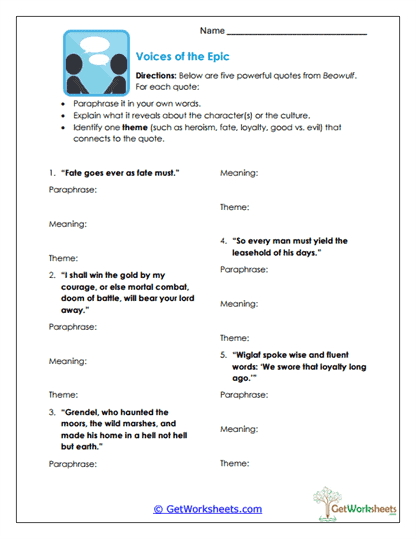
Voices of the Epic
Students paraphrase important quotes and analyze what each reveals about character, culture, or theme. This activity promotes interpretation of archaic language and strengthens theme identification. Learners connect textual details to broader ideas such as heroism or fate. It supports deeper literary analysis through close reading.
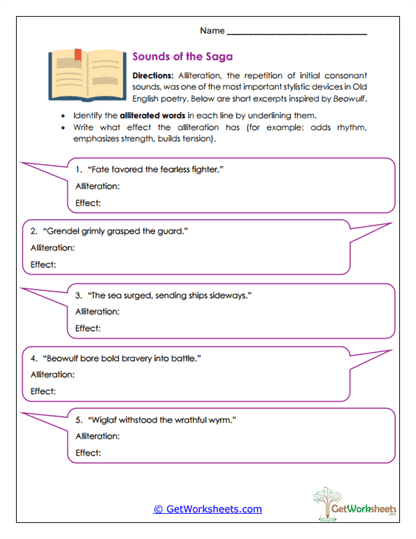
Sounds of the Saga
Learners identify and underline examples of alliteration in short poetic excerpts. They then explain how sound contributes to tone, rhythm, or emphasis. This builds understanding of key stylistic features in Anglo-Saxon poetry. The worksheet strengthens literary device analysis and appreciation of poetic structure.
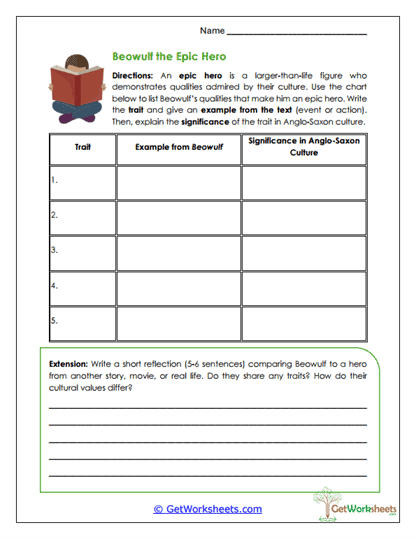
Beowulf the Epic Hero
Students use a chart to explore Beowulf's heroic traits, cite supporting textual evidence, and explain each trait's significance. The activity develops close reading and cultural understanding. An extension invites comparison to another hero. It promotes evidence-based analysis and cultural insight.
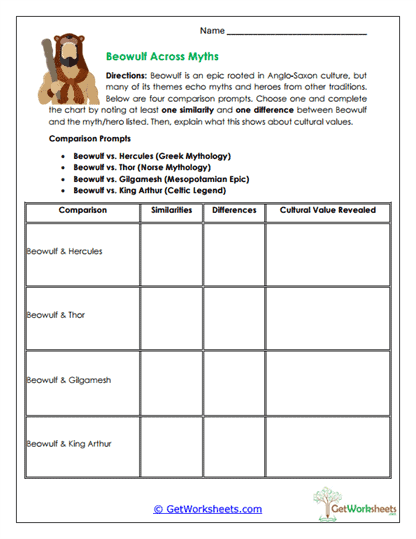
Beowulf Across Myths
Learners compare Beowulf to a mythological or legendary hero using a structured chart. They examine similarities, differences, and cultural values. This activity encourages cross-cultural literary comparison and analytical reasoning. It highlights how heroism varies across traditions.
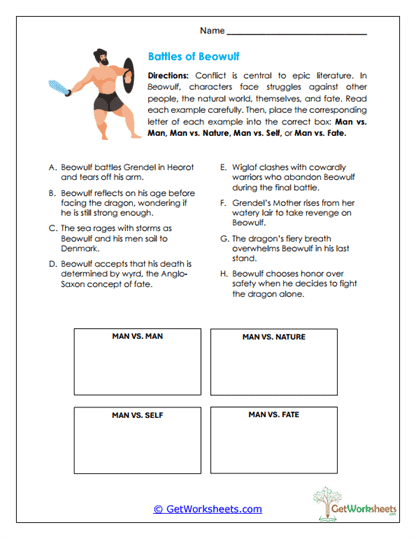
Battles of Beowulf
Students categorize eight conflicts from the poem into four types of literary conflict. This strengthens comprehension of major struggles and motivations within the epic. Learners practice critical reading and classification skills. It deepens understanding of narrative tension.
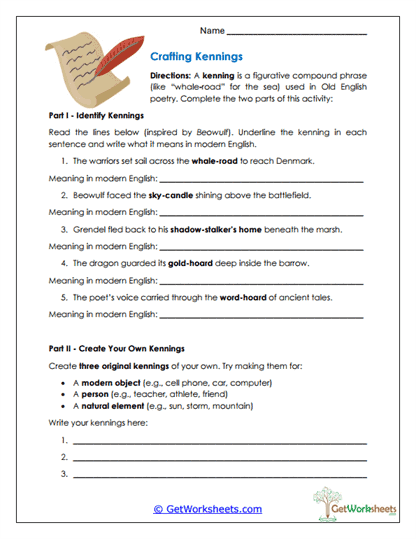
Crafting Kennings
Students identify kennings in selected lines and translate them into modern English before creating original examples. This reinforces understanding of figurative language and Old English poetic style. The activity promotes creativity and vocabulary exploration. It builds appreciation for traditional epic craftsmanship.
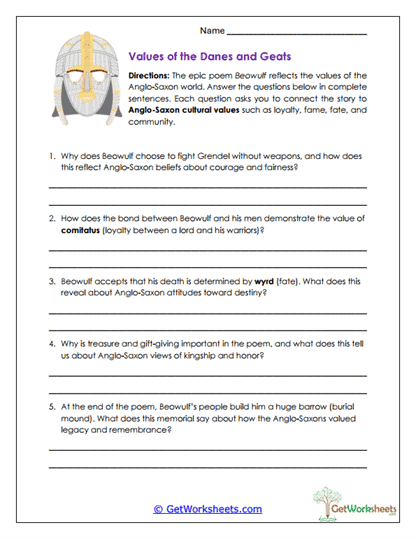
Values of the Danes and Geats
Learners respond to constructed-response questions that connect events in the epic to Anglo-Saxon cultural values. They analyze themes such as loyalty, kingship, and honor. This activity strengthens interpretation using textual evidence. It bridges literary study with historical cultural insight.
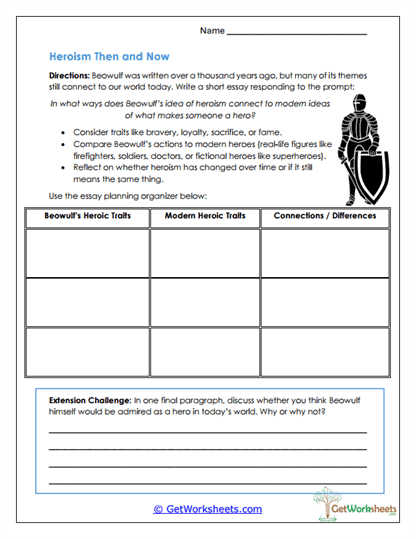
Heroism Then and Now
Using a graphic organizer, students compare Beowulf's heroic qualities with those admired today. They then write an essay analyzing similarities and differences in heroic ideals. The task encourages critical thinking and personal reflection. It connects ancient literature to modern cultural perspectives.
Bookmark Us Now!
New, high-quality worksheets are added every week! Do not miss out!