Asteroids, Comets, and Meteors Worksheets
About This Worksheet Collection
The Asteroids, Comets, and Meteors collection introduces students to the fascinating world of small solar system bodies and their roles in shaping our planet and scientific understanding. Each worksheet blends astronomy and literacy skills, using engaging reading passages, diagrams, and vocabulary exercises to teach how these celestial visitors form, move, and interact with Earth's atmosphere. Learners practice reading comprehension, cause-and-effect reasoning, and scientific vocabulary while connecting key concepts to real-world exploration and discovery.
The collection balances curiosity and comprehension by combining factual learning with analysis, sequencing, and creative thinking. From sequencing a comet's tail formation to researching historical impact events, students strengthen both scientific reasoning and informational text literacy. These activities make astronomy accessible and exciting, fostering a deeper appreciation for how space science connects to everyday life on Earth.
Detailed Descriptions Of These Worksheets
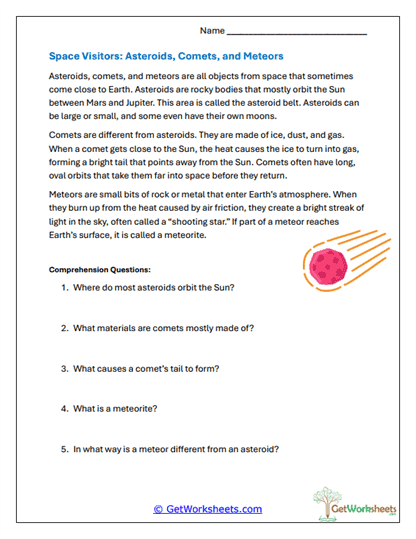
Space Visitors: Asteroids, Comets, and Meteors
Students read a clear, engaging passage explaining what asteroids, comets, and meteors are and how they differ. They learn about each object's composition, movement, and behavior when interacting with Earth's atmosphere. Comprehension questions test understanding and comparison of features. The worksheet strengthens scientific literacy and nonfiction reading skills.
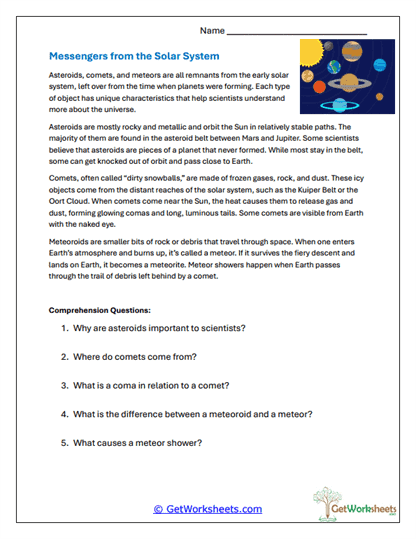
Messengers from the Solar System
Learners explore how asteroids, comets, and meteoroids serve as remnants from the early solar system. The passage explains their origins, motion, and scientific importance in studying planetary formation. Students answer questions about comet structure and meteor showers to reinforce comprehension. This activity connects astronomy content with critical reading and reasoning.
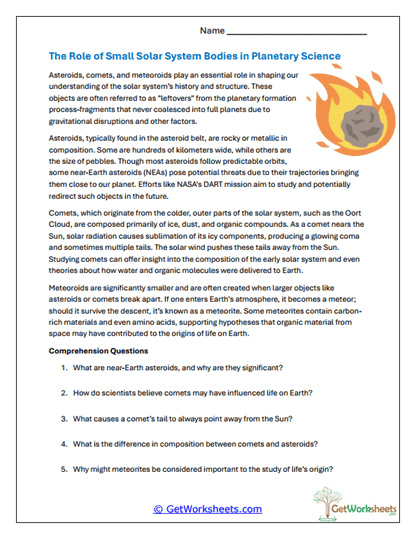
The Role of Small Solar System Bodies in Planetary Science
Students analyze a challenging nonfiction text about how asteroids and comets influence planetary research and theories of life's beginnings. The reading highlights current NASA missions and scientific exploration. Learners answer higher-order questions that synthesize key concepts across paragraphs. The worksheet bridges science and literacy through applied analysis and evaluation.
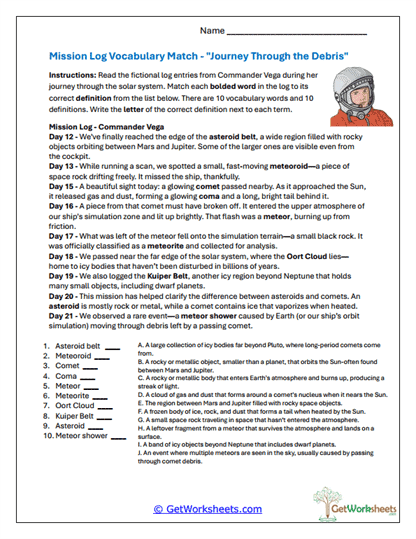
Mission Log Vocabulary Match - "Journey Through the Debris"
In this vocabulary-based task, students match domain-specific terms like asteroid, meteoroid, and Kuiper Belt with their definitions. The format is framed as a space journal written by an astronaut, blending imagination with factual learning. The creative context boosts engagement and retention. It reinforces accurate scientific terminology through context clues.
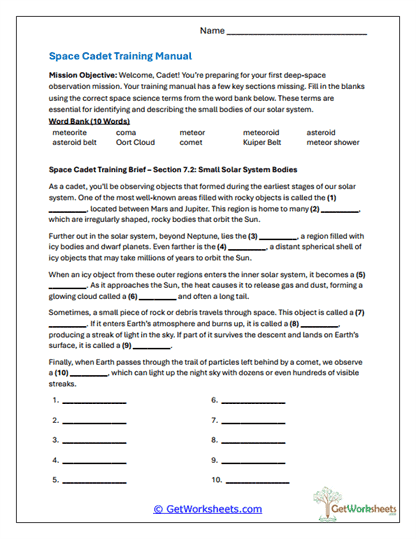
Space Cadet Training Manual
Learners fill in missing key terms from a word bank while reading a passage about solar system objects. The fill-in-the-blank style helps reinforce essential space science vocabulary in context. Students apply terminology such as orbit, comet, and meteorite to complete their "training." The exercise supports understanding through repetition and active recall.
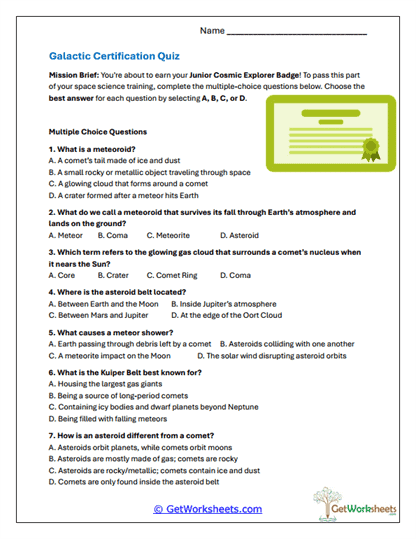
Galactic Certification Quiz
This quiz-format worksheet checks comprehension of asteroids, comets, and meteoroids through true/false and multiple-choice items. Topics include composition, location, and movement in the solar system. The "Junior Cosmic Explorer" theme keeps assessment fun and interactive. It provides a quick, engaging review of key space science facts.
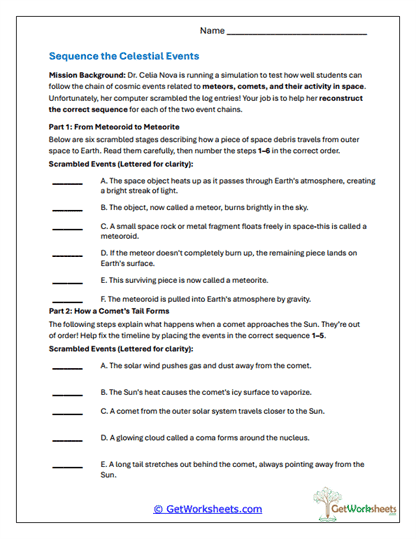
Sequence the Celestial Events
Students arrange scrambled sentences describing how a meteoroid becomes a meteor and how a comet's tail forms. They reconstruct each sequence to show logical scientific order. This hands-on activity reinforces comprehension of cause and effect. Learners strengthen reasoning skills by understanding process-based space phenomena.
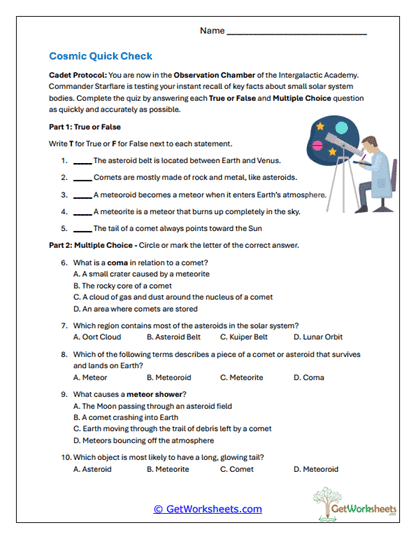
Cosmic Quick Check
In this fast-paced review, students answer questions about asteroid belts, comet composition, and meteor shower formation. The quiz consolidates previously learned vocabulary and concepts. Its short, two-part format encourages independent recall and confidence. The activity builds both speed and accuracy in scientific comprehension.
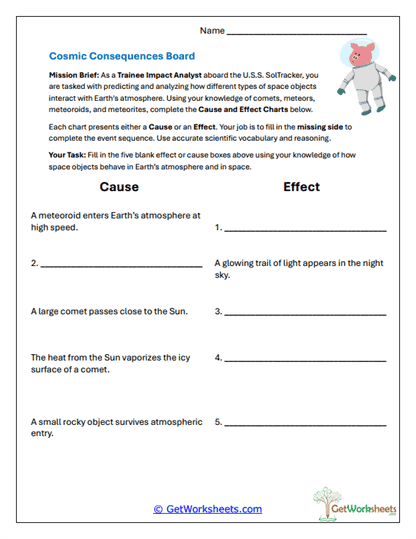
Cosmic Consequences Board
Learners complete a cause-and-effect chart connecting celestial processes to their results. They match space events, such as comet passes or meteor impacts, to their outcomes. This analytical task promotes reasoning and organization skills. It helps students visualize how physical interactions shape astronomical events.
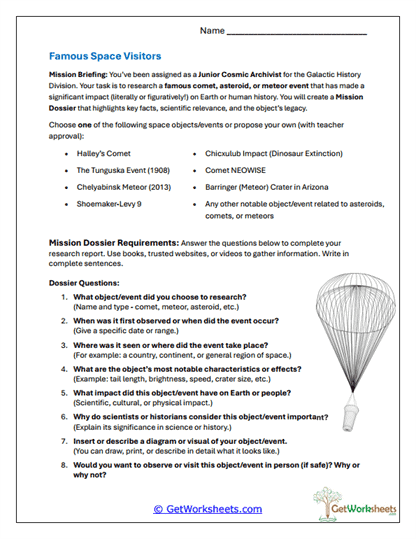
Famous Space Visitors
Students research a real-life comet, asteroid, or meteor event, such as Halley's Comet or the Tunguska explosion. They gather facts about the object's discovery, significance, and impact on science or history. Structured questions guide their exploration and synthesis. This project builds research literacy and scientific communication skills.
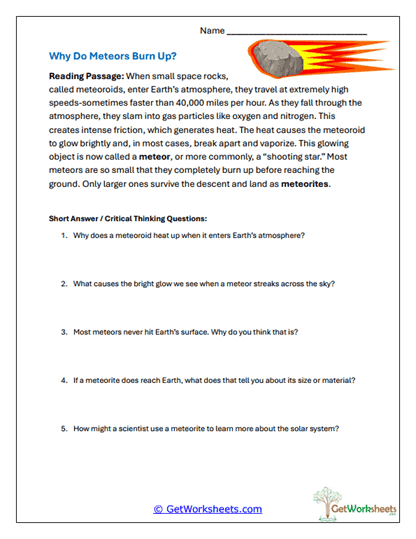
Why Do Meteors Burn Up?
Learners read an explanatory passage describing friction, air resistance, and energy transformation during a meteor's entry into Earth's atmosphere. They answer comprehension and critical-thinking questions that highlight cause-and-effect processes. This worksheet integrates physics concepts with literacy skills. It clarifies how scientific vocabulary supports understanding of natural phenomena.
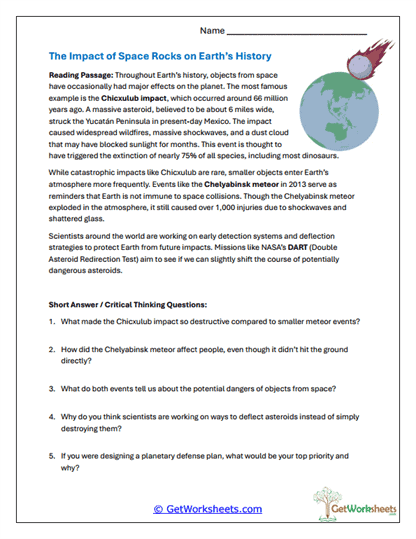
The Impact of Space Rocks on Earth's History
Students read about how asteroid and meteor impacts have shaped Earth, focusing on events like the Chicxulub impact and NASA's DART mission. The text connects catastrophic history to modern planetary defense. Comprehension and inference questions encourage scientific reflection. This worksheet links deep time to contemporary space exploration and critical reasoning.
Bookmark Us Now!
New, high-quality worksheets are added every week! Do not miss out!