Articles of Confederation Worksheets
About This Worksheet Collection
This Articles of Confederation worksheet collection provides educators with a comprehensive set of activities that help students understand the United States' first national government-its goals, its limitations, and why it was ultimately replaced. Through cloze readings, primary-source excerpts, vocabulary tasks, classification activities, quizzes, and extended writing prompts, students explore the structure of early government and the challenges it faced. The worksheets illuminate key issues such as weak federal authority, interstate conflict, economic instability, and the need for constitutional reform.
As learners progress through the collection, they strengthen essential academic skills including context-clue reading, evidence-based analysis, comparison, interpretation of historical documents, and clear informational writing. They also deepen their understanding of civics by examining how government powers are divided, why cooperation among states matters, and how early political mistakes shaped the creation of the Constitution. These activities build a strong foundation for understanding American government while encouraging critical thinking about effective leadership and national unity.
Detailed Descriptions Of These Worksheets
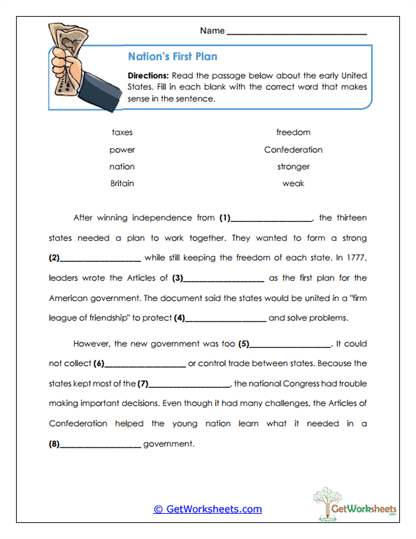
First Government Cloze
Students complete a cloze passage explaining why the Articles of Confederation were created and how their weaknesses affected early U.S. leadership. They use context clues to select vocabulary terms that clarify ideas about freedom, power, and governmental limits. A final question prompts students to explain how the Articles influenced the move toward a stronger Constitution. This reinforces reading comprehension and foundational civics understanding.
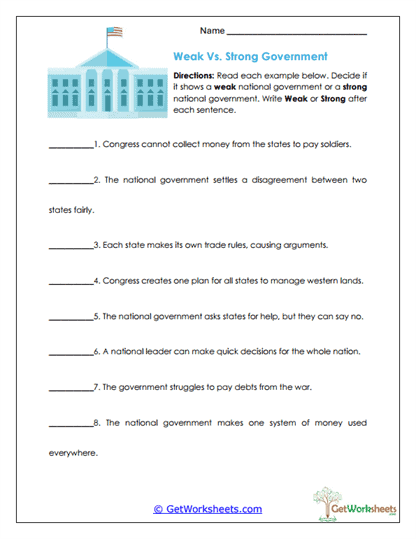
Strong or Weak
Learners review eight statements about government actions and classify each as evidence of a weak or strong national government. The activity highlights the limited powers under the Articles by contrasting them with the stronger federal system that followed. Students analyze examples involving trade, taxation, and conflict resolution to develop clearer insight into governance challenges. It strengthens classification and analytical reasoning.
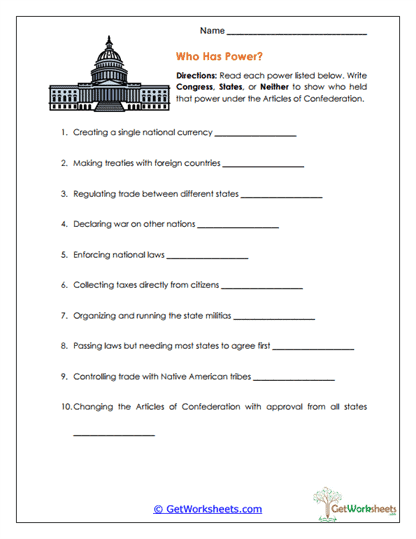
Power Holders
Students identify whether each power listed belonged to Congress, the states, or neither under the Articles of Confederation. This helps them understand the uneven distribution of authority and the problems caused by weak national coordination. The activity reinforces key federalism concepts and deepens comprehension of early U.S. political structure. Learners practice interpreting and categorizing government responsibilities.
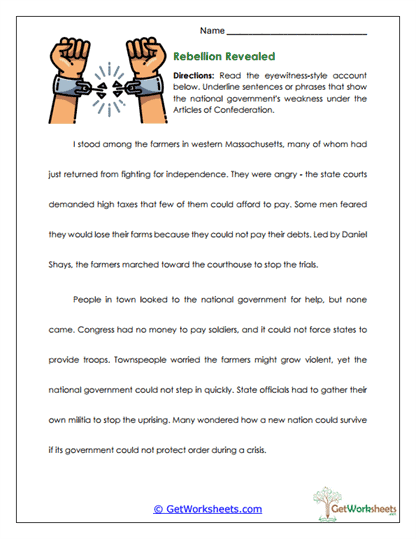
Shays' Rebellion Reading
Learners read an eyewitness-style passage describing events connected to Shays' Rebellion and underline phrases that reveal government weaknesses. They analyze evidence showing issues such as financial instability and inability to maintain order. The worksheet helps students understand why the rebellion exposed flaws in the Articles. It builds document-analysis skills and awareness of constitutional reform needs.
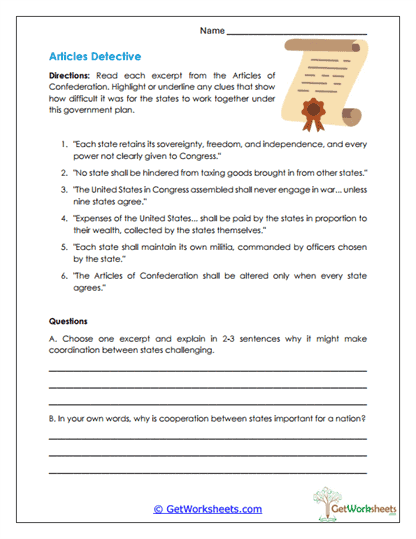
Article Excerpts
Students examine primary-source excerpts from the Articles and highlight clues showing why cooperation between states was difficult. They then respond to questions analyzing these challenges, emphasizing interstate conflict and structural flaws. This strengthens primary-source literacy and develops evidence-based reasoning. Students gain clearer understanding of the Articles' limitations.
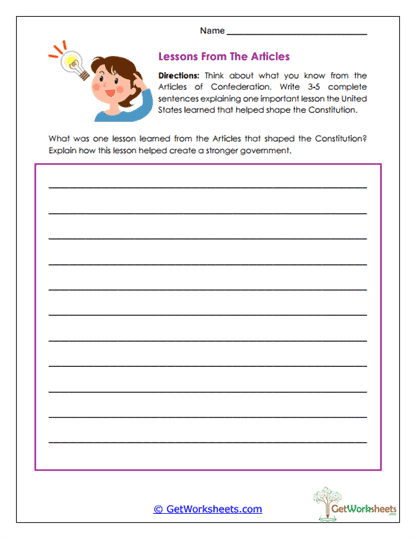
Lessons Learned
Learners write 3-5 sentences explaining a lesson the United States learned from the Articles and how it shaped the Constitution. They connect causes and effects by describing how early weaknesses influenced later reforms. The activity develops thoughtful writing about historical change. It strengthens reasoning about why stronger federal authority became necessary.
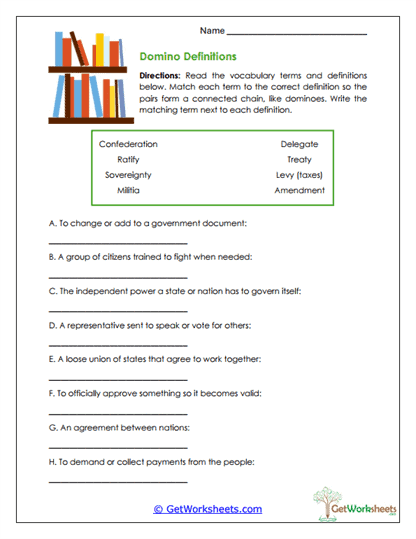
Domino Vocabulary
Students match key government terms-such as sovereignty, militia, ratify, and amendment-to their correct definitions in a "domino chain" style activity. This reinforces precise vocabulary needed to understand early U.S. government discussions. Learners practice reading definitions carefully and building terminology mastery. It supports strong comprehension of constitutional and political language.
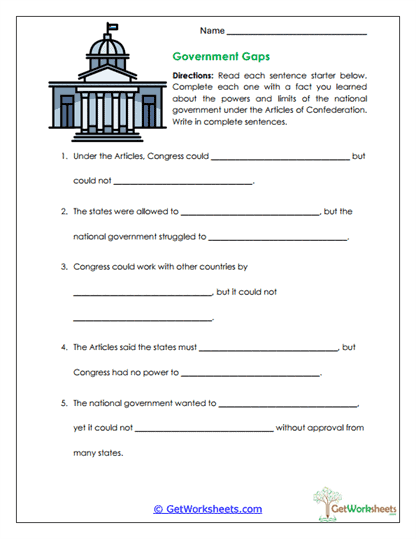
Government Limits
Students complete sentence starters describing both powers and limitations of Congress under the Articles. They write full informational sentences explaining what the national government could and could not do, including taxation, trade regulation, and diplomatic functions. The activity strengthens writing clarity and civics understanding. Learners articulate why the early system struggled to function effectively.
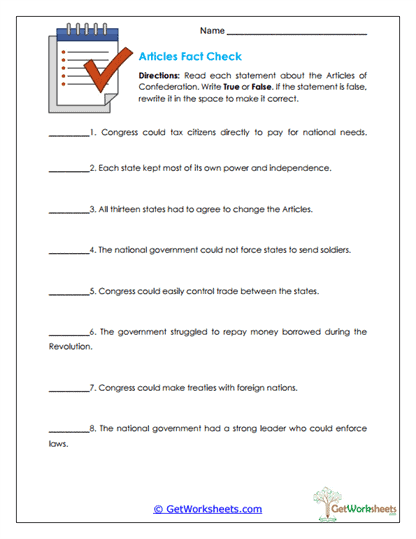
Fact Check
Students evaluate statements about the Articles and determine whether each is true or false, rewriting any incorrect statements to make them accurate. This helps clear up misconceptions and reinforces essential civics knowledge. The activity strengthens accuracy, comprehension, and correction skills. Learners practice distinguishing between historical fact and error.
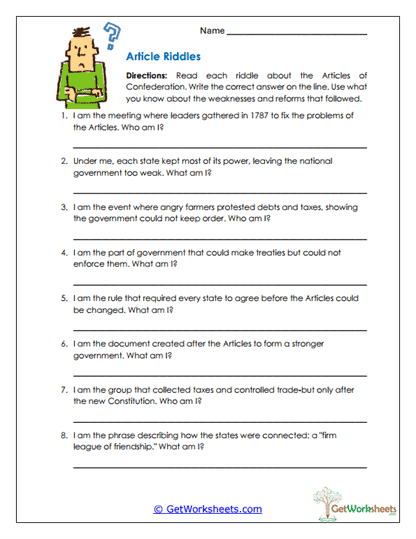
Articles Riddles
Learners solve riddles describing key events and concepts related to the Articles, identifying answers such as Shays' Rebellion or state sovereignty. The puzzle-style format encourages engagement and active recall. Students deepen understanding of political challenges and early government weaknesses. It supports retention through creative problem-solving.
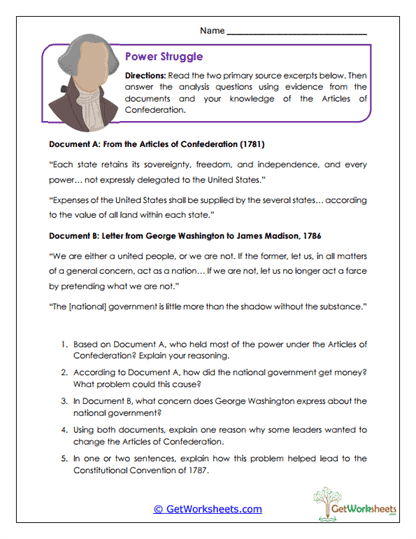
Power Analysis
Students analyze excerpts from the Articles and a letter from George Washington to James Madison, using evidence to compare concerns about national power and unity. They answer questions about financial struggles, authority distribution, and calls for stronger governance. This strengthens primary-source interpretation and historical reasoning. Learners see directly why leaders pushed for the Constitutional Convention.
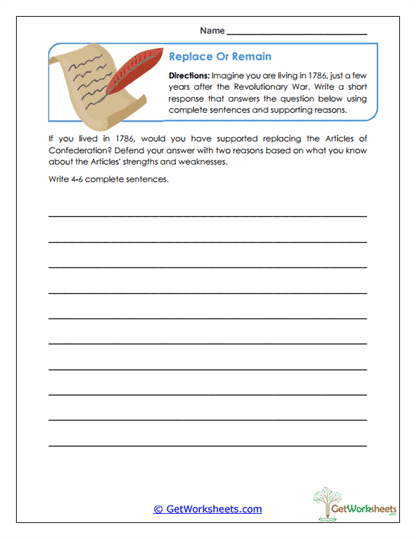
Replace or Remain
Students write a short response imagining themselves in 1786 and explain whether the Articles should be replaced. They defend their viewpoint with two evidence-based reasons, practicing argumentative writing. The activity strengthens persuasive explanation and reinforces understanding of government strengths and weaknesses. It encourages clear reasoning about early American political debates.
Bookmark Us Now!
New, high-quality worksheets are added every week! Do not miss out!