Antonyms Worksheets
-
A Word Opposite
-
Are They Opposites?
-
Boxing Match
-
-
Choice Boxes

-
Circle the Opposites
-
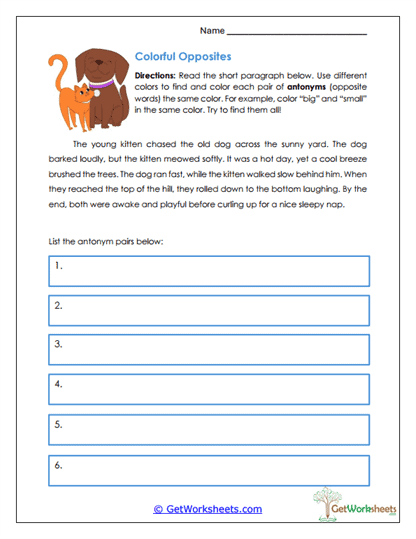
Colorful Opposites
-
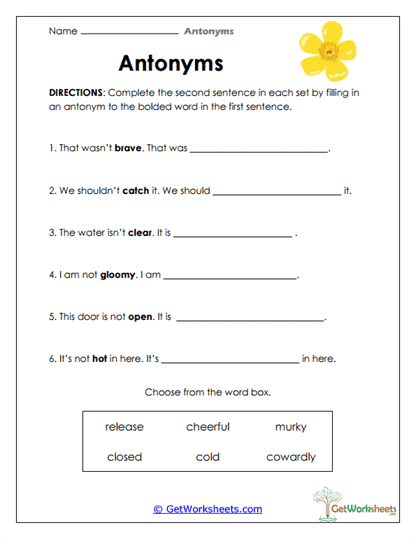
Complete the Opposite Sentence
-
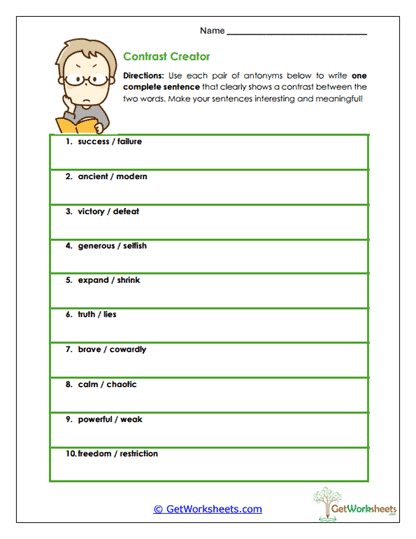
Contrast Creator
-
Dual Opposites Practice

-
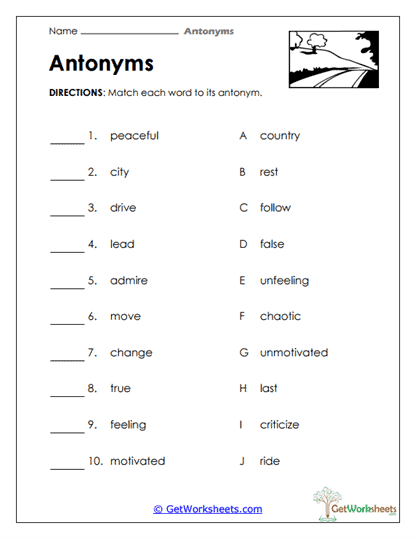
My Match-Up
-
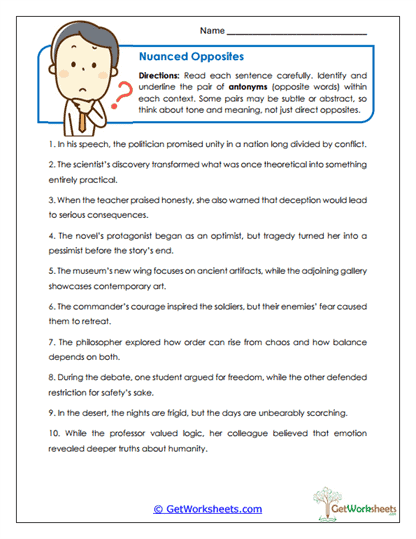
Nuanced Opposites
-
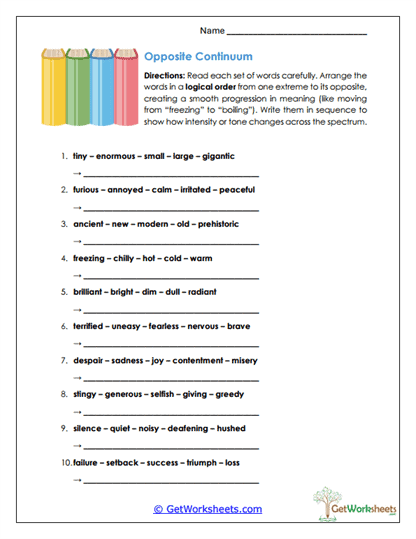
Opposite Continuum
-
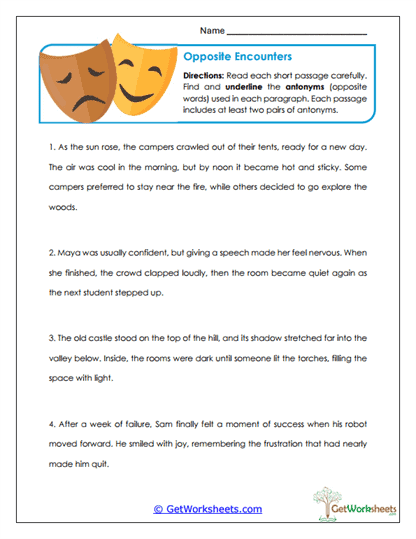
Opposite Encounters
-
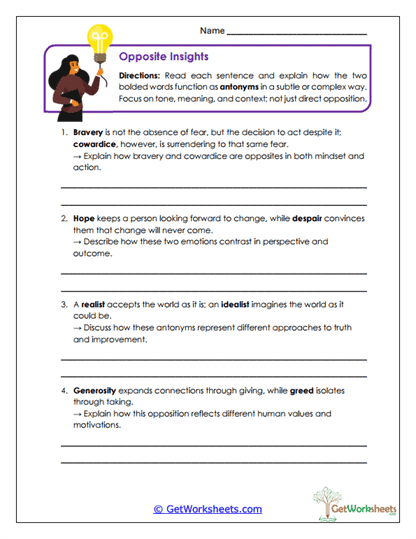
Opposite Insights
-
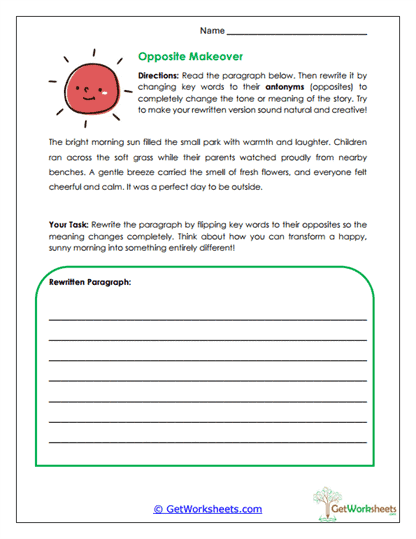
Opposite Makeover
-
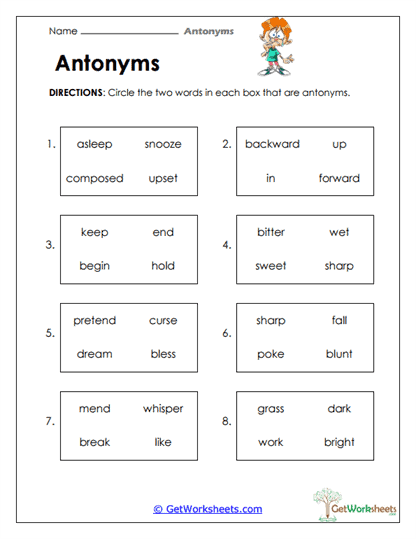
Opposite Pairs
-
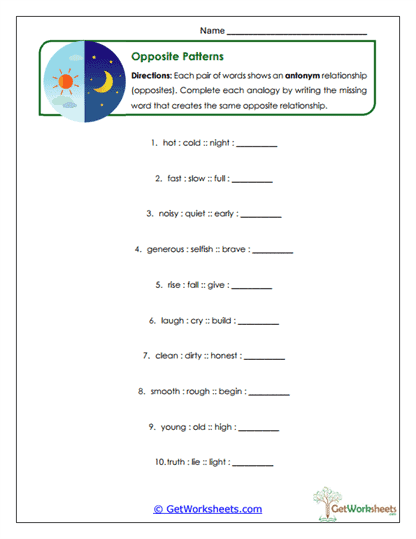
Opposite Patterns
-
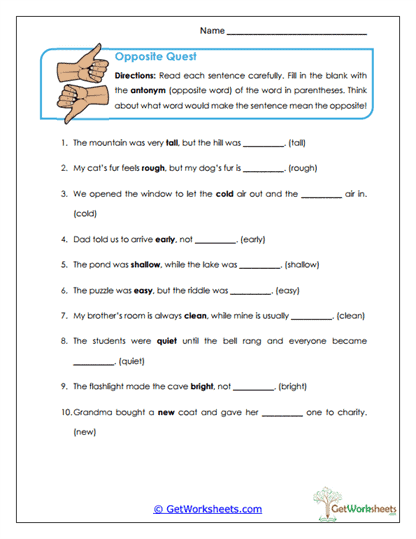
Opposite Quest
-
Picture Opposites
-
Reverse Rewrite
-
Sentence Opposites
-
Sentence Opposites in Context
-
Sorting Synonyms and Antonyms
-
Synonym or Antonym Sort
-
Synonym or Antonym?
-
Word Flips
-
Write the Opposite
About This Worksheet Collection
The Antonyms worksheet collection equips learners with a clear, practical grasp of opposite meanings-from early picture-based activities to advanced analysis of nuanced, abstract contrasts. Hands-on matching, sentence rewrites, and analogy-style challenges build from recognition to fluent application, so students don't just spot opposites-they use them to express precise ideas and adjust tone.
Across the set, students strengthen vocabulary, reading comprehension, and writing control. They practice identifying semantic relationships, editing for clarity, and composing original sentences that hinge on contrast. By encountering antonyms in visuals, passages, and authentic contexts, learners internalize how opposites power description, argument, and style.
Detailed Descriptions Of These Worksheets
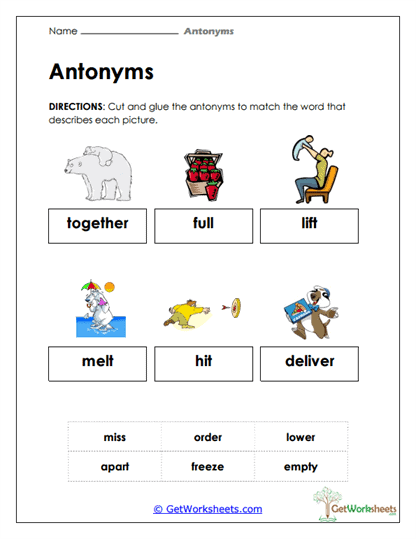
Picture Opposites
Learners cut and glue opposite words to match vivid picture prompts, linking vocabulary to concrete actions and scenes. The tactile format supports fine motor practice and memory. It's an accessible on-ramp to recognizing opposites through images and context.
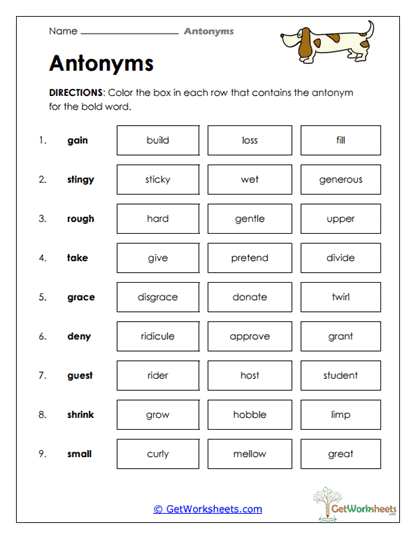
Antonym Choice Boxes
Students color the box that shows the true opposite of a highlighted word, using pictures and word clues to guide decisions. This quick-check format sharpens discrimination between close meanings. It builds accuracy and confidence with everyday antonyms.
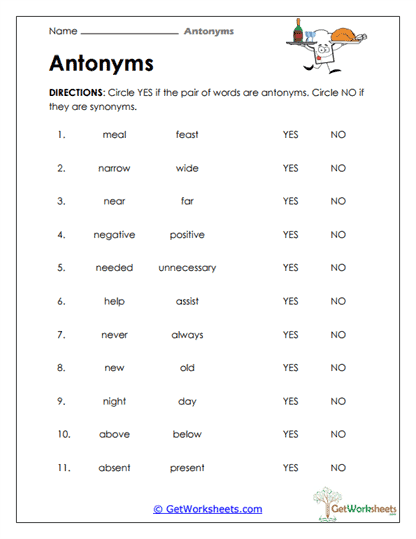
Are They Opposites?
Each item asks whether a pair is an antonym or not, prompting rapid, evidence-based decisions. The brisk pace reinforces recognition while discouraging guesswork. Learners refine accuracy by separating look-alike meanings from true contrasts.
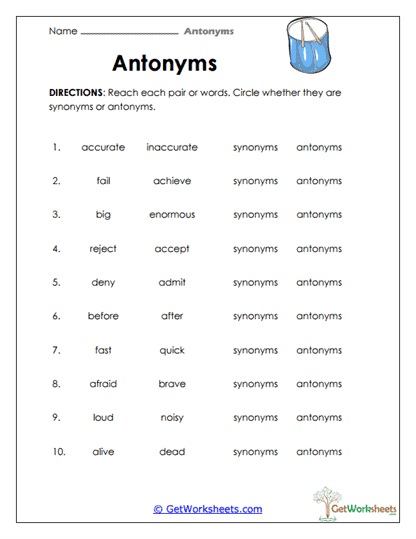
Synonym or Antonym?
Students label pairs as synonyms or antonyms, leaning on roots, prefixes, and context hints. The side-by-side choice deepens understanding of nuanced differences. It's a compact workout for precision in word relationships.
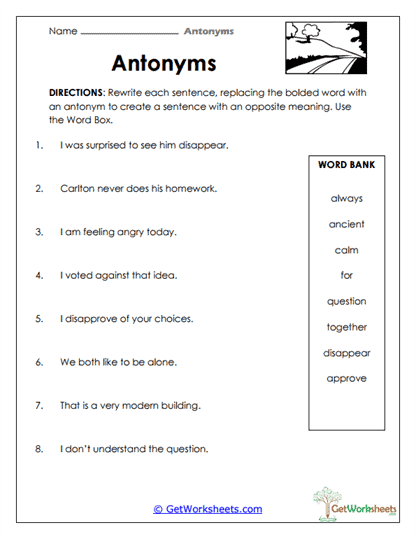
Sentence Opposites
A word bank helps students swap a bolded term for its opposite while preserving sentence sense. This turns recognition into applied writing practice. Learners see how one changed word can flip meaning and tone.
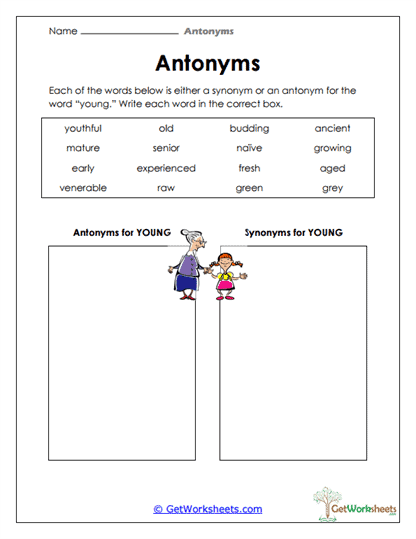
Sorting Synonyms and Antonyms
Words connected to "young" are sorted into synonym and antonym columns, highlighting shades of meaning and connotation. The activity pushes beyond simple binaries. Students justify placements, strengthening semantic judgment.
Opposite Pairs
From four choices, learners circle two words that oppose each other, training quick scanning and contrast detection. Close distractors encourage careful reading. It's efficient practice for building lexical agility.
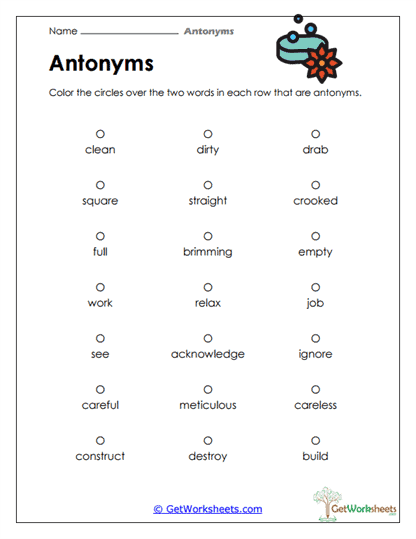
Circle the Opposites
Rows of word pairs invite students to spot and mark true antonyms. Repetition with variation supports independent work and retention. Visual consistency keeps the focus on meaning, not mechanics.
Complete the Opposite Sentence
Given a model sentence, learners complete a partner sentence with an accurate antonym from a word box. The task blends context, grammar, and vocabulary. Students practice choosing words that fit both logic and tone.
Antonym Match-Up
A classic matching set pairs each word with its opposite across topics from feelings to places. Immediate feedback reinforces memory. The clear layout supports swift recall and connection-making.
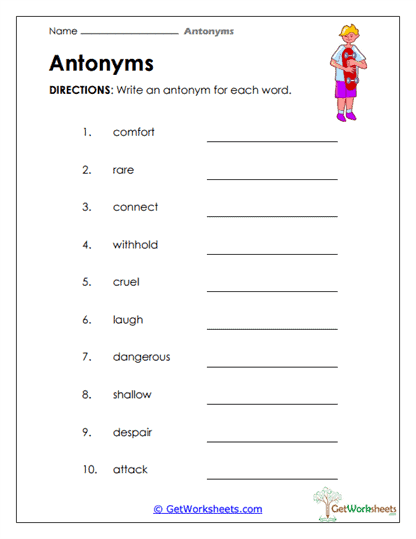
Write the Opposite
Students generate antonyms from memory, moving beyond recognition to production. Open-response format boosts expressive vocabulary and spelling accuracy. It's a strong checkpoint for mastery.
Dual Opposites Practice
Two columns of prompts expand range and stamina as learners supply antonyms for varied parts of speech. The layout encourages comparisons across lists. Students grow flexible and precise in their choices.
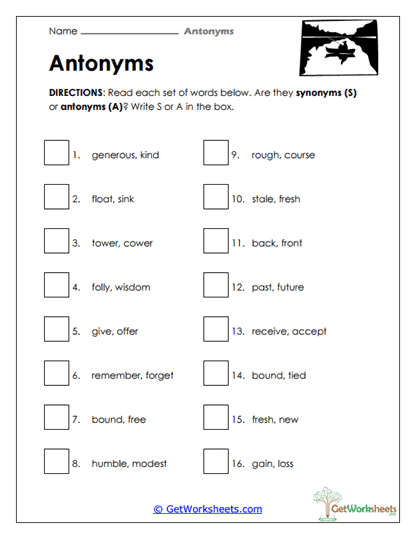
Synonym or Antonym Sort
Pairs are labeled "S" or "A," training learners to weigh context and nuance rather than rely on memorized lists. Borderline cases prompt explanation. This strengthens analytical reading and semantic reasoning.
Antonym Box Match
In a color-coded grid, students find and shade the box with the correct opposite, blending visual engagement with linguistic rigor. The format supports quick recognition and focus. It's ideal for centers or fast-finish review.
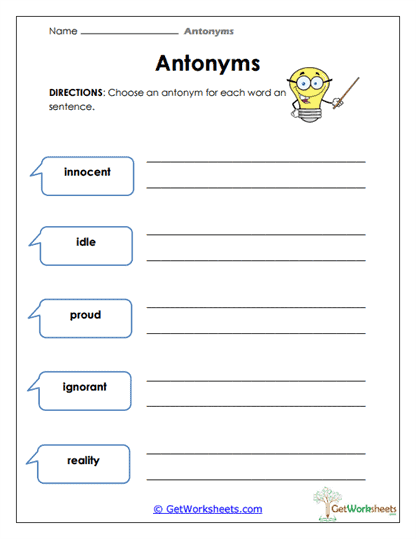
Sentence Opposites in Context
Learners select or generate antonyms for more abstract terms and embed them in full sentences. Attention shifts from isolated words to message and tone. The result is stronger expressive writing and conceptual control.
Opposite Quest
Students complete sentences by choosing context-appropriate antonyms, ensuring grammar and meaning align. Contrastive logic drives each choice. It bridges comprehension with precise vocabulary use.
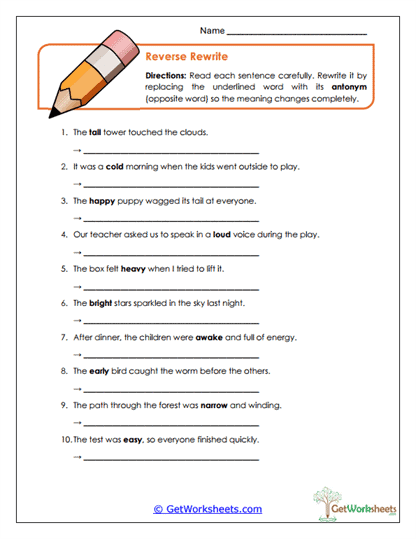
Reverse Rewrite
Whole sentences are rewritten by flipping key words to their opposites while keeping syntax sound. Learners experience how diction reshapes images and outcomes. It's targeted practice in editing, tone, and meaning.
Opposite Patterns
Analogy-style items (A : B :: C : ___) require learners to infer and apply opposition patterns. The format marries logic with vocabulary. It's powerful preparation for reasoning on assessments.
Opposite Encounters
Short passages hide multiple antonym pairs for students to locate and underline. Contextual hunting improves close reading and inference. Learners see how contrast enriches description and mood.
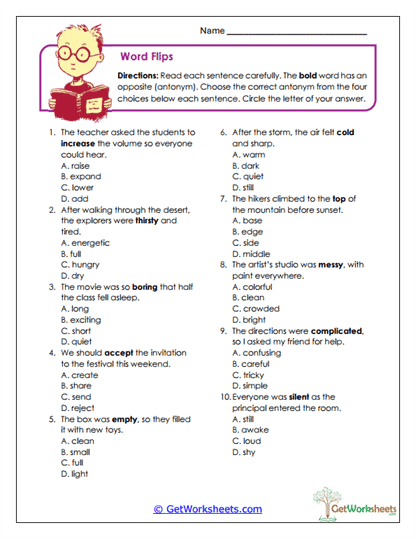
Word Flips
Multiple-choice items place a bolded word in context and ask for its opposite from four options. Students practice eliminating distractors and justifying selections. It's a crisp assessment of applied antonym knowledge.
Contrast Creator
Given paired opposites, learners craft original sentences where both terms appear meaningfully. This elevates vocabulary into style and rhetoric. The task develops fluency, coherence, and control of tone.
Opposite Makeover
A cheerful paragraph is rewritten with strategic antonym substitutions to transform mood and voice. Students discover how small lexical changes shift the entire feel of a text. It's a creative lesson in diction and revision.
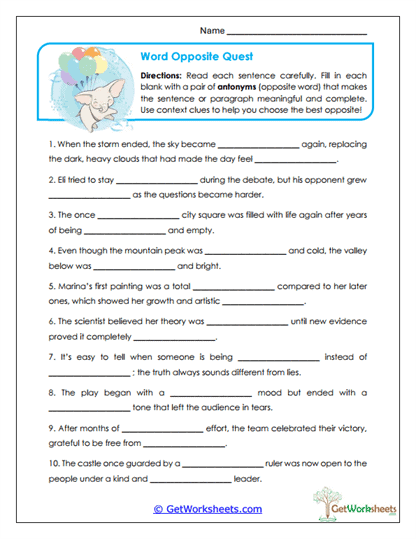
Word Opposite Quest
Context-rich sentences require antonyms that complete ideas logically and precisely. Learners balance meaning, grammar, and flow. The exercise mirrors authentic reading-and-writing demands.
Nuanced Opposites
Students identify sophisticated antonym pairs embedded in complex sentences, including abstract and figurative contrasts. Interpreting tone and intent is essential. The work grows literary sensitivity and critical vocabulary.
Opposite Insights
With value-laden pairs (e.g., generosity/greed), learners explain deeper differences in attitude and behavior. This turns vocabulary into reflective writing. It nurtures ethical reasoning and persuasive clarity.
Opposite Continuum
Sets of words are sequenced from one extreme to its opposite to reveal degrees of intensity. Students visualize meaning as gradients, not binaries. It builds precision in connotation and categorization.
Colorful Opposites
A lively story invites color-coding of antonym pairs for a hands-on blend of reading and vocabulary. Visual tagging cements recognition and recall. Learners connect descriptive detail with contrast in a memorable way.
Bookmark Us Now!
New, high-quality worksheets are added every week! Do not miss out!